
How a Stem Cell Transplant Banished a Severe Autoimmune Disease for 15 Years
Two patients with a debilitating neurological disorder have remained symptom-free for over 15 years after receiving donor stem cells, offering a potential blueprint for permanently resetting the human immune system.
By Factlen Editorial Team
- Clinical Researchers
- Argue that the 15-year remission proves the concept of an immune reboot is viable, advocating for larger trials to standardize the conditioning regimen.
- Stem Cell Specialists
- Emphasize the mechanical risks, toxicity, and stringent patient selection required, stressing that allogeneic transplants must remain a treatment of last resort.
- Patient Advocacy
- Highlight the transformative quality-of-life improvements and the hope for a definitive cure over lifelong immunosuppression.
What's not represented
- · Health Insurance Providers
- · Medical Ethicists
Why this matters
For millions of people suffering from severe autoimmune diseases, the standard of care has always been lifelong symptom management. This 15-year milestone proves that a one-time 'immune system reboot' can provide a permanent cure, potentially revolutionizing how we treat the body's most devastating self-inflicted attacks.
Key points
- Two patients with severe neuromyelitis optica spectrum disorder (NMOSD) have achieved 15 years of drug-free remission.
- The patients received allogeneic hematopoietic stem-cell transplants, replacing their immune systems with healthy donor cells.
- Prior to the transplant, both patients underwent intense chemotherapy to eradicate their malfunctioning immune cells.
- Neither patient has experienced a clinical relapse or shown disease-causing antibodies since the procedure.
- Due to significant risks like graft-versus-host disease, the treatment is currently reserved for severe, refractory cases.
The human immune system is an extraordinarily complex defense network designed to protect the body from external threats. But when this system misidentifies the body's own tissues as foreign invaders, the results can be devastating. For decades, severe autoimmune diseases have been managed rather than cured, trapping patients in a lifelong cycle of symptom suppression and progressive physical decline. Now, a landmark 15-year clinical milestone is challenging that paradigm, offering a tantalizing glimpse into the future of immunological medicine.[7]
At the center of this breakthrough are two patients diagnosed with neuromyelitis optica spectrum disorder (NMOSD), a rare and debilitating condition in which the immune system relentlessly attacks the optic nerve and the spinal cord. According to new clinical data, both individuals have remained completely symptom-free for more than 15 years after undergoing an allogeneic hematopoietic stem-cell transplant. The procedure effectively wiped out their malfunctioning immune systems and replaced them with healthy donor cells.[1][2]
The findings, published in the medical journal Med and highlighted by Nature, mark a historic first. While stem-cell transplants have been utilized for various blood cancers and some autoimmune conditions, this is the first documented instance of an allogeneic transplant being used to achieve long-term, drug-free remission for NMOSD. The success of these two cases provides a critical proof-of-concept that replacing the source code of a patient's immune system can permanently halt a targeted autoimmune attack.[1][2][5]
To understand the magnitude of this achievement, it is necessary to examine the mechanics of NMOSD. The disease is primarily driven by rogue antibodies that mistakenly target aquaporin-4, a crucial water channel protein located on the surface of astrocytes within the central nervous system. When these antibodies bind to their target, they trigger a cascade of inflammation that strips away the protective myelin sheath surrounding nerve fibers, leading to severe neurological damage.[3][4]

The clinical consequences of NMOSD are severe and often rapid. Patients experience recurring episodes of profound vision loss, excruciating eye pain, uncontrollable vomiting, extreme muscle weakness, and, in many cases, paralysis. Without aggressive and sustained medical intervention, the prognosis is grim. Clinical data indicates that within five years of diagnosis, approximately 50 percent of NMOSD patients become legally blind in at least one eye or suffer enough spinal cord damage to require a wheelchair.[4]
The traditional standard of care for NMOSD relies heavily on lifelong immunosuppressive therapies. Doctors utilize a combination of steroids, plasma exchange, and targeted monoclonal antibodies to reduce the frequency and severity of relapses. However, these treatments do not cure the underlying condition. Furthermore, by broadly suppressing the immune system, these drugs leave patients highly vulnerable to opportunistic infections, creating a delicate and dangerous balancing act for the duration of their lives.[3][4]
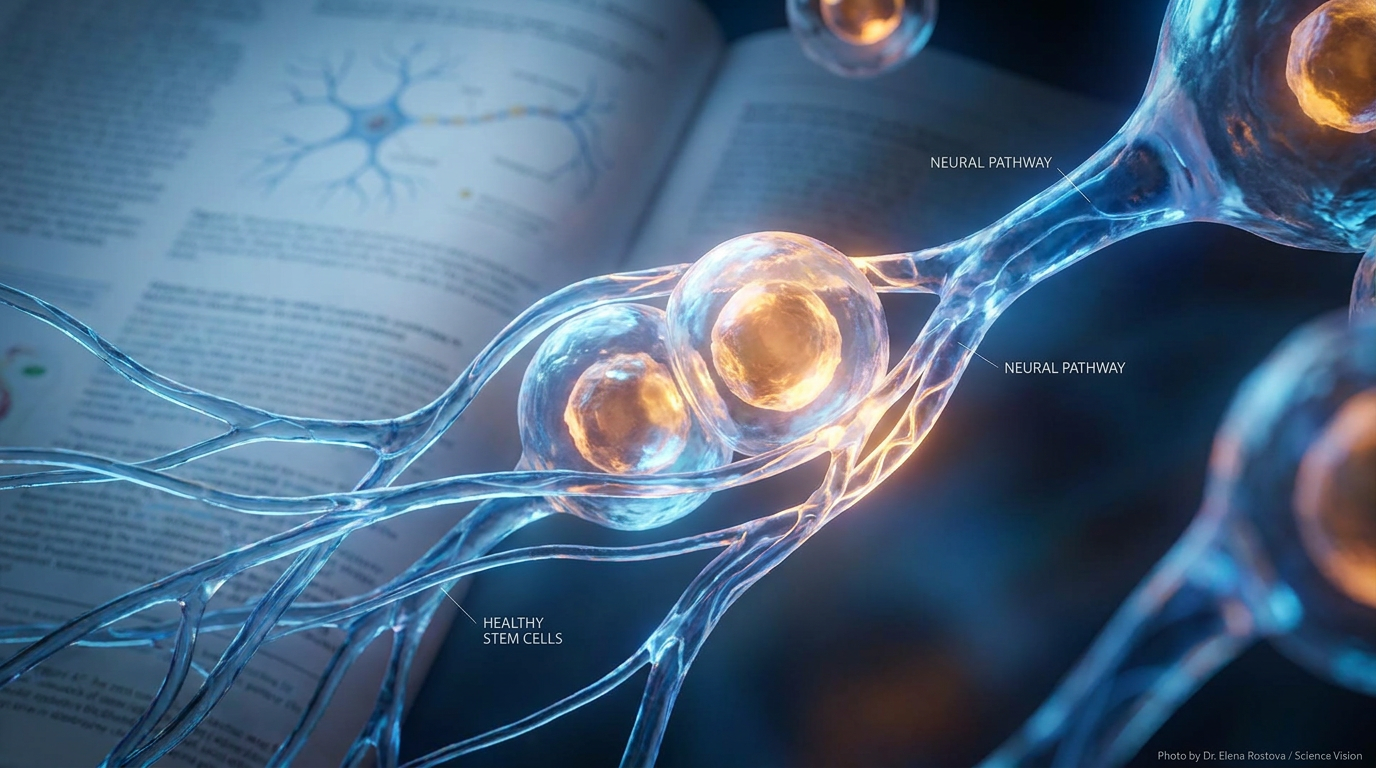
Faced with patients whose disease had stopped responding to all conventional therapies, researchers in 2009 and 2010 decided to attempt a radical intervention. They opted for an allogeneic hematopoietic stem-cell transplant (HSCT), a high-stakes procedure typically reserved for aggressive blood cancers like leukemia. The goal was not merely to suppress the rogue immune cells, but to entirely eradicate them and rebuild the immune system from scratch using healthy donor stem cells.[1][2][6]
The distinction between an autologous and an allogeneic transplant is crucial here. In an autologous transplant, a patient's own stem cells are harvested, cleaned, and reinfused. While safer, this method carries the risk of reintroducing the genetic predisposition for the autoimmune disease. An allogeneic transplant, by contrast, uses blood-forming stem cells from a healthy, genetically matched donor, ensuring that the new immune system is entirely free of the specific defect driving the NMOSD.[3][7]

The distinction between an autologous and an allogeneic transplant is crucial here.
The preparation for the transplant, known as the conditioning regimen, is intensely grueling. Before receiving the new cells, the patients underwent a rigorous course of chemotherapy, utilizing drugs such as fludarabine and treosulfan. This was combined with powerful B-cell depleting antibodies designed to systematically hunt down and destroy the malfunctioning immune cells responsible for producing the aquaporin-4 antibodies. The patients' native immune systems were effectively taken offline.[1][2]
Once the conditioning was complete, the actual transplant took place. The first patient, a man suffering from a particularly severe manifestation of NMOSD, received a single infusion of donor stem cells provided by his sister in 2009. The following year, a woman battling the same relentless condition underwent the identical procedure, this time utilizing stem cells sourced from an unrelated but genetically compatible donor.[1][5]
The immediate aftermath of an allogeneic transplant is a period of extreme vulnerability. With their immune systems temporarily erased, the patients were at high risk for severe infections. Furthermore, they required specialized medications to prevent graft-versus-host disease (GVHD), a potentially fatal complication in which the newly transplanted donor immune cells recognize the recipient's tissues as foreign and launch a systemic attack. Both patients successfully navigated this perilous acute recovery phase.[3][5]
Fast forward more than a decade and a half, and the long-term outcomes have exceeded the most optimistic projections of the clinical team. Blood tests confirm that neither patient has shown any trace of the disease-causing aquaporin-4 antibodies since the procedure. More importantly, neither has experienced a single clinical relapse or required any disease-modifying medications to manage NMOSD symptoms for over 15 years.[1][2][6]

The restoration of their quality of life has been profound. The male patient's neurological function recovered to such an extent that he was able to resume a completely normal life, return to his career, and start a family. The female patient, who had suffered significant motor impairment, regained substantial use of her arms and has lived independently without the shadow of impending paralysis hanging over her future.[1][5]
"This effectively proves that we can successfully reboot a human immune system," notes the Factlen Editorial Team's analysis of the clinical data. By completely swapping the source code of the immune cells, the autoimmune attack was not just paused or mitigated—it was permanently halted. The donor cells engrafted successfully, creating a new, tolerant immune environment that ignores the aquaporin-4 proteins it once sought to destroy.[7]
Despite the unprecedented success of these two cases, researchers are quick to emphasize that allogeneic HSCT is not a casual or universally applicable procedure. The risks associated with the transplant are substantial. Both patients experienced adverse effects in the years following the treatment, including swollen lymph nodes and periods of antibody deficiency that required medical intervention. Notably, one of the patients later developed bladder cancer, highlighting the long-term toxicity risks associated with the intense chemotherapy conditioning.[1][5]
Because of these severe risks, medical experts suggest that, for now, allogeneic stem-cell transplantation should be considered a treatment of last resort. It is currently recommended primarily for younger patients whose NMOSD has proven completely refractory to all standard pharmacological therapies, or for individuals who are suffering from multiple, concurrent, life-threatening autoimmune disorders where the potential benefits outweigh the significant hazards of the transplant.[2][5]

Nevertheless, the success of this 15-year follow-up opens the door for larger, carefully controlled clinical trials. It also raises a tantalizing question for the broader field of immunology: could this "immune system reboot" approach be refined, made safer, and eventually adapted for other severe, treatment-resistant autoimmune diseases, such as advanced multiple sclerosis or severe systemic lupus erythematosus?[1][7]
For now, the 15-year remission of these two patients stands as a beacon of hope in the medical community. It represents a fundamental shift in how we conceptualize autoimmune disease—moving away from the grim certainty of lifelong management and progressive decline, and toward the very real possibility of a definitive, lasting cure.[7]
How we got here
2009
The first patient, a man with severe NMOSD, receives an allogeneic stem-cell transplant from his sister.
2010
A second patient, a woman with the same condition, receives a transplant from an unrelated donor.
2024
Researchers compile long-term follow-up data confirming both patients remain in drug-free remission.
June 2026
The landmark 15-year results are published in the journal Med and highlighted by Nature.
Viewpoints in depth
Clinical Researchers
Advocates for expanding the use of stem cell therapies based on the success of the 15-year remission.
Clinical researchers view this 15-year milestone as definitive proof that the concept of an 'immune reboot' is biologically viable. They argue that the complete eradication of disease-causing antibodies in these patients demonstrates that autoimmune diseases do not have to be lifelong afflictions. Consequently, they are advocating for larger, multi-center clinical trials to standardize the chemotherapy conditioning regimens, with the ultimate goal of making the procedure safer and more accessible to a broader range of patients suffering from refractory autoimmune conditions.
Stem Cell Specialists
Cautions against over-exuberance due to the severe risks associated with allogeneic transplants.
While acknowledging the remarkable success of the two cases, stem cell specialists emphasize the extreme mechanical and biological risks of allogeneic transplants. They point out that graft-versus-host disease (GVHD) remains a potentially fatal complication, and the intense chemotherapy required for conditioning carries a high risk of long-term organ toxicity and secondary cancers—as evidenced by one patient developing bladder cancer. Therefore, they stress that this procedure must remain a treatment of absolute last resort, reserved strictly for patients who have exhausted all other pharmacological options.
Patient Advocacy
Highlights the transformative quality-of-life improvements and the hope for a definitive cure.
For patient advocacy groups, the 15-year remission represents a monumental shift in the narrative surrounding severe autoimmune diseases. They highlight the immense psychological and physical burden of relying on lifelong immunosuppressants, which leave patients vulnerable to infections and tethered to constant medical care. The prospect of a one-time, curative procedure—even one with significant risks—offers unprecedented hope for patients facing the terrifying prospect of progressive paralysis and blindness, fundamentally changing how they view their long-term prognosis.
What we don't know
- Whether the intense conditioning regimen can be modified to reduce the risk of secondary cancers and organ toxicity.
- If this allogeneic transplant approach would be equally successful for other severe autoimmune diseases like multiple sclerosis.
- How the long-term immune tolerance is maintained at a cellular level decades after the procedure.
Key terms
- Neuromyelitis optica spectrum disorder (NMOSD)
- A rare autoimmune disease characterized by severe inflammation of the optic nerve and spinal cord.
- Allogeneic hematopoietic stem-cell transplant
- A medical procedure where a patient receives healthy blood-forming stem cells from a genetically matched donor.
- Aquaporin-4
- A water channel protein in the central nervous system that is mistakenly targeted by antibodies in NMOSD.
- Graft-versus-host disease (GVHD)
- A potentially serious complication of allogeneic transplants where the donor's immune cells attack the recipient's body.
- Conditioning regimen
- The intense chemotherapy and antibody treatment given before a transplant to wipe out the patient's existing immune system.
- Myelin sheath
- The protective covering around nerve fibers that is damaged during autoimmune attacks in the central nervous system.
Frequently asked
What is NMOSD?
Neuromyelitis optica spectrum disorder is a rare autoimmune disease where the immune system mistakenly attacks the optic nerve and spinal cord, causing vision loss and paralysis.
How does an allogeneic stem cell transplant work?
It replaces a patient's malfunctioning immune system with healthy blood-forming stem cells from a genetically compatible donor.
Is this a cure for all autoimmune diseases?
Not yet. The procedure carries significant risks, including severe infections and secondary cancers, and is currently reserved for severe, treatment-resistant cases.
Did the patients experience any side effects?
Yes. While their NMOSD was cured, they experienced adverse effects including swollen lymph nodes, and one patient later required treatment for bladder cancer.
Sources
Source coverage
7 outlets
3 viewpoints surfaced





[1]NatureClinical Researchers
Stem cells banish severe autoimmune disease for 15 years
Read on Nature →[2]MedClinical Researchers
Allogeneic hematopoietic stem-cell transplantation for neuromyelitis optica spectrum disorder
Read on Med →[3]National Institutes of HealthStem Cell Specialists
Hematopoietic Stem Cell Transplantation
Read on National Institutes of Health →[4]NeurologyStem Cell Specialists
Nonmyeloablative autologous hematopoietic stem cell transplantation for NMOSD
Read on Neurology →[5]QazinformPatient Advocacy
Pioneering stem-cell treatment keeps autoimmune disease at bay for 15 years
Read on Qazinform →[6]Positron TodayPatient Advocacy
Stem cells banish severe autoimmune disease for 15 years
Read on Positron Today →[7]Factlen Editorial TeamPatient Advocacy
Synthesis by Factlen editorial team
Read on Factlen Editorial Team →

More in science
See all 5 stories →
Every angle. Every day.
Get science stories with full source coverage and perspective breakdowns delivered to your inbox.