
How the Open Social Web is Finally Giving Users Control of Their Data
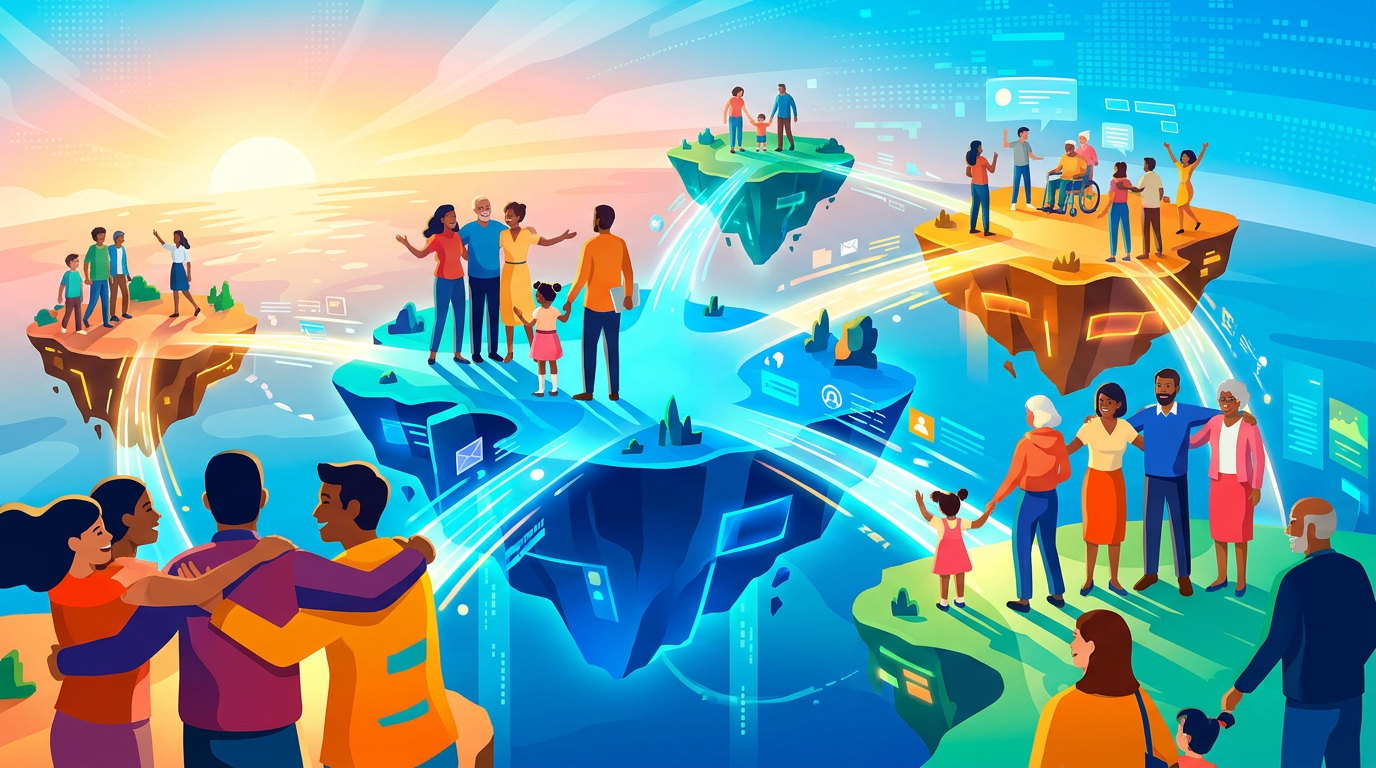
Driven by new interoperability protocols and regulatory pressure, decentralized social media has reached mainstream adoption in 2026. The shift allows users to own their social graphs, choose their algorithms, and seamlessly communicate across different platforms.
By Factlen Editorial Team
- Open-Web Advocates
- Argue that users must own their data and social graphs to prevent corporate manipulation and censorship.
- Commercial Tech Giants
- Embrace open protocols to retain users and comply with regulations, while still seeking to maintain platform dominance.
- Digital Sovereignty Proponents
- View decentralized networks as a strategic necessity to reduce reliance on foreign tech monopolies and ensure local control.
- Web3 & Crypto Pioneers
- See decentralized social media as the next logical step in separating digital identity from centralized application layers.
What's not represented
- · Independent Server Administrators who bear the cost and labor of moderating decentralized communities.
- · Everyday users who find the technical onboarding of decentralized platforms confusing compared to traditional apps.
Why this matters
For the first time in the history of modern social media, users are gaining the ability to own their digital identities and take their followers with them if they leave a platform. This shift dismantles the 'walled garden' model of the internet, giving you the power to choose your own algorithms and escape corporate data lock-in.
Key points
- The 'open social web' allows different social media platforms to communicate with each other, much like email providers.
- Major protocols like ActivityPub and the AT Protocol are driving this shift toward decentralized networks.
- Meta's Threads has integrated with the Fediverse, connecting its 400 million users to the open web.
- Bluesky's architecture introduces algorithmic choice, letting users customize their feeds rather than relying on a central algorithm.
- Users can now own their social graphs, meaning they can migrate between platforms without losing their followers.
- European regulators are championing decentralized networks to promote digital sovereignty and reduce reliance on tech monopolies.
For the last fifteen years, social media has functioned like a series of walled corporate fortresses. Users poured their photos, friendships, and professional networks into platforms owned by a handful of tech giants, only to find themselves locked inside. If a platform changed its algorithm, flooded feeds with advertisements, or altered its moderation policies, users had no recourse. Leaving meant abandoning the digital community they had spent years building.[7]
In 2026, those walls are finally coming down. A fundamental architectural shift is sweeping the internet, transitioning social media from isolated corporate silos to an interconnected ecosystem known as the 'open social web' or the 'Fediverse'. Driven by a combination of user fatigue, regulatory pressure, and technological breakthroughs, decentralized social media has moved from a niche experiment to a mainstream reality.[1][5][7]
The core concept behind this shift is 'interoperability'—the idea that different social networks should be able to talk to each other. To understand how it works, experts often point to the email analogy. A user with a Gmail account can seamlessly send a message to a colleague using Outlook or Yahoo. They do not need to be on the same platform because all email providers use the same underlying communication protocols.[4][6]
The open social web applies this exact principle to social media. Instead of a single company hosting all content on its private servers, independent servers—often called 'instances'—communicate using shared, open-source protocols. A user on one platform can follow, like, and reply to a user on a completely different platform, without ever needing to create a second account.[1][5][6]

Two major protocols are currently driving this revolution. The first and most widely adopted is ActivityPub, a decentralized networking standard recognized by the World Wide Web Consortium. ActivityPub is the engine behind Mastodon, a popular microblogging platform, as well as specialized networks like Pixelfed for images and PeerTube for video.[1][5]
The biggest catalyst for ActivityPub's mainstream explosion has been Meta's Threads. By early 2026, Threads surpassed 400 million users, and crucially, Meta followed through on its promise to integrate the platform with the Fediverse. Users on Threads can now opt-in to share their posts across the open web, allowing someone on a small, independent Mastodon server to follow and interact with a major brand or creator on Threads.[6]

The second major protocol reshaping the landscape is the AT Protocol, developed by Bluesky. Originally incubated within Twitter before spinning out as an independent public benefit corporation, Bluesky has built a 'big world' federation model designed to handle massive global scale while preserving user autonomy.[3]
The second major protocol reshaping the landscape is the AT Protocol, developed by Bluesky.
Bluesky's approach introduces two radical concepts to mainstream users: algorithmic choice and domain-based identity. Instead of being subjected to a single, opaque algorithm designed to maximize engagement, Bluesky users can browse a 'marketplace of algorithms'. If a user wants a chronological feed, a feed dedicated exclusively to sports highlights, or a feed that filters out political arguments, they simply subscribe to it.[3]
Furthermore, the AT Protocol allows users to verify their identity using their own web domains. A journalist can use their publication's URL as their handle, instantly proving their authenticity without relying on a centralized 'blue check' verification system. This self-certifying data structure ensures that users, not platforms, own their digital identities.[3]
The most profound benefit of both ActivityPub and the AT Protocol is account portability. In the traditional social media model, a banned or frustrated user who leaves a platform loses their entire audience. On the open social web, users own their social graph. If a server shuts down or changes its rules, a user can migrate their account to a new server—or start their own—taking their followers and connections with them.[3][5]

This shift is not just technological; it is increasingly political. In Europe, the push for decentralized social media is being framed as a matter of 'digital sovereignty'. Following the implementation of the Digital Markets Act (DMA), European regulators and tech founders are actively funding and building open infrastructure to reduce reliance on foreign tech monopolies.[2][4]
Projects like Eurosky, a non-profit infrastructure layer built on the AT Protocol, are gaining traction by offering European users a platform focused on privacy, human-centric dialogue, and shared moderation tools. As governments around the world weigh restrictions on traditional social media, these open networks provide a resilient, censorship-resistant alternative.[2]
Prominent figures in the tech industry are throwing their weight behind the movement. Ethereum co-founder Vitalik Buterin recently declared 2026 the year of the decentralized social media return, noting that he has transitioned his digital presence to multi-client aggregators that pull from various open protocols. Buterin argues that separating data ownership from the application layer is the only way to escape the 'information warzone' of centralized feeds.[8]

However, the decentralized web is not without its challenges, particularly regarding trust and safety. Because there is no central authority governing the Fediverse, content moderation falls entirely on the operators of individual servers. If a server becomes a haven for harassment or illegal content, it cannot be unilaterally deleted by a corporate overlord.[5][7]
Instead, the open web relies on 'defederation'. If a server acts maliciously, other servers in the network can simply sever ties with it, effectively isolating the bad actors from the rest of the ecosystem. While this community-driven moderation is powerful, it places a heavy burden on volunteer server administrators and requires robust, shared moderation tooling to scale effectively.[2][5]
Despite these hurdles, the momentum behind the open social web is undeniable. The era of the captive audience is ending. By giving users the power to choose their algorithms, own their data, and move freely across the internet, the decentralized web is fulfilling the original, empowering promise of social media—connecting the world on the users' terms.[7]
How we got here
2016
Mastodon launches, popularizing the concept of a federated social network.
2018
The World Wide Web Consortium (W3C) publishes the ActivityPub protocol as a recommended standard.
2023
Bluesky launches its beta, introducing the AT Protocol and domain-based identity.
2024
Meta's Threads begins testing ActivityPub integration, bridging a massive commercial platform to the open web.
2026
Decentralized networks reach mainstream adoption as users seek algorithmic choice and data sovereignty.
Viewpoints in depth
Open-Web Advocates
Argue that users must own their data and social graphs to prevent corporate manipulation.
For open-web advocates, the transition to decentralized protocols is about fundamental digital rights. They argue that the 'walled garden' model of the 2010s allowed corporations to hold users hostage, monetizing their attention while stripping them of agency. By adopting standards like ActivityPub and the AT Protocol, this camp believes the internet is returning to its open, democratic roots. Their primary focus is ensuring that interoperability remains genuine and isn't eventually co-opted by tech giants seeking to build new, slightly larger walled gardens.
Commercial Tech Giants
Embrace open protocols to retain users and comply with regulations, while still seeking to maintain platform dominance.
Major tech corporations, most notably Meta, have recognized that user sentiment is shifting toward data ownership. Rather than fighting the decentralized wave, they are integrating with it. By connecting Threads to the Fediverse, these companies aim to offer the benefits of the open web while keeping users within their polished, ad-supported ecosystems. They argue that their massive scale and engineering resources are necessary to make decentralized social media user-friendly enough for billions of mainstream consumers.
Digital Sovereignty Proponents
View decentralized networks as a strategic necessity to reduce reliance on foreign tech monopolies.
In Europe, the conversation around the open social web is heavily tied to geopolitics and digital sovereignty. Proponents in this camp, including EU regulators and founders of platforms like Eurosky, view reliance on American and Chinese social media giants as a vulnerability. They champion decentralized infrastructure because it allows local communities and nations to host their own data, set their own moderation rules, and foster public discourse without interference from foreign corporate algorithms.
Web3 & Crypto Pioneers
See decentralized social media as the next logical step in separating digital identity from centralized application layers.
Figures in the cryptocurrency and Web3 space view the rise of the Fediverse as validation of their long-held belief in decentralized architecture. Leaders like Vitalik Buterin argue that true digital freedom requires separating the data layer—where your identity and connections live—from the application layer that displays it. This camp is heavily focused on the technical mechanisms of self-certifying data and cryptographic identity, viewing social media as the first major proving ground for technologies that could eventually decentralize finance, governance, and the broader web.
What we don't know
- How effectively decentralized networks will handle coordinated disinformation campaigns or large-scale harassment without a central moderation authority.
- Whether major tech companies will fully commit to open interoperability or attempt to create new, proprietary barriers over time.
- How independent server administrators will fund the rising infrastructure costs as millions of new users join the open web.
Key terms
- ActivityPub
- An open, decentralized social networking protocol recognized by the W3C, used by platforms like Mastodon and Threads.
- AT Protocol
- A federated networking framework developed by Bluesky that emphasizes algorithmic choice and domain-based identity.
- Instance
- An independent server hosting a community within the broader decentralized social network.
- Defederation
- The process where one server blocks communication with another server, typically used as a moderation tool against toxic communities.
- Account Portability
- The ability for a user to move their profile, followers, and data from one platform to another without losing their network.
Frequently asked
What is the Fediverse?
The Fediverse is a collection of independent social media servers that can communicate with each other using shared protocols, much like how different email providers can send messages to one another.
Do I need a new app to use the open social web?
Not necessarily. Major platforms like Threads are integrating these protocols, allowing you to connect with decentralized networks directly from your existing account.
What happens if a decentralized server shuts down?
Because you own your digital identity and social graph, you can migrate your account, followers, and posts to a new server without losing your connections.
How is bad content moderated without a central authority?
Individual server administrators set their own rules. If a server becomes toxic, other servers can 'defederate' or block it, isolating the bad actors from the broader network.
Sources
Source coverage
8 outlets
4 viewpoints surfaced








[1]The HustleOpen-Web Advocates
The fediverse, explained
Read on The Hustle →[2]Tech Funding NewsDigital Sovereignty Proponents
After Trump, Musk, and bans, European founders race to build sovereign social media
Read on Tech Funding News →[3]BlueskyOpen-Web Advocates
The AT Protocol
Read on Bluesky →[4]Open Future FoundationOpen-Web Advocates
A Public, Interoperable Social Media Space
Read on Open Future Foundation →[5]Wikipedia
Fediverse
Read on Wikipedia →[6]MetaCommercial Tech Giants
What is the Fediverse?
Read on Meta →[7]Factlen Editorial Team
Synthesis by Factlen editorial team
Read on Factlen Editorial Team →[8]KuCoinWeb3 & Crypto Pioneers
Vitalik Buterin Predicts Decentralized Social Media Return in 2026
Read on KuCoin →

More in technology
See all 6 stories →Algorithm Fatigue
As 'Algorithm Fatigue' Sets In, Listeners Are Turning Back to Human-Curated Radio
7 sources

Wearable Tech
Why Fitness Trackers and Smartwatches Struggle with Tattooed Skin
7 sources

Robotaxis
Japan's Largest Taxi App IPO Signals a National Pivot to Robotaxis
8 sources

Mars Exploration
NASA Taps Eric Schmidt's Relativity Space for 2028 Mars Weather Mission
6 sources

Every angle. Every day.
Get technology stories with full source coverage and perspective breakdowns delivered to your inbox.