
Beyond Muscle: The Emerging Science of Creatine for Brain Health and Longevity
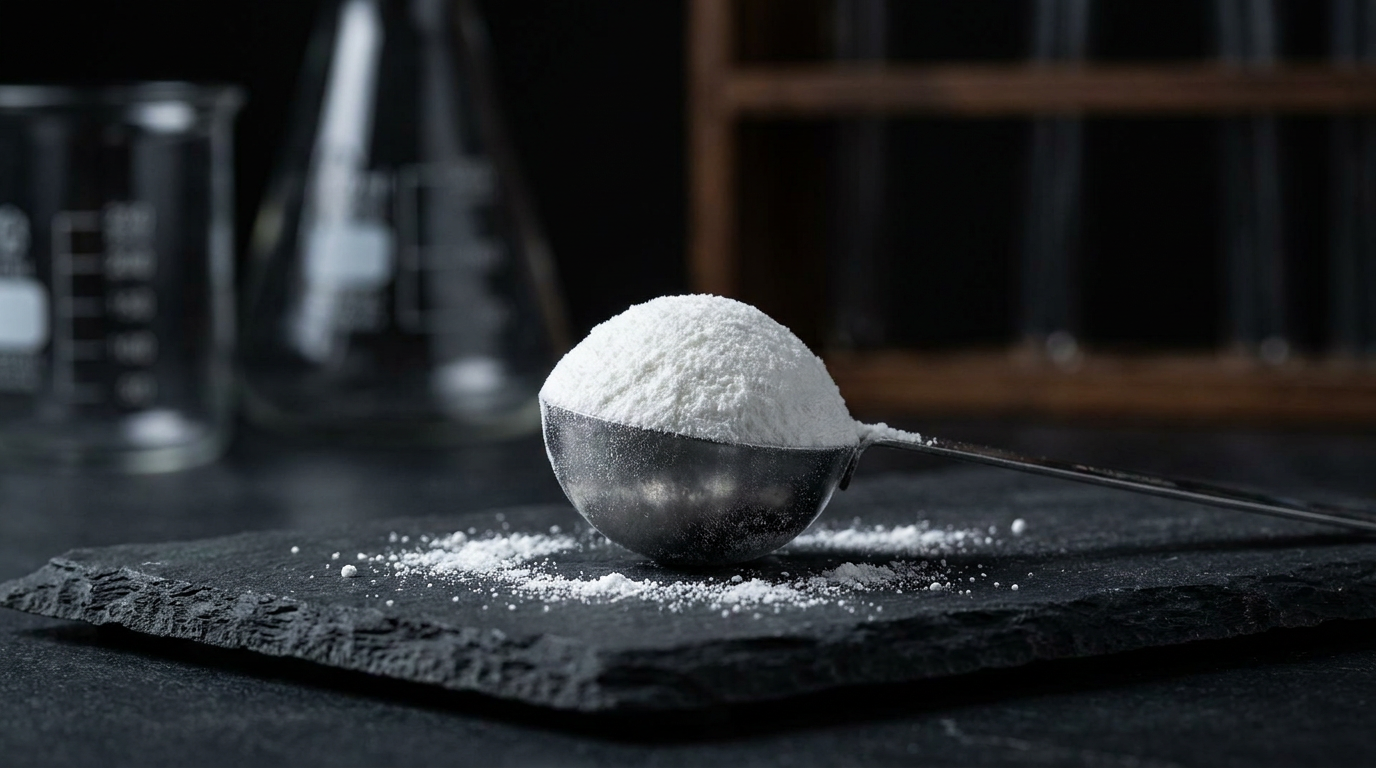
Long dismissed as a niche bodybuilding supplement, creatine monohydrate is now recognized by researchers as a fundamental cellular energy enhancer with profound benefits for cognitive function and healthy aging.
By Factlen Editorial Team
- Sports Scientists & Dietitians
- Focuses on maximizing physical power output, muscular hypertrophy, and athletic recovery through ATP regeneration.
- Cognitive & Longevity Researchers
- Views creatine as a critical tool for preserving brain bioenergetics, memory, and muscle mass in aging populations.
- Clinical Practitioners
- Prioritizes patient safety, proper dosing protocols, and accurate interpretation of kidney function blood tests.
What's not represented
- · Endurance Athletes
Why this matters
Creatine is the most rigorously tested supplement in history, yet remains widely misunderstood. Understanding its role in cellular energy can provide readers with a safe, highly effective, and inexpensive tool to improve their physical strength, protect their cognitive function, and combat age-related decline.
Key points
- Creatine monohydrate is the most researched dietary supplement in history, proven safe and highly effective for healthy individuals.
- It functions by rapidly regenerating ATP, the body's primary cellular energy currency, during moments of high exertion.
- Emerging research demonstrates significant cognitive benefits, including improved memory and processing speed, particularly under stress or sleep deprivation.
- The belief that creatine damages kidneys is a myth stemming from harmless elevations in blood creatinine levels.
- A daily dose of 3 to 5 grams is sufficient to saturate muscle and brain stores, with no loading phase required.
For decades, creatine monohydrate has been culturally confined to the weight room. Sold in massive plastic jugs and marketed with aggressive, hyper-masculine branding, it earned a reputation as a niche supplement strictly for bodybuilders and elite sprinters. But behind the marketing, a quiet revolution has been taking place in clinical research. Today, creatine is widely recognized by the scientific and medical communities not as a muscle-building steroid, but as a fundamental facilitator of cellular energy. As the most rigorously studied dietary supplement in human history, the consensus has definitively shifted: creatine is a critical tool for human optimization, with profound implications that extend far beyond athletic performance into cognitive health, neuroprotection, and healthy aging.[1][7]
To understand why creatine is so effective, one must first understand how the human body generates energy at the cellular level. Every movement, from a heavy deadlift to the blinking of an eye, is powered by a molecule called adenosine triphosphate, or ATP. ATP is the universal energy currency of the human body. When a muscle contracts or a neuron fires, the body "spends" ATP by breaking off one of its three phosphate molecules, releasing a burst of energy. What remains is a depleted byproduct called adenosine diphosphate (ADP), which has only two phosphate molecules and cannot be used for energy until it is recharged.[3][7]
The biological bottleneck is storage. The human body can only store enough ATP to sustain about one to two seconds of maximal exertion. Once that initial reserve is depleted, the body must scramble to manufacture more ATP to keep the muscles working. This is where creatine steps in to rescue the system. Inside the body, creatine binds with a phosphate molecule to become phosphocreatine. Phosphocreatine acts as a rapid-response energy reserve, eagerly donating its phosphate group to the depleted ADP, instantly transforming it back into usable ATP. The more phosphocreatine stored in the cells, the faster the body can recycle its energy currency.[5][7]
In the context of physical performance, this rapid ATP regeneration is exactly what allows an athlete to push out two extra repetitions, sprint at top speed for a few seconds longer, or recover faster between high-intensity intervals. The International Society of Sports Nutrition (ISSN) unequivocally states that creatine monohydrate is the most effective ergogenic nutritional supplement currently available to athletes for increasing high-intensity exercise capacity and lean body mass. By expanding the cellular energy pool, creatine delays the onset of muscular fatigue and allows for a higher volume of work, which in turn drives greater physical adaptation and strength gains over time.[1][3]

But muscles are not the only tissues that demand massive amounts of rapid energy. The human brain, despite accounting for only about 2 percent of total body weight, consumes roughly 20 percent of the body's resting energy. Neurons require a constant, uninterrupted supply of ATP to fire efficiently, process information, and maintain cellular health. Recognizing this, researchers have increasingly turned their attention to the cognitive impacts of creatine supplementation, investigating whether expanding the brain's phosphocreatine pool could yield the same performance enhancements seen in skeletal muscle.[4][5]
The findings have been highly encouraging. Recent systematic reviews published in 2025 and 2026 have demonstrated that creatine supplementation can significantly improve cognitive function, particularly in the domains of short-term memory, attention, and information processing speed. These cognitive benefits become especially pronounced when the brain's bioenergetic system is placed under acute stress. In clinical trials involving sleep deprivation, mental fatigue, or complex executive functioning tasks, participants who supplemented with creatine maintained significantly higher cognitive baselines than those given a placebo, effectively buffering the brain against energetic exhaustion.[4][5]
These cognitive benefits become especially pronounced when the brain's bioenergetic system is placed under acute stress.
The cognitive and physical benefits of creatine are highly dependent on an individual's baseline levels. Because creatine is naturally found in animal products—primarily red meat and seafood—individuals who follow vegetarian or vegan diets typically have significantly lower intramuscular and cerebral creatine stores. Consequently, plant-based eaters often experience the most dramatic improvements in both physical power output and cognitive processing speed when they begin supplementing. For these populations, creatine is increasingly viewed not just as a performance enhancer, but as a necessary dietary bridge to achieve optimal cellular energy metabolism.[2][7]
Beyond young athletes and plant-based eaters, the medical community is increasingly recommending creatine for older adults. Aging is accompanied by two insidious processes: sarcopenia (the age-related loss of muscle mass and strength) and cognitive decline. Both conditions are linked to deteriorating cellular energy production. Clinical data shows that when older adults combine creatine supplementation with resistance training, they experience significantly greater improvements in muscle strength, bone density, and functional independence compared to exercise alone. Furthermore, the neuroprotective properties of elevated brain creatine are currently being studied as a potential intervention to slow the progression of neurodegenerative diseases.[2][4]
Despite its proven safety and efficacy, a persistent myth continues to surround creatine: the belief that it damages the kidneys. This misconception stems from a fundamental misunderstanding of standard blood tests. When the body uses creatine for energy, it produces a harmless waste byproduct called creatinine, which is filtered out by the kidneys and excreted in urine. Because doctors routinely measure blood creatinine levels as a proxy for kidney function—assuming that high creatinine means the kidneys are failing to filter waste—a perfectly healthy person taking a creatine supplement will often trigger a false alarm on their lab results.[6][7]

Medical institutions, including the Mayo Clinic and UCLA Health, have clarified this distinction. The elevated creatinine caused by supplementation is simply a reflection of increased creatine intake and muscle turnover, not a sign of renal damage. Long-term studies tracking athletes who have consumed creatine daily for up to five years have found absolutely no detrimental effects on kidney function, liver health, or overall physiology in healthy individuals. However, practitioners do advise that individuals with pre-existing kidney disease or those taking medications that impair renal function should consult a nephrologist before beginning supplementation, as their kidneys may struggle to clear the increased metabolic load.[2][6]
Another common hesitation, particularly among endurance athletes and weight-class competitors, is the fear of unwanted weight gain and bloating. It is true that starting creatine often results in a rapid weight increase of two to four pounds, but this is not an accumulation of body fat. Creatine is an osmotically active substance, meaning it draws water into the muscle cells alongside it. This intracellular hydration actually creates a highly anabolic environment that promotes muscle protein synthesis and protects against cellular damage. It makes the muscles look fuller and perform better, rather than causing the subcutaneous water retention associated with a high-sodium diet.[3][6]
For those looking to integrate creatine into their routine, the dosing protocol is remarkably straightforward. The traditional approach involves a "loading phase" of 20 grams per day—divided into four 5-gram doses—for five to seven days, which rapidly saturates the muscles' phosphocreatine stores. This is followed by a "maintenance phase" of 3 to 5 grams per day indefinitely. However, sports dietitians note that the loading phase is entirely optional. Simply taking 3 to 5 grams daily will achieve the exact same muscular saturation over a period of three to four weeks, often with a lower risk of the mild gastrointestinal discomfort that some experience during heavy loading.[1][6]

When selecting a supplement, the scientific consensus is unanimous: creatine monohydrate is the only form worth purchasing. The supplement industry frequently attempts to market "advanced" variations—such as creatine ethyl ester, creatine hydrochloride, or liquid serums—claiming superior absorption or reduced bloating. However, decades of clinical trials confirm that standard creatine monohydrate is nearly 100 percent bioavailable, making it impossible to significantly improve upon its absorption rate. The alternative forms are not only more expensive, but many have been shown to be less stable and less effective at elevating intramuscular creatine levels.[1][7]
Ultimately, the story of creatine is a testament to the slow but steady triumph of rigorous science over cultural stigma. It is not a hormone, a stimulant, or a shortcut. It is a naturally occurring amino acid derivative that safely and effectively solves a fundamental biological problem: the rapid depletion of cellular energy. Whether the goal is to sprint faster, recover from a traumatic brain injury, maintain independence in old age, or simply stay sharp during a sleep-deprived workday, creatine monohydrate stands alone as the most reliable, cost-effective, and evidence-backed tool available for human optimization.[5][7]
How we got here
1832
French scientist Michel Eugène Chevreul first discovers and extracts creatine from skeletal muscle.
1992
Creatine gains global attention after several British track and field athletes use it to win gold medals at the Barcelona Olympics.
2007
The International Society of Sports Nutrition publishes its first official position stand declaring creatine safe and highly effective.
2020s
Clinical research focus heavily shifts from athletic performance to neuroprotection, cognitive enhancement, and longevity.
Viewpoints in depth
Sports Scientists & Dietitians
Focuses on maximizing physical power output, muscular hypertrophy, and athletic recovery through ATP regeneration.
This camp views creatine primarily as a mechanical enhancer. By expanding the phosphocreatine pool, athletes can sustain maximal effort for longer durations. Dietitians emphasize that while diet provides some creatine, supplementation is the only practical way to fully saturate muscle stores to achieve these ergogenic benefits.
Cognitive & Longevity Researchers
Views creatine as a critical tool for preserving brain bioenergetics, memory, and muscle mass in aging populations.
Researchers in this field treat creatine as a neuroprotective agent. Because the brain consumes massive amounts of ATP, ensuring a steady energy supply can buffer against cognitive fatigue, sleep deprivation, and potentially slow the progression of neurodegenerative diseases and age-related sarcopenia.
Clinical Practitioners
Prioritizes patient safety, proper dosing protocols, and accurate interpretation of kidney function blood tests.
Medical professionals prioritize safety and accurate diagnostics. Their primary concern with creatine is ensuring patients understand that while the supplement safely elevates blood creatinine, this should not be misdiagnosed as renal failure. They advocate for baseline testing in patients with pre-existing kidney conditions before starting supplementation.
What we don't know
- The exact mechanism by which creatine crosses the blood-brain barrier remains partially understood, making it difficult to determine the optimal dose specifically for cognitive enhancement.
- Long-term data (beyond five years of continuous clinical observation) on high-dose creatine supplementation in elderly populations is still being gathered.
- Whether alternative delivery methods or co-ingestion with specific compounds can significantly increase brain creatine uptake faster than standard monohydrate.
Key terms
- Adenosine Triphosphate (ATP)
- The primary molecule that stores and transfers energy within cells for all biological processes.
- Phosphocreatine
- A stored form of creatine in the body that rapidly donates a phosphate group to regenerate ATP during intense exertion.
- Sarcopenia
- The age-related, involuntary loss of skeletal muscle mass and strength.
- Creatinine
- A harmless chemical waste product generated by muscle metabolism and creatine use, filtered by the kidneys.
Frequently asked
Does creatine cause hair loss?
Current scientific evidence does not support the claim that creatine causes hair loss. The myth originated from a single 2009 study on DHT levels that has not been replicated in subsequent research.
Do I need to cycle off creatine?
No. Long-term studies show that continuous daily use of creatine for up to five years is safe and does not downregulate the body's natural production.
Is creatine safe for teenagers?
The International Society of Sports Nutrition states that creatine is safe and acceptable for younger athletes provided they are supervised and following recommended dosing guidelines.
Should I take creatine before or after a workout?
Timing matters very little. The benefits of creatine come from chronic cellular saturation, not acute timing, so it can be taken at any time of day.
Sources
Source coverage
7 outlets
3 viewpoints surfaced







[1]International Society of Sports NutritionSports Scientists & Dietitians
International Society of Sports Nutrition position stand: safety and efficacy of creatine supplementation
Read on International Society of Sports Nutrition →[2]Mayo ClinicClinical Practitioners
Creatine: Safety, side effects, and benefits
Read on Mayo Clinic →[3]Cleveland ClinicSports Scientists & Dietitians
What Does Creatine Do? Benefits and Side Effects
Read on Cleveland Clinic →[4]National Institutes of HealthCognitive & Longevity Researchers
Creatine and Cognition in Aging: A Systematic Review of Evidence
Read on National Institutes of Health →[5]MDPI NutrientsCognitive & Longevity Researchers
Creatine Supplementation and Brain Health
Read on MDPI Nutrients →[6]UCLA HealthClinical Practitioners
Creatine: Benefits, myths and safe dosing
Read on UCLA Health →[7]Factlen Editorial Team
Synthesis by Factlen editorial team
Read on Factlen Editorial Team →


Every angle. Every day.
Get fitness stories with full source coverage and perspective breakdowns delivered to your inbox.