
Global Swimming Injury Update: Major Stars Cleared for Summer 2026 Competitions
Key international swimmers, including Tom Dean and Luca Urlando, have successfully navigated injury rehabilitations to secure their spots in the upcoming Glasgow Commonwealth Games and Paris European Championships.

The summer of 2026 is shaping up to be a monumental season for global swimming, with the Commonwealth Games in Glasgow and the European Aquatics Championships in Paris on the horizon. For several top-tier athletes, the road to these premier events has been paved with intensive, behind-the-scenes rehabilitation. Rather than succumbing to the physical toll of a grueling Olympic cycle, a wave of international stars has successfully navigated the recovery process, ensuring that the sport's biggest names will be on the blocks when the medals are on the line.
In April, three-time Olympic champion Tom Dean sent ripples through the British swimming community when he withdrew from the Aquatics GB Swimming Championships in London. Citing a persistent shoulder injury, the 26-year-old opted to skip the crucial Stratford meet, which served as a primary selection event for the summer. Dean and his coaching staff at the University of Stirling made the calculated decision to prioritize long-term rehabilitation over immediate domestic racing, focusing entirely on being healthy for the international stage.[1]
That calculated medical gamble paid off. In mid-May, Swim England announced its 42-strong roster for the Glasgow Commonwealth Games, and Dean's name was prominently featured. National selectors utilized their discretionary powers to include the freestyle specialist, recognizing his proven pedigree and trusting his recovery timeline. Dean is now slated to compete in July, seeking to upgrade the trio of silver medals he earned at the 2022 Games in Birmingham.[1][2]
Across the Atlantic, American butterfly specialist Luca Urlando faced a similar predicament earlier in the spring. A minor, undisclosed injury forced the University of Georgia standout to withdraw from the NCAA Division I Men's Swimming and Diving Championships in March. The late scratch left significant points on the table for his collegiate team, but Urlando emphasized that the timing necessitated a cautious approach to avoid aggravating the issue.
Urlando's recovery proved swift and effective. By late May, he was fully cleared and back in the water at the TYR Pro Swim Series in Sacramento. Entering four events—including the 50-meter, 100-meter, and 200-meter butterfly—Urlando reclaimed his status as a top seed, demonstrating that his brief hiatus successfully preserved his form for the long-course summer season.[3]
While Dean and Urlando navigated short-term setbacks, English medley specialist Max Litchfield is completing a comeback more than a decade in the making. Litchfield made his senior international debut at the 2014 Glasgow Games, but his subsequent Commonwealth aspirations were repeatedly derailed. He was forced to withdraw from the 2018 Gold Coast edition entirely due to a severe shoulder injury, and missed the 2022 home Games in Birmingham due to personal struggles.[4]
Now 31, Litchfield has been fully medically cleared and officially named to the Team England squad. Returning to the very city where his international career began twelve years ago, he enters the 400-meter individual medley as a heavy favorite. His return is being celebrated not just as a competitive boost for the English roster, but as a testament to career longevity and resilience in a notoriously demanding sport.[4]
These high-profile returns highlight a persistent challenge in competitive aquatics. "Swimmer's shoulder"—a clinical catch-all term that primarily encompasses subacromial impingement and rotator cuff tendinopathy—is the most common ailment in the sport. Medical data indicates that the condition affects between 40 and 90 percent of competitive swimmers at some point in their careers, driven by the immense repetitive load of overhead arm movements.
Historically, such injuries often derailed entire seasons or forced early retirements. Today, sports medicine professionals are shifting away from prescribing complete rest, which can lead to rapid deconditioning. Instead, modern aquatic rehabilitation focuses on relative deloading, biomechanical stroke correction, and highly structured dryland strength training to stabilize the scapula and rotator cuff.
The global governing body is actively working to institutionalize these modern recovery protocols across all levels of the sport. In May 2026, World Aquatics launched its Masters Education Programme, kicking off with a dedicated clinical webinar on prehabilitation and shoulder health. The initiative aims to equip athletes and coaches worldwide with the tools to manage training loads and prevent the exact types of injuries that briefly sidelined stars like Dean and Litchfield.[5]
As the focus shifts toward the European Aquatics Championships in Paris this August, the integration of advanced physiotherapy is proving critical. The iconic Greater Paris Metropolitan Area Olympic Aquatics Centre will host 74 medal events across five disciplines, demanding peak physical condition from every entrant. With the continent's elite descending on the French capital, the ability to manage the physical toll of the sport has never been more valuable.[6]
Ultimately, the 2026 summer season will be defined as much by what happens in the medical room as in the pool. With international standouts successfully navigating their rehabilitations and returning to top form, the sport's premier events are guaranteed to feature the world-class talent and record-breaking speed that fans expect.
The essentials
- British Olympic champion Tom Dean has been named to the Swim England Commonwealth Games squad after missing national trials for shoulder rehabilitation.
- American butterfly specialist Luca Urlando successfully returned to competition in May after an injury forced him out of the NCAA Championships.
- English medley swimmer Max Litchfield is fully cleared for Glasgow 2026, marking his return to the Commonwealth Games after a 12-year gap.
- Sports medicine professionals are increasingly utilizing load management and dryland prehabilitation rather than complete rest to treat swimmer's shoulder.
- The successful returns ensure highly competitive fields for the upcoming European Aquatics Championships in Paris and the Commonwealth Games in Glasgow.
Timeline
March 2026
Luca Urlando withdraws from the NCAA Championships due to a minor injury.
April 2026
Tom Dean withdraws from the Aquatics GB Swimming Championships to prioritize shoulder rehabilitation.
May 2026
Urlando returns to competition at the TYR Pro Swim Series in Sacramento.
May 2026
Swim England names Dean and a fully cleared Max Litchfield to the Glasgow 2026 Commonwealth Games roster.
July 2026
The Commonwealth Games swimming events begin in Glasgow.
August 2026
The European Aquatics Championships commence in Paris.
- Rehabilitating Athletes
- Focusing on the physical and mental relief of returning to the pool and trusting the recovery process.
- National Selectors
- Prioritizing long-term athlete health and major international readiness over domestic trial meets.
- Sports Medicine Professionals
- Emphasizing load management, dryland prehabilitation, and biomechanical corrections to prevent re-injury.
Perspectives this story doesn't cover
- Collegiate coaches managing the immediate fallout of late-season injury scratches.
- Younger athletes who missed national selection because discretionary spots were given to recovering veterans.
Sources
Source coverage
6 outlets
3 viewpoints surfaced





- [1]SwimSwamNational Selectors
British Olympian Tom Dean Withdraws From 2026 National Championships Due to Injury
Read on SwimSwam → - [2]SwimSwamNational Selectors
Swim England Reveals 42-Strong Roster For 2026 Commonwealth Games
Read on SwimSwam → - [3]Olympics.comRehabilitating Athletes
Swimming: Five-time Olympic champion Ryan Murphy set for return in Sacramento, his first event since Paris 2024
Read on Olympics.com → - [4]Team EnglandRehabilitating Athletes
Max Litchfield relishing return to Commonwealth Games 12 years after debut
Read on Team England → - [5]World AquaticsSports Medicine Professionals
World Aquatics opens 2026 Masters Education Programme with free shoulder health webinar
Read on World Aquatics → - [6]European AquaticsSports Medicine Professionals
Media accreditation is now open for European Aquatics Championships Paris 2026
Read on European Aquatics →
More in Sports
See all →Recap
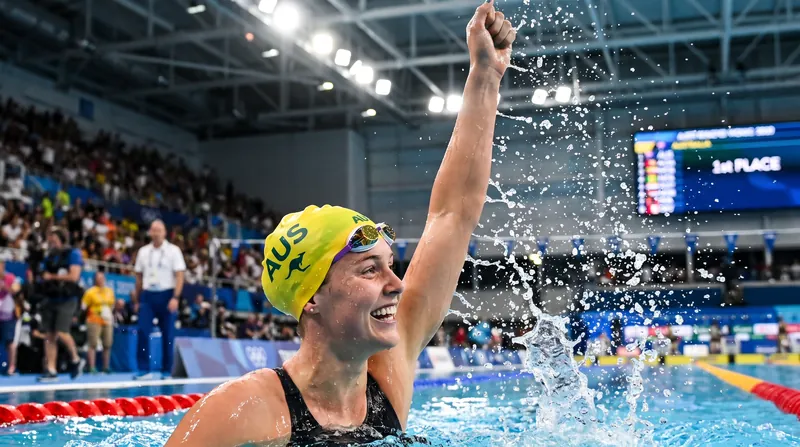
Ludovica Terlizzi and Mate Karpati Capture 10km Titles at Junior Open Water World Championships
7 sources
Power ranking
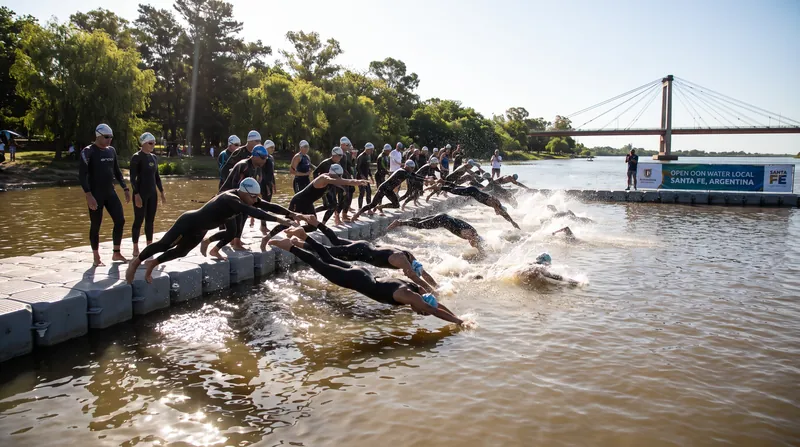
Global Women's Backstroke Power Rankings: Berkoff and Smith Set the Standard as Short Course Season Looms
5 sources
Power ranking
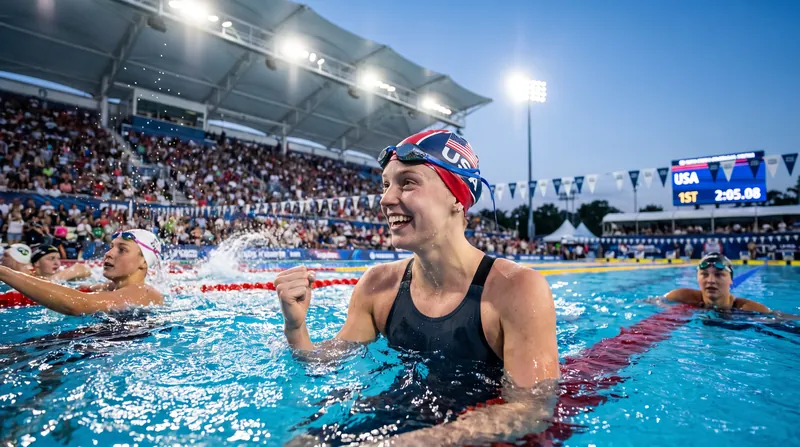
Global Men's Sprint Freestyle Power Rankings: Alexy and Jack Ignite a New US-Australia Rivalry
3 sources
Standings
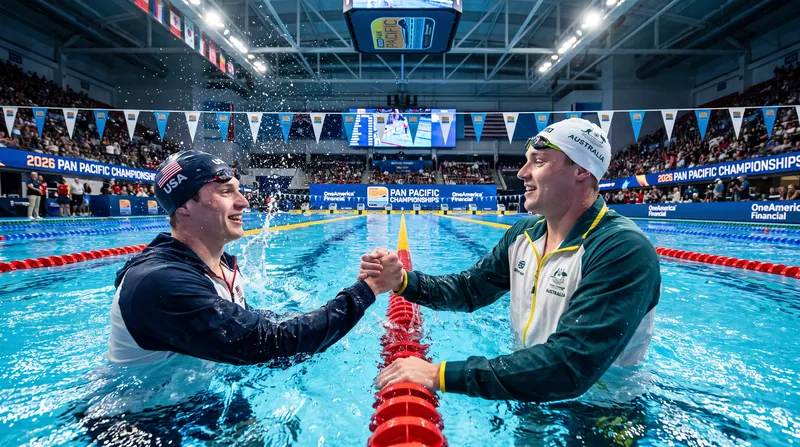
Global Distance Freestyle Standings Upended: Liebmann Demolishes 1500m World Record as Short Dominates Pan Pacs
5 sources
Comments
Every angle. Every day.
Get Sports stories with full source coverage and perspective breakdowns, free every day.