
US House Passes Landmark Bill Imposing Strict Timelines and Binding Arbitration on First Union Contracts
The Faster Labor Contracts Act passed the House in a bipartisan 230-193 vote, establishing a 120-day timeline for newly certified unions and employers to reach an agreement before a government arbitrator imposes one.
By Factlen Editorial Team
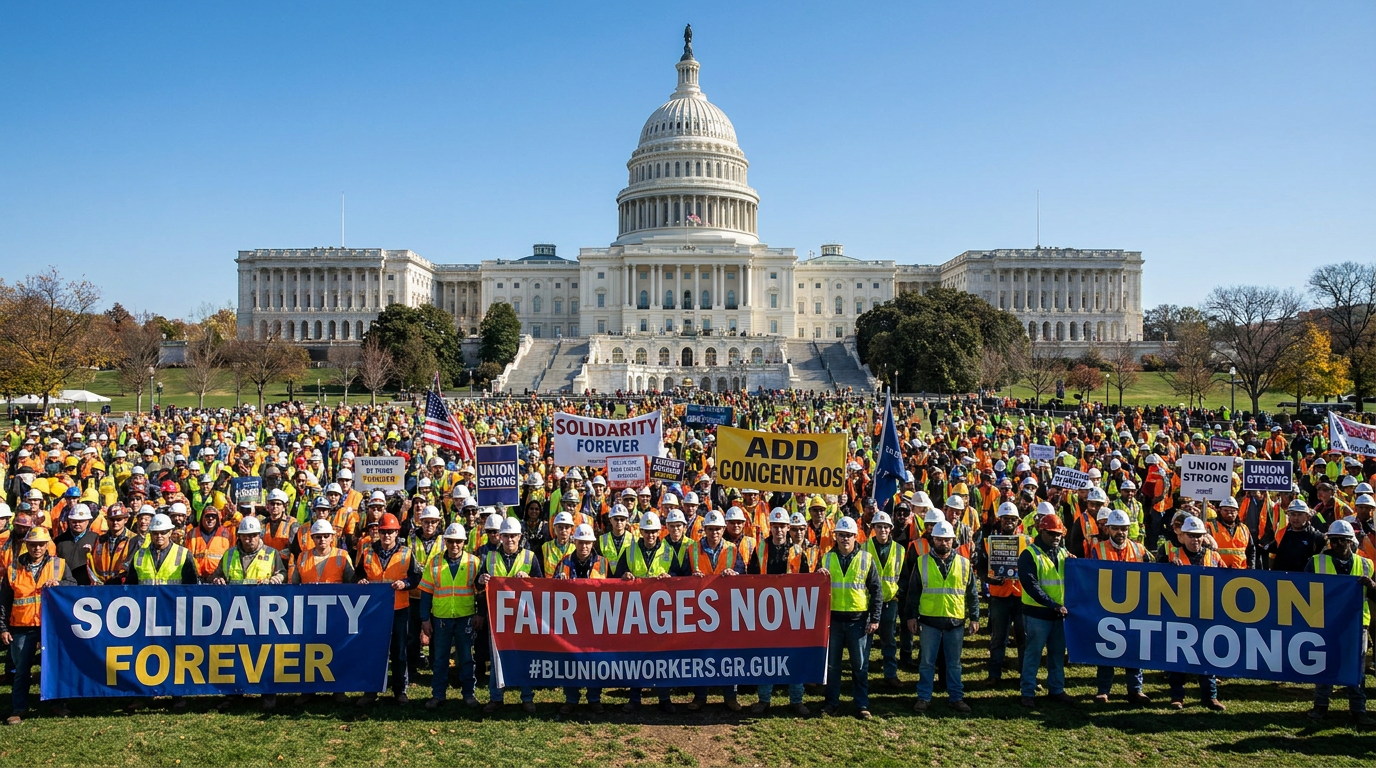
- Labor Advocates
- Argue the bill is necessary to stop corporations from stalling negotiations and denying workers the benefits of unionization.
- Corporate Employers
- Warn that the bill forces complex negotiations into an unrealistic timeline and strips employers of their right to reject unacceptable terms.
- Logistics & Freight Operators
- Express alarm that third-party arbitrators with no industry experience could dictate operational costs and logistics terms.
What's not represented
- · Non-unionized workers who might be affected by industry-wide shifts in labor costs.
- · The Federal Mediation and Conciliation Service (FMCS) on their capacity to handle a sudden surge in mandatory mediations.
Why this matters
This legislation would eliminate one of the biggest hurdles to unionization: the years-long wait for a first contract. If enacted, workers who vote to unionize are guaranteed a contract within roughly four months, dramatically changing the calculus for both labor organizers and corporate employers.
Key points
- The US House passed the Faster Labor Contracts Act in a 230-193 vote, with 20 Republicans joining Democrats.
- The bill imposes a strict 120-day timeline for employers and newly certified unions to reach a first contract.
- If mediation fails after 120 days, a government-appointed arbitration panel will dictate a binding two-year agreement.
- Labor advocates say the bill stops corporate stalling, while business groups warn it strips their negotiating leverage.
The U.S. House of Representatives has passed the Faster Labor Contracts Act (H.R. 5408), a landmark piece of legislation that would fundamentally rewrite the rules of collective bargaining in the private sector. In a 230-193 vote on June 9, twenty Republicans crossed the aisle to join all voting Democrats, defying House leadership to advance the measure.[1][2]
The bill addresses one of the most persistent bottlenecks in American labor relations: the grueling timeline of first-contract negotiations. Under current federal labor law, employers and newly certified unions are required to bargain in good faith, but there is no legal deadline to reach an agreement.[4][7]
As a result, first-contract negotiations often drag on for years. Recent data indicates that it takes an average of 458 to 465 days for a newly formed union to secure an initial deal. Labor advocates argue this delay is a deliberate corporate strategy designed to drain union momentum and deny workers the benefits they voted for.[4][5]
The Faster Labor Contracts Act replaces this open-ended system with a strict, federally mandated timeline that removes an employer's ability to stall. Under the proposed framework, employers must commence bargaining within 10 days of receiving a written request from a newly certified union.[4][6]

From that first meeting, the clock begins ticking on a 90-day negotiation period. Both parties are legally required to make every reasonable effort to reach an agreement during this window. If no deal is struck by the end of those three months, either party can trigger mandatory mediation through the Federal Mediation and Conciliation Service (FMCS).[1][4]
From that first meeting, the clock begins ticking on a 90-day negotiation period.
The mediation phase lasts for a maximum of 30 days unless both parties agree to an extension. If the FMCS cannot facilitate a breakthrough, the legislation introduces its most controversial provision: binding interest arbitration.[1][4]
By day 120, the dispute is referred to a three-person arbitration panel. This panel is authorized to impose a binding, two-year collective bargaining agreement, unilaterally dictating wages, benefits, and working conditions for the newly unionized workforce.[1][3][4]

Labor leaders have hailed the bill's passage as a massive structural victory. The International Brotherhood of Teamsters, which heavily lobbied for the legislation, argued that workers should not have to wait years for a contract while companies exploit legal loopholes. AFL-CIO officials called the bipartisan vote proof that the country is hungry for pro-worker labor law reform.[2][5]
Conversely, business groups and corporate law firms are sounding the alarm over the loss of negotiating power. Legal analysts note that the bill strips employers of their traditional leverage—specifically, the right to refuse contract terms they find unacceptable. Under current law, an employer is never forced to sign a contract they oppose; this bill would remove that shield.[3][7]
In specialized sectors like freight and logistics, the prospect of binding arbitration is particularly concerning. Industry voices warn that government-appointed arbitrators, who may have no experience managing supply chains, pricing freight lanes, or calculating per-mile costs, would be empowered to write contracts that govern complex, margin-thin operations.[1]

The bill's path to the House floor was highly unusual, utilizing a rare procedural maneuver. Supporters gathered 218 signatures on a discharge petition, bypassing committee chairs, regular order, and stakeholder input to force a direct floor vote. The 20 Republican votes largely came from representatives in swing districts, reflecting a shifting political calculus around labor issues ahead of the midterm elections.[1][2][3]
The legislation now moves to the Senate, where a companion measure has already been introduced. While it faces a steep climb to secure the 60 votes needed to overcome a filibuster, its passage in the House marks a significant escalation in the push to strengthen collective bargaining rights in the United States.[1][3][7]
How we got here
May 20, 2026
Supporters secure 218 signatures on a discharge petition, bypassing committee chairs to force a floor vote.
June 9, 2026
The House passes the Faster Labor Contracts Act by a bipartisan vote of 230-193.
June 12, 2026
Labor groups and business associations begin aggressive lobbying campaigns as the bill moves to the Senate.
Viewpoints in depth
Labor Advocates
Argue the bill is necessary to stop corporations from stalling negotiations and denying workers the benefits of unionization.
Union leaders view the Faster Labor Contracts Act as a necessary corrective to a broken system. They argue that under current law, companies routinely use bad-faith delay tactics to drain union momentum, knowing that high turnover and prolonged uncertainty will eventually break the organizing effort. By imposing a strict 120-day clock, labor advocates believe the bill forces employers to take negotiations seriously and guarantees that workers who vote to unionize actually receive the contractual protections they won.
Corporate Employers
Warn that the bill forces complex negotiations into an unrealistic timeline and strips employers of their right to reject unacceptable terms.
Business groups and management-side labor attorneys argue that first-contract negotiations are inherently complex and cannot be rushed. They point out that initial agreements set the baseline for all future contracts, requiring careful deliberation over intricate operational details. Employers are particularly opposed to the binding arbitration provision, warning that it fundamentally violates the premise of free-market bargaining by allowing a government-appointed panel to dictate wages, benefits, and work rules against a company's will.
Logistics & Freight Operators
Express alarm that third-party arbitrators with no industry experience could dictate operational costs and logistics terms.
In margin-thin, highly specialized industries like trucking and logistics, the prospect of binding arbitration is viewed as an existential threat. Operators argue that a government arbitrator with no experience in dispatching trucks, managing terminals, or pricing freight lanes could impose terms that make a business uncompetitive. They fear that a mandated two-year contract written by an outside panel could ignore the operational realities of supply chains, ultimately harming both the company and its workforce.
What we don't know
- Whether the Senate will take up the companion measure or if it will fail to overcome a 60-vote filibuster.
- How the Federal Mediation and Conciliation Service would handle the sudden influx of mandatory mediations if the bill becomes law.
Key terms
- National Labor Relations Act (NLRA)
- The foundational 1935 US labor law that guarantees private-sector employees the right to unionize and engage in collective bargaining.
- Discharge Petition
- A parliamentary procedure in the US House of Representatives that allows a majority of members to bring a bill to the floor for a vote, bypassing the committee that has jurisdiction over it.
- Binding Interest Arbitration
- A process where an impartial third party hears arguments from both labor and management and then dictates the final terms of a collective bargaining agreement, which both sides are legally required to accept.
- Federal Mediation and Conciliation Service (FMCS)
- An independent US government agency that provides mediation services to help resolve labor disputes and prevent work stoppages.
- First Contract
- The initial collective bargaining agreement negotiated between an employer and a newly certified union, which establishes the baseline for all future labor relations at the company.
Frequently asked
What does the Faster Labor Contracts Act do?
The bill imposes a strict 120-day timeline for newly unionized workers and their employers to negotiate a first contract. If they cannot reach an agreement, a government-appointed arbitration panel will dictate the terms.
Why did the bill pass the Republican-controlled House?
The bill passed after supporters used a discharge petition to force a floor vote. Twenty Republicans, mostly from swing districts or the Northeast, crossed the aisle to vote with Democrats in favor of the measure.
Will the bill become law?
The bill faces a difficult path in the Senate, where it would likely need 60 votes to overcome a filibuster. Its ultimate enactment remains uncertain.
Sources
Source coverage
8 outlets
3 viewpoints surfaced








[1]FreightWavesLogistics & Freight Operators
House passes Faster Labor Contracts Act
Read on FreightWaves →[2]People's WorldLabor Advocates
Defying GOP leadership, House passes Faster Labor Contracts Act
Read on People's World →[3]Fox RothschildCorporate Employers
House Passes the Faster Labor Contracts Act: What Employers Need to Know
Read on Fox Rothschild →[4]FranczekCorporate Employers
Congress Advances “Faster Labor Contracts Act,” Imposing Strict Timelines and Binding Arbitration for First Union Agreements
Read on Franczek →[5]International Brotherhood of TeamstersLabor Advocates
Take Action – Faster Labor Contracts Act
Read on International Brotherhood of Teamsters →[6]Jackson LewisCorporate Employers
Top Five Labor Law Developments for May 2026
Read on Jackson Lewis →[7]Center for Workplace ComplianceCorporate Employers
House Passes Faster Labor Contracts Act
Read on Center for Workplace Compliance →[8]OnLaborLabor Advocates
Daily News & Commentary: June 12, 2026
Read on OnLabor →

More in news politics
See all 5 stories →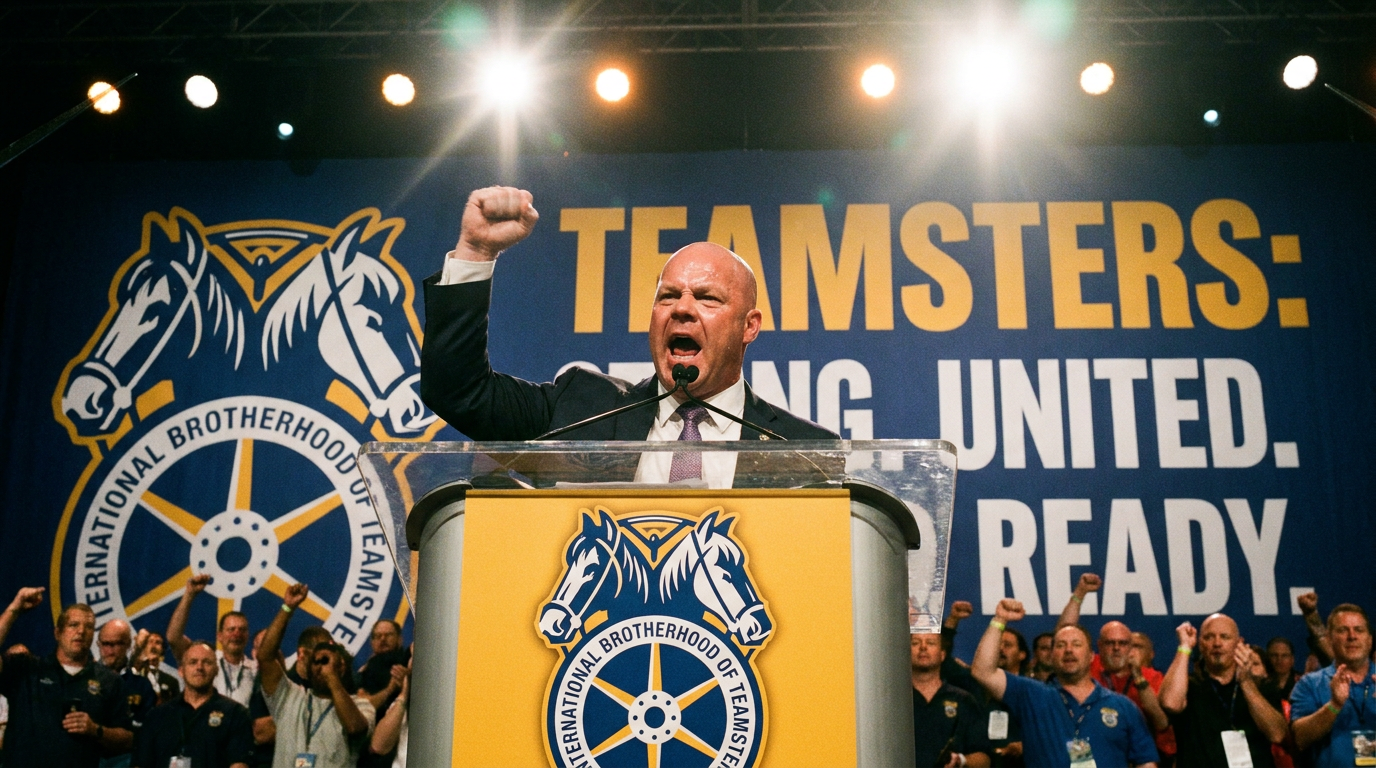


Every angle. Every day.
Get news politics stories with full source coverage and perspective breakdowns delivered to your inbox.