
The 2026 Solid-State Battery Push: How the Next Generation of EVs Actually Works
Solid-state batteries are moving from the lab to pilot production, promising electric vehicles with 600-mile ranges, 10-minute charge times, and virtually no fire risk.
By Factlen Editorial Team
- Automakers & Optimists
- Pilot production in 2027 will quickly validate the technology and unlock unprecedented EV performance.
- Battery Pragmatists
- High costs and scaling challenges mean mass adoption is unlikely before the 2030s.
- Materials Scientists
- The true bottleneck lies in perfecting solid-solid interfaces and managing cell pressure.
What's not represented
- · Raw Material Suppliers
- · Grid Storage Operators
Why this matters
If successful, solid-state batteries will eliminate the two biggest hurdles to global electric vehicle adoption: range anxiety and fire risk. This technology will fundamentally reshape the automotive industry, the power grid, and consumer electronics over the next decade.
Key points
- Solid-state batteries replace flammable liquid electrolytes with solid materials like ceramics or polymers.
- The solid architecture allows for pure lithium metal anodes, vastly increasing energy density.
- Automakers are targeting 620-mile ranges and 10-minute fast charging for next-generation EVs.
- Major pilot plants are breaking ground in 2026, with premium commercial vehicles expected by 2028.
- High manufacturing costs and the physics of solid-solid interfaces remain the primary hurdles to mass adoption.
The lithium-ion battery has powered the modern world, from the smartphone in your pocket to the electric vehicle in your driveway. But after three decades of incremental improvements, the technology is approaching its physical and chemical limits. To push past the boundaries of range anxiety, charging times, and fire risks, the energy sector is turning to a fundamental redesign: the solid-state battery.[6]
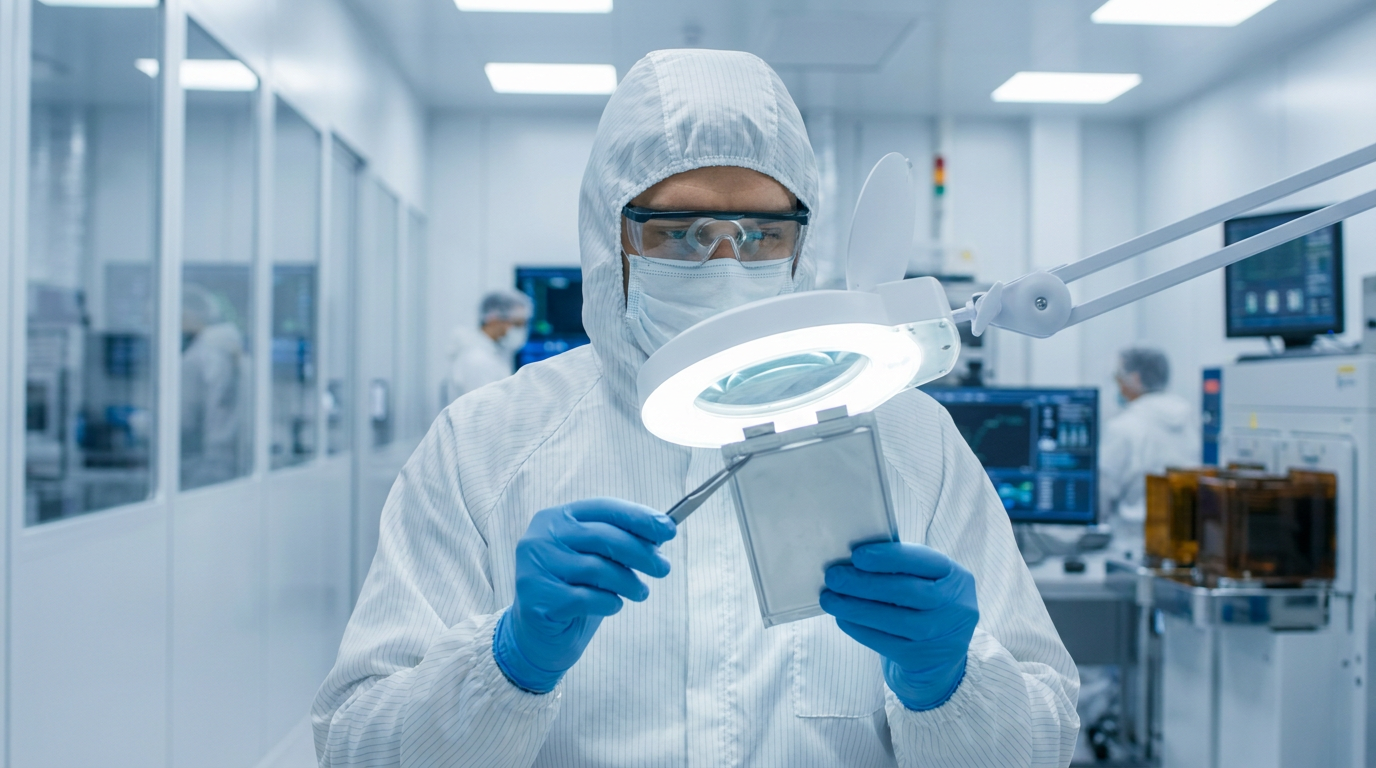
For years, solid-state technology has been dismissed as a perpetual lab experiment that was always "five years away." However, 2026 marks a definitive turning point. Major automakers and battery giants are breaking ground on pilot manufacturing plants, transitioning the technology from pristine research environments to commercial assembly lines. The race to commercialize what could be the biggest leap in energy storage since the 1990s is officially underway.[1][5]
To understand why solid-state batteries are so revolutionary, it helps to look at how current batteries work. Every battery consists of three primary components: a negative electrode (the anode), a positive electrode (the cathode), and an electrolyte sitting between them. When a device draws power, lithium ions travel from the anode to the cathode through the electrolyte, while electrons take an external route to power the device.[6][7]
In conventional lithium-ion batteries, that electrolyte is a liquid solvent. While effective at shuttling ions, this liquid is the root of the battery's greatest vulnerabilities. It is highly flammable, prone to degrading at high temperatures, and requires heavy, bulky physical separators to keep the anode and cathode from touching and causing a short circuit.[6][7]

Solid-state batteries change the equation with a single, profound swap: they replace the liquid electrolyte with a solid material, typically a ceramic, glass, or specialized sulfide polymer. This eliminates the flammable liquid entirely, fundamentally altering the battery's safety profile and performance ceiling.[7]
The immediate benefit of this solid architecture is a dramatic reduction in fire risk. In traditional lithium-ion cells, thermal runaway—a cascading fire event—can begin at temperatures as low as 90 degrees Celsius. In solid-state systems, comparative testing shows thermal events do not begin until around 247 degrees Celsius, and any heat release develops far more slowly with less intensity.[7]
But safety is only half the story; the true prize is energy density. Because the solid electrolyte is physically robust, it suppresses the growth of dendrites—microscopic metallic whiskers that cause short circuits. This unlocks the ability to use a pure lithium metal anode instead of the standard graphite used today. Lithium metal holds approximately ten times the capacity of graphite, massively increasing the amount of energy the battery can store per kilogram.[6][7]
But safety is only half the story; the true prize is energy density.
Today's best lithium-ion batteries deliver an energy density of roughly 200 to 260 watt-hours per kilogram (Wh/kg). Solid-state batteries are targeting commercial densities of 400 to 500 Wh/kg. In practical terms, this could allow automakers to pack 50 to 80 percent more energy into the exact same physical space, or build a significantly lighter vehicle that maintains the same range.[7]

For the consumer, this translates to electric vehicles capable of traveling up to 1,000 kilometers (about 620 miles) on a single charge. Furthermore, solid electrolytes handle the heat and stress of rapid charging far better than liquids. Automakers are targeting 10-to-80 percent charge times of roughly 10 minutes, bringing the EV charging experience remarkably close to a traditional gas station visit.[4]
The timeline for this rollout is accelerating rapidly. Toyota, working in partnership with Japanese oil refiner Idemitsu Kosan, has already begun constructing a large-scale pilot plant to produce solid electrolytes. The automaker aims to launch its first electric vehicles equipped with solid-state batteries in the 2027 to 2028 timeframe, likely debuting in premium Lexus models where higher initial costs can be absorbed.[1][4]
Meanwhile, China has formed the China All-Solid-State Battery Collaborative Innovation Platform (CASIP), a consortium of major battery and automotive manufacturers aiming to establish a complete solid-state supply chain by 2030. The global consensus among industry roadmaps points to small-batch production by 2027, followed by mass-market scaling at the turn of the decade.[3]

Despite the momentum, significant engineering and economic hurdles remain. CATL, the world's largest battery manufacturer, has cautioned that while the core scientific challenges have largely been resolved, manufacturing complexities persist. Currently, sulfide-based solid-state cells are estimated to be three to five times more expensive to produce than conventional lithium-ion cells.[3]
The most stubborn technical challenge lies in the physics of solid-solid interfaces. In a traditional battery, the liquid electrolyte flows into every microscopic pore of the electrodes, ensuring perfect electrical contact. In a solid-state battery, pressing two solid materials together often leaves microscopic voids or "dead space," which increases electrical resistance and limits performance.[6]
To maintain intimate contact as the battery expands and contracts during charging, many solid-state designs require high mechanical pressure to be applied to the cells. Engineering battery packs that can maintain this pressure uniformly without adding excessive weight or cost is a primary focus for manufacturing teams today.[6]

Because of these challenges, the industry is relying on bridge technologies for the immediate future. Automakers are heavily investing in silicon anodes, which blend silicon into traditional graphite to boost capacity. Similarly, "semi-solid" or condensed batteries, which use a hybrid of solid and reduced-liquid electrolytes, are already entering the market as a stepping stone.[2]
The transition to solid-state energy storage will not be an overnight flip, but rather a phased evolution. As pilot plants come online and manufacturing techniques mature, the technology will trickle down from premium electric vehicles to mass-market cars, and eventually to consumer electronics and grid storage. When it does, the humble battery may finally cease to be the bottleneck of the modern electric age.[2][3]
How we got here
2020
Toyota demonstrates an early solid-state prototype vehicle, though cycle life and costs prevent commercialization.
Jan 2024
Major Chinese battery and auto manufacturers form the CASIP consortium to build a solid-state supply chain.
Early 2026
Automakers and partners, including Toyota and Idemitsu, break ground on large-scale solid electrolyte pilot plants.
2027–2028
The first commercial electric vehicles equipped with solid-state batteries are expected to hit the premium market.
2030
Industry consensus target for mass-market commercialization and scaled supply chains.
Viewpoints in depth
Automakers & Optimists
Pilot production in 2027 will quickly validate the technology and unlock unprecedented EV performance.
Companies like Toyota and their manufacturing partners view solid-state technology as the ultimate competitive moat. By breaking ground on pilot plants now, they argue that the remaining manufacturing hurdles are purely engineering problems, not scientific unknowns. They project that once the first premium vehicles demonstrate 1,000-kilometer ranges and 10-minute charge times, consumer demand will force a rapid, industry-wide retooling, making liquid-based batteries obsolete in high-end transport.
Battery Pragmatists
High costs and scaling challenges mean mass adoption is unlikely before the 2030s.
Incumbent battery giants like CATL caution against overhyping near-term timelines. While acknowledging that the core chemistry works, they point out that sulfide-based solid cells currently cost three to five times more to produce than traditional lithium-ion cells. This camp argues that the 2020s will actually be dominated by incremental bridge technologies—such as silicon anodes and semi-solid condensed batteries—while true all-solid-state systems remain confined to niche luxury vehicles until at least 2030.
Materials Scientists
The true bottleneck lies in perfecting solid-solid interfaces and managing cell pressure.
For researchers and materials engineers, the solid-state race is fundamentally a battle against microscopic voids. Because solid electrolytes do not flow into the pores of electrodes like liquids do, maintaining intimate electrical contact is incredibly difficult. This camp emphasizes that until the industry can reliably manufacture cells that don't require heavy, expensive mechanical pressure systems to keep the layers touching as they expand and contract, the technology cannot scale to mass-market volumes.
What we don't know
- Whether the industry can engineer cost-effective battery packs that maintain the high mechanical pressure required by solid cells.
- Exactly how quickly manufacturing costs will fall to reach parity with traditional lithium-ion batteries.
- Which specific solid electrolyte material—sulfides, oxides, or polymers—will ultimately dominate the market.
Key terms
- Anode
- The negative electrode of a battery, which releases electrons during discharge.
- Cathode
- The positive electrode of a battery, which absorbs electrons during discharge.
- Electrolyte
- The medium that allows charged ions to travel between the anode and cathode.
- Dendrites
- Microscopic, needle-like metallic structures that can grow inside a battery and cause short circuits.
- Energy Density
- The amount of energy a battery can store relative to its weight, typically measured in watt-hours per kilogram (Wh/kg).
- Thermal Runaway
- A dangerous chain reaction where a battery overheats uncontrollably, often leading to a fire.
Frequently asked
Will solid-state batteries make electric vehicles cheaper?
Not initially. Early solid-state cells are estimated to cost three to five times more than current batteries, meaning they will debut in premium vehicles before scaling brings prices down.
Can I upgrade my current EV with a solid-state battery?
No. Solid-state batteries require entirely different thermal management, pressure systems, and software, meaning they must be integrated into new vehicle architectures.
Are solid-state batteries completely fireproof?
While not entirely fireproof, they are vastly safer. They eliminate flammable liquid solvents, pushing the temperature threshold for thermal events from 90°C up to nearly 250°C.
Sources
Source coverage
7 outlets
3 viewpoints surfaced







[1]ElectrekAutomakers & Optimists
Toyota partner breaks ground on solid electrolyes plant for all-solid-state EV batteries
Read on Electrek →[2]InsideEVsBattery Pragmatists
Silicon Anodes And The Bridge To Solid-State
Read on InsideEVs →[3]ElectriveBattery Pragmatists
CATL tempers near-term expectations for solid-state Batteries
Read on Electrive →[4]CarScoopsAutomakers & Optimists
Toyota's 620-Mile Solid-State EV Plan Just Got A Major Boost
Read on CarScoops →[5]Green Car ReportsAutomakers & Optimists
Toyota EV plans: Tenfold boost by 2026, solid-state batteries
Read on Green Car Reports →[6]Battery Tech OnlineMaterials Scientists
Why solid-state interfaces change everything
Read on Battery Tech Online →[7]To7MotorMaterials Scientists
Solid-State Batteries 2026: The Complete Guide
Read on To7Motor →

Every angle. Every day.
Get meta stories with full source coverage and perspective breakdowns delivered to your inbox.