
The Engineering Behind Snowboarding's Quick-Entry Revolution
Modern step-in binding systems have solved a decades-old engineering puzzle, eliminating the need to sit and strap in while making the sport vastly more accessible.
By Factlen Editorial Team
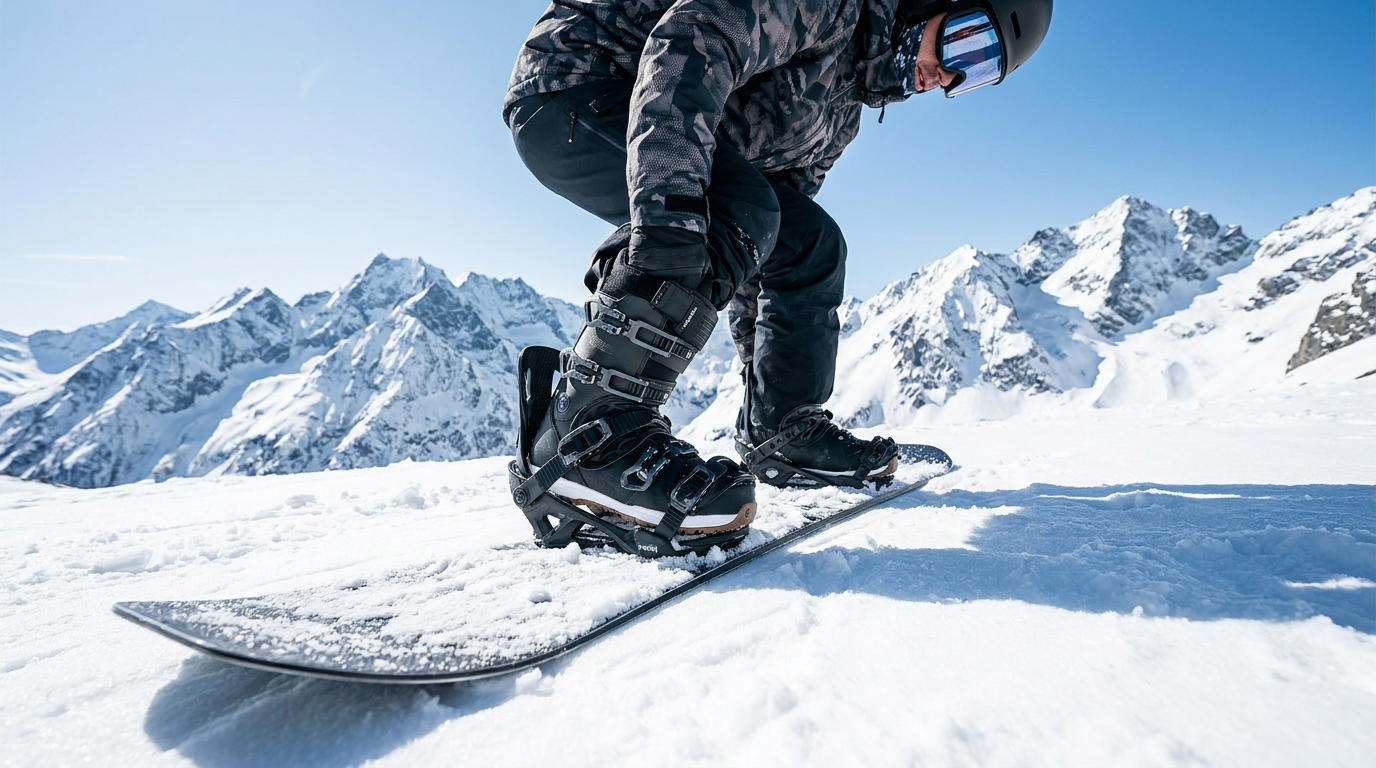
- Accessibility Advocates
- Riders who view quick-entry systems as a vital tool for extending their time in the sport.
- Performance Freeriders
- Riders who prioritize the instant edge-to-edge response and locked-in feel provided by direct cleat-to-baseplate connections.
- Universal Gear Adopters
- Snowboarders who prefer drop-down highback systems because they allow the use of any boot brand and retain the feel of traditional straps.
- Traditional Purists
- Freestyle riders and traditionalists who prefer the infinite adjustability, lateral flex, and proven simplicity of standard ratcheting straps.
What's not represented
- · Snowboard Instructors
- · Rental Shop Operators
Why this matters
By eliminating the physical strain of bending over to ratchet straps, new binding technologies are extending the riding years of older snowboarders and opening the mountain to adaptive athletes.
Key points
- Quick-entry bindings eliminate the need to sit down and ratchet straps, significantly reducing physical strain.
- The Burton Step On system uses a proprietary three-point cleat design for instant edge-to-edge response.
- The Nidecker Supermatic offers a universal drop-down highback that works with any standard snowboard boot.
- These technologies are keeping older riders in the sport longer and improving accessibility for adaptive athletes.
For decades, the defining image of a snowboarder has involved sitting in the snow at the top of a chairlift, leaning forward, and cranking down plastic ratchets. While traditional strap bindings offer excellent performance and reliability, the repetitive motion of bending over to strap in and out takes a cumulative physical toll over a full day of riding. For older riders, or those dealing with back and hip injuries, this constant flexion can turn a joyful day on the mountain into an exhausting chore that limits their time on the snow.[1]
The snowboard industry recognized this friction early on, but initial attempts to solve it fell flat. In the late 1990s and early 2000s, various brands introduced "step-in" bindings that relied on heavy metal plates under the foot. These early iterations were notoriously clunky, prone to packing with ice, and completely eliminated the lateral flex that gives snowboarding its surf-like feel. It took nearly two decades of material science and engineering advancements to finally crack the code, resulting in a modern renaissance of quick-entry systems that are fundamentally changing who can participate in the sport.[1][4]
The breakthrough that legitimized the modern quick-entry category came from Burton's highly engineered 'Step On' system. Instead of relying on traditional straps draped across the top of the foot, the technology utilizes three physical connection points to secure the rider to the board. Two small, durable cleats are positioned on either side of the boot's toe box, while a third, larger cleat sits directly at the heel. These cleats lock directly into corresponding hooks on the binding's baseplate, completely eliminating the need for any over-the-foot hardware or ratcheting mechanisms.[4]
Engaging the Step On system is designed to be an entirely hands-free experience. A rider simply aligns their foot over the baseplate and steps down with their weight. The heel clip snaps into place first, followed immediately by the toe cleats, creating an incredibly secure, three-point connection accompanied by an audible click. Exiting the binding is just as efficient; the rider reaches down to pull a small quick-release lever located on the side of the heel cup, which disengages the rear locking mechanism and allows the foot to simply twist out.[4][6]

The immediate and most profound benefit of this technology is accessibility. By removing the need to sit down and bend over, quick-entry systems are extending the riding careers of older snowboarders who might otherwise age out of the sport due to joint pain. Furthermore, the hands-free entry has proven to be a game-changer for adaptive athletes and riders with limited mobility, allowing them to navigate the mountain with a newfound level of independence and energy conservation.[2][7]
However, the Burton Step On system comes with a significant structural catch: it requires proprietary boots. Because the locking cleats are built directly into the exterior of the boot itself, riders must purchase a compatible model—currently manufactured primarily by Burton and DC. If a rider has a unique foot shape that doesn't comfortably fit into one of these specific boot lasts, the entire Step On ecosystem becomes unusable for them, regardless of how well the binding mechanism performs.[5][7]
Recognizing this limitation in the market, rival manufacturer Nidecker took a completely different engineering approach to solve the exact same problem. In 2022, they introduced the Supermatic, which was billed as the snowboard industry's first universal automatic binding with dual entry. Unlike the proprietary Step On system, the Supermatic does not require specialized footwear; it is explicitly designed to work seamlessly with any standard snowboard boot from any brand currently available on the market. This opened the door for riders who refuse to compromise on their preferred boot fit.[5]
Recognizing this limitation in the market, rival manufacturer Nidecker took a completely different engineering approach to solve the exact same problem.
The Supermatic achieves this universal compatibility through a "Drop-Down" highback mechanism combined with a frictionless baseplate called the Slip-N-Grip. To strap in, a rider slides their boot into the binding from the rear. As the boot slides forward, the heel presses down on a specialized roller trigger in the baseplate. This downward pressure automatically snaps the highback up into a vertical position, locking it in place and securing traditional ankle and toe straps tightly over the boot.[3][5]

This universal design makes the Supermatic highly appealing to riders who already own perfectly molded boots, or those who require specific orthotic fits that only certain boot brands can provide. Because the system still utilizes physical straps over the foot, it also retains the familiar, cushioned feel of a traditional binding, allowing riders to micro-adjust the strap tension to their exact preference before locking the highback into place.[3][5]
The primary trade-off for this universal compatibility is an increase in both weight and mechanical complexity. Because the Supermatic houses an automatic trigger mechanism, a reclining highback, and internal locking levers, it is noticeably heavier than both traditional strap bindings and the minimalist Burton Step On design. While the extra weight is rarely noticed while actively riding downhill, it does add a slight physical penalty when maneuvering the board on chairlifts, skating across flat cat-tracks, or hiking in the backcountry for fresh powder.[3]
On the snow, the performance of these modern quick-entry systems has consistently surprised skeptics. Traditionalists long assumed that removing straps or adding drop-down mechanisms would result in a loose, unresponsive ride. In reality, the opposite is true, particularly for the Step On system, which delivers a highly locked-in feel that rivals the stiffest traditional freeride bindings.[2][6]

Because the Step On boot is locked directly to the baseplate via the rigid cleats, the edge-to-edge response is nearly instantaneous. There is no strap stretch or foam compression to absorb the rider's physical input. Reviewers frequently note that the energy transfer is so direct it feels closer to a hard-boot carving setup, offering maximum control and allowing riders to lay down deep trenches on groomed runs with minimal forward lean.[2][6]
This hyper-responsiveness, however, isn't ideal for every style of riding. Dedicated park riders who rely on lateral flex to tweak grabs in the air or press the board on metal rails often find the Step On system too rigid. For aggressive freestyle snowboarding, traditional straps still offer a level of micro-adjustability and forgiving "give" that mechanical cleats simply cannot replicate.[6][7]
Initial safety concerns regarding unwanted releases have also been largely debunked by rigorous laboratory and on-snow testing. Pull-comparison tests have repeatedly demonstrated that traditional binding baseplates will often fail and rip out of the snowboard before the Step On clips release under extreme force. The locking lugs are engineered to withstand up to 500,000 entry and exit cycles, ensuring that the mechanism can take an absolute beating in harsh winter environments without ever compromising the rider's security. Unintentional un-clipping is virtually non-existent when the system is properly engaged.[6]

Ultimately, the quick-entry revolution is no longer viewed as a passing gimmick. By removing the physical barriers and frustrations of strapping in, these engineering feats are keeping more people on the mountain for longer durations. Whether a rider chooses the proprietary precision of the Step On or the universal convenience of the Supermatic, the result is a more accessible, energy-efficient future for snowboarding.[1][2]
How we got here
1990s
Early step-in binding systems fail to gain traction due to snow packing issues and a lack of lateral flex.
2017
Burton launches the Step On system, revolutionizing the modern quick-entry market with a secure three-point cleat design.
2022
Nidecker introduces the Supermatic, the industry's first universal automatic binding compatible with any standard boot.
2026
Quick-entry systems capture a massive share of the resort market, driven by older riders and accessibility demands.
Viewpoints in depth
Accessibility Advocates
Riders who view quick-entry systems as a vital tool for extending their time in the sport.
For aging snowboarders, adaptive athletes, and those with chronic back or hip pain, the repetitive motion of bending over to ratchet straps is often the most exhausting part of the day. This camp views quick-entry bindings not just as a convenience, but as a necessary evolution that keeps them on the mountain. By eliminating the physical toll of strapping in, these riders can conserve their energy for actual snowboarding, effectively extending their riding careers by years.
Traditional Purists
Riders who prefer the proven mechanics and adjustability of standard strap bindings.
Despite the technological advancements, many dedicated freestyle and park riders remain loyal to traditional ratcheting straps. This camp argues that mechanical cleats and drop-down highbacks introduce unnecessary rigidity and weight. They value the ability to micro-adjust strap tension on the fly, allowing for the lateral flex needed to tweak grabs and press on rails. For these purists, the proven simplicity and forgiving 'give' of a traditional binding still outweigh the benefits of a faster entry.
Universal Gear Adopters
Riders who embrace quick-entry convenience but refuse to be locked into a proprietary boot ecosystem.
This perspective champions systems like the Nidecker Supermatic, which offer the speed of an automatic binding without dictating boot choice. Because boot fit is the most critical factor in snowboard comfort, these riders prioritize the ability to use their preferred brand, custom orthotics, or perfectly broken-in boots. They are willing to accept a slightly heavier binding mechanism in exchange for universal compatibility and the familiar, cushioned feel of over-the-foot straps.
What we don't know
- How the complex internal mechanisms of universal drop-down bindings will hold up to a decade of heavy use.
- Whether the industry will eventually adopt an open-source standard for boot cleats, allowing all brands to manufacture compatible boots.
Key terms
- Baseplate
- The bottom frame of the snowboard binding that mounts directly to the board and houses the primary locking mechanisms.
- Highback
- The vertical plate behind the lower calf that transfers a rider's energy to the heel edge of the snowboard.
- Cleat
- The small, durable locking lugs built into the side of a proprietary boot that secure it to the binding.
- Drop-Down Mechanism
- A binding design where the highback reclines backward, allowing the rider to slide their boot in from the rear.
Frequently asked
Do quick-entry bindings release if you crash?
No. Unlike alpine ski bindings, snowboard bindings are not designed to release during a fall. Modern quick-entry clips are tested to withstand extreme force without disengaging.
Can I use any boot with Burton Step Ons?
No. The Step On system requires specific boots with built-in locking cleats, currently manufactured primarily by Burton and DC.
Do these bindings get clogged with snow?
While deep powder can occasionally require a quick wipe of the baseplate, modern systems are engineered to push snow out of the way as the boot locks in.
Sources
Source coverage
7 outlets
4 viewpoints surfaced







[1]Factlen Editorial TeamAccessibility Advocates
Synthesis by Factlen editorial team
Read on Factlen Editorial Team →[2]Transfer MagazineAccessibility Advocates
Gear Review | Burton Step On's – Yay or Nay?
Read on Transfer Magazine →[3]The Good RideUniversal Gear Adopters
Nidecker Supermatic Full Review
Read on The Good Ride →[4]Rhythm SnowsportsTraditional Purists
Everything you need to know about Burton Step On boots and bindings
Read on Rhythm Snowsports →[5]AlpinStoreUniversal Gear Adopters
The Supermatic from Nidecker vs Burton Step On
Read on AlpinStore →[6]Onyx SnowboardingPerformance Freeriders
Burton Step On Review & Mythbusting
Read on Onyx Snowboarding →[7]Mountain Weekly NewsPerformance Freeriders
Burton Photon Step On Boots Review
Read on Mountain Weekly News →

More in sports
See all 10 stories →Standings
Race to the Winter Gardens: The 2026 World Matchplay Qualification Picture
6 sources
Wearable Tech
The "E-Bike for Skiing": How Wearable Exoskeletons Are Extending Careers on the Slopes
7 sources
Injury
Global Triathlon Injury Report: McCullough's Triumphant Return and Wilde's Precautionary Pause
6 sources
Standings
Vilaca and Potter Hold Narrow Leads in WTCS Standings as Triathlon Season Heats Up
6 sources
Every angle. Every day.
Get sports stories with full source coverage and perspective breakdowns delivered to your inbox.