
E-Bike Motors Compared: Hub vs. Mid-Drive Systems
Choosing the right e-bike comes down to how the motor delivers power. We compare the affordability of hub motors against the natural feel and efficiency of mid-drive systems to help you find the perfect ride.
By Factlen Editorial Team
- Urban Commuters & Budget Riders
- Prioritize reliability, lower upfront costs, and the ability to use a throttle to avoid sweating on the way to work.
- Enthusiasts & Mountain Bikers
- Value the natural ride feel, balanced weight distribution, and high-torque hill climbing capabilities of mid-drive systems.
- E-Bike Mechanics
- Focus on long-term repairability, noting that hub motors save the drivetrain while mid-drives require frequent chain and cassette replacements.
What's not represented
- · Traditional acoustic cyclists who view e-bikes as a disruption to trail networks
- · City planners designing infrastructure for heavier, faster electric bicycles
Why this matters
An e-bike is a major investment, often replacing a car for daily commutes or opening up new avenues for fitness. Understanding the fundamental difference between motor types ensures you buy a bike that matches your local terrain, maintenance comfort level, and budget.
Key points
- Hub motors are located in the wheel, operating independently of the bike's gears.
- Mid-drive motors are located at the pedals, utilizing the bike's gears for maximum efficiency.
- Hub motors are generally more affordable and require less drivetrain maintenance.
- Mid-drives offer superior hill-climbing ability, natural ride feel, and better weight distribution.
- Mid-drive systems cause faster wear and tear on the bicycle's chain and cassette.
- The choice depends heavily on local terrain, budget, and whether the rider prefers a throttle.
The electric bicycle revolution has permanently altered urban commuting and recreational cycling, offering a sweat-free alternative to traditional pedaling and a zero-emissions alternative to driving. As battery technology has improved and prices have stabilized, millions of consumers are entering the market for the first time. Yet, beneath the sleek frames and digital displays lies a fundamental engineering divide that shapes every aspect of the riding experience.[1][6]
At the heart of this transformation is a critical choice that dictates how an e-bike feels, performs, and costs: the placement of the electric motor. While battery capacity determines how far you can go, the motor architecture determines how you get there, influencing everything from hill-climbing ability to flat-tire repairs.[2][6]
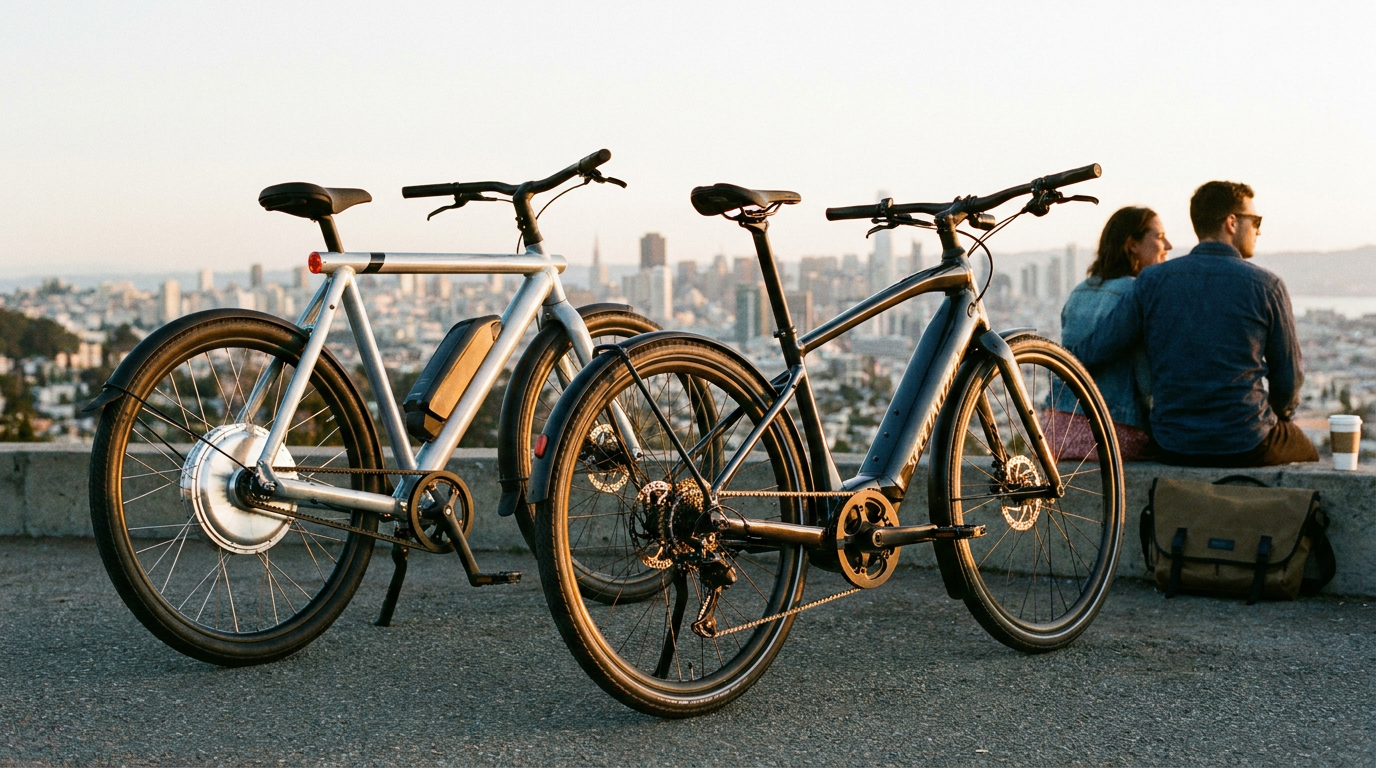
For prospective buyers, the market is broadly divided into two dominant architectures. Hub-drive motors sit inside the center of the front or rear wheel, directly spinning the axle. Mid-drive motors, conversely, are integrated directly into the bike's bottom bracket between the pedals, transferring power through the bike's chain and gears.[3][4]
Understanding the mechanics of a hub motor is the first step in navigating this choice. Hub motors operate entirely independently of the bicycle's standard drivetrain. When the motor engages, it simply turns the wheel it is mounted in, pushing or pulling the bike forward regardless of what gear the rider has selected.[1][3]

Because they bypass the chain and cogs, hub motors offer a distinct advantage in simplicity and resilience. If a rider snaps a chain on a hub-driven e-bike, the motor can still propel the bike forward using a throttle, ensuring you are never stranded on the side of the road with a broken drivetrain.[2][3]
This independence also translates to significantly lower manufacturing and maintenance costs. Hub motors are largely sealed, self-contained units that require little to no routine servicing. They do not add extra stress to the bicycle's chain, meaning standard components last just as long as they would on a non-electric bike.[1][2]
However, this design introduces specific compromises, most notably in weight distribution. Placing a heavy, five-to-ten-pound motor in the rear wheel shifts the bike's center of gravity backward. At high speeds or on loose terrain, this rear-heavy bias can make the front end feel light, twitchy, or less planted.[3][4]
Furthermore, fixing a flat tire on a hub-driven wheel can be a frustrating ordeal for the uninitiated. The wheel is tethered to the bike's electrical system by a heavy-gauge cable that must be carefully disconnected, and the axle is often secured with heavy bolts rather than a simple quick-release lever.[1][3]
In stark contrast, mid-drive motors represent a more integrated, albeit complex, approach to electric propulsion. By positioning the motor at the cranks, mid-drives leverage the bicycle's existing gears, effectively giving the motor a transmission to work with.[4][5]
In stark contrast, mid-drive motors represent a more integrated, albeit complex, approach to electric propulsion.
This mechanical synergy allows mid-drive motors to operate at their optimal RPM range regardless of the bike's speed. Just as a driver shifts a car into first gear to climb a steep hill, a cyclist on a mid-drive e-bike can shift into a low gear, allowing the motor to spin rapidly and efficiently even while the bike moves slowly.[2][5]
The result is a dramatic increase in efficiency and hill-climbing capability. A 250-watt mid-drive motor can often outperform a 500-watt hub motor on steep inclines simply because it can utilize the mechanical advantage of the bike's cassette, preventing the motor from bogging down and overheating.[1][4]

Beyond raw performance, mid-drives are celebrated for their highly natural ride feel. Most utilize sophisticated torque sensors that measure exactly how hard the rider is pushing on the pedals a thousand times per second, delivering electrical assistance that scales proportionally and instantly with human effort.[3][5]
This central placement also optimizes the bike's handling dynamics. Keeping the heaviest component low and perfectly centered maintains the traditional balance of a bicycle. This predictable weight distribution is precisely why mid-drives are the undisputed, mandatory standard for electric mountain bikes navigating technical trails.[4][6]
Yet, the mid-drive architecture is not without its drawbacks, chief among them being accelerated drivetrain wear. Because the motor's substantial torque is channeled directly through the chain and rear cogs, these metal components degrade much faster than they would under human power alone.[1][2]
Riders must be proactive about maintenance, regularly cleaning and lubricating the chain, and replacing cassettes more frequently. A neglected drivetrain on a mid-drive e-bike will quickly lead to skipping gears and a degraded riding experience.[2][3]
Shifting gears under heavy load also requires a slight learning curve. While modern mid-drives feature shift-detection technology that momentarily cuts power to prevent the chain from snapping, riders still need to anticipate hills and shift into the correct gear before the incline begins.[4][5]

Cost remains the most significant barrier to entry for mid-drive systems. The motors themselves are mechanically complex and expensive to manufacture, and they require specially designed, proprietary frames to house them, pushing the entry price of mid-drive bikes significantly higher than their hub-driven counterparts.[1][6]
When comparing the two, the decision ultimately hinges on the rider's primary use case, local geography, and budget. Hub motors excel in flat to moderately hilly urban environments where cost-effectiveness, throttle availability, and low maintenance are paramount.[2][3]
They are the ideal choice for commuters who want a reliable vehicle for getting to work without breaking a sweat, or for casual weekend riders who stick to paved paths and prioritize a lower upfront purchase price.[1][4]
Conversely, mid-drive systems are the superior choice for riders tackling steep terrain, hauling heavy cargo, or seeking an authentic, sport-oriented cycling experience that seamlessly amplifies their own physical input rather than simply pulling them along.[4][5]

How we got here
Early 2000s
Heavy, direct-drive hub motors dominate the early consumer e-bike market, primarily using lead-acid batteries.
2010
Bosch introduces its first mid-drive e-bike system, shifting the European market toward integrated, gear-leveraging motors.
2015
Geared hub motors become smaller and lighter, making affordable, stealthy urban e-bikes widely accessible.
2020
The pandemic-era cycling boom sees massive adoption of both motor types, with direct-to-consumer brands popularizing hub drives in North America.
2026
Mid-drive systems become increasingly compact and smart, featuring automatic electronic shifting integration.
Viewpoints in depth
The Value-Conscious Commuter's View
Hub motors provide the most practical and cost-effective solution for daily transportation.
For riders using an e-bike primarily as a car replacement for city commuting, the hub motor represents unmatched value. Advocates point out that flat urban grids do not require the mechanical advantage of a mid-drive. Furthermore, the ability to rely on a throttle if a chain breaks or if the rider is too tired to pedal is a massive safety net. From a total-cost-of-ownership perspective, the lower initial purchase price combined with minimal drivetrain wear makes hub-driven bikes the most economical choice for daily A-to-B transportation.
The Cycling Purist's View
Mid-drive motors are essential for preserving the authentic feel and handling of a bicycle.
Enthusiasts and mountain bikers argue that hub motors fundamentally ruin bicycle geometry by placing dead weight at the extremities. Mid-drives, by contrast, keep the center of gravity low and central, allowing the bike to handle jumps, drops, and tight corners naturally. Moreover, purists value the torque-sensing technology inherent to mid-drives, which amplifies human effort rather than overriding it. To this camp, an e-bike should feel like you have bionic legs, not like you are riding a low-powered electric motorcycle.
The E-Bike Mechanic's View
Both systems present unique maintenance challenges that buyers rarely consider upfront.
Service professionals see the long-term consequences of both architectures. Mechanics note that while mid-drives are a joy to ride, they chew through chains and cassettes at an alarming rate, requiring riders to spend significantly more on routine maintenance. Conversely, while hub motors save the drivetrain, repairing a rear flat tire on a heavy hub-drive bike is notoriously difficult for the average consumer. Mechanics often advise buyers to choose mid-drives only if they are willing to clean their chains regularly and learn basic drivetrain maintenance.
What we don't know
- Whether manufacturing costs for mid-drive motors will ever drop low enough to compete directly with budget hub motors.
- How the rise of automatic electronic shifting will impact the longevity of mid-drive drivetrains.
- If lightweight, low-torque hub motors will eventually replace heavy geared hubs in the urban commuter market.
Key terms
- Torque
- The rotational force produced by the motor, measured in Newton-meters (Nm); higher torque means better acceleration and hill-climbing power.
- Cadence Sensor
- A basic sensor often used with hub motors that detects if the pedals are turning, delivering a flat rate of power regardless of how hard the rider pushes.
- Torque Sensor
- A premium sensor that measures the actual physical force the rider applies to the pedals, adjusting the motor's output to match the rider's effort for a natural feel.
- Drivetrain
- The mechanical system that transfers power from the pedals to the rear wheel, including the chain, front chainring, rear cassette (cogs), and derailleur.
Frequently asked
Can I add a mid-drive motor to my regular bicycle?
Yes, aftermarket mid-drive conversion kits (like those from Bafang) can be installed on standard bicycle bottom brackets, though they lack the seamless integration of factory-built mid-drive frames.
Do hub motors offer regenerative braking?
Some direct-drive hub motors offer regenerative braking, which puts a small amount of energy back into the battery when slowing down, but geared hub motors and mid-drives generally do not.
Which motor type is better for riding in the rain?
Both motor types are highly water-resistant and safe for rain riding. However, mid-drives require you to keep the chain well-lubricated to prevent rust after wet rides.
Why do mid-drive bikes rarely have throttles?
Because mid-drives send power through the chain, using a throttle without pedaling can put immense strain on the drivetrain, especially if the bike is in the wrong gear, leading to snapped chains.
Sources
Source coverage
6 outlets
3 viewpoints surfaced






[1]Bicycling MagazineEnthusiasts & Mountain Bikers
Hub Motor vs. Mid-Drive Motor: Which E-Bike is Right for You?
Read on Bicycling Magazine →[2]ElectrekUrban Commuters & Budget Riders
The complete guide to electric bicycle motors and drivetrains
Read on Electrek →[3]ElectricBikeReviewUrban Commuters & Budget Riders
Understanding Ebike Motors: Hub Drives vs Mid-Drives
Read on ElectricBikeReview →[4]Cycling WeeklyEnthusiasts & Mountain Bikers
E-bike motors explained: Everything you need to know about power and torque
Read on Cycling Weekly →[5]Bosch eBike SystemsEnthusiasts & Mountain Bikers
Why mid-drive motors are the standard for premium eBikes
Read on Bosch eBike Systems →[6]Factlen Editorial TeamE-Bike Mechanics
Synthesis by Factlen editorial team
Read on Factlen Editorial Team →


Every angle. Every day.
Get shopping stories with full source coverage and perspective breakdowns delivered to your inbox.