
Evidence Mounts That the Shingles Vaccine Significantly Lowers Dementia Risk
A new study of over 500,000 older adults finds that the recombinant shingles vaccine reduces the risk of a dementia diagnosis by 24%, adding to a growing body of evidence linking the shot to long-term cognitive protection.
By Factlen Editorial Team
- Epidemiological Researchers
- Focusing on the statistical significance of the data and the need to rule out behavioral biases through randomized trials.
- Public Health Advocates
- Viewing the findings as a massive dual-benefit for an immunization that is already widely recommended.
- Editorial Synthesis
- Contextualizing the observational data within the broader search for effective dementia preventatives.
What's not represented
- · Health insurance providers evaluating long-term coverage impacts
- · Patients currently living with early-stage dementia
Why this matters
With no definitive cure for Alzheimer's or other forms of dementia, the discovery that a widely available, routine vaccine could cut the risk of cognitive decline by nearly a quarter offers a massive, immediate public health opportunity.
Key points
- A Brown University study found a 24% lower risk of dementia among older adults who received the recombinant shingles vaccine.
- The research analyzed health records from over 500,000 Medicare patients admitted to skilled nursing facilities.
- The findings align with previous global studies that found similar cognitive protection from older versions of the vaccine.
- Scientists hypothesize the vaccine may protect the brain by preventing neuroinflammation, reducing stroke risk, or triggering a beneficial immune response.
- While randomized trials are needed to prove direct causation, the vaccine is already widely recommended to prevent shingles.
The holy grail of Alzheimer's and dementia research has long been a preventative drug—a simple, accessible intervention that could stave off the devastating cognitive decline that currently affects tens of millions of people globally. For decades, pharmaceutical companies have poured billions of dollars into developing complex monoclonal antibodies and targeted therapies to clear toxic proteins from the aging brain, often with mixed or marginal results. However, a remarkable paradigm shift is currently underway in the neurological community. It turns out that millions of older adults might have already received a highly effective preventative treatment in the form of a routine, widely available immunization initially designed for an entirely different purpose.[7]
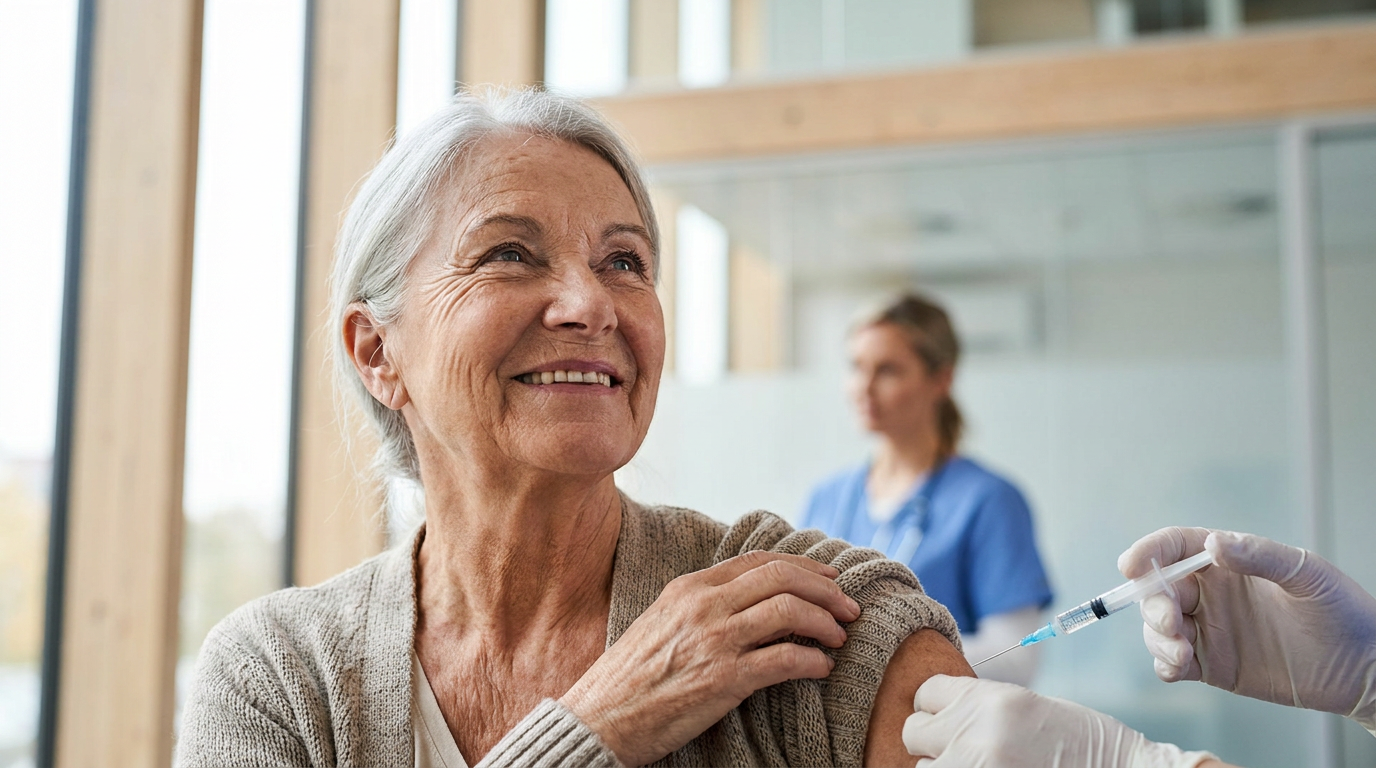
A major new study published this week in the prestigious Annals of Internal Medicine by researchers at Brown University has delivered some of the most compelling evidence to date. The research team found that the recombinant shingles vaccine, widely known commercially as Shingrix, is associated with a striking 24% lower risk of being diagnosed with dementia over a four-year period. This finding is sending ripples through the public health sector, as it suggests that a standard preventative measure already stocked in nearly every pharmacy could double as a powerful shield against one of the most feared and costly conditions of aging.[1][3]
To reach this conclusion, the research team conducted a massive, rigorous analysis of Medicare data and electronic health records from more than 500,000 adults aged 66 and older. Specifically, they looked at a highly vulnerable population: patients who had recently been admitted to skilled nursing facilities for either short-term rehabilitation or long-term care. By meticulously comparing the cognitive trajectories of those who received at least one dose of the recombinant vaccine within a year of their discharge to those who remained unvaccinated, the researchers uncovered a profound and statistically significant protective effect that persisted for years.[2][3]
The raw numbers from the Brown University analysis paint a highly compelling picture of cognitive preservation. Among the vaccinated group, only 18.8% went on to develop dementia within the four-year follow-up window, compared to a notably higher 24.6% of the unvaccinated individuals. According to the study's lead author, Dr. Kaley Hayes, this absolute risk reduction translates to roughly one in 17 cases of dementia potentially being prevented entirely through the administration of the vaccine. In the context of a disease that currently has no definitive cure and limited treatment options, preventing even a fraction of cases represents a monumental public health victory.[2][3]

This is not the first time scientists have noticed this protective pattern, but it is one of the most definitive looks at the specific, modern vaccine currently in widespread use. Earlier observational studies that hinted at a link between shingles immunization and cognitive health largely focused on the older, live-attenuated vaccine known as Zostavax. That older formulation was officially discontinued in the United States in 2020 in favor of the newer recombinant version, which boasts a much higher efficacy rate against the shingles virus itself. Proving that the newer, standard-of-care vaccine carries the same—or potentially greater—neurological benefits was a crucial missing piece of the puzzle.[3][6]
The Brown University findings build upon a rapidly growing mountain of international evidence, most notably a massive 2025 study led by researchers at Stanford Medicine and published in the journal Nature. That groundbreaking research leveraged a unique 'natural experiment' in Wales, where a strict birthdate cutoff for a national vaccine rollout inadvertently created two virtually identical groups of older adults. Because eligibility was determined solely by the day a person was born, the two cohorts shared the same socioeconomic backgrounds, healthcare access, and general health profiles, allowing researchers to isolate the vaccine's effects with unprecedented clarity.[4][5]
In that Welsh cohort, the Stanford researchers discovered that those who received the older shingles vaccine were 20% less likely to develop dementia over the next seven years than those who narrowly missed the eligibility window. The strict age cutoff was celebrated by epidemiologists because it helped eliminate much of the behavioral bias that usually plagues observational studies. Seeing a similar, and even slightly stronger, 24% risk reduction in the newer American study using the recombinant vaccine strongly suggests that the protective signal is real, durable, and potentially amplified by the newer vaccine technology.[4][5]

So how exactly does a shot designed to prevent a painful, blistering skin rash end up protecting the complex architecture of the human brain? This is the central question currently driving millions of dollars in new grant funding and laboratory research. While the exact biological mechanism remains unproven in human clinical trials, neurologists, immunologists, and virologists have narrowed the possibilities down to three primary, biologically plausible hypotheses that could explain the remarkable data emerging from these massive population studies.[6][7]
So how exactly does a shot designed to prevent a painful, blistering skin rash end up protecting the complex architecture of the human brain?
The first and most prominent hypothesis centers on the destructive role of neuroinflammation. Shingles is caused by the varicella-zoster virus—the exact same pathogen that causes chickenpox in children. After a childhood infection clears, the virus does not leave the body; instead, it retreats and lies dormant deep within the nervous system for decades. When it reactivates in older age due to a naturally weakening immune system, it causes widespread, systemic inflammation. Chronic inflammation is increasingly recognized by the scientific community as a major catalyst for cognitive decline, neurodegeneration, and the onset of various dementias.[5][6]
By artificially boosting the immune system to suppress the varicella-zoster virus and prevent its reactivation, the recombinant vaccine may be stopping this neuroinflammatory cascade before it can even begin. If the virus is kept in a permanent state of dormancy, it cannot trigger the inflammatory immune responses that inadvertently damage delicate brain tissue and accelerate the aging of neural networks. In this scenario, the vaccine is acting as a direct shield against a viral trigger for dementia.[6]
The second leading theory involves the preservation of vascular health. Severe shingles infections are known to significantly increase a patient's risk of experiencing cardiovascular events, including major strokes and transient ischemic attacks, commonly known as mini-strokes. These vascular events restrict vital blood flow and oxygen to the brain, directly contributing to the development of vascular dementia. By effectively protecting patients from the underlying viral infection, the vaccine might be indirectly preserving the brain's vascular integrity and preventing the micro-damages that accumulate into noticeable cognitive impairment.[2]
The third hypothesis is broader and potentially more revolutionary: general immune activation. Some scientists suspect that the incredibly robust immune response triggered by the recombinant vaccine—which utilizes a specific adjuvant designed to provoke a strong reaction—might have secondary benefits for the brain. This heightened state of immune alertness could help the body's specialized immune cells, such as microglia, more effectively clear out toxic proteins from the brain, including the amyloid plaques and tau tangles that are the hallmark physiological signs of Alzheimer's disease.[6]

The therapeutic potential of this profound immune activation may actually extend well beyond mere prevention. Follow-up research from the Stanford University team, which was presented at major neurological conferences and published late last year in the journal Cell, suggested a staggering possibility: the vaccine might actually slow the progression of the disease in patients who have already been diagnosed with cognitive decline. This shifts the conversation from a purely preventative public health measure to a potential disease-modifying intervention that could alter the landscape of dementia care.[5][6]
In that specific analysis, researchers found that patients who received the shingles vaccine after receiving a formal dementia diagnosis were nearly 30% less likely to die from the disease over the subsequent nine years compared to their unvaccinated peers. This strongly indicates that the vaccine's immune-modulating effects might fundamentally alter the disease's trajectory, slowing the rate of neurodegeneration and buying patients significantly more time with preserved cognitive function, better quality of life, and extended independence before the disease reaches its terminal stages.[5]
Despite the overwhelming and consistent signal across multiple international datasets, cautious researchers are quick to point out the persistent threat of 'healthy vaccine bias.' In any observational study, there is a risk that people who proactively choose to get vaccinated simply tend to be more health-conscious overall. These individuals often have better diets, exercise more frequently, manage their blood pressure effectively, and engage in more cognitive stimulation—all of which are independent lifestyle factors known to significantly reduce the risk of developing dementia.[1][3]
However, the researchers behind the latest Brown University study anticipated this exact critique and went to great lengths to adjust for these confounding variables. They meticulously matched vaccinated and unvaccinated patients on numerous health, demographic, and socioeconomic factors to ensure an apples-to-apples comparison. Even after applying these rigorous statistical adjustments to account for underlying health behaviors, the 24% risk reduction remained stubbornly robust, suggesting that the vaccine itself—not just the healthy lifestyle of the person receiving it—is driving the cognitive benefit.[2][3]

Intriguingly, multiple studies across different countries have consistently found that the protective effect of the vaccine appears to be significantly stronger in women than in men. While Alzheimer's disease is naturally more prevalent in the female population, the disproportionate benefit derived from the immunization remains a profound mystery. Researchers are currently actively investigating this sex difference through advanced biomarker analysis, looking at how male and female immune systems respond differently to the recombinant adjuvant and whether hormonal factors play a role in neuroprotection.[4][6]
The scientific community is now universally calling for the ultimate test: large-scale, randomized controlled trials to definitively prove cause and effect once and for all. But in the meantime, public health officials note that the recombinant shingles vaccine is already highly recommended for all adults over the age of 50 to prevent a truly debilitating viral condition. If it ultimately proves to also serve as a powerful shield against cognitive decline, it will undoubtedly represent one of the most significant and serendipitous medical discoveries of the decade.[1][6][7]
How we got here
2017
The FDA approves Shingrix, a highly effective recombinant shingles vaccine, for adults over 50.
2020
The older, live-attenuated shingles vaccine (Zostavax) is discontinued in the U.S. in favor of Shingrix.
April 2025
A major Stanford study using health records from Wales finds the older shingles vaccine reduced dementia risk by 20%.
June 2026
Brown University researchers publish findings showing the newer Shingrix vaccine reduces dementia risk by 24% in older adults.
Viewpoints in depth
Epidemiologists & Data Scientists
Focusing on the statistical significance and the need to rule out behavioral biases.
Researchers in this camp emphasize the sheer scale of the data—analyzing over half a million Medicare records provides a massive sample size. However, they remain cautious about 'healthy vaccine bias.' Because this is an observational study rather than a randomized controlled trial, epidemiologists stress that people who get vaccinated might simply have healthier lifestyles that protect their brains. They advocate for massive, multi-year randomized trials to definitively prove that the vaccine itself is the shield.
Neurologists & Alzheimer's Researchers
Investigating the biological pathways between viral infections and neurodegeneration.
For neurologists, the statistical link is merely the starting point. This camp is deeply focused on the biological 'how.' They are investigating whether the varicella-zoster virus directly damages brain tissue through neuroinflammation, or if the vaccine's robust immune activation helps clear out the amyloid plaques associated with Alzheimer's. Their goal is to map the exact mechanism, which could unlock entirely new classes of preventative drugs designed specifically for the brain.
Public Health Officials
Viewing the findings as a massive dual-benefit for an already recommended immunization.
Public health advocates view this research as a monumental win, regardless of the exact mechanism. Since the recombinant shingles vaccine is already highly recommended for adults over 50 to prevent a painful and debilitating skin condition, any secondary benefit to cognitive health is a massive bonus. They are using these findings to encourage higher vaccination compliance rates, noting that preventing even a fraction of dementia cases would save billions in healthcare costs and preserve the quality of life for millions of families.
What we don't know
- The exact biological mechanism linking the varicella-zoster virus to Alzheimer's disease and cognitive decline.
- Why the protective effect of the vaccine appears to be significantly stronger in women than in men.
- Whether the vaccine provides similar cognitive protection for younger adults or those with early-onset dementia.
Key terms
- Recombinant vaccine
- A vaccine created by using a small, synthesized piece of the virus to trigger an immune response, rather than using a live, weakened virus.
- Varicella-zoster virus
- The virus that causes chickenpox in childhood and can reactivate decades later to cause shingles.
- Neuroinflammation
- Inflammation of the nervous tissue in the brain or spinal cord, often linked to neurodegenerative diseases like Alzheimer's.
- Healthy vaccine bias
- A statistical phenomenon in observational studies where people who choose to get vaccinated also tend to have healthier overall lifestyles, potentially skewing the results.
Frequently asked
Which shingles vaccine was used in the new study?
The study focused on the recombinant zoster vaccine, known commercially as Shingrix, which is currently the standard vaccine administered in the United States.
Does the vaccine cure dementia?
No. The vaccine is associated with a lower risk of developing dementia, and some evidence suggests it may slow progression, but it is not a cure.
Why might the shingles vaccine protect the brain?
Scientists believe it may prevent neuroinflammation caused by the dormant chickenpox virus, reduce the risk of strokes, or trigger a general immune response that helps clear toxic proteins from the brain.
Should I get the vaccine specifically to prevent dementia?
Currently, the vaccine is recommended for adults over 50 to prevent shingles. While the dementia prevention benefits are highly promising, they are considered an incidental benefit pending further clinical trials.
Sources
Source coverage
7 outlets
3 viewpoints surfaced






[1]STAT NewsPublic Health Advocates
Shingles vaccine may lower dementia risk, new study finds
Read on STAT News →[2]CIDRAPPublic Health Advocates
Shingles vaccine may protect against dementia
Read on CIDRAP →[3]Brown UniversityEpidemiological Researchers
Study suggests shingles vaccine may lower dementia risk
Read on Brown University →[4]NatureEpidemiological Researchers
The recombinant shingles vaccine is associated with lower risk of dementia
Read on Nature →[5]Stanford MedicineEpidemiological Researchers
For those living with dementia, new study suggests shingles vaccine could slow the disease
Read on Stanford Medicine →[6]AARPPublic Health Advocates
Shingles Vaccine May Reduce Dementia Risk
Read on AARP →[7]Factlen Editorial TeamEditorial Synthesis
Synthesis by Factlen editorial team
Read on Factlen Editorial Team →
More in health
See all 6 stories →Gut-Brain Science
How 'Psychobiotics' and the Gut-Brain Axis Are Reshaping Mental Health Treatment
7 sources

Metabolic Health
The 'Exercise Pill' Moves Closer to Reality as AMPK Activators Show Promise in Human Trials
7 sources
Longevity Tech
The Science of the 'Exercise Pill': How New Longevity Drugs Mimic the Benefits of a Workout
7 sources
Neuroscience
How Acupuncture Actually Works: The Neuroanatomy of an Ancient Practice
6 sources
Every angle. Every day.
Get health stories with full source coverage and perspective breakdowns delivered to your inbox.