
The Science of 'Exercise in a Pill': How AMPK Activators Could Redefine Longevity
Experimental drugs known as 'exercise mimetics' are entering clinical trials, promising to trigger the metabolic benefits of a workout without the physical exertion.
By Factlen Editorial Team
- Longevity Researchers
- View exercise mimetics as a critical tool to reverse age-related metabolic decline and extend human healthspan.
- Public Health Advocates
- Emphasize the therapeutic potential for patients who are physically unable to exercise due to injury, severe obesity, or frailty.
- Exercise Physiologists
- Caution that while pills can mimic metabolic shifts, they cannot replicate the mechanical and psychological benefits of actual physical exertion.
- Sports Integrity Officials
- Warn that these compounds carry high potential for abuse as performance-enhancing drugs in competitive athletics.
What's not represented
- · Fitness Industry Professionals
- · Health Insurance Providers
Why this matters
Exercise mimetics could revolutionize preventative medicine by offering the metabolic benefits of a workout to those who are physically unable to exercise due to injury, obesity, or aging. If successful, these drugs could drastically reduce the rates of type 2 diabetes and cardiovascular disease in immobile populations.
Key points
- Biotech firms are advancing 'exercise mimetics,' drugs designed to replicate the metabolic benefits of physical activity.
- Cambrian Biopharma's subsidiary is developing ATX-304, a drug that activates the AMPK cellular energy sensor.
- AMPK activation shifts the body into a catabolic state, promoting fat burning, glucose uptake, and mitochondrial growth.
- In early animal studies, AMPK activators increased the running endurance of completely sedentary mice by 44 percent.
- The drugs are primarily intended for patients unable to exercise due to spinal cord injuries, severe obesity, or aging.
- While pills can mimic metabolic shifts, they cannot replicate the mechanical benefits of exercise like bone density growth.
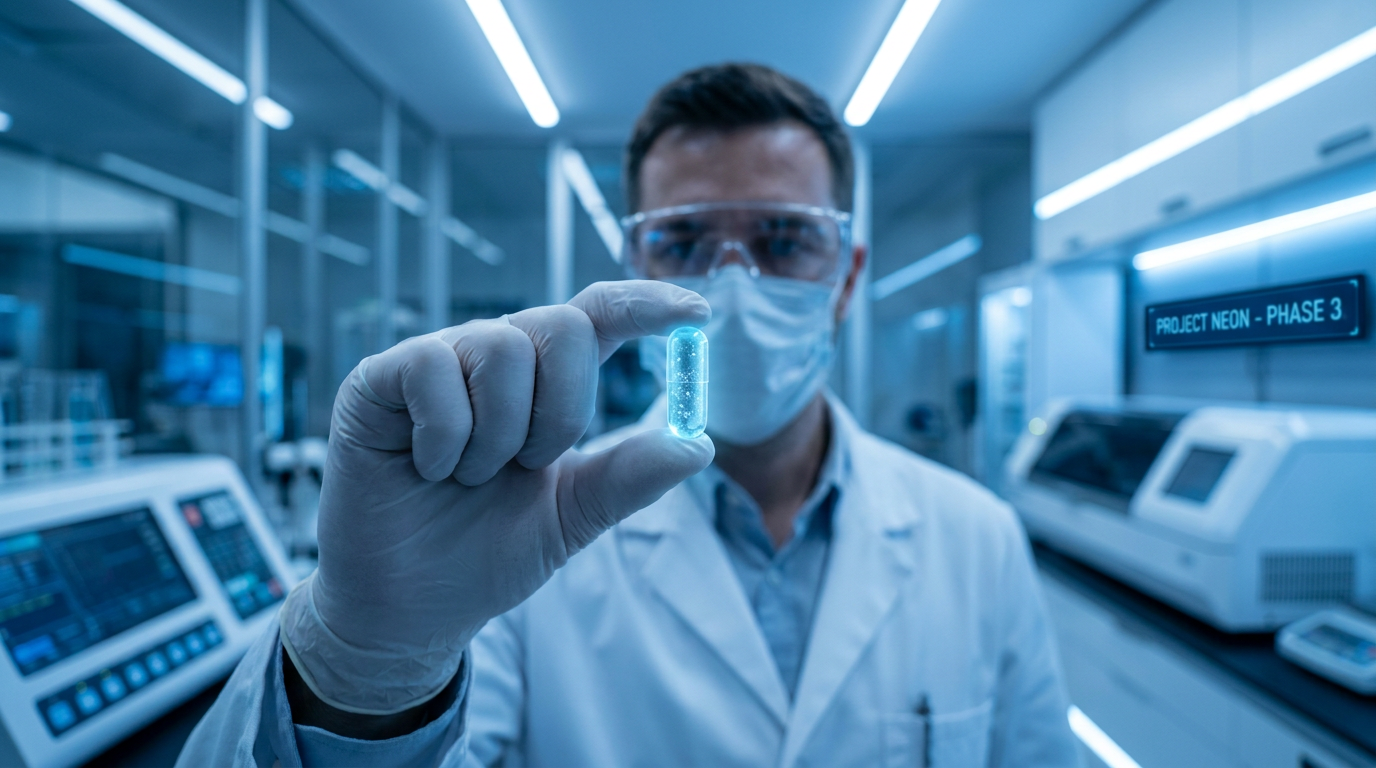
The concept of "exercise in a pill" has long been considered the holy grail of preventative medicine. For decades, scientists have searched for a way to package the profound metabolic benefits of physical exertion into a daily capsule. Now, that theoretical pursuit is moving from the laboratory into clinical development. Experimental compounds known as "exercise mimetics" are designed to trick the body into believing it has just completed a grueling workout, triggering a cascade of health benefits without a single drop of sweat.[8]
The latest momentum in this field comes from the longevity sector. Cambrian Biopharma, a clinical-stage biotechnology company focused on the biology of aging, is advancing an experimental drug called ATX-304 through its subsidiary, Amplifier Therapeutics. Acquired for $26 million, the compound is a "pan-AMPK activator" aimed at treating obesity and metabolic conditions. But the company's ultimate vision extends far beyond weight loss; they view the drug as a foundational therapy to extend human healthspan by mimicking the protective effects of exercise.[1][2][7]
To understand how an exercise mimetic works, one must look at the cellular machinery that governs human energy. The primary target for ATX-304, and many similar compounds, is an enzyme called AMP-activated protein kinase, or AMPK. Biologists often describe AMPK as the master energy sensor of the cell—a microscopic "low battery" indicator. Under normal resting conditions, the body relies on a steady supply of ATP (adenosine triphosphate) for energy.[4][6]
When a person engages in strenuous physical activity, their muscle cells rapidly consume ATP, leaving behind a byproduct called AMP. As AMP levels rise, the cellular battery drops, and AMPK is activated. This activation flips a metabolic switch, transitioning the body from an anabolic state—where it stores energy and builds tissue—to a catabolic state, where it breaks down reserves to survive the perceived stress.[4]

Once the AMPK switch is flipped, the physiological changes are dramatic. The body immediately halts energy-consuming processes and begins pulling glucose from the bloodstream into the muscles. Simultaneously, it unlocks stored fat, mobilizing fatty acids to be burned for fuel. Over the long term, sustained AMPK activation prompts the body to build new mitochondria—the powerhouses of the cell—increasing overall endurance and metabolic efficiency.[4][5]
The profound potential of artificially flipping this switch was first demonstrated in a landmark 2008 study by researchers at the Salk Institute. Scientists administered an early AMPK activator, known as AICAR, to completely sedentary mice. After four weeks of receiving the drug without any physical training, the mice exhibited a 44 percent increase in running endurance compared to a control group. Their muscles had fundamentally reprogrammed themselves to burn fat and resist fatigue, exactly as if they had been running on a treadmill daily.[3]
While the Salk study proved the concept, translating that success into a safe human drug has been a complex challenge. Early compounds like AICAR had poor bioavailability and required massive doses to be effective. Furthermore, AMPK is a blunt instrument; activating it too aggressively or in the wrong tissues can lead to unintended consequences, such as chronic catabolism or interference with cell division. Modern iterations like ATX-304 are designed to be highly selective, targeting the metabolic benefits while minimizing systemic toxicity.[2][4][6][7]

While the Salk study proved the concept, translating that success into a safe human drug has been a complex challenge.
The target demographic for these drugs is frequently misunderstood. While the phrase "exercise in a pill" inevitably draws jokes about gym-averse consumers looking for a shortcut, the medical applications are profoundly serious. Public health advocates emphasize that millions of people are physically incapable of meeting the standard recommendation of 150 minutes of weekly exercise.[4][8]
For patients paralyzed by spinal cord injuries, individuals with severe morbid obesity, or elderly populations suffering from sarcopenia (age-related muscle wasting), an exercise mimetic could be life-changing. When the human body stops moving, it undergoes a rapid metabolic collapse—insulin resistance spikes, cardiovascular health deteriorates, and fat accumulates around the organs. A drug that artificially maintains the metabolic tone of an active body could prevent this downward spiral in immobile patients.[4][5]
Beyond treating the immobile, researchers view AMPK activators as a key to unlocking longevity. The body's innate ability to activate AMPK naturally declines as we age, contributing to the sluggish metabolism, weight gain, and reduced endurance commonly experienced in later life. By artificially restoring youthful AMPK activity, scientists hope to stave off a host of age-related conditions, including type 2 diabetes, cardiovascular disease, and chronic kidney disease.[1][2][5]

Despite the immense promise, exercise physiologists are quick to point out the limitations of a purely pharmacological approach. While a pill can replicate the chemical signaling of a workout, it cannot replicate the mechanical forces. Weight-bearing exercise places physical stress on the skeletal system, which is essential for building bone density and preventing osteoporosis. Similarly, the mechanical tearing and rebuilding of muscle fibers during resistance training cannot be triggered by an enzyme activator alone.[4][8]
Furthermore, the psychological benefits of physical exertion remain entirely out of reach for a pill. The rush of endorphins, the reduction in cortisol, and the mental clarity that follow a brisk run or a heavy lifting session are complex neurological responses tied to the physical act of moving through space. An exercise mimetic will not improve a patient's balance, coordination, or mental health in the same way that a physical routine does.[4][8]
There is also the inevitable issue of abuse in competitive sports. Long before exercise mimetics reach pharmacy shelves, they have caught the attention of athletes looking for an illicit edge. The World Anti-Doping Agency (WADA) has already banned early-generation AMPK activators like AICAR and PPAR-delta agonists like GW501516. Because these drugs fundamentally alter the muscle's ability to burn fat and resist fatigue, they offer a massive, unfair advantage in endurance sports like cycling and marathon running.[6]
As Cambrian Biopharma and other biotech firms push these compounds through clinical trials, the regulatory pathway will require careful navigation. The FDA does not recognize "aging" or "lack of exercise" as diseases, meaning these drugs must first prove their efficacy in treating specific, recognized conditions like obesity or metabolic syndrome.[2][7]
If successful, however, the approval of an exercise mimetic would represent a paradigm shift in modern medicine. By isolating the molecular pathways that make physical activity so beneficial, science may soon offer a lifeline to those whose bodies are failing them, transforming the metabolic benefits of a five-mile run into a daily prescription.[1][4][8]
How we got here
2008
Salk Institute researchers demonstrate that AMPK and PPARδ agonists can increase endurance in sedentary mice by 44 percent.
2017
The concept of 'exercise in a pill' gains traction as researchers identify multiple pathways to mimic physical activity.
March 2023
Cambrian Biopharma launches Amplifier Therapeutics to bring the pan-AMPK activator ATX-304 to clinical trials.
June 2026
Experimental longevity drugs mimicking exercise gain renewed attention as they advance through the biotech pipeline.
Viewpoints in depth
Longevity Researchers
Focus on extending healthspan and treating age-related metabolic decline.
For scientists focused on the biology of aging, exercise mimetics represent a crucial tool for extending 'healthspan'—the years of life spent free from chronic disease. Because the body's natural ability to activate the AMPK energy sensor diminishes with age, older adults inevitably suffer from reduced metabolic efficiency, leading to weight gain and fatigue. By pharmacologically restoring this pathway, researchers believe they can preemptively block the onset of type 2 diabetes, cardiovascular disease, and other age-related metabolic disorders, effectively using the drug as a preventative shield rather than just a reactive treatment.
Public Health Advocates
Emphasize the therapeutic potential for patients who are physically unable to exercise.
Public health experts view these compounds not as a lifestyle shortcut, but as a medical necessity for vulnerable populations. Millions of individuals are physically incapable of engaging in the cardiovascular exercise required to maintain metabolic health, whether due to spinal cord injuries, severe morbid obesity, or advanced age-related frailty. For these patients, immobility triggers a rapid decline in insulin sensitivity and cardiovascular function. An exercise mimetic could artificially maintain the metabolic baseline of an active body, preventing the secondary diseases that typically accompany severe physical disability.
Exercise Physiologists
Caution that pills cannot replicate the mechanical and psychological benefits of actual physical exertion.
While acknowledging the metabolic breakthroughs, exercise physiologists warn against viewing these drugs as a total replacement for physical activity. A pill can trigger fat burning and glucose uptake, but it cannot replicate the mechanical stress required to build bone density and prevent osteoporosis. Furthermore, the physical tearing and rebuilding of muscle fibers, the improvement of joint stability, and the psychological release of endorphins are uniquely tied to the mechanical act of moving. They argue that mimetics should be viewed as a supplement to movement, not a substitute.
What we don't know
- Whether chronic, long-term activation of the AMPK pathway in humans will lead to unintended side effects, such as excessive catabolism.
- How effectively these drugs will perform in human clinical trials compared to the dramatic 44 percent endurance increase seen in mouse models.
- Whether health insurance companies will eventually cover exercise mimetics for preventative longevity, or restrict them strictly to diagnosed metabolic diseases.
Key terms
- AMPK
- An enzyme that serves as the body's master energy sensor, triggering fat burning and glucose uptake when cellular energy is low.
- Exercise Mimetic
- A pharmacological compound that replicates the physiological benefits of physical training without actual exertion.
- Mitochondrial Biogenesis
- The process by which cells increase their number of mitochondria, improving their overall ability to produce and manage energy.
- Healthspan
- The period of a person's life spent in good health, free from the chronic diseases and disabilities typically associated with aging.
Frequently asked
What is an exercise mimetic?
An exercise mimetic is an experimental drug designed to trigger the same cellular and metabolic pathways that are normally activated by physical exertion, such as fat burning and glucose uptake.
Will this pill replace going to the gym?
No. While it mimics metabolic effects, it cannot replicate the mechanical benefits of exercise, such as building bone density, tearing and rebuilding muscle fibers, or releasing endorphins.
Why are these drugs being developed?
The primary goal is to treat metabolic diseases and help patients who are physically unable to exercise due to aging, severe obesity, or spinal cord injuries.
Sources
Source coverage
8 outlets
4 viewpoints surfaced







[1]STAT NewsLongevity Researchers
Cambrian’s experimental longevity drug mimics exercise
Read on STAT News →[2]BioSpaceLongevity Researchers
Amplifier Launches to Bring First AMPK Activator to the Clinic
Read on BioSpace →[3]CellExercise Physiologists
AMPK and PPARδ Agonists Are Exercise Mimetics
Read on Cell →[4]National Institutes of HealthPublic Health Advocates
Exercise in a Pill: The Latest on Exercise-Mimetics
Read on National Institutes of Health →[5]Journal of Molecular EndocrinologyPublic Health Advocates
Nuclear receptors and AMPK: Can exercise mimetics cure diabetes?
Read on Journal of Molecular Endocrinology →[6]U.S. Anti-Doping AgencySports Integrity Officials
What is AICAR? How do AICAR and AMPK impact performance?
Read on U.S. Anti-Doping Agency →[7]Cambrian BioLongevity Researchers
Cambrian Bio Unveils New Pipeline Company – Amplifier Therapeutics
Read on Cambrian Bio →[8]Factlen Editorial TeamExercise Physiologists
Synthesis by Factlen editorial team
Read on Factlen Editorial Team →

More in health
See all 9 stories →Neuroscience
How Acupuncture Actually Works: The Neuroanatomy of an Ancient Practice
6 sources
Gut-Brain Axis
How the Gut-Brain Axis is Rewriting the Science of Depression
6 sources

Precision Psychiatry
Beyond Serotonin: New Clinical Data Shows Rapid-Acting Psychedelics and Immunotherapy Reversing Severe Depression
7 sources
Dementia Research
Evidence Mounts That the Shingles Vaccine Significantly Lowers Dementia Risk
7 sources

Every angle. Every day.
Get health stories with full source coverage and perspective breakdowns delivered to your inbox.