
How AI Concierges and 'Zero-Party Data' Are Rewriting the Rules of Online Shopping
As third-party tracking cookies vanish, consumers are deploying autonomous AI agents to do their shopping, forcing brands to adapt to a privacy-first, 'zero-click' retail economy.
By Factlen Editorial Team
- Retail Strategy Analysts
- Focuses on the urgent need for brands to adapt to Answer Engine Optimization (AEO) to survive the death of traditional search.
- Privacy & Consumer Advocates
- Argues that zero-party data and AI agents finally give consumers control over their personal information and shopping habits.
- Commerce Technology Developers
- Prioritizes building the secure protocols and autonomous agents that allow machines to execute transactions safely.
What's not represented
- · Traditional SEO agencies facing business model disruption
- · Data brokers whose third-party tracking businesses are becoming obsolete
Why this matters
The way you shop online is fundamentally changing. Instead of being tracked across the web by invisible cookies, you will increasingly use personal AI assistants to find products and negotiate prices, giving you total control over your data and saving hours of browsing time.
Key points
- Third-party tracking cookies are being replaced by 'zero-party data'—information consumers intentionally share with brands.
- Consumers are increasingly using AI shopping assistants to find and purchase products, driving a surge in 'agentic commerce.'
- Tech giants have launched standardized protocols (UCP, ACP) to allow AI agents to securely execute transactions.
- Brands must shift from traditional SEO to Answer Engine Optimization (AEO) to ensure AI models can read their product catalogs.
- AI-referred traffic converts at a significantly higher rate because the AI pre-qualifies the product against the user's explicit preferences.
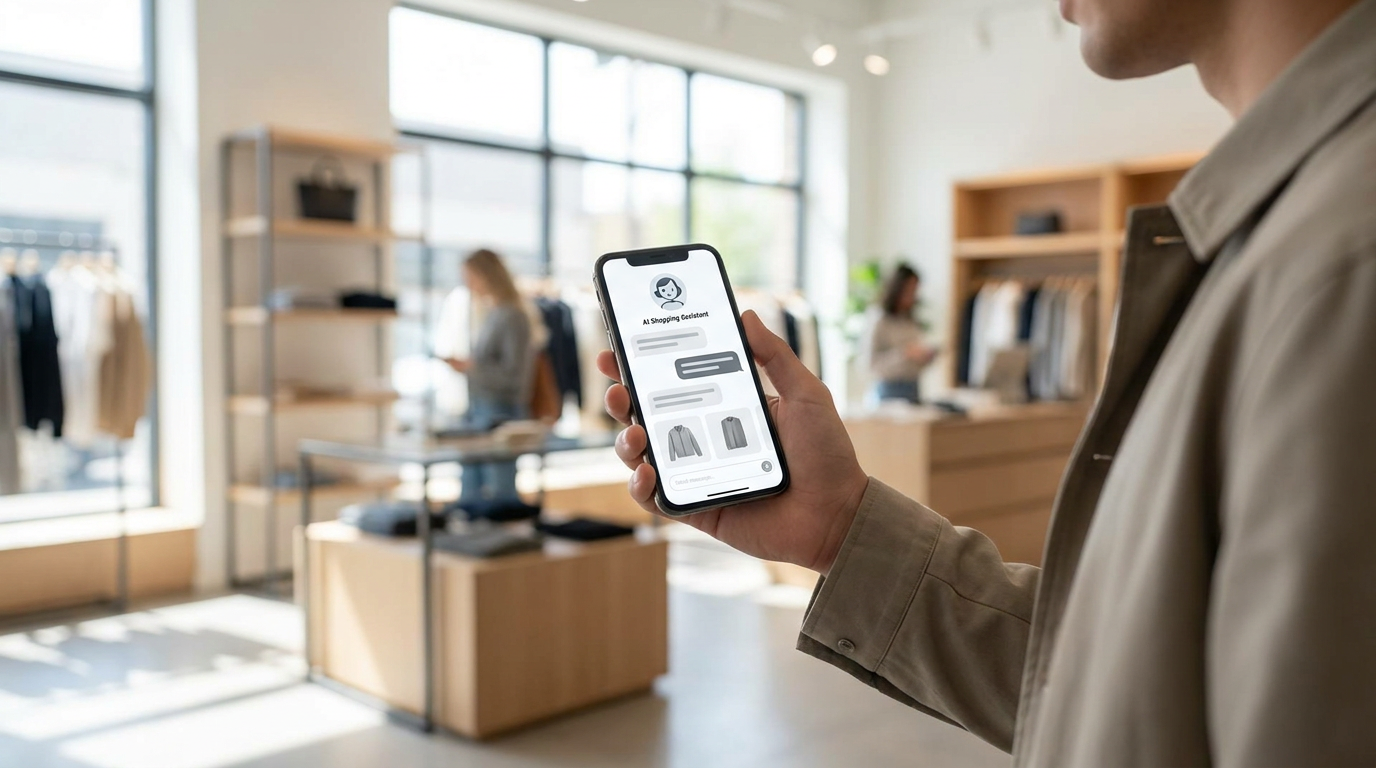
For two decades, the digital economy ran on invisible surveillance. Third-party cookies tracked consumers across the web, inferring their desires from clicks, pauses, and abandoned carts. In 2026, that era is definitively closing. Driven by stringent global privacy laws and browser-level blocking, the old marketing playbook has broken down. But the replacement is not a stealthier tracking pixel. Instead, the retail industry is undergoing a structural shift toward "agentic commerce"—a model where consumers explicitly tell artificial intelligence what they want, and the AI does the shopping for them.[1][3]
This transition represents a fundamental inversion of the traditional internet economy. Rather than brands spending billions to hunt down consumers with hyper-targeted ads, consumers are deploying their own digital concierges to hunt down products. Industry analysts note that this shift is moving digital commerce away from browsing pages and comparing prices, and toward a "zero-click" reality where autonomous agents interpret goals and execute actions on the buyer's behalf.[3][5]
The fuel for this new ecosystem is "zero-party data." Unlike first-party data, which is passively observed from a user's behavior on a website, zero-party data is information a customer intentionally and proactively shares with a brand. It is the difference between a retailer guessing a shopper's size based on their browsing history, and the shopper explicitly filling out a sizing and style quiz in exchange for curated, highly accurate recommendations.[4]

The demand for this transparent data exchange has never been higher. With over 80% of global internet users now covered by privacy regulations like Europe's GDPR, California's CCPA, and India's DPDP Act, brands are under immense pressure to collect data ethically. Zero-party data solves the privacy dilemma by making the value exchange explicit. Customers receive highly personalized, time-saving service, and brands receive accurate, consent-driven insights without relying on opaque data brokers.[4]
Once a consumer establishes these preferences, agentic commerce takes over. In early 2026, the concept of the AI shopping assistant moved from a novelty to a primary driver of retail traffic. Major e-commerce platforms have reported that AI-driven purchases have increased by a factor of eleven over the past year. Furthermore, analytics data indicates that three-quarters of all purchases made on desktop computers are now referred by AI systems, signaling a rapid and permanent change in consumer habits.[1]
Once a consumer establishes these preferences, agentic commerce takes over.
The mechanism powering this shift relies on new, standardized communication frameworks. At recent industry conferences, tech giants unveiled protocols designed specifically for machine-to-machine commerce. Google introduced the Universal Commerce Protocol (UCP) to power checkout features directly within its Gemini models, while OpenAI rolled out an Agentic Commerce Protocol (ACP) built in partnership with major payment processors. These protocols allow an AI agent to securely verify inventory, negotiate shipping, and authorize payments without the user ever visiting the retailer's website.[2]
For marketers and retailers, this autonomous future requires a complete overhaul of digital strategy. The focus is shifting from Search Engine Optimization (SEO)—designed to rank links for human eyes—to Answer Engine Optimization (AEO). AEO involves structuring product catalogs, specifications, and inventory data so that large language models can instantly read and evaluate them. If a brand's data is messy or incomplete, the AI agent will simply bypass it in favor of a competitor with machine-readable specifications.[3]
Market research firm Kantar recently highlighted this imperative, noting that while brands historically needed to predispose human consumers to their products, they must now predispose autonomous agents as well. This means ensuring that when a user asks their AI for "the most durable, sustainably sourced hiking boots under $200," the brand's product is logically surfaced as the definitive answer by the underlying algorithm, rather than relying on flashy banner ads to catch a human's attention.[5]

The financial incentives for brands to adapt are massive. Traffic originating from AI sources currently boasts significantly higher conversion rates than traffic from traditional search engines or social media. Because the AI agent has already filtered out irrelevant options and matched the product to the user's explicit zero-party data preferences, the shoppers who do arrive at a retailer's checkout are highly qualified and ready to buy.[1]
Despite the technological readiness, a trust barrier remains regarding fully autonomous purchasing. While consumers are increasingly comfortable using AI to discover and compare products, delegating the actual financial transaction requires a leap of faith. Industry forecasts suggest that 2026 will largely be defined by "human-in-the-loop" commerce, where the AI agent builds the cart and presents the final options, but the human user clicks the final approval button to authorize the spend.[2]
To bridge this trust gap, platforms are implementing rigorous security guardrails. Leading brands are standardizing transparent consent flows, granular user permissions, and strict spending limits. Consumers can view agent action logs to see exactly why an AI selected a specific product and authorized a payment, ensuring that the machine remains a subordinate, highly transparent tool rather than an unpredictable black box.[3]

Ultimately, the convergence of zero-party data and agentic commerce represents a rare win-win in the digital economy. Consumers regain control over their privacy and their time, outsourcing the friction of digital shopping to tireless digital assistants. Meanwhile, brands that adapt to Answer Engine Optimization and ethical data collection are rewarded with higher conversion rates and deeper, more transparent customer loyalty. The era of the invisible tracking cookie is over, replaced by an era of explicit consent and intelligent automation.[6]
How we got here
Late 2024
Major browsers begin aggressively phasing out third-party tracking cookies, disrupting traditional digital advertising.
Mid 2025
Brands pivot heavily to zero-party data collection through quizzes and direct consumer engagement.
Early 2026
Tech giants introduce standardized commerce protocols (UCP, ACP) to facilitate machine-to-machine transactions.
June 2026
AI-referred e-commerce traffic reaches record highs, signaling the mainstream adoption of agentic commerce.
Viewpoints in depth
Privacy & Consumer Advocates
Argues that zero-party data and AI agents finally give consumers control over their personal information and shopping habits.
For years, consumer advocates have fought against the invisible surveillance economy powered by third-party cookies. This camp views the shift toward zero-party data as a massive victory for digital rights. By forcing brands to explicitly ask for preferences rather than secretly inferring them, consumers regain agency over their digital footprints. Furthermore, deploying personal AI agents to handle shopping insulates the human user from manipulative advertising tactics, dark patterns, and impulse-buy triggers, creating a healthier and more intentional retail environment.
Retail Strategy Analysts
Focuses on the urgent need for brands to adapt to Answer Engine Optimization (AEO) to survive the death of traditional search.
Retail strategists warn that brands relying on traditional Search Engine Optimization (SEO) are facing an existential threat. As consumers stop using Google to search for products and instead ask their AI concierges, the old metrics of page ranking become irrelevant. This camp emphasizes that companies must urgently invest in Answer Engine Optimization (AEO)—cleaning up their backend data, standardizing product specifications, and ensuring their APIs can talk directly to AI agents. Brands that fail to make their catalogs machine-readable will simply become invisible in the new zero-click economy.
Commerce Technology Developers
Prioritizes building the secure protocols and autonomous agents that allow machines to execute transactions safely.
The engineers and platforms building the infrastructure for agentic commerce are focused on security, interoperability, and trust. They argue that the success of AI shopping hinges entirely on protocols like UCP and ACP, which ensure that an AI agent cannot accidentally overspend or fall victim to a fraudulent storefront. This camp is currently focused on perfecting 'human-in-the-loop' systems, where the AI does the heavy lifting of discovery and comparison, but relies on secure, biometric human approval to finalize the transaction, thereby building the necessary consumer trust to eventually scale to fully autonomous purchasing.
What we don't know
- How quickly consumers will transition from 'human-in-the-loop' approvals to fully autonomous AI purchasing.
- Which specific AI platform (e.g., Google, OpenAI, or independent agents) will dominate the consumer shopping interface.
- How smaller retailers will afford the technical upgrades required to optimize their catalogs for Answer Engine Optimization.
Key terms
- Agentic Commerce
- A retail model where consumers use autonomous AI assistants to discover, compare, and purchase products on their behalf.
- Zero-Party Data
- Information a customer intentionally and proactively shares with a brand, such as preferences or purchase intent.
- Answer Engine Optimization (AEO)
- The practice of structuring digital content and product catalogs so they can be easily read and recommended by artificial intelligence models.
- Universal Commerce Protocol (UCP)
- A standardized digital framework that allows AI agents to securely interact with retailer inventories and payment systems.
Frequently asked
Will AI agents buy things without my permission?
In 2026, most agentic commerce operates with a 'human-in-the-loop' safeguard. The AI finds the product and prepares the cart, but the user must explicitly authorize the final payment.
How is zero-party data different from first-party data?
First-party data is passively observed behavior, like tracking which pages you click on. Zero-party data is information you intentionally share, like filling out a style preference quiz.
What does this mean for traditional SEO?
Brands are shifting from Search Engine Optimization (SEO) to Answer Engine Optimization (AEO), structuring their catalogs so AI models can read them rather than just trying to rank on Google.
Sources
Source coverage
6 outlets
3 viewpoints surfaced






[1]Fast CompanyCommerce Technology Developers
AI is already helping people find the stuff they need to buy. Next year, we might just let it buy it on our behalf.
Read on Fast Company →[2]SnowflakeCommerce Technology Developers
2026 Predictions: How AI Will Transform Retail and Consumer Goods
Read on Snowflake →[3]commercetoolsRetail Strategy Analysts
Why 2026 is the breakout year of AI, with agentic commerce becoming mainstream
Read on commercetools →[4]CookieYesPrivacy & Consumer Advocates
Zero-Party Data: A Guide to Privacy-First Marketing
Read on CookieYes →[5]KantarRetail Strategy Analysts
Retail Media Networks and AI Agents: 2026 Trends
Read on Kantar →[6]Factlen Editorial TeamRetail Strategy Analysts
Synthesis by Factlen editorial team
Read on Factlen Editorial Team →


Every angle. Every day.
Get business stories with full source coverage and perspective breakdowns delivered to your inbox.