
A 15-Year Remission: How Stem Cell Transplants Are Rewriting the Rules of Autoimmune Disease
Two patients with a severe autoimmune disorder have remained symptom-free for over 15 years after an experimental stem-cell transplant, offering unprecedented hope for long-term remission.
By Factlen Editorial Team
- Immunology Researchers
- View the 15-year remission as biological proof that autoimmune diseases can be permanently halted.
- Patient Advocacy Community
- Celebrate the dramatic restoration of quality of life and freedom from chronic medications.
- Clinical Safety Experts
- Caution that the severe risks of immune replacement restrict its use to only the most desperate cases.
- Biotech Innovators
- Advocate for targeted cellular therapies like CAR-T to achieve remission with lower toxicity.
What's not represented
- · Patients who suffered severe complications from stem cell trials
- · Insurance providers evaluating the cost-effectiveness of curative cell therapies
Why this matters
For decades, autoimmune diseases have been considered lifelong conditions requiring constant management. This 15-year milestone proves that a complete biological 'reboot' can permanently halt the disease process, paving the way for next-generation curative therapies.
Key points
- Two patients with severe NMOSD have remained symptom-free for over 15 years following a stem cell transplant.
- The procedure involved wiping out their malfunctioning immune systems and replacing them with healthy donor cells.
- Both patients regained significant physical function and no longer require daily immunosuppressive medications.
- Due to severe risks like graft-versus-host disease, the treatment is currently reserved for extreme, refractory cases.
The holy grail of autoimmune disease treatment has never been merely managing symptoms—it is teaching the body to stop attacking itself. For millions of people suffering from conditions where their own immune systems turn rogue, the standard of care involves a lifetime of immunosuppressive drugs that dampen the body's defenses, leaving them vulnerable to infections while only slowing the disease's progression. But for two patients with a devastating neurological condition, that holy grail has been a reality for over 15 years. Their unprecedented long-term remission is now forcing the medical community to rethink what is biologically possible in the fight against autoimmune disorders.[7]
The milestone, detailed in a new long-term follow-up study published in the prestigious medical journal Med and highlighted by Nature, centers on an experimental procedure that effectively 'rebooted' the immune systems of a man and a woman. Both patients were suffering from neuromyelitis optica spectrum disorder (NMOSD), a rare, aggressive, and debilitating disease. By utilizing an allogeneic hematopoietic stem-cell transplant—a procedure more commonly associated with blood cancers—researchers were able to completely replace their malfunctioning immune networks with healthy donor cells, achieving a durable remission that has lasted more than a decade and a half.[1][2]
Neuromyelitis optica spectrum disorder is a particularly aggressive condition. In patients with NMOSD, the immune system mistakenly produces autoantibodies that attack the optic nerve—which connects the eye to the brain—and the spinal cord. This relentless friendly fire leads to severe pain, vision loss, and paralysis. Standard treatments rely heavily on chronic immunosuppression, which rarely halts the disease entirely and carries a heavy burden of side effects. For the two patients in the study, standard therapies had failed to stop the progression of their physical decline, prompting the decision to try a radical intervention.[4]

The stem cell procedure they underwent is not a simple treatment; it is a profound biological demolition and reconstruction. Before the transplant could occur, doctors had to administer a grueling 'conditioning regimen.' This involved intense chemotherapy drugs, specifically fludarabine and treosulfan, combined with B-cell depleting antibody therapies. The goal was to systematically wipe out the patients' existing, malfunctioning immune cells—essentially clearing the slate so that the rogue autoantibodies responsible for the disease were entirely eradicated from their bodies.[1][4]
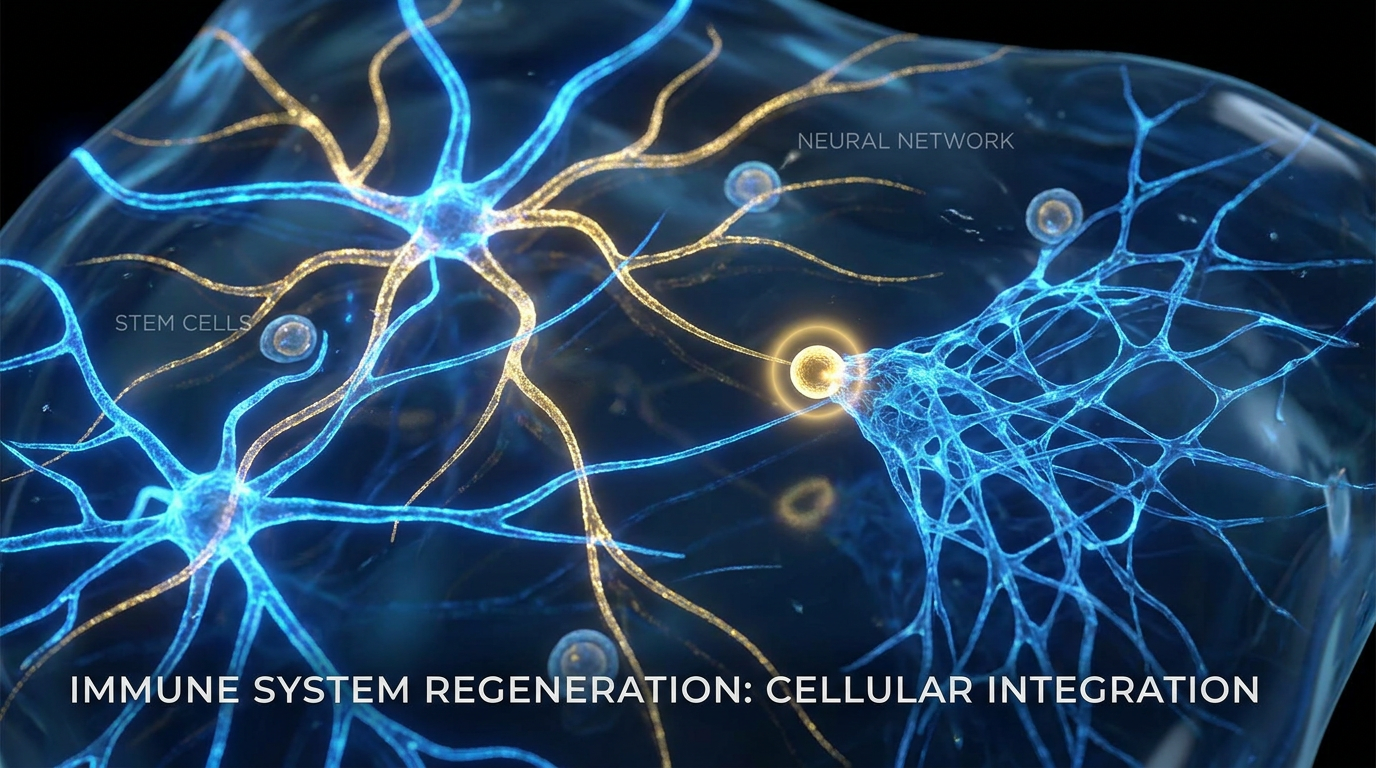
Once the defective immune system was destroyed, the rebuilding phase began. The patients received a single infusion of healthy, donor-derived hematopoietic stem cells. Because the cells came from a donor (an allogeneic transplant) rather than the patients themselves, they did not carry the biological 'memory' or genetic predisposition that triggered the autoimmune attack. These donor stem cells migrated to the bone marrow and slowly began generating a brand-new, healthy immune system from scratch.[2][7]
The long-term outcomes of this profound immune system replacement have been nothing short of life-altering for the individuals involved. More than 15 years after receiving their single infusion of donor cells, neither patient has experienced a return of the disease-causing autoantibodies, nor have they shown any clinical symptoms of NMOSD. Most remarkably, they have remained in complete, unassisted remission without the need for the daily immunosuppressive medications that typically define the lives of autoimmune patients, proving the durability of the biological reset.[1][2][5]

The impact on their daily lives underscores the transformative potential of the therapy. The male patient's neurological condition improved so significantly that he was able to resume a normal life, return to work, and start a family. The female patient, who had suffered severe mobility issues, regained substantial use of her arms and has lived completely free of the medications previously required to manage her debilitating symptoms. For both, the transplant did not just halt the disease; it gave them their futures back.[4][5]
The impact on their daily lives underscores the transformative potential of the therapy.
This 15-year milestone arrives at a moment when the broader field of cellular medicine is experiencing explosive growth. Researchers are increasingly looking at stem cells and other advanced cellular therapies as potential treatments for a wide range of autoimmune conditions, including systemic lupus erythematosus, multiple sclerosis, and Crohn's disease. According to data from the National Institutes of Health, clinical trials for stem cell therapies in autoimmune diseases have surged in recent years, though the vast majority—over 83 percent—remain in early Phase I or II stages.[3][7]
While stem cell transplants offer a blunt-force replacement of the immune system, innovators are also exploring more targeted approaches. For instance, researchers at the University of North Carolina and various biotech firms are developing mRNA-based CAR-T cell therapies. Instead of wiping out the entire immune system, these therapies temporarily genetically engineer a patient's own T-cells to hunt down and destroy only the specific plasma cells producing the harmful autoantibodies. This targeted approach aims to deliver the profound remission seen in stem cell transplants without the extreme risks of a full immune system reboot.[6]
And those extreme risks are the primary reason why allogeneic stem cell transplants remain highly controversial for autoimmune diseases. The conditioning regimen leaves patients entirely without an immune system for a period, making them highly susceptible to lethal infections. Furthermore, introducing donor cells carries the severe risk of graft-versus-host disease (GVHD), a potentially fatal complication where the newly formed immune system recognizes the recipient's own tissues as foreign and begins to attack them.[3][4]

The two patients in the NMOSD study did not escape the procedure unscathed. Over the course of their 15-year remission, they experienced significant adverse effects directly related to the transplant. These complications included swollen lymph nodes, long-term antibody deficiencies that required ongoing medical care and infusions, and in one case, the development of bladder cancer. These severe secondary health issues highlight the immense toll the treatment takes on the human body.[4]
Because of this daunting risk profile, clinical safety experts and medical ethicists emphasize that a strict risk-reward calculus must be applied to every potential candidate. Allogeneic stem cell transplants are currently only justifiable for the most severe, refractory cases of autoimmune disease—situations where the disease itself is immediately life-threatening and all standard pharmaceutical therapies have completely failed to halt the patient's decline. It is not, and likely never will be, a first-line treatment for mild or moderate autoimmune conditions.[3][7]
Looking ahead, the future of this specific therapeutic avenue relies heavily on refining the biological process. Experts note that larger, multi-center clinical trials are desperately needed to determine if the approach can safely benefit a wider population of NMOSD patients. Researchers are actively working on optimizing the pre-transplant conditioning regimens to make them less toxic to the body, while also improving donor matching techniques to lower the incidence of graft-versus-host disease, hoping to widen the therapeutic window for future patients.[2][4]

Despite the severe risks and the inherently small sample size of the study, the conceptual importance of this medical milestone cannot be overstated. For decades, the prevailing medical consensus held that autoimmune diseases were permanent biological errors that could only be managed through continuous suppression, never truly erased. The fact that a complete biological reset can hold a devastating disease like NMOSD at bay for a decade and a half proves that true, durable remission is biologically possible.[5][7]
As cellular therapies become increasingly sophisticated, the medical community is inching closer to a completely new paradigm in immunology. Whether through full stem-cell replacements for the most severe and intractable cases, or through targeted CAR-T cell therapies for broader clinical applications, the ultimate goal is shifting. The 15-year remission of these two patients stands as a powerful beacon for the field, signaling that the objective is no longer just managing autoimmune diseases, but permanently banishing them from the body.[7]
How we got here
Early 2000s
Stem cell transplants begin to be explored as a theoretical 'reset' for severe autoimmune diseases.
2010
Two patients with severe NMOSD undergo experimental allogeneic hematopoietic stem-cell transplants.
2022
Clinical trials for stem cell therapies in autoimmune diseases reach a record peak globally.
June 2026
Researchers publish a 15-year follow-up in the journal Med, confirming both NMOSD patients remain in complete remission.
Viewpoints in depth
Immunology Researchers
Focus on the biological proof-of-concept that autoimmune diseases can be halted permanently.
For decades, the central dogma of autoimmune treatment has been suppression: using drugs to dampen the immune system's overall activity to minimize damage. Researchers view this 15-year milestone as proof that a complete 'reboot' is possible. By entirely replacing the defective immune memory with naive donor cells, scientists argue we are moving from disease management to true curative therapies. The focus now is on refining the conditioning regimens to make the procedure less toxic.
Clinical Safety Experts
Emphasize the severe risks of allogeneic transplants and urge strict patient selection.
While the efficacy is undeniable, safety monitors point to the grueling reality of the treatment. Wiping out a patient's immune system leaves them highly vulnerable to lethal infections, and introducing donor cells carries the risk of graft-versus-host disease (GVHD)—where the new immune system attacks the recipient's organs. Given that the trial patients experienced secondary complications like antibody deficiencies and bladder cancer, experts argue this therapy must remain a last resort for patients who have exhausted all other options, rather than a first-line treatment.
Biotech Innovators
Look toward next-generation targeted therapies like CAR-T to achieve the same results with lower risk.
The biotech sector sees the stem cell success as a stepping stone. Instead of a blunt-force replacement of the entire immune system, innovators are developing targeted cellular therapies. Approaches like mRNA-based CAR-T cells aim to hunt down only the specific rogue plasma cells causing the autoimmune attack, leaving the rest of the patient's immune system intact. This camp believes that targeted cell programming will eventually offer the profound remission seen in stem cell transplants without the life-threatening risks of a full allogeneic graft.
What we don't know
- Whether this specific allogeneic transplant protocol can be safely scaled to treat a larger population of NMOSD patients.
- How the long-term efficacy of full stem cell transplants will compare to emerging, targeted treatments like CAR-T cell therapy.
- The exact biological mechanisms that allowed these two specific patients to avoid a relapse for over a decade and a half.
Key terms
- Neuromyelitis optica spectrum disorder (NMOSD)
- A rare, severe autoimmune disease where the immune system mistakenly attacks the optic nerve and spinal cord, causing blindness and paralysis.
- Allogeneic stem-cell transplant
- A procedure where a patient receives healthy blood-forming stem cells from a genetically similar, but not identical, donor.
- Conditioning regimen
- The intense chemotherapy and antibody treatment given before a transplant to intentionally destroy the patient's existing, malfunctioning immune system.
- Graft-versus-host disease (GVHD)
- A potentially life-threatening complication where the newly transplanted donor immune cells recognize the recipient's body as foreign and attack it.
- CAR-T cell therapy
- A treatment that genetically engineers a patient's own T-cells to hunt down and destroy specific disease-causing cells.
Frequently asked
Is this a cure for all autoimmune diseases?
Not yet. While the results are groundbreaking, the procedure is highly specific, incredibly risky, and currently only considered for severe, life-threatening cases that do not respond to other treatments.
Why is an allogeneic transplant used instead of the patient's own cells?
Using a donor's cells (allogeneic) ensures that the new immune system does not carry the genetic or biological 'memory' that caused the original autoimmune attack.
What are the main risks of the procedure?
The primary risks include severe infections during the period when the immune system is wiped out, graft-versus-host disease, and secondary complications like cancer.
Will this treatment become widely available soon?
Because of the severe risks and high costs, it will likely remain a specialized treatment for extreme cases. However, the success is driving research into safer, targeted cellular therapies.
Sources
Source coverage
7 outlets
4 viewpoints surfaced







[1]MedImmunology Researchers
Long-term remission of neuromyelitis optica spectrum disorder following allogeneic hematopoietic stem cell transplantation
Read on Med →[2]NatureImmunology Researchers
Stem cells banish severe autoimmune disease for 15 years
Read on Nature →[3]National Institutes of HealthClinical Safety Experts
Clinical trial trends and challenges of stem cell therapy in autoimmune diseases
Read on National Institutes of Health →[4]QazinformClinical Safety Experts
A pioneering stem-cell treatment has kept two patients with a rare and severe autoimmune disorder free from disease activity
Read on Qazinform →[5]Positron TodayPatient Advocacy Community
Stem cells banish severe autoimmune disease for 15 years
Read on Positron Today →[6]University of North CarolinaBiotech Innovators
mRNA CAR T cell therapy for autoimmune disease: A new frontier
Read on University of North Carolina →[7]Factlen Editorial TeamImmunology Researchers
Synthesis by Factlen editorial team
Read on Factlen Editorial Team →


Every angle. Every day.
Get science stories with full source coverage and perspective breakdowns delivered to your inbox.