
Sodium-Ion Batteries Enter Mass Production, Solving the EV Winter Range Problem
Chinese battery giant CATL has officially begun mass production of sodium-ion EV batteries, offering a cheaper, cold-resistant alternative to lithium that is already hitting dealerships in 2026.
By Factlen Editorial Team
- Battery Manufacturers
- View sodium-ion as the critical next step to lower costs, diversify supply chains away from scarce lithium, and capture the entry-level EV market.
- Industry Analysts
- Argue that while solid-state batteries get the hype, sodium-ion is the actual disruptive chemistry arriving at scale today.
- Automakers
- See the technology as a way to build cheaper, cold-weather-resilient EVs that appeal to mass-market consumers without sacrificing margins.
- Cold-Climate Drivers
- Enthusiastic about the technology's ability to retain capacity in extreme cold, effectively solving winter range anxiety.
What's not represented
- · Lithium Mining Executives
- · Western Battery Startups
Why this matters
Lithium-ion batteries have kept electric vehicles expensive and prone to severe range loss in freezing weather. By replacing scarce lithium with cheap, abundant sodium, this breakthrough dramatically lowers the sticker price of entry-level EVs while ensuring they perform flawlessly in sub-zero winters.
Key points
- CATL has officially begun mass production of sodium-ion batteries in 2026.
- The cells achieve an energy density of 175 Wh/kg, matching early LFP batteries.
- Sodium-ion batteries retain 90% of their capacity at -40°C, solving winter range loss.
- Production costs are estimated to be up to 60% lower than traditional lithium-ion packs.
- The technology uses abundant sodium, reducing reliance on volatile lithium mining.
- The first mass-produced passenger EVs using the tech are already hitting dealerships.
For the past decade, the automotive world has treated solid-state batteries as the ultimate holy grail of electric mobility, pouring billions into research that always seemed five years away. But the most disruptive battery breakthrough of 2026 relies on a much humbler ingredient: salt. Contemporary Amperex Technology Co., Limited (CATL), the world's largest battery manufacturer, has officially commenced mass production of its "Naxtra" sodium-ion batteries, moving the technology out of the laboratory and onto public roads.[2][4]
The commercial proof point arrived earlier this year when CATL, in partnership with Changan Automobile, unveiled the Changan Nevo A06—the world's first mass-produced passenger vehicle equipped entirely with sodium-ion cells. As of mid-2026, these vehicles are actively reaching dealerships, marking a definitive shift in the global supply chain. The transition is happening at a staggering scale, with CATL securing a 60-gigawatt-hour supply contract, the largest single order for sodium cells ever recorded.[5][6]
To understand why this matters, one must look at the mechanism inside the battery. Like conventional lithium-ion packs, sodium-ion batteries generate power by shuttling ions back and forth between a cathode and an anode through an electrolyte. The critical difference is the charge carrier. Instead of relying on lithium—a scarce, expensive metal prone to volatile price spikes and complex mining bottlenecks—these new cells use sodium, one of the most abundant elements on Earth, easily extracted from seawater and rock salt.[1][3]
This elemental swap fundamentally alters the economics of electric vehicle manufacturing. Because sodium is cheap and its chemical properties allow engineers to use inexpensive aluminum instead of pricey copper for the battery's current collectors, production costs plummet. Industry analysts forecast that at scale, CATL's sodium-ion cells could cost roughly $19 per kilowatt-hour to produce, compared to the $55 to $60 per kilowatt-hour required for large-volume Lithium Iron Phosphate (LFP) purchases. That translates to a structural cost advantage of up to 60 percent.[4][5]

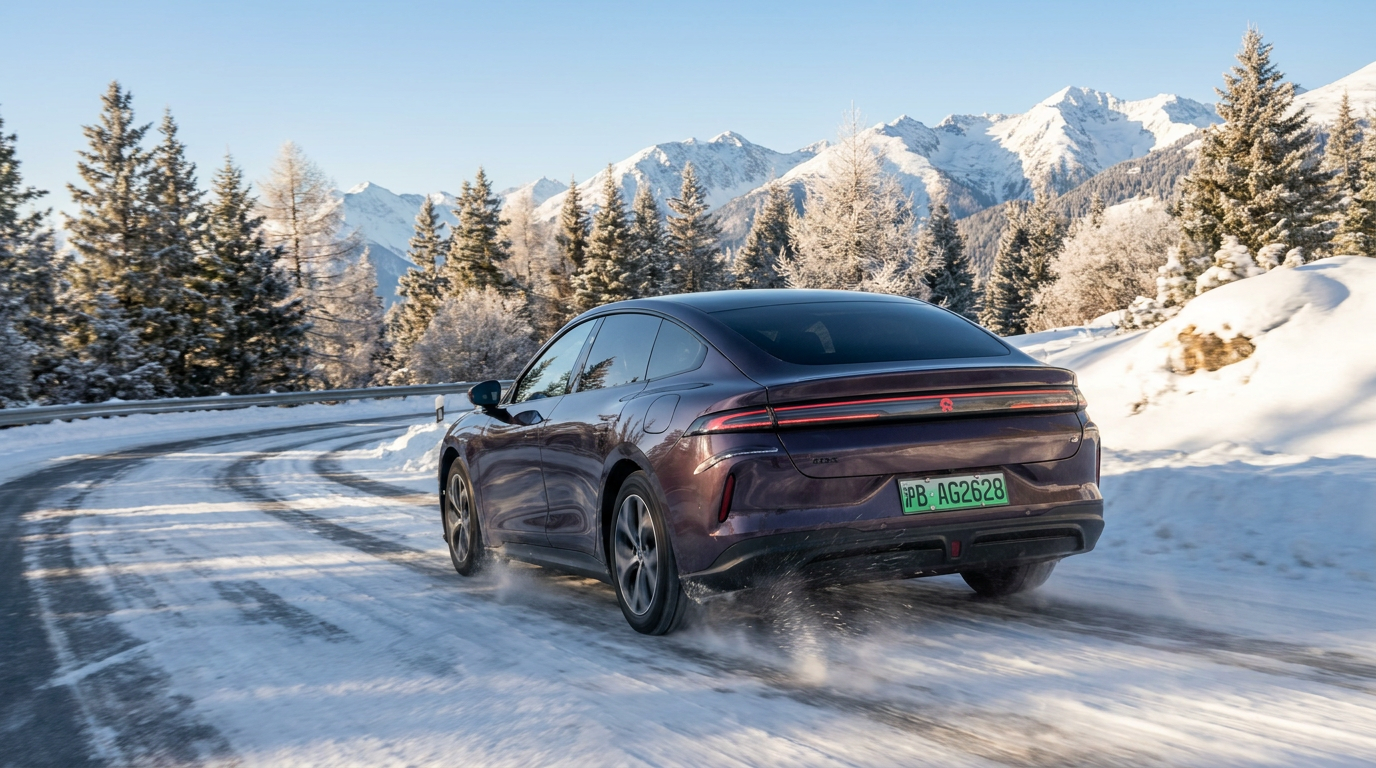
Beyond the sticker price, sodium-ion chemistry solves the most persistent complaint among electric vehicle owners in northern climates: winter range anxiety. Traditional lithium-ion batteries become sluggish in freezing temperatures, as the liquid electrolyte thickens and the lithium ions struggle to move through the graphite anode. This can result in range drops of 30 to 40 percent when the temperature plunges below freezing.[1][6]
Sodium ions, however, are physically larger than lithium ions and require a different anode material, typically a highly porous "hard carbon." This unique architecture happens to perform exceptionally well in extreme cold. CATL's Chief Scientist, Wu Kai, confirmed that the new Naxtra cells retain roughly 90 percent of their total capacity even at -40 degrees Celsius. For drivers in Canada, Scandinavia, and the American Midwest, this effectively eliminates the winter penalty associated with electric mobility.[1][2][6]
CATL's Chief Scientist, Wu Kai, confirmed that the new Naxtra cells retain roughly 90 percent of their total capacity even at -40 degrees Celsius.
Historically, the primary argument against sodium-ion technology was its weight. Early prototypes simply could not hold enough energy per kilogram to make a viable passenger car; they were relegated to stationary grid storage or low-speed scooters. But rapid engineering advancements have closed the gap. CATL's 2026 mass-production cells achieve an energy density of 175 watt-hours per kilogram (Wh/kg).[3][5]
At 175 Wh/kg, sodium-ion is no longer a compromise—it sits squarely on par with early-generation LFP batteries. When integrated into CATL's advanced Cell-to-Pack architecture, which eliminates heavy battery modules to save space, these cells deliver a pure-electric driving range of roughly 400 kilometers (248 miles) under standard testing cycles. CATL's official roadmap targets 600 kilometers of range for future iterations, pushing sodium firmly into mainstream EV territory.[2][4][6]

Despite these breakthroughs, sodium-ion is not expected to completely replace lithium. Because lithium is the lightest metal on the periodic table, it will always maintain an absolute advantage in peak energy density. High-performance sports cars, heavy-duty long-haul trucks, and luxury vehicles requiring 800-kilometer ranges will continue to rely on advanced lithium-ion or emerging solid-state chemistries.[3][4]
Instead of a zero-sum competition, the industry is entering a "dual-chemistry" era. Automakers are deploying sodium-ion packs for entry-level commuter cars, urban delivery fleets, and massive stationary energy storage projects—segments that account for nearly half of all global battery demand. By shifting these high-volume, cost-sensitive applications to sodium, manufacturers free up premium lithium supplies for the vehicles that genuinely need them.[5][6]
The geopolitical implications of this shift are profound. By aggressively scaling sodium-ion production, Chinese manufacturers are effectively insulating their domestic EV supply chains from global lithium market shocks. They are bypassing the need to secure foreign mining rights, relying instead on materials that can be sourced entirely within their own borders. This creates a resilient, low-cost manufacturing base that Western competitors will find difficult to match.[2][4]

In response, automakers across Europe and North America are scrambling to adjust their roadmaps. Many had assumed sodium-ion was still a decade away from commercial viability, focusing their research budgets entirely on squeezing incremental gains out of lithium. Now, they face a reality where budget-friendly, cold-weather-resilient EVs are already rolling off assembly lines overseas.[4][5]
As 2026 progresses, the conversation around electric vehicle affordability is fundamentally changing. The debate is no longer centered on waiting for lithium mining to scale up or hoping for a miraculous drop in raw material prices. The solution is already here, manufactured by the gigawatt-hour, and ready to be installed.[1][5]
Ultimately, while the automotive world continues to dream of the solid-state batteries that might power the supercars of the 2030s, sodium-ion is the pragmatic, unglamorous workhorse democratizing electric mobility today. By making EVs cheaper to build and reliable in the dead of winter, salt has quietly become the most important ingredient in the clean energy transition.[4][6]
How we got here
July 2021
CATL introduces its first-generation sodium-ion battery concept with an energy density of 160 Wh/kg.
April 2025
The Naxtra sodium-ion series is officially launched for passenger vehicles and heavy trucks.
February 2026
CATL and Changan unveil the world's first mass-production passenger vehicle equipped with sodium-ion batteries.
May 2026
CATL confirms all manufacturing bottlenecks are resolved and full-scale mass production is underway.
Viewpoints in depth
Battery Manufacturers' View
Sodium-ion is the key to decoupling EV growth from volatile lithium supply chains.
For giants like CATL and BYD, the pivot to sodium is a strategic masterstroke. By utilizing an element that is virtually infinite and universally accessible, they eliminate the geopolitical and environmental bottlenecks associated with lithium mining. Manufacturers view sodium-ion not as a replacement for high-end lithium cells, but as a complementary 'dual-star' technology that will dominate the massive, cost-sensitive entry-level EV and grid storage markets, freeing up premium lithium for luxury vehicles.
Industry Analysts' View
Sodium-ion is the actual disruptive force in the 2026 battery market, eclipsing solid-state hype.
Market analysts point out that while Western automakers have spent billions chasing the distant promise of solid-state batteries, Chinese firms have quietly industrialized a chemistry that fundamentally alters the current cost curve. With sodium-ion cells forecasted to hit $19/kWh—roughly 60% cheaper than LFP—analysts warn that whoever scales this technology first gains a structural cost advantage in the budget EV sector that competitors will find nearly impossible to claw back.
Cold-Climate Drivers' View
The technology finally makes electric vehicles practical and reliable in extreme winter conditions.
For consumers in regions with harsh winters, the appeal of sodium-ion has little to do with raw material supply chains and everything to do with reliability. Traditional lithium-ion EVs can lose up to 40% of their range in freezing weather as the battery chemistry slows down. Because sodium ions pair with a hard carbon anode that remains highly active in the cold, these new vehicles can start reliably and retain 90% of their range at -40°C, effectively curing winter range anxiety.
What we don't know
- How quickly Western automakers can secure their own sodium-ion supply chains to compete with Chinese manufacturers.
- Whether the long-term cycle life of mass-produced sodium cells will match the 5,000+ cycles proven by mature LFP batteries.
- How the sudden drop in battery costs will impact the resale value of older, lithium-based budget EVs.
Key terms
- Sodium-ion battery
- A rechargeable battery that uses sodium ions (derived from abundant salts) rather than lithium ions to store and release electrical energy.
- LFP (Lithium Iron Phosphate)
- A popular, durable, and relatively low-cost type of lithium-ion battery currently dominating the entry-level electric vehicle market.
- Energy density (Wh/kg)
- A metric measuring how much energy a battery can store relative to its weight; higher numbers mean a lighter battery for the same driving range.
- Hard carbon anode
- A highly porous carbon material used in sodium batteries that easily absorbs larger sodium ions, enabling fast charging and excellent cold-weather performance.
- Cell-to-Pack (CTP)
- A manufacturing method that integrates battery cells directly into the vehicle's main pack, eliminating heavy intermediate modules to save space and weight.
Frequently asked
Are sodium-ion batteries better than lithium-ion?
They are cheaper to produce, safer, and perform much better in freezing temperatures. However, lithium-ion batteries are still lighter and hold more absolute energy, making them better for long-range luxury vehicles.
What is the range of a sodium-ion EV?
Current 2026 mass-production sodium-ion vehicles offer roughly 400 kilometers (248 miles) of range. Future iterations target up to 600 kilometers.
Do sodium batteries lose range in the winter?
Unlike lithium batteries, which struggle in the cold, sodium-ion cells retain up to 90% of their capacity even at -40°C, virtually eliminating winter range loss.
Why are sodium batteries cheaper?
Sodium is one of the most abundant elements on Earth, unlike scarce lithium. Additionally, sodium batteries can use cheap aluminum instead of expensive copper for their internal components.
Sources
Source coverage
6 outlets
4 viewpoints surfaced






[1]ElectrekBattery Manufacturers
CATL is bringing sodium-ion batteries to EVs in 2026
Read on Electrek →[2]CarNewsChinaBattery Manufacturers
CATL to mass-produce sodium-ion batteries in 2026, targets 600 km range
Read on CarNewsChina →[3]ArabWheelsAutomakers
Sodium Ion vs LFP Batteries is no longer a niche lab argument
Read on ArabWheels →[4]AutonocionIndustry Analysts
CATL just quietly made solid-state battery hype look like a distraction
Read on Autonocion →[5]Battery TechIndustry Analysts
Sodium-Ion in 2026: Commercial Footprint at a Glance
Read on Battery Tech →[6]CATL OfficialBattery Manufacturers
CHANGAN Automobile and CATL unveil world's first mass-production passenger vehicle with sodium-ion batteries
Read on CATL Official →

Every angle. Every day.
Get automotive stories with full source coverage and perspective breakdowns delivered to your inbox.