
Israel and Hezbollah agree to renewed ceasefire, saving fragile US-Iran peace deal
Following a deadly 24-hour flare-up that threatened to derail the newly signed U.S.-Iran peace agreement, Israel and Hezbollah have agreed to a renewed ceasefire brokered by Washington and Qatar.
By Factlen Editorial Team
- U.S. Administration
- Argues the Iran deal was a necessary victory to avert a global economic depression and demands allies fall in line.
- Israeli Government
- Prioritizes eliminating Hezbollah's military threat on its northern border and views the U.S.-Iran deal with deep skepticism.
- Iranian Leadership
- Claims the agreement as a strategic win while threatening retaliation if proxy fronts like Lebanon are not included in the truce.
- Regional Mediators
- Focused strictly on immediate de-escalation, maritime security, and restoring global energy trade through the Gulf.
What's not represented
- · Lebanese civilians displaced by the fighting
- · Global shipping companies navigating the reopened strait
Why this matters
The survival of the U.S.-Iran peace deal hinges on maintaining this fragile ceasefire in Lebanon. If the truce holds, it paves the way for the reopening of global energy trade through the Strait of Hormuz; if it fails, the Middle East risks plunging back into a devastating regional war.
Key points
- Israel and Hezbollah agreed to a renewed ceasefire in Lebanon that took effect at 4 p.m. local time on Friday.
- The truce followed a deadly 24-hour exchange of fire that killed at least 47 people in Lebanon and four Israeli soldiers.
- The clashes temporarily delayed U.S.-Iran negotiations in Switzerland aimed at finalizing a broader peace agreement.
- President Trump defended the U.S.-Iran deal, stating it averted a global economic depression by reopening the Strait of Hormuz.
- Vice President JD Vance issued a stark warning to Israeli officials, urging them to stop criticizing the U.S.-brokered pact.
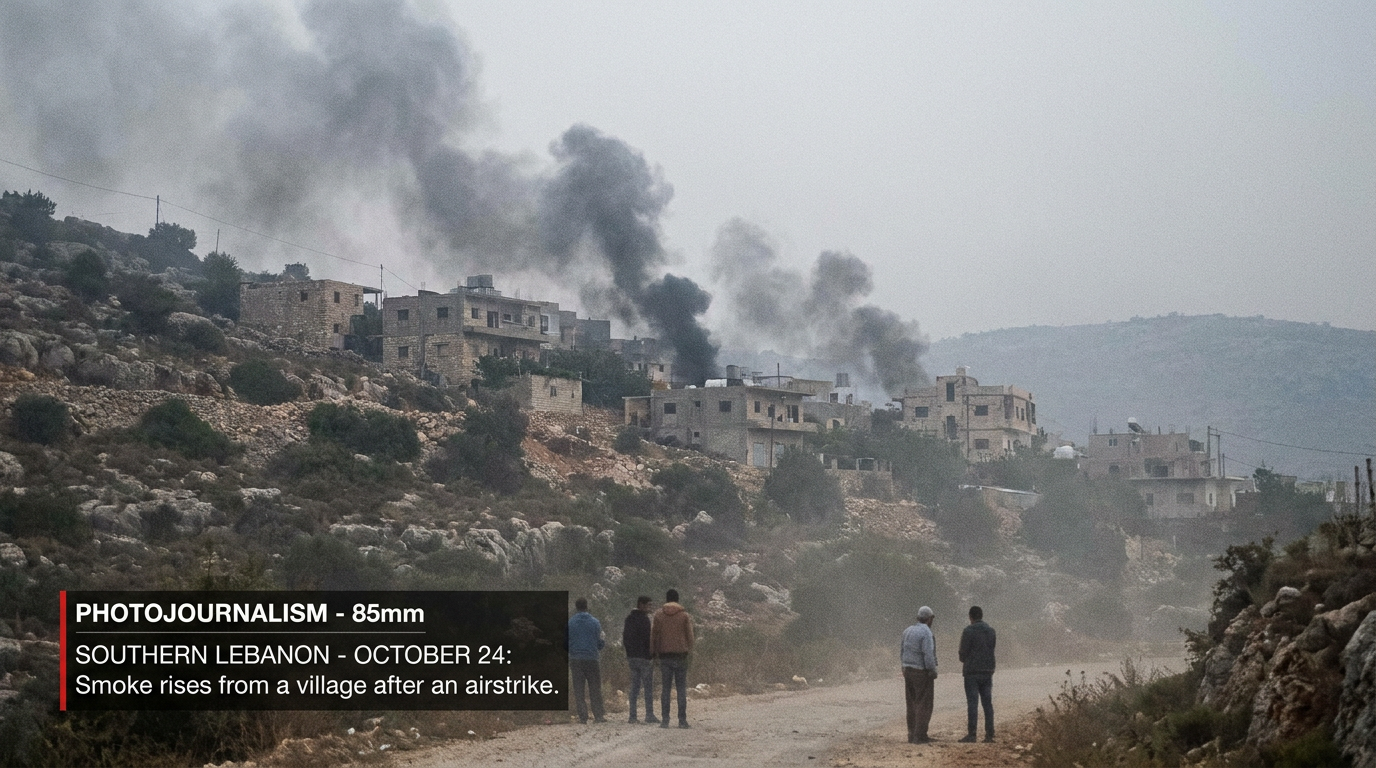
Israel and Hezbollah have agreed to a renewed ceasefire in Lebanon, halting a deadly 24-hour military flare-up that threatened to unravel the newly signed peace agreement between the United States and Iran.[1][4]
The truce, brokered urgently by U.S. and Qatari mediators, took effect at 4 p.m. local time on Friday. It follows a fierce exchange of fire that saw Israel strike more than 80 Hezbollah targets, while the Iranian-backed militant group launched retaliatory attacks.[3][5][6]
The overnight violence exacted a heavy toll, killing at least 47 people in Lebanon and four Israeli soldiers, including a battalion commander whose tank was struck in the village of Kfar Tebnit.[1][6]
More broadly, the sudden escalation in the Levant posed the first existential test for the U.S.-Iran memorandum of understanding, signed earlier this week to end a devastating three-and-a-half-month war.[2][3]

The immediate diplomatic casualty of the Lebanon clashes was a planned meeting in Switzerland. U.S. and Iranian officials were forced to postpone Friday's technical negotiations, and Vice President JD Vance delayed a trip to lead the American delegation.[1][3][4]
However, rapid intervention by regional mediators managed to pull the warring parties back from the brink. By Friday afternoon, a Gulf diplomat confirmed that hostilities had ceased, allowing the broader Washington-Tehran peace framework to survive its fragile first week.[3][5]
The global stakes for the U.S.-Iran deal are massive. The conflict, which erupted on February 28 following U.S.-Israeli strikes, effectively closed the Strait of Hormuz, choking off a critical artery for global energy supplies and rattling international markets.[2][7]
In an interview with Axios, President Donald Trump defended the agreement as an "unconditional surrender" by Tehran. He argued that finalizing the deal was an absolute necessity to prevent the maritime blockade from triggering a worldwide economic depression.[2][7]

The economic relief is already materializing. On Thursday, U.S. Central Command officially lifted all blockade enforcement on maritime traffic entering and exiting Iranian coastal areas.[2][7]
Central Command officially lifted all blockade enforcement on maritime traffic entering and exiting Iranian coastal areas.
Within hours, the Strait of Hormuz saw its highest traffic since mid-April, with at least 25 commercial vessels and oil tankers successfully transiting the newly reopened waterway.[3]
Despite the resumption of global trade, the peace deal has exposed a severe and highly public rift between the Trump administration and the Israeli government.[1][4]
Israeli Prime Minister Benjamin Netanyahu's cabinet has expressed deep reservations about the U.S.-Iran pact, arguing that it leaves Tehran's nuclear infrastructure intact and fails to neutralize its regional proxy network.[1][4]

Prior to Friday's ceasefire, Netanyahu vowed to exact a "very heavy price" from Hezbollah and insisted that the Israel Defense Forces would maintain a security buffer zone in southern Lebanon "for as long as required."[1][3]
The White House has pushed back forcefully against Israeli criticism. Vice President Vance issued a stark public warning to hardline Israeli ministers, including Itamar Ben-Gvir and Bezalel Smotrich, urging them to stop attacking the U.S.-Iran agreement.[4][6]
"If I was in the cabinet of the Israeli government, I might not be attacking the only powerful ally that I have anywhere left in the entire world," Vance told reporters, bluntly reminding Israel that two-thirds of its defense weapons are funded and built by Americans.[4]
On the Iranian side, the political dynamics are equally complex. Newly installed Supreme Leader Ayatollah Mojtaba Khamenei, who succeeded his father following the February strikes, approved the accord while publicly noting he held a "different view."[3]

Tehran's foreign ministry spokesperson Esmaeil Baghaei explicitly blamed the United States for the Israeli strikes in Lebanon, citing the first clause of the U.S.-Iran memorandum which calls for the immediate termination of military operations on all fronts.[4]
Iranian negotiators have warned that their finger remains "on the trigger" if Israel continues its military campaigns, even as they prepare to negotiate the release of billions in frozen assets.[3]
How we got here
Feb 28, 2026
U.S.-Israeli strikes kill Iranian Supreme Leader Ayatollah Ali Khamenei, sparking a 3.5-month war.
Mid-April 2026
The Strait of Hormuz is effectively closed to commercial shipping, rattling global energy markets.
June 15, 2026
The U.S. and Iran electronically sign a memorandum of understanding to end the war.
June 18, 2026
The maritime blockade is lifted, and commercial vessels resume crossing the Strait of Hormuz.
June 19, 2026
Israel and Hezbollah agree to a renewed ceasefire in Lebanon after a deadly 24-hour flare-up.
Viewpoints in depth
U.S. Administration's view
The Trump administration views the Iran deal as a necessary victory to avert global economic disaster.
President Trump and Vice President Vance argue that the agreement represents an 'unconditional surrender' by Tehran that saved the world from an economic depression. They are deeply frustrated by Israeli military actions in Lebanon, viewing them as a dangerous distraction that threatens to unravel the broader peace framework. Vance has bluntly reminded Israeli officials that their security relies almost entirely on American military support.
Israeli Government's view
Israel prioritizes eliminating the immediate military threat posed by Hezbollah on its northern border.
Prime Minister Benjamin Netanyahu and his cabinet view the U.S.-Iran deal with profound skepticism, arguing that it fails to dismantle Iran's nuclear program or neutralize its proxy network. From Jerusalem's perspective, halting the campaign in Lebanon prematurely leaves Israeli citizens vulnerable to future attacks. They insist on maintaining a security buffer zone in southern Lebanon, regardless of Washington's diplomatic timeline.
Iranian Leadership's view
Tehran claims the agreement as a strategic win while demanding that proxy fronts be included in the truce.
Under newly installed Supreme Leader Ayatollah Mojtaba Khamenei, Iran is projecting strength, with negotiators warning their finger remains 'on the trigger.' Tehran insists that the U.S.-Iran memorandum requires an immediate cessation of hostilities on all fronts, including Lebanon. They are leveraging the threat of renewed conflict to ensure the swift release of frozen assets and the permanent lifting of the maritime blockade.
What we don't know
- Whether the ceasefire in Lebanon will hold long enough for U.S. and Iranian diplomats to complete their technical negotiations in Switzerland.
- How much of Iran's frozen assets will be released in the initial 60-day negotiating window.
- Whether the Israeli cabinet will formally endorse the U.S.-Iran peace framework or continue to publicly oppose it.
Key terms
- Strait of Hormuz
- A narrow waterway between the Persian Gulf and the Gulf of Oman, through which a significant portion of the world's oil supply passes.
- Hezbollah
- A heavily armed, Iranian-backed Shiite militant group and political party based in Lebanon.
- Buffer Zone
- A designated neutral or demilitarized area intended to separate hostile forces and prevent conflict.
- Downblending
- The process of reducing the purity of enriched uranium to a level suitable for civilian energy use, a key component of nuclear non-proliferation agreements.
Frequently asked
Why did Israel and Hezbollah agree to a ceasefire?
The truce was brokered urgently by the U.S. and Qatar to prevent the fighting in Lebanon from derailing the newly signed U.S.-Iran peace agreement.
What is the U.S.-Iran peace deal?
It is a memorandum of understanding signed by Washington and Tehran to end a three-and-a-half-month war, reopen the Strait of Hormuz, and begin negotiations on sanctions and nuclear issues.
Why is the Strait of Hormuz important?
It is a critical maritime chokepoint for global energy supplies; its closure during the war threatened to trigger a worldwide economic depression.
How has Israel reacted to the U.S.-Iran deal?
The Israeli government has heavily criticized the deal, arguing it leaves Iran's nuclear infrastructure and regional proxy network intact.
Sources
Source coverage
7 outlets
4 viewpoints surfaced







[1]The Washington PostIsraeli Government
Clashes in Lebanon seemed to imperil the U.S.-Iran peace deal
Read on The Washington Post →[2]AxiosU.S. Administration
Exclusive: President Trump talks Iran, Cuba, Israel, AI, and power on "The Axios Show"
Read on Axios →[3]Al-MonitorIranian Leadership
Israel and Hezbollah agree a ceasefire as US-Iran deal strained
Read on Al-Monitor →[4]TIMEU.S. Administration
Israel and Hezbollah Agree to Cease-Fire, U.S. Official Says
Read on TIME →[5]CBS NewsRegional Mediators
Israel and Hezbollah agree to Lebanon truce, officials say, as fighting delays U.S.-Iran talks
Read on CBS News →[6]The HinduIsraeli Government
Israel and Hezbollah agree a ceasefire on Friday
Read on The Hindu →[7]Seeking AlphaRegional Mediators
Trump calls Iran deal 'unconditional surrender,' says his power has 'no limits': Axios
Read on Seeking Alpha →

More in news politics
See all 7 stories →PEPFAR Cuts
U.S. to Phase Out HIV/AIDS Funding for South Africa Over Policy Dispute
6 sources
School Choice
Supreme Court Rules Federal Education Funds Can Follow Students to Private Schools
7 sources
US-Iran Peace Deal
US and Iran sign historic agreement to end 110-day war, triggering Israel-Hezbollah ceasefire
7 sources

Voting Rights
Supreme Court Upholds Strict State Deadlines for Mail-In Ballots Ahead of 2026 Midterms
7 sources
Every angle. Every day.
Get news politics stories with full source coverage and perspective breakdowns delivered to your inbox.