
How AI is Making 'Returnless Refunds' the New E-Commerce Standard
Retailers are increasingly telling customers to keep unwanted items while still issuing full refunds, using advanced AI to cut reverse-logistics costs and reduce carbon emissions.
By Madison Lane

In short
- Retailers are increasingly using AI to issue refunds without requiring customers to return the physical item.
- The policy is triggered when the cost of return shipping and warehouse labor exceeds the item's resale value.
- Returnless refunds eliminate millions of tons of carbon emissions and prevent usable goods from entering landfills.
Online shopping has always had a stubborn Achilles' heel that frustrates both buyers and sellers alike: the cumbersome return process. For decades, consumers have wrestled with the tedious chores of printing shipping labels, finding the right packaging tape, and driving to distant drop-off locations during their lunch breaks.
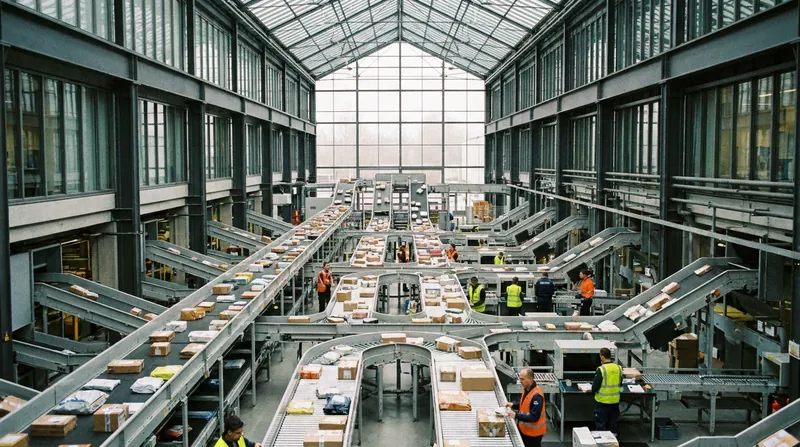
Meanwhile, retailers have quietly bled profit margins while processing the massive volume of inbound freight. The traditional reverse logistics pipeline is notoriously inefficient, requiring multiple touchpoints, extensive transportation networks, and significant manual labor just to get a single unwanted item back onto a warehouse shelf.
But a quiet, highly lucrative revolution is currently reshaping the checkout ecosystem across the digital retail landscape. An increasing number of major e-commerce platforms are adopting 'returnless refunds'—a surprisingly generous policy where the customer receives their money back in full but is instructed to simply keep, donate, or recycle the unwanted item. What initially feels to the consumer like a lucky customer service glitch or a temporary system error is actually a highly calibrated, permanent strategy.
This paradigm shift is entirely powered by predictive artificial intelligence and advanced data analytics. By deliberately eliminating the physical journey of a returned product, retailers are discovering that they can simultaneously delight their consumers, slash their ballooning logistics costs, and drastically reduce their environmental waste footprint. It represents a rare alignment of corporate cost-cutting and consumer convenience, transforming a historically negative touchpoint into a moment of unexpected brand loyalty.[1]
The underlying mechanism behind this counterintuitive shift relies on instantaneous, real-time algorithmic decision-making at the exact moment of the return request. When a customer clicks the 'return item' button on a retailer's app or website, the backend system instantly evaluates dozens of complex variables before deciding whether to generate a printable shipping label. The software acts as a lightning-fast financial analyst, weighing the immediate loss of the refund against the projected future costs of physical retrieval.
Specifically, the AI calculates the exact, granular cost of reverse logistics for that specific item originating from that specific zip code. It factors in the current outbound shipping rate, the hourly warehouse labor required to open, inspect, and repackage the product, and the statistical likelihood that the item can actually be resold at full retail price. For seasonal items, intimate apparel, or rapidly depreciating electronics, the resale probability drops precipitously, heavily influencing the algorithm's final verdict.[3]
If the software determines that the total cost of processing the return exceeds the item's ultimate salvage value—a remarkably common scenario for bulky, heavy, or low-margin goods like inexpensive apparel, basic home decor, or oversized furniture—the system automatically triggers a returnless refund. The retailer essentially decides that the cheapest logistical move is to make no physical move at all, absorbing the wholesale cost of the item as a necessary operational expense rather than compounding the loss with shipping fees.
The overarching business case for this seemingly radical approach is overwhelming when viewed through a macro-economic lens. The National Retail Federation estimates that reverse logistics cost United States retailers roughly $38 billion annually, a staggering figure that has steadily climbed alongside the overall penetration of e-commerce into daily life. As online shopping captures a larger share of total retail sales, the sheer volume of returns has threatened to overwhelm traditional fulfillment infrastructure, forcing companies to find creative relief valves.
The unit economics of a single return clearly illustrate the problem. Processing a returned $20 cotton t-shirt can easily cost a company $15 in freight charges, warehouse labor, and administrative overhead. Once the item is finally restocked weeks later, it often must be heavily discounted to move, meaning the retailer actually loses significantly more money by taking the product back than by simply writing it off immediately. Returnless refunds stop this financial bleeding at the source.[2]
Beyond the corporate balance sheet, the environmental implications of the 'keep it' policy are profound and increasingly prioritized by sustainability advocates. The traditional retail return cycle is an ecological nightmare, generating massive amounts of carbon emissions through redundant, inefficient transportation. Delivery trucks driving back and forth to retrieve single items from residential neighborhoods contribute heavily to the logistics industry's overall climate impact, often for products that will never see a second owner.
Furthermore, because many returned items are ultimately deemed too costly to meticulously inspect, clean, and repackage to brand standards, an estimated 9.5 billion pounds of returned inventory ends up in landfills every year in the United States alone. Perfectly usable goods are routinely destroyed or thrown away simply because the spreadsheet dictates that disposal is cheaper than refurbishment. This hidden waste crisis has long been the dark secret of the convenience economy.
By halting the reverse supply chain before it even starts, returnless refunds directly eliminate the carbon footprint of the return trip and shift the disposal or donation responsibility to the consumer. Shoppers are often much better positioned to give the item a second life locally, whether by gifting it to a friend, dropping it at a neighborhood charity thrift store, or repurposing it, thereby keeping the product out of the industrial waste stream entirely.[1]
However, the widespread adoption of this frictionless policy introduces a significant and highly costly vulnerability: the rise of 'friendly fraud.' Retailers and loss prevention teams are acutely aware that if consumers know they can reliably get a refund without returning the item, bad actors will inevitably exploit the system to score free merchandise. Online forums and social media communities frequently share tips on which retailers have the most lenient algorithms, creating a constant cat-and-mouse game.
To combat this inevitable abuse, the AI models governing these automated refunds are heavily guarded and constantly updated. The algorithms analyze a shopper's entire historical profile, including their lifetime purchase volume, their historical return frequency, the age of their account, and even their behavioral browsing patterns to assign a dynamic, invisible trust score. This score determines exactly how much leniency they are afforded during the automated return process.[3]
A loyal, long-term customer with a five-year history of keeping 95 percent of their purchases is highly likely to be granted a returnless refund on a defective $15 phone case without any friction. Conversely, a brand-new account attempting to return a high-value electronic device or a user who frequently claims packages never arrived will always be forced to physically ship the item back, and may even face account suspension if the system detects coordinated fraudulent behavior.
As machine learning models become increasingly sophisticated at identifying subtle fraud patterns and calculating real-time logistics costs, the threshold for returnless refunds is expected to expand across the industry. For the modern consumer, the era of the dreaded, time-consuming return errand is slowly coming to an end, replaced by a highly optimized system that prioritizes logistical efficiency, environmental sustainability, and a genuinely frictionless shopping experience.[1]
Key terms
- Reverse Logistics
- The supply chain process of moving goods from their typical final destination back to the retailer or manufacturer for returns, repairs, or recycling.
- Returnless Refund
- A customer service policy where a retailer issues a full refund for an unwanted item but instructs the buyer to keep or dispose of the product.
- Friendly Fraud
- When a legitimate consumer exploits lenient store policies, such as falsely claiming an item never arrived or intentionally abusing returnless refund algorithms to get free merchandise.
- Salvage Value
- The estimated resale value of an item after it has been returned, inspected, repackaged, and potentially discounted.
Reader questions
Does this policy apply to expensive electronics?
Generally, no. Returnless refunds are typically reserved for low-margin, bulky, or heavy items where the cost of return shipping exceeds the item's resale value.
Will my account get banned if I use this too much?
Yes, if the AI detects abuse. Retailers use dynamic trust scores based on your purchase history; frequent returners or new accounts are usually required to ship items back.
What am I supposed to do with the unwanted item?
Retailers encourage consumers to donate the item to a local charity, gift it to a friend, or recycle it, keeping it out of the industrial waste stream.
Where opinion splits
Retail Strategists
Focus on protecting profit margins by eliminating the exorbitant costs of reverse logistics.
For retail executives, the math is entirely unsentimental. The traditional model of accepting every return regardless of value is viewed as a legacy inefficiency. Strategists argue that by absorbing the wholesale cost of a $10 item immediately, companies avoid the compounding losses of return freight, warehouse labor, and eventual liquidation. This approach treats low-value returns as a predictable operational expense rather than a logistical crisis.
Environmental Advocates
Champion the reduction of carbon emissions and the prevention of usable goods ending up in landfills.
Climate and sustainability researchers view the traditional return cycle as an ecological disaster. They point out that reverse logistics generate massive amounts of redundant carbon emissions, often for products that are ultimately destroyed because repackaging them is too expensive. By halting the return trip, advocates argue that returnless refunds force a more localized, sustainable approach to unwanted goods, encouraging community donation over industrial disposal.
Fraud Prevention Experts
Warn about the rise of 'friendly fraud' and emphasize the need for strict algorithmic guardrails.
Loss prevention analysts caution that frictionless return policies inevitably attract bad actors. They track the rise of online communities dedicated to exploiting lenient algorithms, warning that without aggressive machine learning oversight, returnless refunds can quickly become a massive liability. These experts advocate for continuous monitoring of account age, return frequency, and IP addresses to ensure the policy only benefits genuinely loyal customers.
- Retail Strategists
- Focus on protecting profit margins by eliminating the exorbitant costs of reverse logistics and warehouse restocking.
- Environmental Advocates
- Champion the reduction of carbon emissions from return shipping and the prevention of usable goods ending up in landfills.
- Fraud Prevention Experts
- Warn about the rise of 'friendly fraud' and emphasize the need for strict algorithmic guardrails to prevent abuse.
- Consumer Experience Analysts
- View the policy as a massive win for consumer convenience that builds long-term brand loyalty.
Perspectives this story doesn't cover
- Small Business Owners
- Warehouse Logistics Workers
Sources
Source coverage
3 outlets
4 viewpoints surfaced



- [1]Factlen Editorial TeamConsumer Experience Analysts
Synthesis by Factlen editorial team
Read on Factlen Editorial Team → - [2]Supply Chain Management ReviewRetail Strategists
The Salvage Value Equation: When to Walk Away from Inventory
Read on Supply Chain Management Review → - [3]Forrester ResearchFraud Prevention Experts
Dynamic Trust Scoring in Modern E-Commerce
Read on Forrester Research →

More in Business
See all →Trade Policy
EU Ends E-Commerce Tax Exemption, Imposing New €3 Duty on Small Parcels to Counter China Trade Imbalance
4 sources
AI Marketplaces
How AI is Fixing the Used Car Market as Carro Targets a $3 Billion US IPO
5 sources
Agentic AI
The Rise of Agentic AI: How Autonomous Assistants Are Rewriting E-Commerce
2 sources

Agentic AI
The Rise of Agentic Commerce: How AI is Autonomously Executing Purchases
5 sources

Comments
Every angle. Every day.
Get Business stories with full source coverage and perspective breakdowns, free every day.