
Spain's 'Tiki-Taka 2.0' Faces Early Test: Inside Luis de la Fuente's 2026 World Cup Tactics
Spain arrived at the 2026 World Cup as heavy favorites with a modernized, vertical approach, but an opening draw against Cape Verde has highlighted their reliance on dynamic wingers.
By Factlen Editorial Team
- Tactical Analysts
- Praise the evolution from sterile possession to vertical attacking.
- Skeptical Supporters
- Express frustration over the team's inability to break down low blocks without key players.
- National Team Management
- Prioritize structural reliability, control, and squad cohesion over reactive changes.
What's not represented
- · Opposing Managers' Strategies
- · Cape Verde Camp's View
Why this matters
Understanding Spain's tactical evolution provides a blueprint for how modern international football is won, highlighting the delicate balance between controlling possession and executing rapid, vertical attacks.
Key points
- Spain enters the 2026 World Cup utilizing a modernized, vertical "Tiki-Taka 2.0" system.
- An opening 0-0 draw against Cape Verde highlighted struggles against deep defensive blocks.
- The absence of injured wingers severely limited Spain's attacking width.
- Manager Luis de la Fuente defended the team's performance, citing a 32-match unbeaten streak.
- Spain's tactical structure shifts from a 4-3-3 to an aggressive 3-2-5 in possession.
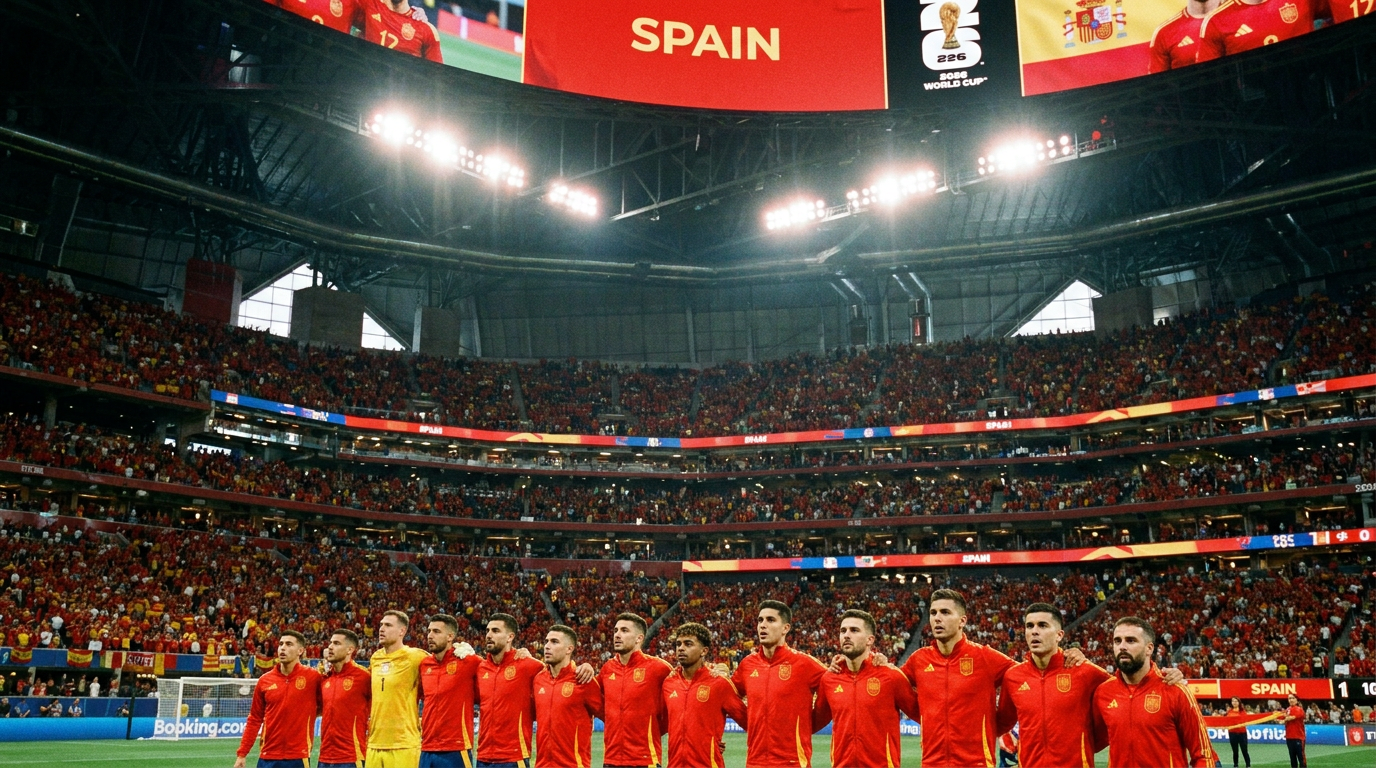
Spain arrived in North America for the 2026 FIFA World Cup carrying the weight of expectation and the glittering pedigree of European champions. Under the guidance of manager Luis de la Fuente, La Roja has successfully shed the sterile, possession-heavy identity of the late 2010s, evolving into a dynamic, multifaceted attacking force. This modernized approach, widely dubbed "Tiki-Taka 2.0," blends the traditional Spanish mastery of the ball with a ruthless verticality designed to punish defensive blocks. Entering the tournament ranked second globally, Spain is widely considered one of the primary contenders to lift the trophy, boasting a squad that seamlessly mixes seasoned veterans with electrifying teenage talent.[1][2]
However, the reality of tournament football delivered a swift reality check in their Group H opener. Playing in Atlanta, Spain was held to a frustrating 0-0 draw by tournament newcomers Cape Verde. The match served as a stark illustration of both Spain's enduring strengths and their lingering vulnerabilities. La Roja dominated the ball, hoarding 74 percent possession and suffocating their opponents, yet they managed only seven shots on target. The performance felt eerily reminiscent of past tournaments where Spain passed opponents into submission without actually breaching the net, sparking immediate debate about the team's cutting edge when faced with a deeply entrenched low block.[3][5]
The crucial context behind the opening stalemate was the absence of Spain's two most explosive weapons. Wingers Lamine Yamal and Nico Williams, whose pace and directness defined the team's Euro 2024 triumph, were relegated to the bench after battling hamstring injuries in the build-up to the tournament. Without their ability to stretch the pitch and isolate defenders in one-on-one situations, Spain's attack became narrow and predictable. The 18-year-old Yamal, who recorded 16 goals and 11 assists in his domestic season, is the linchpin of De la Fuente's vertical strategy; his absence fundamentally altered the team's attacking geometry.[4][5]
To understand why Yamal and Williams are so vital, one must examine the mechanics of De la Fuente's system. The 64-year-old manager typically deploys a fluid 4-3-3 formation that radically alters in possession. When Spain has the ball, the structure morphs into an aggressive 3-2-5 or 2-3-5. The center-backs split wide, and goalkeeper Unai Simon steps up as a deep-lying playmaker, tasked with provoking the opposition's press before breaking lines with precise mid-range passes. This allows the fullbacks to push high up the pitch, while the wingers are instructed to stay wide or cut inside to overload the penalty area.[2][6]

The engine room of this intricate system is anchored by Rodri, who operates as the undisputed defensive pivot. The captain drops deep to offer a central passing option during the build-up phase, ensuring Spain maintains an average pass completion rate of over 92 percent in their own third. More importantly, Rodri serves as the team's tactical safety net. Because Spain commits so many bodies forward, they are inherently vulnerable to counterattacks. Rodri's elite reading of the game allows him to sweep up loose balls and sustain the pressure, a role he executes better than arguably anyone else in world football.[1][2]
The engine room of this intricate system is anchored by Rodri, who operates as the undisputed defensive pivot.
Ahead of Rodri, technicians like Pedri and Fabián Ruiz are tasked with controlling the tempo and threading passes through the half-spaces. De la Fuente's philosophy dictates that possession must have a purpose. If a vertical passing lane opens to the wingers within three seconds of regaining the ball, the midfielders are instructed to take it immediately. This shift from patient, horizontal circulation to rapid, aggressive transition is what separates the current iteration of La Roja from the squads that struggled at the 2018 and 2022 World Cups.[2][6]
The fullback dynamics further complicate the picture for opposing defenses. Spain frequently utilizes an asymmetrical system to balance their attacking overloads. On the left, Marc Cucurella or Alejandro Grimaldo acts as an aggressive playmaker, bombing forward to deliver early crosses or cutbacks. To compensate, the right-back—often Marcos Llorente or Pedro Porro—will tuck inside, inverting to sit alongside Rodri. This creates a double pivot that fortifies the center of the pitch against rapid transitions while still allowing Spain to overwhelm the flanks.[5][6]
Against Cape Verde, De la Fuente attempted to solve the winger shortage through a controversial tactical tweak. Knowing his side would dominate possession, the manager deployed central midfielder Gavi as a makeshift left winger. The experiment largely failed to produce the desired penetration, as Gavi naturally drifted inside rather than holding the width required to stretch the defense. The decision drew heavy criticism from supporters and analysts alike, who argued that the team lacked the raw speed necessary to bypass Cape Verde's organized defensive lines.[3]

Despite the external noise, De la Fuente remained steadfast in his defense of the team's performance and tactical setup. In his post-match press conference, the manager pointed out that Spain had generated clear crossing opportunities and emphasized the squad's remarkable consistency. He reminded critics that the national team is currently riding a 32-match unbeaten streak, a testament to the reliability of their possession-based game model. De la Fuente insists that the team will not abandon its core philosophy, though he acknowledged that finishing in the final third must improve.[3]
That finishing burden falls heavily on the shoulders of Mikel Oyarzabal, who has emerged as Spain's primary striker. Oyarzabal boasts an impressive record of 12 goals in his last 12 appearances for the national team, but he endured a frustrating afternoon in Atlanta, at one point going 30 minutes without touching the ball. As a forward who thrives on intelligent movement and precise service rather than sheer physical dominance, Oyarzabal's effectiveness is directly tied to the creativity of the players around him. When the wingers are grounded, the striker is easily isolated.[3][5]
The good news for Spain is that both Yamal and Williams have returned to full training, greeted by celebratory gauntlets from their teammates at the squad's base camp. Their imminent return to the starting lineup is expected to restore the terrifying unpredictability that makes Spain a legitimate title contender. With the medical staff managing their loads carefully, the duo's fresh legs could prove to be a decisive advantage as the tournament progresses into the grueling knockout stages. The psychological boost of having their most dynamic attackers back on the pitch cannot be overstated, as it forces opposing defenses to stretch wider and creates more central space for the midfield technicians.[4]

Looking ahead, Spain's path out of Group H remains highly favorable despite the opening stumble. Upcoming fixtures against Saudi Arabia and a formidable Uruguay side will test entirely different aspects of De la Fuente's tactical blueprint. Uruguay, in particular, possesses the midfield intensity and aggressive pressing structure to challenge Spain's build-up play, setting the stage for a fascinating clash of styles. If La Roja can successfully reintegrate their dynamic wingers and rediscover their ruthless edge in the final third, the structural foundations are firmly in place for a deep, commanding run into the North American summer.[1][6]
How we got here
Jan 2023
Luis de la Fuente takes over as manager, beginning the tactical shift toward a more vertical style.
Jul 2024
Spain wins Euro 2024, validating the new 'Tiki-Taka 2.0' philosophy.
Jun 11, 2026
The 2026 FIFA World Cup kicks off in North America.
Jun 15, 2026
Spain draws 0-0 with Cape Verde in their Group H opener in Atlanta.
Viewpoints in depth
Tactical Analysts
Praise the evolution from sterile possession to vertical attacking.
Football analysts widely commend Luis de la Fuente for modernizing Spain's traditional tiki-taka. By instructing players to seek vertical passing lanes within three seconds of recovering the ball, the team has become significantly more dangerous in transition. Analysts point out that the 3-2-5 attacking structure perfectly utilizes the pace of modern wingers, making Spain a far more unpredictable opponent than the iterations seen in 2018 and 2022.
Skeptical Supporters
Express frustration over the team's inability to break down low blocks without key players.
A vocal segment of the Spanish fanbase remains haunted by the ghosts of past tournaments, where the team frequently recorded over 70 percent possession without scoring. The 0-0 draw against Cape Verde reignited these fears, with supporters criticizing the decision to play central midfielders out of position on the wings. For these fans, possession without penetration is a fatal flaw, and they demand a more direct Plan B when the primary wingers are unavailable.
National Team Management
Prioritize structural reliability, control, and squad cohesion over reactive changes.
Luis de la Fuente and his coaching staff maintain that their system is fundamentally sound, pointing to a 32-match unbeaten streak as proof of concept. The management believes that controlling the tempo and suffocating opponents through possession is the safest way to navigate tournament football. They view the Cape Verde draw as a minor execution issue rather than a structural failure, trusting that the return of fully fit attackers will naturally solve their final-third struggles.
What we don't know
- Whether returning wingers can maintain full fitness through the grueling tournament schedule.
- How Spain's high defensive line will hold up against elite counter-attacking teams in the knockout stages.
Key terms
- Tiki-Taka
- A style of play characterized by short passing and maintaining possession, traditionally associated with the Spanish national team.
- Low Block
- A defensive strategy where a team positions its players deep in their own half to restrict space for the attacking team.
- Sweeper-Keeper
- A goalkeeper who pushes high up the pitch to participate in the build-up play and clear balls behind the defensive line.
- Double Pivot
- Two defensive midfielders playing alongside each other to protect the defense and control the center of the pitch.
- Half-Spaces
- The vertical channels on the football pitch located between the center and the wide flanks, often exploited by attacking midfielders.
Frequently asked
Why didn't Lamine Yamal start the opening match?
Yamal was recovering from a hamstring injury sustained prior to the tournament, prompting the medical staff to manage his minutes carefully.
What is Spain's tactical formation?
Spain typically starts in a 4-3-3 formation, but it fluidly shifts into a 3-2-5 or 2-3-5 when they have possession of the ball.
Who is in Spain's World Cup group?
Spain is competing in Group H alongside Uruguay, Saudi Arabia, and tournament newcomers Cape Verde.
Sources
Source coverage
6 outlets
3 viewpoints surfaced






[1]The GuardianNational Team Management
Spain World Cup 2026 team guide
Read on The Guardian →[2]The IndependentTactical Analysts
How Spain have developed 'tiki-taka 2.0' in pursuit of World Cup glory
Read on The Independent →[3]World Soccer TalkSkeptical Supporters
Spain's Luis de la Fuente explains Gavi's role as left winger
Read on World Soccer Talk →[4]GoalNational Team Management
Lamine Yamal and Nico Williams return to Spain training ahead of World Cup opener
Read on Goal →[5]Sports Mole
Spain vs. Cape Verde: Predicted La Roja XI including Lamine Yamal, Nico Williams decisions
Read on Sports Mole →[6]LiveScoreTactical Analysts
Who will win the World Cup 2026? Top contenders analysed
Read on LiveScore →
More in sports
See all 8 stories →Standings
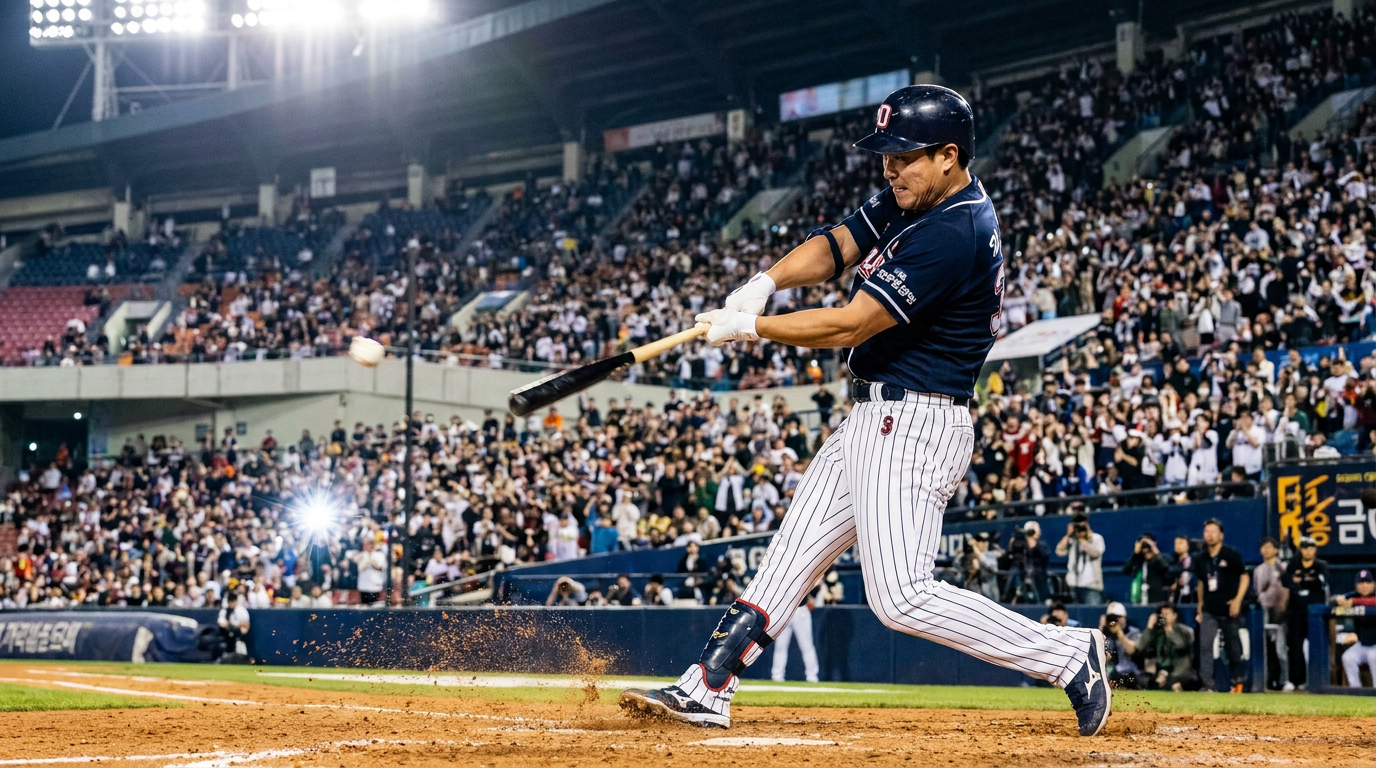
LG Twins Hold Off Surging KT Wiz and Doosan Bears in Tight KBO Pennant Race
8 sources
Injury
Global Soccer Injury Report: Key Stars Return to Fitness Ahead of 2026 Pre-Season
7 sources

Standings
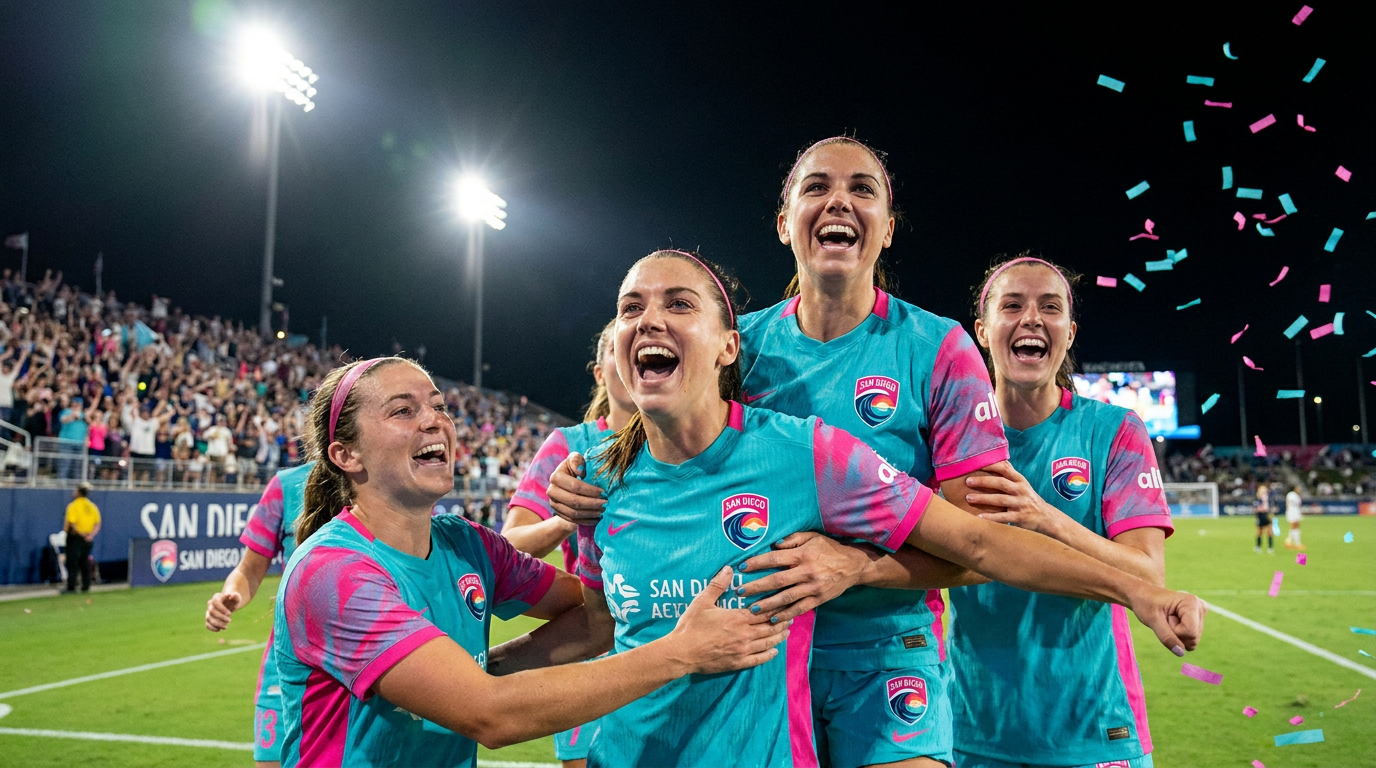
San Diego Wave Seize NWSL Top Spot as League Enters World Cup Break
7 sources
Equipment Tech
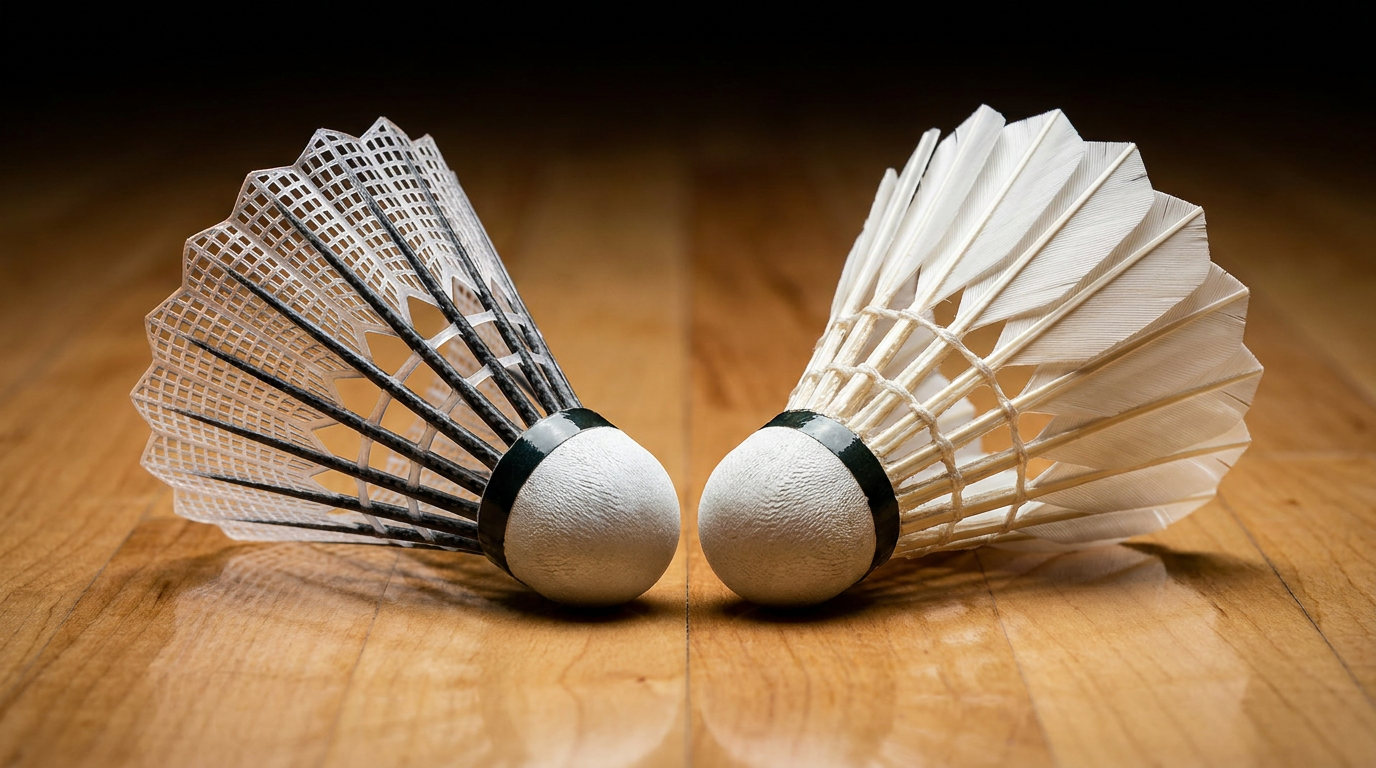
Badminton's Quiet Revolution: The Engineering Race to Replace the Feather Shuttlecock
7 sources
Every angle. Every day.
Get sports stories with full source coverage and perspective breakdowns delivered to your inbox.