
Federal Judge Rules EPA's Cancellation of $2.8 Billion Climate Justice Grant Program Unlawful
A U.S. District Court has voided the Trump administration's termination of a $2.8 billion environmental justice grant program, calling the move 'arbitrary and capricious.' However, the judge stopped short of ordering the EPA to resume disbursements, leaving over a hundred local projects in legal limbo ahead of a September funding deadline.
By Factlen Editorial Team
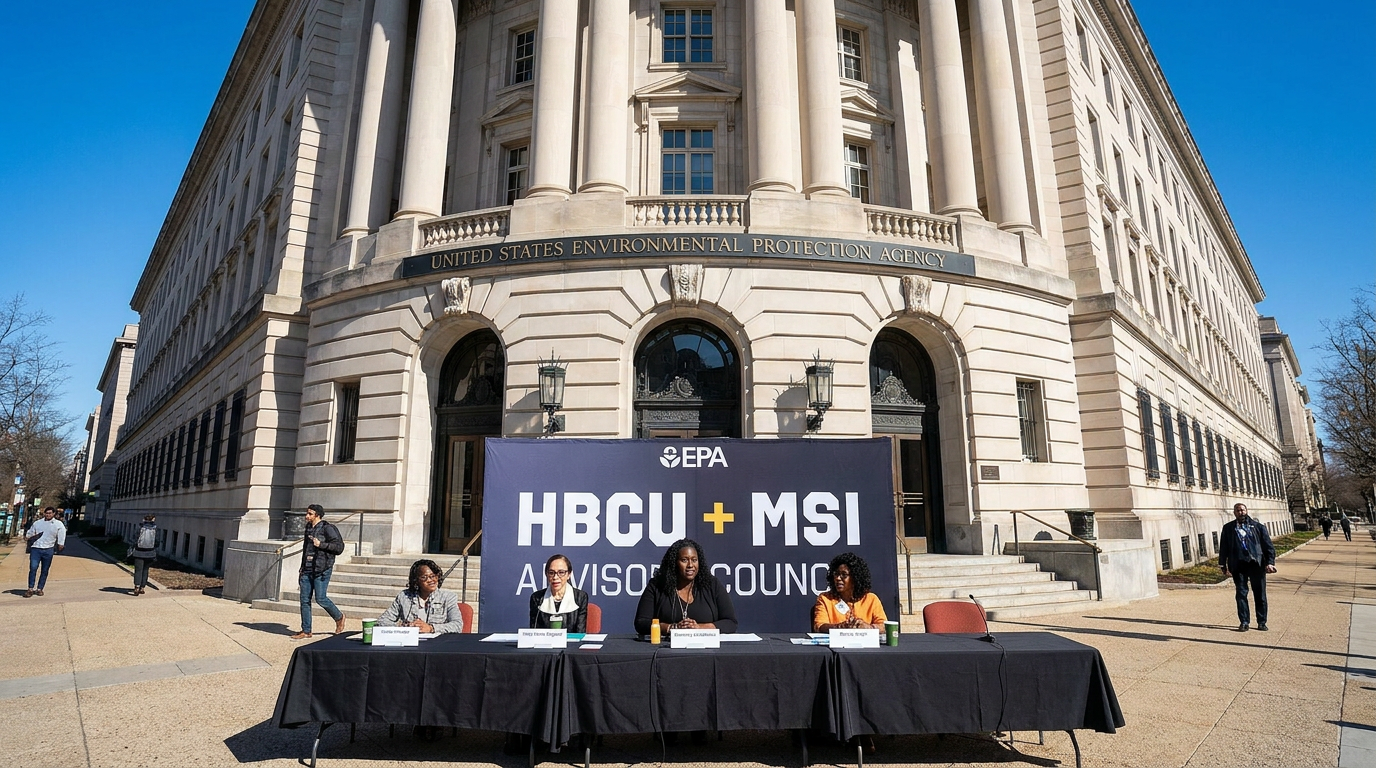
- Environmental Justice Advocates
- Argue the administration illegally withheld congressionally appropriated funds from vulnerable communities, bypassing the legislative process.
- The Administration
- Maintains the grants funded activist groups rather than concrete environmental remediation, asserting executive authority to pause misaligned disbursements.
- Legal Analysts
- Emphasize the procedural reality that without an injunction to force the EPA to act, the legal victory for grantees is largely symbolic.
What's not represented
- · Taxpayer watchdog groups
- · Congressional appropriators
Why this matters
The ruling exposes the limits of executive power to unilaterally cancel congressionally appropriated funds, but the lack of an enforcement mechanism means communities expecting billions for pollution reduction and climate resilience may never see the money.
Key points
- A federal judge ruled the EPA's cancellation of a $2.8 billion climate justice grant program was unlawful.
- The program, created by the Inflation Reduction Act, was shuttered by the Trump administration in February 2025.
- The judge declined to order the EPA to resume the program, citing the impracticality of rehiring dismissed staff.
- Funds must be obligated by September 30, 2026, or they will revert to the Treasury.
- Affected communities may be forced to seek damages in the Court of Federal Claims.
A federal judge has ruled that the Environmental Protection Agency acted unlawfully when it abruptly shuttered a $2.8 billion grant program designed to help disadvantaged communities address pollution and climate risks. U.S. District Judge Richard Mark Gergel of the District of South Carolina issued a 47-page opinion declaring the termination of the Environmental and Climate Justice Block Grant Program to be "arbitrary and capricious and unlawful" under the Administrative Procedure Act.[1][2][6]
The grant program was originally established by Congress under the 2022 Inflation Reduction Act. It was designed to distribute financial assistance to community groups, local governments, and tribal nations to fund projects targeting air pollution, extreme heat, decaying infrastructure, and rising utility costs in historically underserved areas. Hundreds of communities across the country had spent years preparing applications and negotiating awards.[1][3][7]
In February 2025, following an executive order from President Donald Trump titled "Unleashing American Energy," the EPA halted the program. The administration argued the cancellation was necessary for "policy reasons," with EPA Administrator Lee Zeldin stating that the term environmental justice had been used as an excuse to fund activist organizations rather than directly remediating concrete environmental issues.[2][3][4]

The termination prompted a lawsuit from a coalition of nonprofits, cities, and tribal partners, represented by the Southern Environmental Law Center and the Public Rights Project. The plaintiffs argued that the executive branch cannot unilaterally ignore a congressional mandate and withhold appropriated funds without passing a formal rescission bill through Congress.[2][5][7]
Judge Gergel, an Obama appointee, agreed with the plaintiffs. He ruled that the EPA's internal guidance to shutter the program circumvented the will of Congress, which had explicitly authorized the funding and set statutory eligibility criteria that an executive order cannot rewrite. The decision officially voids the agency's termination guidance, restoring legal status to the grantees.[2][6][7]
Judge Gergel, an Obama appointee, agreed with the plaintiffs.
However, the legal victory may prove hollow for the communities awaiting funds. Despite declaring the cancellation illegal, Judge Gergel denied the plaintiffs' request for a permanent injunction that would have forced the EPA to resume administering the grants. He noted that the agency had already laid off the federal employees responsible for overseeing the program, making an immediate restart "impractical."[1][2][4]
The lack of an injunction places 116 grantees who were in the middle of award negotiations in a precarious position, as the clock is rapidly running out. Under the Inflation Reduction Act, the EPA only has the authority to obligate the block grant funds through September 30, 2026. After that date, any unobligated money automatically reverts to the U.S. Treasury, and the program ceases to exist.[6][7]

The local impacts of the frozen funds are already being felt nationwide. The Walker River Paiute Tribe in Nevada lost a $20 million grant intended for clean energy infrastructure. Other stalled initiatives include a collaboration in rural Alabama to install household wastewater treatment systems, and a project in Texas aimed at expanding residential composting to reduce landfill waste.[5][7]
The ruling arrives amid a broader push by the administration to dismantle Biden-era climate initiatives and deregulate the energy sector. The EPA recently rescinded the 2009 Endangerment Finding for greenhouse gases, and the Justice Department has actively intervened in Supreme Court cases to block local governments from suing fossil fuel producers over climate impacts.[1][3]
With the EPA stating it is currently "reviewing the decision," legal experts suggest that affected communities have few immediate options. Rather than receiving the actual grants to build infrastructure, terminated grantees may be forced to pursue damages in the Court of Federal Claims—turning a program meant to deliver environmental relief into a protracted, years-long legal battle.[2][5][6]
How we got here
August 2022
Congress passes the Inflation Reduction Act, creating the $2.8 billion Environmental and Climate Justice Block Grant Program.
February 2025
The Trump administration issues an executive order pausing the funds, and the EPA officially terminates the program.
March 2025
A coalition of nonprofits and local governments sues the EPA over the cancellation.
June 11, 2026
A federal judge rules the termination unlawful but declines to force the EPA to restart the program.
September 30, 2026
Statutory deadline for the EPA to obligate the funds before they revert to the Treasury.
Viewpoints in depth
Environmental Justice Advocates
Argue the ruling validates that the administration illegally deprived vulnerable communities of congressionally appropriated funds.
Advocacy groups and affected grantees emphasize that the executive branch cannot rewrite statutory eligibility criteria or ignore a congressional mandate. They argue that the $2.8 billion was legally designated to help communities disproportionately burdened by industrial pollution and climate change, and that the administration's unilateral cancellation represents a severe overreach of executive power that harms the nation's most vulnerable populations.
The Administration
Asserts that the program was a vehicle to fund activist organizations rather than directly remediating environmental issues.
Conservative policymakers and EPA leadership maintain that the executive branch has the authority to pause disbursements that do not align with current national priorities. They argue that the 'environmental justice' label was frequently used to funnel taxpayer dollars to left-wing advocacy groups, and that federal funds should be redirected toward concrete, measurable environmental remediation efforts rather than community organizing.
Legal Analysts
Focus on the procedural implications, noting that the lack of an injunction leaves grantees with a hollow victory.
Legal experts point out that while the judge's ruling under the Administrative Procedure Act is a sharp rebuke of the EPA's methods, the practical outcome is grim for the grantees. Because the judge deemed it 'impractical' to force the agency to rehire staff and restart the program, the September 2026 deadline will likely pass without the funds being disbursed. Analysts predict the dispute will now migrate to the Court of Federal Claims, where communities will have to engage in lengthy litigation just to recover damages.
What we don't know
- Whether the EPA will voluntarily resume any part of the grant program before the September 2026 deadline.
- How the Court of Federal Claims will handle potential damages lawsuits from the 116 affected grantees.
- Whether Congress will intervene to extend the statutory deadline for the funds.
Key terms
- Administrative Procedure Act (APA)
- A federal law that governs how administrative agencies of the federal government may propose and establish regulations, prohibiting actions that are 'arbitrary and capricious.'
- Block Grant
- A large sum of money granted by the national government to a regional or local authority with only general provisions as to the way it is to be spent.
- Court of Federal Claims
- A federal court that hears monetary claims against the U.S. government, including contract disputes and claims for damages.
- Injunction
- A judicial order that restrains a person or entity from beginning or continuing an action, or that compels a person to carry out a certain act.
Frequently asked
Why did the EPA cancel the grant program?
The Trump administration terminated the program in February 2025, arguing the funds were being used to support activist groups rather than directly addressing environmental remediation.
Will the communities get their grant money?
It is unlikely in the short term. Because the judge did not order the EPA to resume the program, communities may have to sue for damages in the Court of Federal Claims.
What happens to the $2.8 billion if it isn't spent?
Under the law, any funds not obligated by September 30, 2026, will automatically revert to the U.S. Treasury.
Sources
Source coverage
7 outlets
3 viewpoints surfaced







[1]Inside Climate NewsEnvironmental Justice Advocates
A Federal Judge in South Carolina Ruled the Trump Administration's Termination of Environmental Justice Grants Was 'Illegal'
Read on Inside Climate News →[2]NOTUSLegal Analysts
Federal Judge Rules the EPA Unlawfully Ended Justice Block Grants
Read on NOTUS →[3]Mother JonesEnvironmental Justice Advocates
Judge Says EPA Illegally Canceled a $2.8 Billion Environmental Justice Program
Read on Mother Jones →[4]Smart Cities DiveThe Administration
A federal judge called termination of the $2.8 billion Environmental and Climate Justice Block Grant 'arbitrary and capricious'
Read on Smart Cities Dive →[5]TruthoutEnvironmental Justice Advocates
Federal Judge Rules Trump Administration's Termination of Environmental Justice Grants Was Illegal
Read on Truthout →[6]Granted AILegal Analysts
Federal Court Voids EPA Termination of $2.8B ECJ Block Grant Program
Read on Granted AI →[7]CEPRLegal Analysts
Another court ruling that the Trump administration illegally withheld Congressionally appropriated funding
Read on CEPR →

More in news politics
See all 7 stories →PEPFAR Cuts
U.S. to Phase Out HIV/AIDS Funding for South Africa Over Policy Dispute
6 sources

School Choice
Supreme Court Rules Federal Education Funds Can Follow Students to Private Schools
7 sources
US-Iran Peace Deal
US and Iran sign historic agreement to end 110-day war, triggering Israel-Hezbollah ceasefire
7 sources

Voting Rights
Supreme Court Upholds Strict State Deadlines for Mail-In Ballots Ahead of 2026 Midterms
7 sources
Every angle. Every day.
Get news politics stories with full source coverage and perspective breakdowns delivered to your inbox.