
Dolly Parton's Imagination Library Surpasses 300 Million Books Gifted Globally
The philanthropic literacy program launched by Dolly Parton in 1995 has reached a historic milestone, now mailing over 3.4 million free books each month to children across five countries.
By Factlen Editorial Team
- Early Education Researchers
- Academics focused on the cognitive and developmental impacts of shared reading.
- Local Implementation Partners
- The civic and nonprofit organizations that fund the localized distribution of the books.
- Program Directors & Analysts
- The architects and evaluators of the Imagination Library's global strategy.
What's not represented
- · Publishing Industry Analysts
Why this matters
Early childhood literacy is one of the strongest predictors of lifelong educational and economic success. By removing cost and access barriers to high-quality books, this program is fundamentally altering the developmental trajectories of millions of children worldwide.
Key points
- Dolly Parton's Imagination Library has surpassed 300 million free books gifted to children under five.
- The program currently mails over 3.4 million books every month across five countries.
- Books are selected by a Blue Ribbon committee and include bilingual, braille, and audio options.
- Global research indicates participating children are significantly more prepared for kindergarten.
- The initiative relies on a cost-sharing model between the Dollywood Foundation and local community partners.
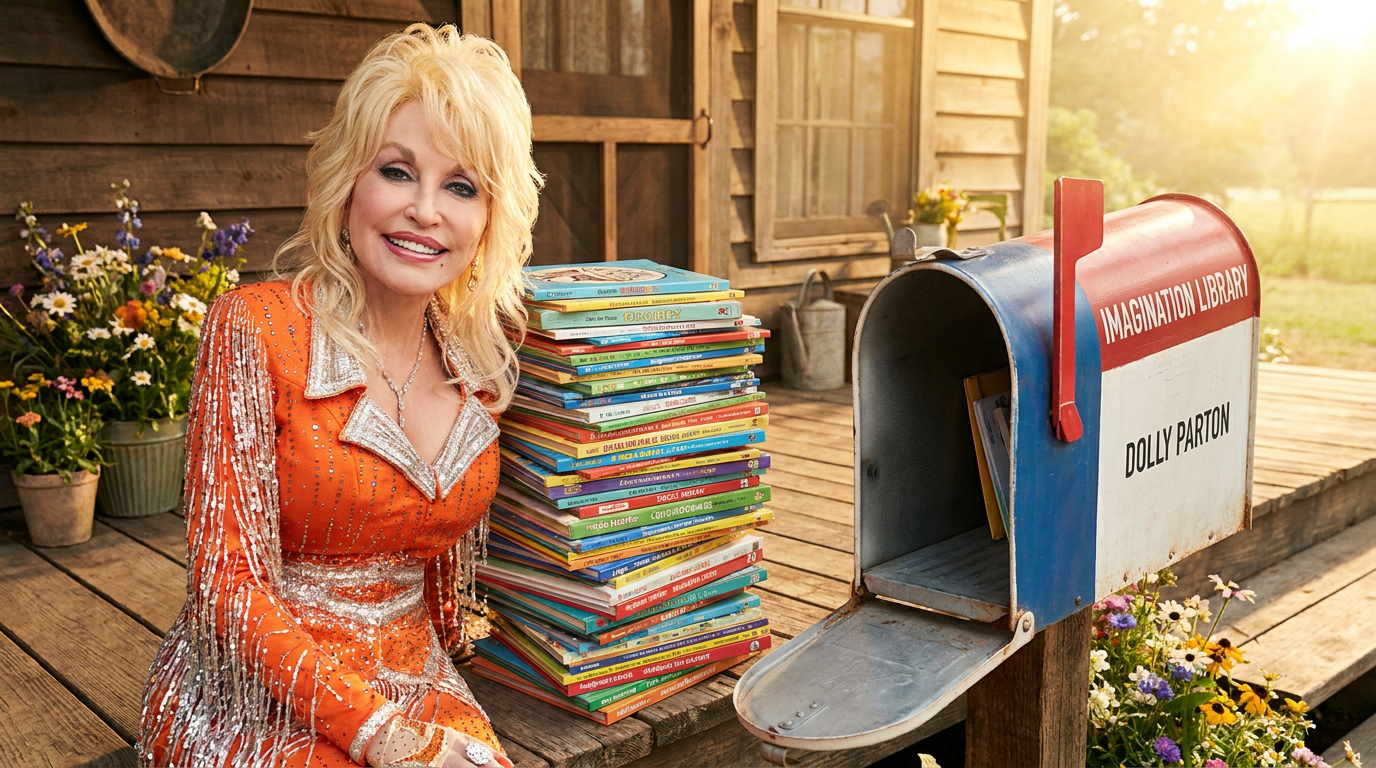
Dolly Parton's Imagination Library has officially surpassed a staggering milestone, gifting more than 300 million free books to young children around the globe. What began as a localized philanthropic effort in the mid-1990s has steadily evolved into an international early childhood literacy juggernaut. Today, the program operates at an unprecedented scale, mailing over 3.4 million high-quality, age-appropriate books every single month to children across the United States, Canada, the United Kingdom, Australia, and the Republic of Ireland.[1][3][7]
This massive logistical undertaking ensures that millions of children, regardless of their family's socioeconomic status, have consistent access to literature during their most critical developmental years. The initiative was born in 1995 in Sevier County, Tennessee, where Dolly Parton grew up. Parton launched the program as a deeply personal tribute to her father, Robert Parton. Despite his undeniable intelligence and relentless work ethic, his inability to read or write profoundly limited his opportunities and weighed heavily on him throughout his life.[2][4]
"Before he passed away, my Daddy told me the Imagination Library was probably the most important thing I had ever done," Parton has shared publicly. She noted that inspiring children to love reading and preventing the kind of illiteracy that constrained her father became her ultimate, lifelong mission. The mechanism of the Imagination Library is elegantly simple for the end-user but logistically massive behind the scenes. Any parent or caregiver of a child under the age of five living in a participating community can register their child for free, with absolutely no income requirements or hidden fees.[1][2][4]
Once enrolled, the child receives a personalized book in the mail every month until their fifth birthday. These books are not randomly assigned; they are carefully curated by the Blue Ribbon Book Selection Committee, a dedicated panel of early literacy experts, educators, and authors who ensure the titles reflect diverse experiences, engaging themes, and strict developmental appropriateness for each specific age group. Every child's journey through the Imagination Library program is bookended by two highly specific and symbolic titles.[1][2]

The very first book a newborn or newly enrolled child receives is a customized version of the classic "The Little Engine That Could," setting a tone of perseverance and optimism. The month they turn five and officially age out of the program, they receive "Look Out Kindergarten, Here I Come!" to prepare them for their transition into formal schooling. To ensure that no child is left behind, the program has continuously expanded its accessibility features.[1]
To ensure that no child is left behind, the program has continuously expanded its accessibility features.
Through a specialized partnership with the American Printing House for the Blind, the Imagination Library offers braille and audio versions of its selections. Additionally, the Blue Ribbon committee curates bilingual English/Spanish titles to support dual-language households and promote inclusive literacy. The financial engine driving this massive, multi-national distribution network is a unique and highly effective cost-sharing model. The Dollywood Foundation covers the overarching administrative overhead, the technological infrastructure, and the crucial negotiation of wholesale book prices with major publishers like Penguin Random House.[1][2][7]
However, the actual cost of the books and the localized postage is funded by local community partners. These partners—ranging from regional chapters of the United Way to county library systems, rotary clubs, and local educational nonprofits—step in to sponsor the children in their specific zip codes, making the program a true public-private collaboration. This localized funding model has fueled rapid and sustainable geographic expansion across multiple continents.[3][4]
For example, Marin County recently became the 45th county in California to offer the program, making the library available to more than 11,000 local children under age five through a robust coalition of local libraries and early childhood organizations. Similarly, the United Way of Yellowstone County recently celebrated enrolling thousands of new children, pacing to distribute 50,000 books locally over the next year alone. This grassroots funding approach allows communities to leverage the massive purchasing power of the Dollywood Foundation while keeping the philanthropic focus entirely local.[3][4]
Beyond the sheer volume of physical books distributed, rigorous academic research has begun to quantify the program's profound and lasting impact on early childhood development. Developmental psychologists emphasize that the first five years of life represent a highly critical window for brain development, where neural connections are formed at a rapid, unrepeatable pace. A massive global research study conducted by Macquarie University—widely considered the largest ever conducted on shared book reading—found that children participating in the Imagination Library were significantly more likely to develop strong early literacy skills.[5][7]

In the United States alone, participating children were found to be 11 times more likely to show a sustained interest in books compared to their non-participating peers. Additional peer-reviewed research published in the academic journal Reading Psychology by Dr. Chad Waldron demonstrated that children who received Imagination Library books entered kindergarten with measurably better "Concepts about Print." These foundational academic skills include letter identification, phonological awareness, and a basic understanding of how text and illustrations orient on a physical page.[5][6]

The program's success relies heavily on what educators call a "two-generation approach." By mailing the books directly to the home addressed to the child, the Imagination Library changes caregiver behavior just as much as it impacts the child. Surveys indicate that over 75% of caregivers report a significant increase in the frequency of reading aloud at home after joining the program. Consistent shared reading routines do much more than build early vocabulary; they foster emotional stability, create safe learning environments, and deepen the vital parent-child bond.[5][7]

Over 91% of surveyed parents believe that participating in the program is actively preparing their children for the academic and social rigors of kindergarten. As the Imagination Library looks past its historic 300-million-book milestone, its trajectory shows no signs of slowing down. Entire states and territories are increasingly passing legislation to fund the local-partner side of the equation, aiming for universal, statewide coverage. For a cultural icon known globally for her extensive catalog of hit country songs, vibrant public persona, and theme parks, the quiet, steady delivery of millions of books to mailboxes around the world may ultimately stand as Dolly Parton's most enduring and transformative legacy.[1][4][5][7]
How we got here
1995
Dolly Parton launches the Imagination Library in Sevier County, Tennessee, to honor her father.
2000
The program becomes available for replication nationally across the United States.
2006
The Imagination Library begins its international expansion, starting with communities in Canada.
2013
The initiative expands overseas to Australia and the United Kingdom.
2025
The Imagination Library officially surpasses the historic milestone of 300 million books gifted globally.
Viewpoints in depth
Early Education Researchers
Academics focused on the cognitive and developmental impacts of shared reading.
Researchers emphasize that the first five years of life are a critical period for neurodevelopment. By studying cohorts of children who receive Imagination Library books, academics have documented measurable increases in 'Concepts about Print' and phonological awareness. They argue that the program's true value lies not just in the physical books, but in how those books alter the home literacy environment and encourage daily parent-child reading routines.
Local Implementation Partners
The civic and nonprofit organizations that fund the localized distribution of the books.
For local libraries, United Way chapters, and county governments, the Imagination Library represents a highly efficient turnkey intervention. Because the Dollywood Foundation handles the administrative overhead and negotiates bulk pricing with publishers, local partners only need to raise funds for the wholesale cost and postage. This allows community organizers to stretch their early-childhood budgets significantly further than if they attempted to source and mail books independently.
Program Directors & Analysts
The architects and evaluators of the Imagination Library's global strategy.
From the perspective of the program's leadership, the goal is universal access to high-quality literature regardless of a family's socioeconomic status. Analysts note that the program's recent push toward statewide legislative funding models in the U.S. represents a shift from localized charity to systemic educational infrastructure. The inclusion of braille, audio, and bilingual formats is seen as a necessary evolution to ensure the program serves every demographic equally.
What we don't know
- How quickly the program will expand to additional non-English speaking countries outside its current five-nation footprint.
- The exact long-term high school graduation rates directly attributable to the program, as longitudinal tracking over 15+ years remains complex.
Key terms
- Concepts about Print (CAP)
- Foundational reading skills, such as understanding that text is read from left to right and that letters form words.
- Phonological Awareness
- The ability to recognize and manipulate spoken parts of sentences and words, which is a key predictor of later reading success.
- Two-Generation Approach
- Social programs designed to address the needs of both children and their parents simultaneously, such as encouraging caregivers to read aloud to their kids.
Frequently asked
Who is eligible for the Imagination Library?
Any child from birth to age five living in a participating community can register, regardless of their family's income level.
How much does the program cost participating families?
The program is completely free for families. The cost of the books and postage is covered by a partnership between the Dollywood Foundation and local community sponsors.
What kind of books do the children receive?
Children receive high-quality, age-appropriate books selected by a panel of early literacy experts. The collection includes bilingual, braille, and audio options.
Sources
Source coverage
7 outlets
3 viewpoints surfaced






[1]Dolly Parton's Imagination LibraryProgram Directors & Analysts
Celebrating 300 Million Books – and Counting!
Read on Dolly Parton's Imagination Library →[2]City of Palo AltoLocal Implementation Partners
Dolly Parton's Imagination Library
Read on City of Palo Alto →[3]Marin County GovernmentLocal Implementation Partners
Imagination Library Comes to Marin County
Read on Marin County Government →[4]United Way of Yellowstone CountyLocal Implementation Partners
Dolly Parton's Imagination Library
Read on United Way of Yellowstone County →[5]Macquarie UniversityEarly Education Researchers
Global Research Study on Shared Book Reading
Read on Macquarie University →[6]Reading PsychologyEarly Education Researchers
The Imagination Library Influencing Storybook Reading and Early Literacy
Read on Reading Psychology →[7]Factlen Editorial TeamProgram Directors & Analysts
Synthesis by Factlen editorial team
Read on Factlen Editorial Team →
Every angle. Every day.
Get entertainment stories with full source coverage and perspective breakdowns delivered to your inbox.