
The Invisible Camera: How AI and Micro-Drones Are Revolutionizing Nature Documentaries
Next-generation smart sensors and hybrid drones are allowing filmmakers to capture unprecedented animal behaviors while dramatically reducing human intrusion in fragile ecosystems.
By Factlen Editorial Team
- Wildlife Filmmakers
- Focuses on utilizing new technology to capture impossible shots and craft deeper emotional narratives.
- Conservation Scientists
- Values the real-time data processing and the drastically reduced human footprint in fragile habitats.
- Media Ethicists
- Warns about the erosion of truth and the rise of synthetic media in nature broadcasting.
What's not represented
- · Indigenous trackers whose traditional knowledge is being supplemented by automated sensors
- · Independent filmmakers who cannot afford high-end AI and drone technology
Why this matters
By removing the disruptive presence of human camera crews, this technology provides scientists with purer ecological data and gives audiences a truer, more intimate understanding of the natural world.
Key points
- Next-generation AI camera traps process data on-device, instantly identifying species and filtering out irrelevant motion.
- The technology eliminates hundreds of hours of manual footage review for both filmmakers and conservationists.
- Hybrid 'splash drones' allow productions like the BBC's Blue Planet III to capture seamless air-to-water sequences.
- AI editing tools are helping directors find narrative patterns in petabytes of raw field data.
- The rise of synthetic AI video is forcing the industry to adopt strict digital watermarking to prove authenticity.
- High-end documentary cameras now double as real-time biodiversity monitors and anti-poaching alerts.
The traditional image of a wildlife filmmaker involves a solitary figure huddled in a camouflaged hide, enduring weeks of freezing rain or sweltering heat just to capture a few seconds of usable footage. For decades, this grueling test of patience was the only way to bring the natural world to television screens. Crews hauled hundreds of pounds of gear through unforgiving terrain, and their physical presence inherently altered the environment, often scaring away the very creatures they sought to document. It was a game of attrition, where success relied as much on luck as it did on skill.[6]
But in 2026, the landscape of nature documentaries is undergoing a quiet, silicon-powered revolution. The bulky lenses and human observers are increasingly being supplemented—and in some cases, entirely replaced—by a new generation of intelligent, unobtrusive technology. This shift is moving the industry from passive recording to active interpretation. Driven by artificial intelligence, edge computing, and micro-robotics, modern wildlife filmmaking is capturing intimate behaviors that were previously impossible to witness. More importantly, it is doing so while dramatically reducing the human footprint in some of the world's most fragile and protected ecosystems.[6]
At the forefront of this transformation are AI-enabled camera traps. Traditional motion-sensor cameras were notorious for their lack of discernment, frequently filling SD cards with thousands of useless images of swaying branches, falling leaves, or shifting shadows. Researchers and film editors would then spend agonizing hours manually sorting through the digital noise just to find a single usable clip of a passing animal. It was an incredibly inefficient system that created massive data bottlenecks and delayed the discovery of vital ecological insights.[4]
Today’s smart cameras process data in real time directly on the device, utilizing a concept known as edge computing. Systems like the DOC AI camera deployed in New Zealand utilize thermal sensors that are three to twenty times more sensitive than older trail models. More importantly, they feature onboard machine learning algorithms that instantly identify the specific species passing by, from invasive predators to native birds. Instead of dumping raw video files onto a server, the camera sends a curated alert and a clean data table, completely eliminating the need for manual review.[4]

In the dense, humid forests of Gabon, conservationists and documentary filmmakers are utilizing similar technology developed by the tech firm Okala. Reaching these remote locations to swap batteries and memory cards used to require days of hazardous trekking through terrain fraught with malaria risks and poachers. Now, their modified camera traps are trained to recognize elephants, gorillas, and duikers autonomously. When a target animal is spotted, the system pings a low-bandwidth satellite notification to researchers miles away, ensuring that human intervention only happens when absolutely necessary and keeping the ecosystem undisturbed.[5]
This embedded intelligence means the camera doesn't just capture an image; it fundamentally understands what it is looking at. By filtering out irrelevant motion and only saving high-value encounters, these devices save hundreds of hours of manual labor for post-production teams. They allow filmmakers to monitor dozens of remote locations simultaneously, essentially building a vast, automated surveillance network for nature. The camera becomes a silent participant, waiting patiently for months on solar power without ever needing a human to check its pulse or disturb the surrounding habitat.[2][5]
Beyond stationary traps, mobile technology is also unlocking entirely new visual frontiers for the genre. For the BBC’s highly anticipated Blue Planet III, set to air later this year, the Natural History Unit has deployed a suite of next-generation aquatic tools. The production aims to capture marine adaptation and resilience in unprecedented detail, relying on hardware that can go where human divers simply cannot survive, or where the noise of their scuba bubbles would instantly frighten away the delicate wildlife they are trying to film.[1]
Beyond stationary traps, mobile technology is also unlocking entirely new visual frontiers for the genre.
A key innovation for the production is the use of "splash drones"—hybrid aerial-aquatic vehicles that can track a seabird through the sky and seamlessly dive underwater to follow its prey in a single, unbroken cinematic shot. Combined with long-term remote underwater cameras and specialized "mini domes," these tools are capturing behaviors that were previously impossible to film, or only recently discovered by marine biologists. The resulting footage offers a fluid, highly immersive perspective that bridges the gap between the sky and the deep ocean without breaking the viewer's suspension of disbelief.[1]

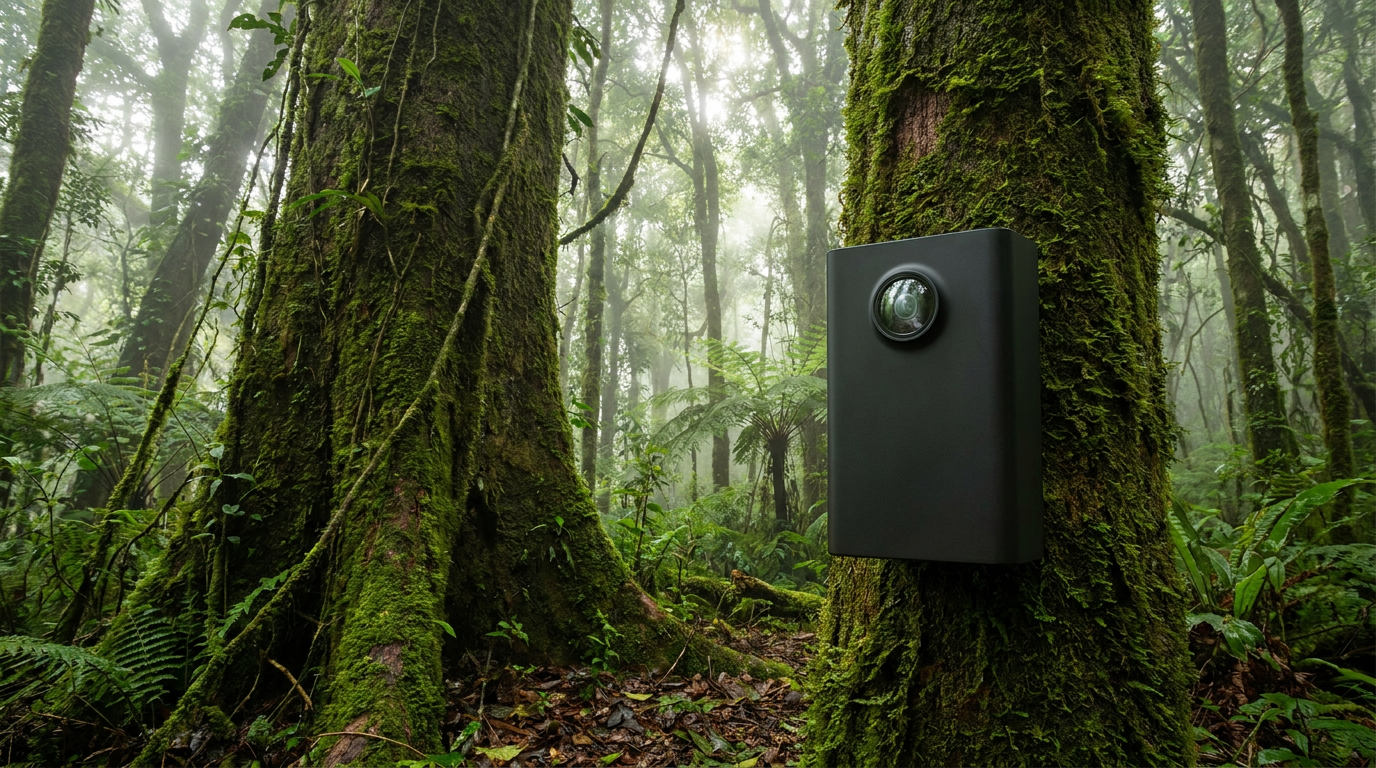
The physical design of these new tools is also evolving rapidly to meet the demands of the wild. Industrial designers are stripping away screens, glowing buttons, and aggressive styling to create monolithic, minimalist sensors that blend perfectly into the natural environment. The goal is to make the device as unobtrusive as possible. In wildlife monitoring, even the slightest visual anomaly or acoustic disruption can alter animal behavior, ruining the authenticity of the documentary. By embracing a softer, refined visual language, these cameras hide in plain sight.[2]
The artificial intelligence revolution isn't confined to the muddy reality of the field; it is fundamentally changing the sterile environment of the editing room. Modern blue-chip documentary productions generate terabytes, and sometimes petabytes, of raw data over a multi-year shoot. AI software now acts as a tireless algorithmic assistant, scanning endless hours of footage to flag specific, high-value behaviors. Whether it is a predator's lightning-fast strike, a rare avian mating dance, or the subtle cracking of an egg, the software can tag and categorize the exact timestamps for the human editors.[6]
Some advanced tools even possess a rudimentary "story sense," helping editors uncover narrative patterns and emotional arcs that a human might easily miss when overwhelmed by the sheer volume of video. By analyzing pacing, movement, and visual composition, the AI can suggest sequences that naturally flow together. This allows human directors to focus their energy on the creative assembly, musical scoring, and emotional pacing rather than the tedious sorting of clips. It accelerates the post-production pipeline while ensuring that no magical, fleeting moment is accidentally left on the cutting room floor.[6]
However, the rapid integration of artificial intelligence into nature broadcasting brings significant ethical challenges that the industry is only beginning to grapple with. As generative AI video tools become increasingly sophisticated, the internet is already awash with fabricated clips of wildlife engaging in impossible antics. From whales covered in perfectly rendered, hyper-realistic barnacles to extinct species casually roaming modern forests, synthetic media is flooding social platforms. This deluge of fake content is actively blurring the lines of reality for the average viewer.[3]
This phenomenon creates a dangerous "authenticity illusion." If a consumer AI program can generate a photorealistic video of a snow leopard hunting in a matter of seconds, audiences may begin to question the legitimacy of genuine, hard-won documentary footage that took a crew three years to capture. The boundary between a heavily processed real shot—perhaps color-corrected, upscaled, and stabilized by AI—and a completely synthetic one is becoming dangerously thin. Filmmakers must now go to extraordinary lengths to prove that what they are showing actually happened in the wild.[3]

To combat this rising tide of skepticism, scientific journals and premier documentary units are engaging in a technological arms race. They are deploying advanced AI detection software to verify the provenance of images and appending strict cryptographic digital watermarks to raw files at the exact moment of capture. Maintaining public trust is paramount for these institutions; if viewers believe a heartbreaking sequence of habitat loss or a triumphant moment of survival is faked, the emotional resonance and the subsequent conservation impact of the film evaporates instantly.[3]
Despite these ethical hurdles, the net impact of this technological leap is overwhelmingly positive for both the entertainment industry and the scientific community. By removing the disruptive presence of human crews, we are finally seeing animals behave exactly as they do when they believe no one is watching. We are gaining a truer, more intimate understanding of the natural world, free from the observer effect that has plagued field biology for centuries. The animals are no longer reacting to us; they are simply living.[6]
Furthermore, the data collected for these blockbuster films is increasingly dual-purpose, bridging the gap between entertainment and activism. The same AI camera that captures a breathtaking 8K sequence for a global streaming service is simultaneously providing real-time biodiversity metrics to local conservationists. It can track the health of an endangered population, monitor migration shifts due to climate change, or instantly alert park rangers to the presence of armed poachers. This turns a passive film production into an active, life-saving conservation tool.[4][5]

As we look to the future of the genre, the focus is no longer just on the raw spectacle of the wild, but on the intelligence and ethics of the observation. The era of the invisible camera has arrived, and it is telling the story of our planet with more clarity, empathy, and scientific rigor than ever before. The wild remains wonderfully untamed, but thanks to silicon and code, our window into its deepest secrets has never been clearer or more profound.[6]
How we got here
2006
The release of 'Planet Earth' ushers in the blockbuster era of high-budget, cinematic nature documentaries.
2017
'Blue Planet II' revolutionizes underwater filming, exposing global audiences to the realities of ocean plastics.
2024
Early AI camera traps begin processing species identification on-device, drastically reducing manual footage review.
2026
Broadcasters deploy hybrid splash drones and AI-curated editing systems for next-generation series like 'Blue Planet III'.
Viewpoints in depth
The Filmmaker's View
Focuses on capturing impossible shots and crafting emotional narratives.
For directors and cinematographers, AI and micro-drones are tools of liberation. They remove the physical limitations of human presence, allowing cameras to go where humans cannot—inside burrows, deep underwater, or inches from a predator—without altering the animal's natural behavior. By offloading the tedious task of sorting through terabytes of empty footage to artificial intelligence, creative teams can focus entirely on storytelling, pacing, and emotional resonance.
The Conservationist's View
Values the real-time data and reduced human footprint in fragile habitats.
Scientists see these modern documentaries as dual-purpose missions. The same smart cameras that capture 8K footage for television also provide invaluable, real-time biodiversity metrics. Because the AI processes data on the edge, it can track endangered populations and even alert rangers to poachers instantly via satellite. Furthermore, the minimalist design of these new tools ensures that the ecosystem remains undisturbed by human interference.
The Skeptic's View
Warns about the erosion of truth and the rise of synthetic media.
Media ethicists worry that as generative AI video becomes indistinguishable from reality, the public will lose trust in nature broadcasting. If a viewer suspects that a heartbreaking scene of habitat loss was generated by an algorithm, the conservation impact of the film is destroyed. They argue that strict transparency, behind-the-scenes disclosures, and cryptographic digital watermarking are essential to prove that a breathtaking wildlife encounter actually happened.
What we don't know
- How quickly independent and low-budget filmmakers will gain access to these expensive, proprietary AI tools.
- Whether digital watermarking will be enough to maintain public trust as generative AI video becomes completely photorealistic.
Key terms
- Edge Computing
- Processing data directly on the camera device rather than sending raw footage to a distant cloud server, enabling real-time alerts.
- Splash Drone
- A hybrid waterproof drone capable of flying through the air and seamlessly diving underwater to capture continuous shots.
- Camera Trap
- A remotely activated camera triggered by motion or heat, traditionally used by researchers to monitor animals without human presence.
Frequently asked
Will AI replace human wildlife camera operators?
No, but it shifts their role. Humans will increasingly focus on creative storytelling and complex setups, while AI handles long-term monitoring, data sorting, and species identification.
How do these smart cameras survive in the wild?
Modern units are built with rugged, minimalist housings that resist animal bites and extreme weather. They are often powered by integrated solar panels, allowing them to operate continuously for months.
Can AI generate fake nature documentaries?
Yes, generative AI can create highly realistic synthetic wildlife videos. This is why major broadcasters are investing heavily in cryptographic watermarking and verification tools to maintain audience trust.
Sources
Source coverage
6 outlets
3 viewpoints surfaced






[1]BBC StudiosWildlife Filmmakers
BBC announces Blue Planet III with next-generation underwater technology
Read on BBC Studios →[2]Yanko DesignWildlife Filmmakers
This minimal AI camera blends into the wild while quietly tracking wildlife
Read on Yanko Design →[3]Polar ResearchMedia Ethicists
When does fakery in nature documentaries go too far?
Read on Polar Research →[4]The Cacophony ProjectConservation Scientists
DOC AI Cam: Real-time predator monitoring and identification
Read on The Cacophony Project →[5]FilmFreewayConservation Scientists
When AI Meets Conservation: Smart Camera Traps in Gabon
Read on FilmFreeway →[6]Factlen Editorial TeamMedia Ethicists
Synthesis by Factlen editorial team
Read on Factlen Editorial Team →
Every angle. Every day.
Get entertainment stories with full source coverage and perspective breakdowns delivered to your inbox.