
The 2026 Guide to Buying a Heat Pump: Efficiency, Costs, and Shifting Rebates
As home electrification becomes the standard, navigating the complex landscape of heat pump technologies, efficiency ratings, and updated federal tax incentives is crucial for homeowners.
By Factlen Editorial Team
- Home Electrification Advocates
- Focus on the long-term efficiency and carbon reduction benefits of transitioning away from fossil fuels.
- Pragmatic Retrofitters
- Emphasize the importance of building envelope improvements and navigating the complex new rebate rules.
- Geothermal Purists
- Argue that ground-source systems are the only true solution for extreme climates and long-term value.
What's not represented
- · Renters unable to upgrade building infrastructure
- · HVAC installers facing complex new rebate paperwork
Why this matters
Replacing an HVAC system is one of the most expensive decisions a homeowner will make. Understanding the new 2026 efficiency standards, navigating shifting federal rebates, and choosing the right heat pump technology can save thousands of dollars upfront and permanently lower monthly utility bills.
Key points
- Heat pumps move existing heat rather than burning fuel, achieving 300 to 400 percent efficiency.
- Air-source models are the standard for most homes, while ground-source systems offer premium winter performance at a higher cost.
- Variable-speed inverters allow modern heat pumps to operate efficiently even in sub-zero temperatures.
- The US Section 25C tax credit provides up to $2,000 annually for qualifying heat pump installations.
- New 2026 DOE guidance requires weatherization before homes can access certain federal equipment rebates.
- Proper sizing via a Manual J calculation is critical to prevent short-cycling and ensure comfort.
Heading into the summer of 2026, home electrification has transitioned from a niche environmental goal to the standard upgrade path for aging HVAC systems. At the center of this shift is the heat pump—a mature technology that promises to handle both heating and cooling while drastically cutting a home's overall energy consumption.[7]
But as adoption surges nationwide, so does the complexity of buying one. With shifting federal incentives, competing source technologies, and an alphabet soup of efficiency ratings, purchasing a heat pump requires significantly more research than simply swapping out an old gas furnace for a newer model.[7]
The fundamental mechanism of a heat pump is elegant: rather than burning fossil fuels to generate heat, it uses electricity and advanced refrigerants to move existing heat from one place to another. In the summer, it acts exactly like a traditional air conditioner, extracting heat from inside the house and dumping it outdoors.[5]
In the winter, the system simply reverses. Even in freezing weather, ambient thermal energy exists in the outdoor environment. The heat pump absorbs this low-grade heat, compresses the refrigerant to raise its temperature, and transfers that concentrated warmth indoors to heat the living space.[5]

This process of moving heat rather than creating it from scratch is what gives heat pumps their massive efficiency advantage. While a top-tier natural gas furnace might achieve 95 percent efficiency—meaning it turns 95 percent of its fuel into usable heat—a modern heat pump routinely operates at 300 to 400 percent efficiency.[3]
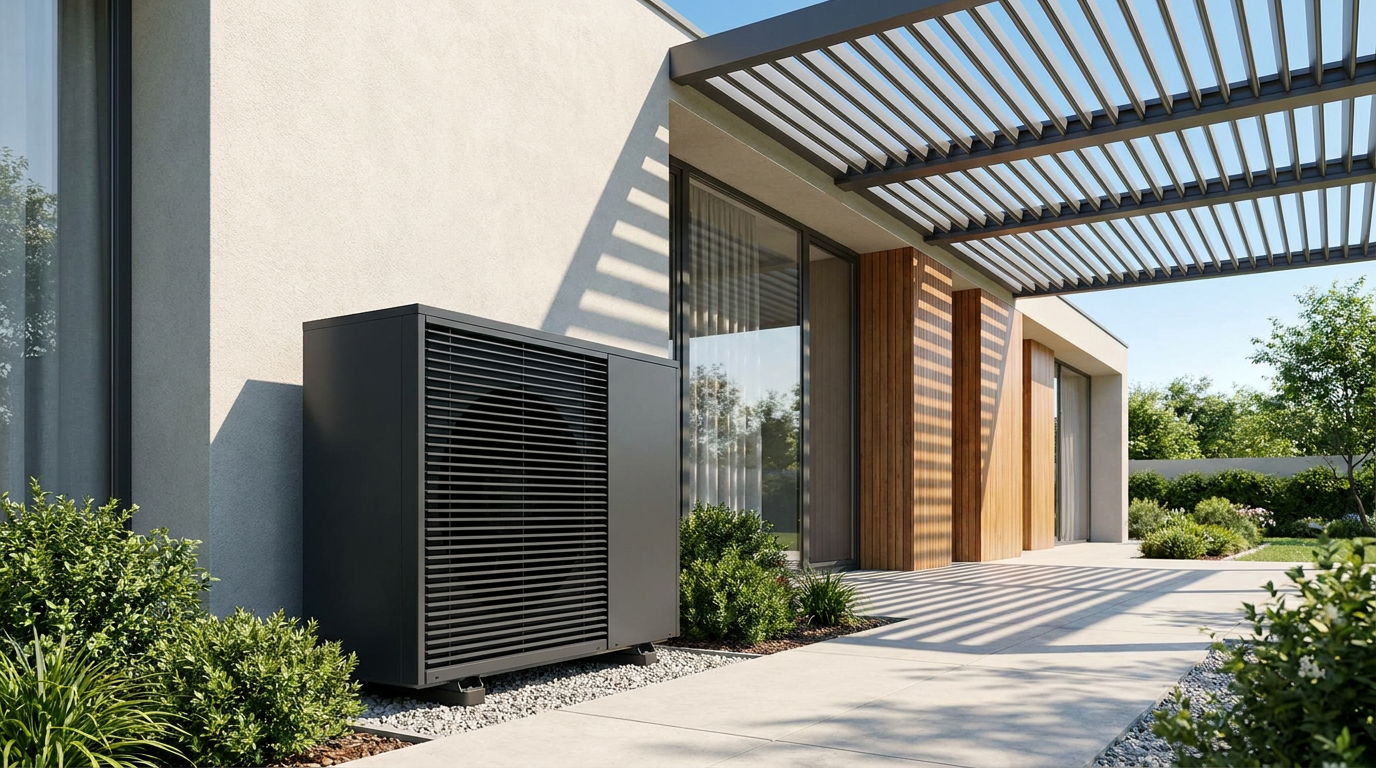
When shopping in 2026, the first major decision is choosing the heat source: air or ground. Air-source heat pumps (ASHPs) are the practical choice for roughly 95 percent of homes. They feature an outdoor fan unit that looks identical to a standard air conditioner and typically cost between $6,000 and $14,000 to install, depending on the home's size and existing ductwork.[6]
Ground-source, or geothermal, heat pumps (GSHPs) are the premium alternative. Instead of drawing heat from fluctuating outdoor air, they use a network of fluid-filled pipes buried in the yard to extract heat from the earth, which remains a stable 50 to 60 degrees Fahrenheit year-round across most of the continental United States.[3][5]
Because they draw from a highly stable temperature source, geothermal systems are incredibly efficient and completely immune to winter cold snaps. However, the extensive excavation required pushes installation costs to $20,000 or more, making them best suited for new builds, rural estates, or homeowners planning to stay in their property for decades.[3][6]

For those opting for the more common air-source route, the biggest historical concern has been cold-weather performance. Early generations of heat pumps struggled when temperatures dropped below freezing, forcing reliance on expensive, inefficient electric resistance backup heaters to keep the house warm.[1]
For those opting for the more common air-source route, the biggest historical concern has been cold-weather performance.
That limitation has largely been solved by the widespread adoption of variable-speed inverter compressors. Unlike older systems that simply blast on at 100 percent capacity and then shut off, modern inverters can ramp their speed up and down continuously. This allows cold-climate models to extract meaningful heat even when outdoor temperatures plunge to negative 13 degrees Fahrenheit.[1]
To verify a system's capability, buyers must decode three critical metrics. SEER2 (Seasonal Energy Efficiency Ratio 2) measures cooling efficiency, while HSPF2 (Heating Seasonal Performance Factor 2) measures heating efficiency over a typical season. For a home in a cold climate, experts recommend looking for an HSPF2 rating of 9.0 or higher.[1]
The third metric is COP, or Coefficient of Performance, which measures real-time efficiency at specific temperatures. A COP of 3.0 means the system is producing three units of heat for every one unit of electricity consumed. Checking a unit's COP at 5 degrees Fahrenheit reveals its true cold-weather pedigree.[1][3]

The financial calculus of buying a heat pump in the United States shifted significantly in 2026. The Inflation Reduction Act (IRA) still provides a robust Section 25C tax credit, allowing homeowners to claim 30 percent of the installation cost, up to $2,000, as a dollar-for-dollar reduction on their federal tax bill.[2]
Crucially, this $2,000 credit resets annually. Savvy homeowners are phasing their upgrades—installing a heat pump one year, and claiming a separate credit for a heat pump water heater, new windows, or upgraded insulation the following tax year.[2]
However, the landscape for upfront state rebates has tightened. In June 2026, the Department of Energy issued new guidance prohibiting states from using federal IRA rebate funds to incentivize consumers to switch from working oil, propane, or natural gas furnaces to electric heat pumps.[4]
The new rules restrict those specific federal rebates to electric-to-electric upgrades or new construction. Furthermore, the DOE now requires homes to undergo weatherization—such as insulation and air sealing—before qualifying for equipment rebates, raising the complexity bar for electrification retrofits.[4]

This weatherization-first mandate, while frustrating for some buyers seeking immediate discounts, aligns perfectly with building science best practices. Installing a high-efficiency heat pump in a drafty, poorly insulated house will result in the system working overtime, driving up electricity bills and reducing overall comfort.[4][7]
Across the Atlantic, the financial incentives remain highly straightforward. The UK government continues to offer the £7,500 Boiler Upgrade Scheme grant in 2026, which drastically narrows the price gap between installing a new gas boiler and transitioning to a low-carbon air-source heat pump.[6]
Ultimately, the success of any heat pump installation comes down to proper sizing. Contractors must perform a rigorous Manual J load calculation to determine the home's exact heating and cooling needs based on square footage, window placement, ceiling height, and insulation levels.[7]
Oversizing a unit will cause it to short cycle, turning on and off too quickly to properly dehumidify the air in summer. Undersizing it will leave the home cold in winter. By prioritizing a meticulous installation and proper weatherization over simply buying the most expensive brand, homeowners can secure decades of quiet, efficient climate control.[7]
How we got here
Aug 2022
The US Inflation Reduction Act passes, creating the Section 25C tax credits and funding state rebate programs.
Jan 2023
New SEER2 and HSPF2 testing standards take effect to better reflect real-world HVAC performance.
Jan 2026
The $2,000 annual Section 25C tax credit resets for the new tax year, allowing phased home upgrades.
Jun 2026
The Department of Energy issues guidance restricting the use of federal IRA rebates for fossil-fuel-to-electric conversions.
Viewpoints in depth
Home Electrification Advocates
Focus on the long-term efficiency and carbon reduction benefits of transitioning away from fossil fuels.
This camp views the heat pump as the linchpin of modern home energy. They emphasize that even with higher upfront costs, the 300 to 400 percent efficiency of moving heat rather than burning fuel pays massive dividends over a 15-year lifespan. They argue that variable-speed inverter technology has completely solved the cold-weather performance issues of the past, making air-source heat pumps viable and environmentally necessary in almost any climate.
Geothermal Purists
Argue that ground-source systems are the only true solution for extreme climates and long-term value.
While acknowledging the high upfront excavation costs, geothermal advocates point out that ground-source systems are immune to the efficiency drops that air-source units suffer during extreme cold snaps. Because the earth maintains a stable 50 to 60 degrees Fahrenheit year-round, these systems offer unmatched reliability. They also highlight that ground loops can last over 50 years, making the total cost of ownership highly competitive for homeowners with a long-term horizon.
Pragmatic Retrofitters
Emphasize the importance of building envelope improvements and navigating the complex new rebate rules.
This perspective, often shared by HVAC contractors and energy auditors, stresses that installing a high-efficiency heat pump in a drafty house is a waste of capital. They support the Department of Energy's June 2026 guidance requiring weatherization before equipment upgrades. They advise homeowners to focus on insulation and air sealing first, and to carefully strategize their purchases to maximize the annual $2,000 Section 25C tax credits rather than relying on shifting state rebate programs.
What we don't know
- How individual states will adapt their specific rebate programs to comply with the June 2026 DOE guidance.
- Whether the cost of premium variable-speed inverter technology will drop as manufacturing scales further.
Key terms
- Coefficient of Performance (COP)
- A metric showing how much heat a system produces for every unit of electricity it consumes; a COP of 3.0 means 300 percent efficiency.
- Variable-Speed Inverter
- A modern compressor technology that can ramp its power up and down continuously to maintain a consistent temperature, rather than simply turning on and off.
- Manual J Calculation
- A rigorous mathematical assessment performed by HVAC contractors to determine the exact heating and cooling capacity a specific home requires.
- Air-Source Heat Pump (ASHP)
- A system that extracts thermal energy from the outside air to heat a home, and reverses the process to cool it.
Frequently asked
Do heat pumps actually work in freezing weather?
Yes. Modern cold-climate heat pumps use variable-speed inverter compressors that can efficiently extract heat from the air even when outdoor temperatures drop to negative 13 degrees Fahrenheit.
What is the difference between SEER2 and HSPF2?
SEER2 measures a system's cooling efficiency during the summer, while HSPF2 measures its heating efficiency over the winter season. Higher numbers indicate better energy performance.
Can I still get a tax credit for a heat pump in 2026?
Yes. The federal Section 25C tax credit remains active, allowing homeowners to claim 30 percent of the installation cost, up to a maximum of $2,000 per year.
Do I need to replace my ductwork to install a heat pump?
Not necessarily. If your existing ductwork is in good condition, a central air-source heat pump can use it. If you lack ductwork, ductless mini-split systems are designed specifically for your home.
Sources
Source coverage
7 outlets
3 viewpoints surfaced







[1]Heat Pump NetworkHome Electrification Advocates
HSPF2 Ratings Explained and Cold Climate Performance
Read on Heat Pump Network →[2]AC DirectPragmatic Retrofitters
The Two Federal Programs That Still Apply in 2026
Read on AC Direct →[3]Geothermal FinderGeothermal Purists
Geothermal vs. Air-Source Heat Pumps: 2026 Comparison
Read on Geothermal Finder →[4]National Energy & Fuels InstitutePragmatic Retrofitters
DOE Tells States: IRA Rebates Cannot Be Used for Heat Pump Conversions
Read on National Energy & Fuels Institute →[5]Energy Saving TrustGeothermal Purists
Air source vs ground source heat pumps
Read on Energy Saving Trust →[6]Renewables ExcellenceGeothermal Purists
Air Source vs Ground Source Heat Pumps: The 2026 Verdict
Read on Renewables Excellence →[7]Factlen Editorial TeamHome Electrification Advocates
Synthesis by Factlen editorial team
Read on Factlen Editorial Team →



Every angle. Every day.
Get shopping stories with full source coverage and perspective breakdowns delivered to your inbox.