
EU Parliament Passes 'AI Omnibus,' Delaying High-Risk AI Enforcement to 2027
The European Parliament has voted to delay the most stringent compliance deadlines of the EU AI Act by up to 16 months, giving tech companies a reprieve while holding the line on generative AI watermarking.
By Factlen Editorial Team
- Tech Industry & Compliance Teams
- Argue that the delay was practically necessary because the technical standards required for legal compliance had not yet been written.
- EU Policymakers
- Frame the Omnibus as a pragmatic simplification that preserves the Act's core architecture while ensuring European economic competitiveness.
- Legal & Risk Analysts
- Warn that despite the timeline delay, the Commission's expansive definition of 'high-risk' means more companies will eventually be caught in the regulatory net.
What's not represented
- · Digital Rights Advocates
- · Open-Source AI Developers
Why this matters
The EU AI Act is the world's first comprehensive artificial intelligence law, setting the global baseline for tech compliance. This delay means companies building AI for employment, healthcare, and critical infrastructure have an extra year to operate under current rules, fundamentally shifting the short-term regulatory landscape for the global tech sector.
Key points
- The EU Parliament passed the 'AI Omnibus' on June 16, 2026, delaying high-risk AI compliance.
- Standalone high-risk systems (Annex III) now face a December 2027 enforcement deadline.
- AI embedded in regulated products (Annex I) has been delayed until August 2028.
- Generative AI watermarking and transparency rules will take effect on December 2, 2026.
- Rules governing General Purpose AI (GPAI) and prohibited practices remain unchanged.
- Draft guidelines suggest regulators are taking a broad view of what qualifies as 'high-risk.'
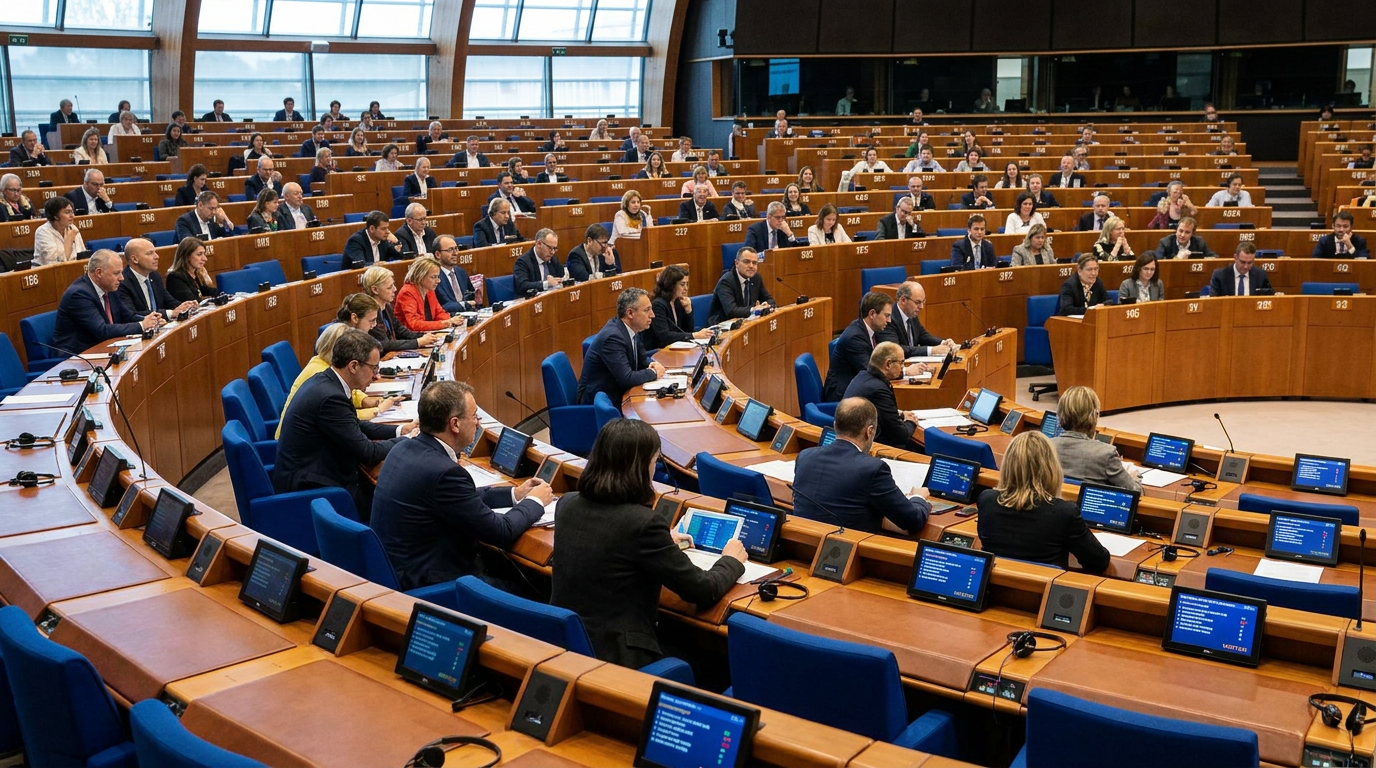
On June 16, 2026, the European Parliament formally voted in favor of the "AI Omnibus," a legislative package that fundamentally alters the enforcement timeline of the world's first comprehensive artificial intelligence law. The vote effectively delays the most stringent "high-risk" compliance obligations of the EU AI Act by 12 to 16 months, pushing the regulatory cliff from August 2026 into late 2027 and 2028.[1][3]
The primary claim driving the Omnibus package was that the European Commission had failed to finalize the technical "harmonised standards" required for compliance. Industry groups successfully argued that companies could not reasonably engineer systems to meet legal requirements that had not yet been written. The evidence supporting this claim was robust: as of mid-2026, the specific testing, documentation, and third-party assessment protocols for high-risk systems remained in draft form.[2][3]
Under the newly approved timeline, the compliance date for standalone high-risk AI systems—classified under Annex III of the Act, which includes AI used in biometric categorization, employment, and critical infrastructure—has been pushed from August 2, 2026, to December 2, 2027. This 16-month delay represents a massive reprieve for enterprise AI developers.[2][3][4]

For high-risk AI systems embedded into already-regulated physical products—such as medical devices, elevators, or toys, classified under Annex I—the deadline has been pushed back a full 24 months from the original target, now landing on August 2, 2028. This extended transition period reflects the complex reality of integrating software regulation with existing hardware safety laws.[3][4][5]
However, the evidence shows that the AI Omnibus is not a blanket suspension of the law. The core architecture of the AI Act remains entirely intact. The outright prohibitions on unacceptable AI practices—such as social scoring and untargeted facial recognition scraping—went into effect in February 2025 and remain actively enforced.[3][4][6]
Crucially, the obligations for General Purpose AI (GPAI) models—the foundational models powering chatbots and generative tools—also remain largely unaffected. The governance rules for these models became applicable in August 2025, and the AI Office continues to monitor systemic risks from the largest providers.[4][5]
One of the most immediate compliance deadlines for consumer-facing tech involves transparency and watermarking. The Omnibus package granted only a minor 4-month extension for Article 50(2), which mandates that AI-generated synthetic content and deepfakes be clearly labeled and machine-readable. That deadline is now locked in for December 2, 2026.[1][3]

One of the most immediate compliance deadlines for consumer-facing tech involves transparency and watermarking.
This creates a bifurcated regulatory environment. The evidence suggests that while enterprise B2B software providers have been granted breathing room, consumer-facing generative AI platforms must still ship robust UI labeling, metadata embedding, and detection capabilities before the end of the year. Legal analysts note this requires roughly six months of dedicated engineering, making it the most pressing item on corporate work plans.[1][3]
Despite the timeline extensions, the scope of what the EU considers "high-risk" appears to be expanding rather than contracting. On May 19, 2026, the European Commission published draft guidelines on the classification of high-risk systems under Article 6. Legal reviews of these guidelines indicate an expansive interpretation of the conformity assessment test.[1][6]
According to corporate law analysts, the draft guidelines capture substantially more AI systems than businesses previously assumed. The Article 6(3) filter mechanism—which allows companies to argue their system is not high-risk if it only performs a narrow procedural task—is being interpreted very narrowly by regulators. Businesses that previously assumed their products were out of scope are being advised to revisit those assumptions.[1]

The Omnibus package also delays the requirement for Member States to establish national AI regulatory sandboxes. Originally slated for August 2026, governments now have until August 2027 to build these safe-harbor testing environments. This delay reflects the logistical and financial challenges national authorities face in staffing and operationalizing AI oversight bodies.[2][3]
A critical point of uncertainty remains regarding the technical standards. The political compromise of the Omnibus package explicitly decoupled the new deadlines from the delivery of the harmonised standards. This means that if the Commission's standards arrive late again, the December 2027 and August 2028 dates will not automatically move with them. They are now considered hard deadlines.[3]
The stakes for the European Union are high. The so-called "Brussels Effect"—the phenomenon where EU regulations become the de facto global standard because multinational companies prefer to build to a single strict compliance baseline—depends entirely on the AI Act being viewed as a binding, enforceable text.[3][4]

Political analysts argue that the institutions held the line on the core architecture specifically to preserve this credibility. Reopening the file for a second postponement would likely be viewed as a failure of the Commission's simplification agenda and a signal that the EU cannot effectively govern the technology it claims to lead on.[3]
For now, the global tech industry has a revised roadmap. The immediate focus shifts to the July 23, 2026, deadline for public consultation on the high-risk guidelines, followed by the sprint to implement generative AI watermarking by December. The era of AI regulation has not been cancelled, but its heaviest impacts have been rescheduled.[1][3][4]
How we got here
August 2024
The original EU AI Act officially enters into force.
February 2025
Prohibitions on unacceptable AI practices, such as social scoring, take effect.
August 2025
Governance rules for General Purpose AI (GPAI) models become applicable.
May 2026
The European Commission publishes draft guidelines interpreting the high-risk classification.
June 16, 2026
The European Parliament votes to pass the AI Omnibus, delaying high-risk enforcement.
December 2026
New deadline for generative AI watermarking and transparency obligations.
December 2027
New deadline for standalone high-risk AI systems to achieve compliance.
Viewpoints in depth
Tech Industry & Compliance Teams
Argue that the delay was practically necessary because the technical standards required for legal compliance had not yet been written.
Industry groups and corporate compliance teams have largely welcomed the AI Omnibus as a necessary correction to an impossible timeline. Their primary argument is rooted in engineering reality: companies cannot build software to meet legal requirements that have not been technically defined. Because the European Commission had not finalized the 'harmonised standards'—the specific testing, documentation, and third-party assessment protocols—developers argued they were flying blind. The 16-month delay is viewed not as a loophole, but as the minimum time required to translate forthcoming government standards into actual product code.
EU Policymakers
Frame the Omnibus as a pragmatic simplification that preserves the Act's core architecture while ensuring European economic competitiveness.
For European regulators, the AI Omnibus is framed as a strategic adjustment rather than a retreat. Policymakers emphasize that the core architecture of the AI Act—including the outright bans on unacceptable AI and the strict oversight of General Purpose AI models—remains fully intact and actively enforced. By granting an extension on the most complex, hardware-integrated aspects of the law, the Commission aims to prevent a scenario where European businesses are forced to halt operations due to bureaucratic bottlenecks. They argue this pragmatic approach protects the 'Brussels Effect' by ensuring the law remains credible and implementable.
Legal & Risk Analysts
Warn that despite the timeline delay, the Commission's expansive definition of 'high-risk' means more companies will eventually be caught in the regulatory net.
Legal analysts reviewing the broader regulatory landscape caution companies against viewing the delay as a permanent exemption. They point to the draft guidelines published in May 2026, which indicate that the European Commission is interpreting the 'high-risk' classification very broadly. Analysts warn that the filter mechanisms designed to exempt narrow, procedural AI tasks are being applied strictly, meaning many systems previously thought to be low-risk may actually fall under Annex III. Their consensus is that while companies have gained time, the ultimate compliance burden will likely be heavier and apply to a wider range of products than initially anticipated.
What we don't know
- Whether the European Commission will successfully finalize the harmonised technical standards before the new 2027 deadlines.
- How strictly the AI Office will enforce the December 2026 watermarking deadline for open-source generative models.
- Whether the expansive interpretation of 'high-risk' in the draft guidelines will be narrowed following the July 2026 public consultation.
Key terms
- AI Omnibus
- A legislative package passed by the EU Parliament in June 2026 that amends the original EU AI Act to delay certain compliance deadlines and simplify implementation.
- Annex III Systems
- Standalone AI systems classified as high-risk due to their use in sensitive areas like employment, education, or law enforcement.
- Annex I Systems
- AI systems embedded as safety components into physical products that are already subject to EU regulations, such as medical devices or machinery.
- Harmonised Standards
- Technical specifications drafted by European standardization bodies that provide companies with the exact engineering requirements needed to comply with the law.
- General Purpose AI (GPAI)
- Large, highly capable foundational AI models (like those powering ChatGPT or Claude) that can perform a wide variety of tasks.
Frequently asked
Does the AI Omnibus cancel the EU AI Act?
No. The core architecture, risk tiers, and prohibitions remain intact. The Omnibus only delays the enforcement dates for specific high-risk and transparency obligations.
When do generative AI watermarking rules take effect?
The deadline for implementing watermarking and synthetic content disclosure has been moved to December 2, 2026.
What is a high-risk AI system?
Under the Act, high-risk systems include AI used in critical infrastructure, employment, education, law enforcement, and biometric categorization, as well as AI embedded in regulated physical products like medical devices.
Are General Purpose AI (GPAI) models delayed?
No. The governance rules and obligations for providers of General Purpose AI models went into effect in August 2025 and remain actively enforced.
Sources
Source coverage
6 outlets
3 viewpoints surfaced






[1]Osborne ClarkeLegal & Risk Analysts
Draft guidelines on high-risk AI systems and the AI Omnibus
Read on Osborne Clarke →[2]Global Policy WatchTech Industry & Compliance Teams
EU AI Act: Digital Omnibus Delays Key Deadlines
Read on Global Policy Watch →[3]VerifyWiseTech Industry & Compliance Teams
EU AI Act timeline: The Digital Omnibus delay
Read on VerifyWise →[4]European CommissionEU Policymakers
Timeline for the Implementation of the EU AI Act
Read on European Commission →[5]MathesonLegal & Risk Analysts
Timeline for Implementation of EU AI Act
Read on Matheson →[6]Artificial Intelligence Act EUEU Policymakers
Implementation Timeline
Read on Artificial Intelligence Act EU →

More in ai
See all 5 stories →


Every angle. Every day.
Get ai stories with full source coverage and perspective breakdowns delivered to your inbox.