
Israel-Hezbollah Ceasefire Takes Effect as Fragile U.S.-Iran Truce Faces Immediate Tests
A renewed ceasefire between Israel and Hezbollah took effect Friday afternoon, halting intense cross-border strikes that briefly threatened to derail a newly signed peace framework between the United States and Iran.
By Factlen Editorial Team
- U.S. & International Mediators
- Prioritizes immediate de-escalation, economic stabilization, and the success of the 60-day negotiation window.
- Israeli Security Establishment
- Focuses on neutralizing immediate border threats and maintaining military independence from broader U.S. diplomatic frameworks.
- Iranian Leadership & Allies
- Views the agreements as necessary for economic survival but remains deeply suspicious of U.S. and Israeli intentions.
What's not represented
- · Lebanese civilians displaced by the fighting
- · European energy importers dependent on the Strait of Hormuz
Why this matters
The stability of this truce dictates whether the Middle East steps back from a devastating regional war or plunges deeper into conflict. It also directly impacts global energy markets, as the broader U.S.-Iran deal includes lifting blockades on the critical Strait of Hormuz.
Key points
- A renewed ceasefire between Israel and Hezbollah took effect at 4 p.m. local time on Friday.
- The halt in hostilities followed intense Israeli airstrikes on over 80 targets in Lebanon.
- The fighting caused the U.S. and Iran to postpone planned diplomatic talks in Switzerland.
- The U.S. and Iran recently signed an MoU establishing a 60-day negotiation window.
- Iran's new Supreme Leader Mojtaba Khamenei approved the deal despite holding a 'different view.'
- Israel maintains it is not bound by the U.S.-Iran agreement and will protect its northern border.
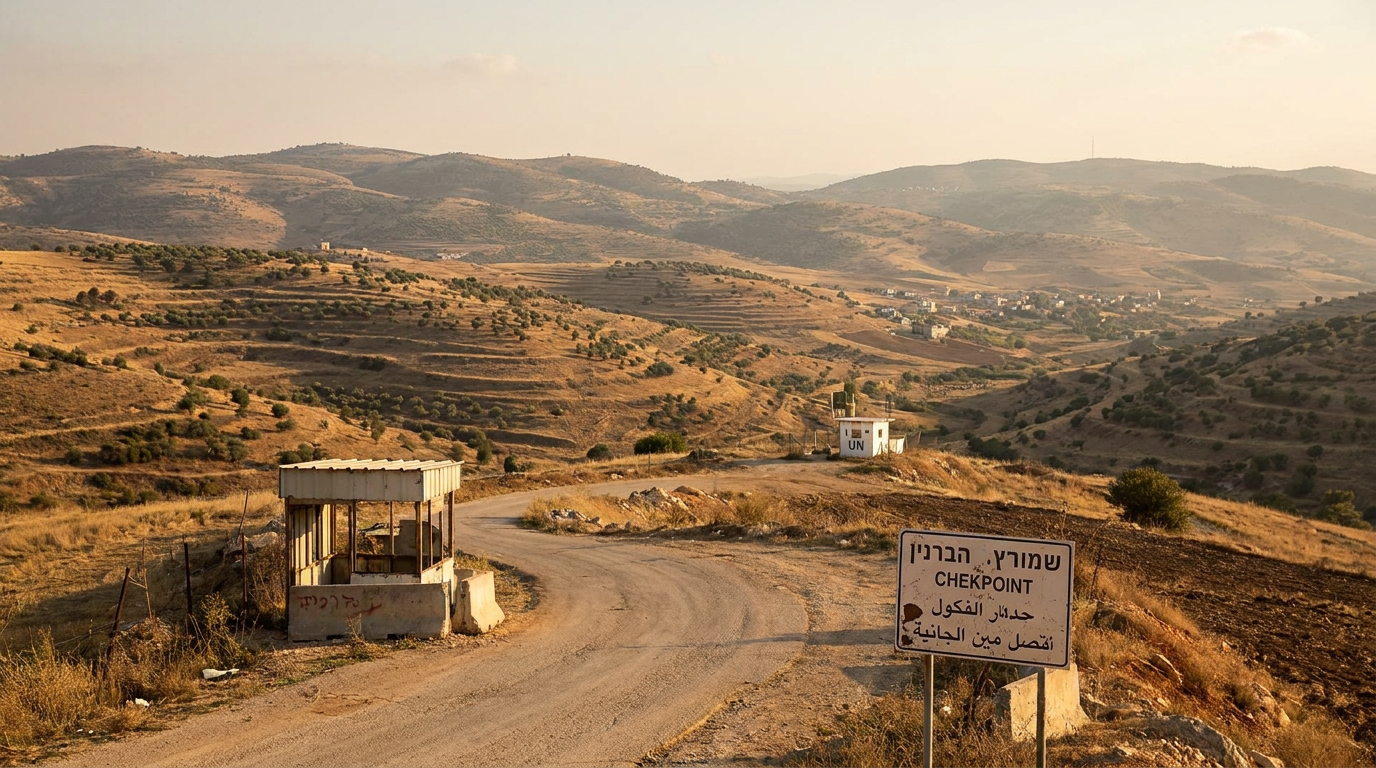
The renewed ceasefire between Israel and Hezbollah officially took effect at 4 p.m. local time on Friday, pausing a fierce and deadly exchange of fire that threatened to unravel a historic, albeit highly fragile, peace agreement between the United States and Iran. The halt in hostilities was mediated by officials from the U.S., Qatar, and Iran, following a chaotic 24-hour period that saw the region teetering on the edge of a wider escalation. The sudden implementation of the truce brings a temporary sigh of relief to border communities, though the underlying tensions remain entirely unresolved.[4][5]
The ceasefire agreement followed a morning of intense violence. Israeli airstrikes pummeled over 80 targets across southern and eastern Lebanon, a heavy bombardment launched in direct response to Hezbollah attacks that killed four Israeli soldiers, including a battalion commander. The Israel Defense Forces characterized the strikes as a necessary measure to dismantle terrorist infrastructure and restore deterrence, while Lebanese officials condemned the attacks as a dangerous escalation that resulted in dozens of casualties. The rapid cycle of retaliation underscored how quickly the broader regional peace framework could collapse under the weight of localized conflicts.[2][4][6]
The flare-up in Lebanon immediately complicated the broader diplomatic picture, sending shockwaves through international negotiating teams. Planned talks between U.S. and Iranian officials in Switzerland, which were intended to build upon a newly signed Memorandum of Understanding (MoU), were abruptly postponed. Both sides balked at sitting down at the negotiating table while cross-border strikes were actively ongoing. U.S. Vice President JD Vance delayed his planned trip to lead the American delegation, citing the need for the immediate security situation to stabilize before technical negotiations could proceed.[1][4][6]

The underlying MoU, signed digitally on Thursday by U.S. President Donald Trump and Iranian President Masoud Pezeshkian, establishes a critical 60-day window to negotiate a permanent end to the months-long conflict. The landmark deal includes significant immediate concessions, most notably the United States lifting its naval blockade of Iranian ports and the reopening of the Strait of Hormuz. This maritime chokepoint is essential for global energy shipments, and its closure during the conflict had sent international markets into a panic.[5][8]
In his first public reaction to the sweeping agreement, Iran's new Supreme Leader, Ayatollah Mojtaba Khamenei, issued a written statement endorsing the deal despite holding what he described as a "different view." Khamenei, who assumed ultimate power after his father Ali Khamenei was killed in a February airstrike that sparked the wider war, emphasized that future face-to-face negotiations do not mean accepting the "enemy's position." His remarks appeared carefully calibrated to appease hardline domestic factions while allowing the pragmatic economic benefits of the deal to move forward.[3][8]
Iranian officials have framed the U.S. agreement as a necessary and calculated step to protect the nation's rights and secure desperately needed economic relief. However, they have also drawn a firm line regarding the conflict in the Levant, warning that any continued Israeli military operations in Lebanon would be viewed by Tehran as a fundamental breach of the broader commitment. This linkage places immense pressure on the U.S. to rein in its closest Middle Eastern ally to preserve the historic detente with Iran.[2][8]

agreement as a necessary and calculated step to protect the nation's rights and secure desperately needed economic relief.
Israel, however, has steadfastly maintained that it is not bound by the U.S.-Iran MoU. Israeli officials assert they are operating under an entirely separate ceasefire framework with Beirut and will not allow Washington's diplomatic timeline to dictate their national security requirements. Prime Minister Benjamin Netanyahu's government has vowed to maintain a security buffer zone in southern Lebanon for as long as necessary to protect northern Israeli communities from the persistent threat of Hezbollah incursions and rocket fire.[4][7]
This stark disconnect between the U.S.-Iran framework and Israel's immediate military objectives has exposed significant rifts between Washington and Jerusalem. The U.S. administration has expressed visible frustration over the continued fighting, warning that tactical strikes in Lebanon jeopardize the broader regional de-escalation effort and the delicate, high-stakes negotiations with Tehran. American diplomats are now working overtime to compartmentalize the two conflicts, attempting to keep the U.S.-Iran talks alive while simultaneously managing the volatile Israel-Hezbollah border dynamic.[1][5][6]

For now, the guns have quieted, and global markets are reacting positively to the diplomatic progress. Oil prices, which skyrocketed to punishing highs during the height of the conflict, have begun to cool significantly as tankers resume their passage through the Strait of Hormuz. Reports indicate that over 12.5 million barrels of oil moved through the channel on Wednesday night alone, signaling a rapid return to normal maritime operations and providing a much-needed boost to the global economy.[6]
Yet, with the 60-day clock ticking and deep, historical distrust permeating all sides, the path to a lasting peace remains fraught with formidable obstacles. Negotiators must still tackle deeply entrenched and complex issues, including the future of Iran's nuclear program, the comprehensive lifting of broader economic sanctions, and the permanent disarmament of militant factions along Israel's borders. The coming weeks will test whether this fragile architecture of ceasefires and memorandums can withstand the inevitable pressures of a deeply divided region.[5][8]
How we got here
Feb 28, 2026
Iranian Supreme Leader Ali Khamenei is killed in an airstrike, sparking a wider regional war.
April 2026
Initial ceasefire attempts fail to hold as cross-border strikes between Israel and Hezbollah continue.
June 18, 2026
The U.S. and Iran digitally sign a Memorandum of Understanding to end hostilities and reopen the Strait of Hormuz.
June 19, 2026
A renewed Israel-Hezbollah ceasefire takes effect at 4 p.m. after intense morning strikes postpone U.S.-Iran talks.
Viewpoints in depth
The U.S. Diplomatic Push
Washington views the MoU and the Lebanon ceasefire as critical first steps to stabilizing the Middle East and the global economy.
The U.S. administration is heavily invested in the 60-day negotiation window, prioritizing the reopening of the Strait of Hormuz to ease global oil prices. U.S. officials have expressed frustration with Israel's continued military operations in Lebanon, warning that tactical strikes risk unraveling the broader strategic agreement with Tehran. For Washington, compartmentalizing the Lebanese border conflict from the broader U.S.-Iran detente is the paramount diplomatic challenge.
Israel's Security Imperative
Jerusalem insists on maintaining military freedom of action to protect its northern border, regardless of U.S.-Iran deals.
Israeli leadership fundamentally separates its conflict with Hezbollah from the Washington-Tehran negotiations. By refusing to be bound by the MoU, Israel reserves the right to enforce its own buffer zone in southern Lebanon and retaliate against any perceived threats. The Israeli security establishment prioritizes the immediate safety of its northern citizens over international diplomatic timelines, even at the cost of friction with the United States.
Iran's Calculated Pragmatism
Tehran is accepting the ceasefire for economic relief while maintaining deep ideological skepticism of the United States.
Supreme Leader Mojtaba Khamenei's public statement reflects a delicate balancing act: approving the deal to end crippling blockades and secure reconstruction funds, while assuring hardliners that negotiations do not equal surrender. Iranian officials continue to view Israeli actions in Lebanon as potential dealbreakers that could justify a return to hostilities, using their proxy networks as leverage in the broader negotiations with Washington.
What we don't know
- Whether the Israel-Hezbollah ceasefire will hold through the weekend without further retaliatory strikes.
- When the postponed U.S.-Iran talks in Switzerland will be officially rescheduled.
- How the U.S. plans to address Israel's security concerns without alienating Iranian negotiators.
Key terms
- Strait of Hormuz
- A critical maritime chokepoint between the Persian Gulf and the Gulf of Oman, through which a significant portion of the world's oil supply passes.
- Memorandum of Understanding (MoU)
- A formal agreement between two or more parties outlining the terms of a mutual understanding, often serving as the foundation for a final treaty.
- Buffer Zone
- A neutral area serving to separate hostile forces, which Israel insists on maintaining in southern Lebanon to protect its northern communities.
Frequently asked
What is the U.S.-Iran Memorandum of Understanding?
It is a digitally signed agreement establishing a 60-day window to negotiate a permanent end to the war, while immediately lifting the U.S. blockade on Iranian ports.
Is Israel bound by the U.S.-Iran deal?
No. Israel maintains it is not bound by the broader U.S.-Iran agreement and is operating under a separate ceasefire framework regarding its conflict with Hezbollah in Lebanon.
Who is Mojtaba Khamenei?
He is the new Supreme Leader of Iran, having assumed the role after his father, Ali Khamenei, was killed in an airstrike in February 2026.
Sources
Source coverage
8 outlets
3 viewpoints surfaced








[1]Fox NewsU.S. & International Mediators
Israel–Hezbollah ceasefire becomes first test of Trump Iran framework after talks delay
Read on Fox News →[2]Al JazeeraIranian Leadership & Allies
Israeli air strikes hit Lebanon minutes after new ceasefire
Read on Al Jazeera →[3]NYTU.S. & International Mediators
Iran’s Supreme Leader Says He Dislikes Deal With U.S., but Allowed It
Read on NYT →[4]The Washington PostU.S. & International Mediators
Clashes in Lebanon seemed to imperil the U.S.-Iran peace deal
Read on The Washington Post →[5]TIMEU.S. & International Mediators
Israel and Hezbollah Agree to Cease-Fire, U.S. Official Says
Read on TIME →[6]PBSU.S. & International Mediators
Israel and Hezbollah renew ceasefire after U.S. and Iran call off talks over fighting in Lebanon
Read on PBS →[7]The Times of IsraelIsraeli Security Establishment
Gulf diplomat says Iran was a mediator of the Israel-Hezbollah ceasefire
Read on The Times of Israel →[8]Jerusalem PostIsraeli Security Establishment
Iranian Supreme Leader Mojtaba Khamenei said that Iran will not submit to 'excessive demands'
Read on Jerusalem Post →

More in news politics
See all 8 stories →State vs Federal
DOJ Sues Virginia Over Laws Banning ICE Masks and Limiting Immigration Enforcement
7 sources
Immigration Enforcement
DOJ Sues Virginia to Block New Laws Restricting ICE Agents and Banning Masks
7 sources
FISA Standoff
Trump Halts DNI Confirmation and FISA Renewal to Force Vote on SAVE America Act
8 sources
School Meals
Fact-Checking the Evidence on Universal Free School Meals: Impacts on Health, Behavior, and Budgets
7 sources

Every angle. Every day.
Get news politics stories with full source coverage and perspective breakdowns delivered to your inbox.