
Israel and Hezbollah Agree to Ceasefire as U.S.-Iran Swiss Talks Face Delays
A renewed ceasefire between Israel and Hezbollah took effect Friday, halting a deadly flare-up that threatened to derail the newly signed U.S.-Iran peace framework.
By Factlen Editorial Team
- U.S. Administration
- Prioritizing the broader U.S.-Iran peace framework and regional de-escalation, even at the cost of friction with Israel.
- Israeli Security Establishment
- Viewing the U.S.-Iran deal as a dangerous concession that leaves Tehran's proxy network intact on their borders.
- Iranian Leadership
- Balancing domestic hardliners and economic desperation, framing the deal as a tactical necessity while maintaining rhetorical resistance.
- Regional Mediators
- Focusing on logistical facilitation and incremental diplomatic wins to prevent a return to all-out regional war.
What's not represented
- · Lebanese civilians displaced by the conflict
- · Global shipping companies reliant on the Strait of Hormuz
Why this matters
The successful implementation of this ceasefire is the linchpin for a broader U.S.-Iran peace deal that promises to end a devastating regional war, reopen the global oil chokepoint at the Strait of Hormuz, and reshape Middle Eastern geopolitics.
Key points
- Israel and Hezbollah agreed to a renewed ceasefire effective 4:00 p.m. local time Friday.
- The truce follows a deadly overnight escalation that killed 47 Lebanese and four Israeli soldiers.
- The violence forced the postponement of U.S.-Iran technical talks scheduled in Switzerland.
- Iran's Supreme Leader Mojtaba Khamenei publicly authorized the broader U.S.-Iran peace framework despite personal reservations.
- The U.S. administration has sharply rebuked Israeli officials for criticizing the U.S.-Iran deal.
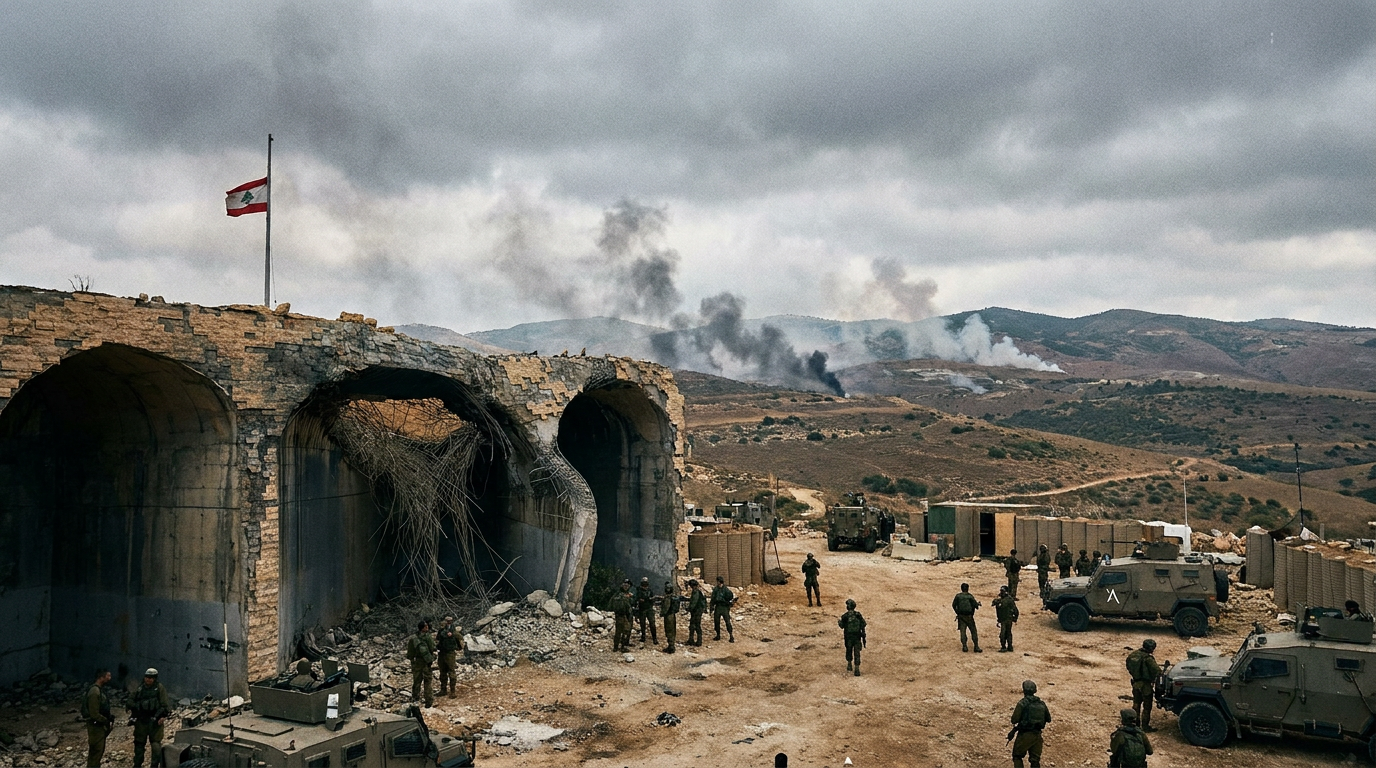
Israel and Hezbollah have agreed to a renewed ceasefire brokered by the United States, Qatar, and Iran, taking effect at 4:00 p.m. local time on Friday.[4][5][6]
The truce halts a deadly overnight escalation that threatened to unravel a newly signed U.S.-Iran peace framework aimed at ending the broader Middle East conflict.[1][4]
Before the ceasefire took hold, heavy fighting erupted across southern Lebanon. Israeli airstrikes killed at least 47 people, while a Hezbollah ambush on an advancing tank unit killed four Israeli soldiers, prompting Israeli Prime Minister Benjamin Netanyahu to vow a "heavy price."[2][5][6]

The sudden violence forced the postponement of highly anticipated follow-up negotiations between the U.S. and Iran, which were scheduled to take place at the Bürgenstock resort in Switzerland.[1][7]
The White House confirmed that Vice President JD Vance delayed his departure for the talks, citing logistical hurdles, while the Swiss Foreign Ministry formally announced the postponement, noting that preparatory work would continue.[7][8]
The Israel-Hezbollah ceasefire serves as the first major test of the "Islamabad Memorandum of Understanding," a preliminary peace framework signed digitally on Wednesday by U.S. President Donald Trump and Iranian President Masoud Pezeshkian.[4][5]
President Donald Trump and Iranian President Masoud Pezeshkian.
The landmark pact lifts the U.S. naval blockade of Iranian ports, reopens the strategically vital Strait of Hormuz to commercial shipping, and establishes a 60-day window to negotiate a final settlement regarding Iran's nuclear program.[4][6]

On Thursday, Iran's new Supreme Leader, Ayatollah Mojtaba Khamenei—who assumed power after his father was killed in a February airstrike at the onset of the war—issued his first public reaction to the agreement.[3]
In a statement read on state media, Khamenei admitted he held a "different view" of the deal but authorized it based on Pezeshkian's commitments to safeguard Iranian rights, warning that future face-to-face negotiations would not mean accepting "the enemy's point of view."[3]
The broader framework has exposed a growing rift between Washington and Tel Aviv, with Israeli officials sharply criticizing the pact for leaving Iran as a regional threat.[5][8]

The Trump administration has responded with unusual bluntness. Trump publicly criticized Israel's heavy-handed strikes in Beirut, while Vance rebuked Israeli hardliners, warning them not to attack their "only powerful ally."[8]
How we got here
Feb 28, 2026
A broader Middle East war begins, marked by a strike that kills Iranian Supreme Leader Ali Khamenei.
June 17, 2026
U.S. President Donald Trump and Iranian President Masoud Pezeshkian digitally sign a memorandum of understanding to end the war.
June 18, 2026
Heavy fighting erupts between Israel and Hezbollah, threatening the broader peace framework.
June 19, 2026
A renewed ceasefire takes effect at 4:00 p.m. local time, though follow-up U.S.-Iran talks in Switzerland are delayed.
Viewpoints in depth
U.S. Administration's view
The White House views the broader U.S.-Iran framework as a historic diplomatic achievement necessary to stabilize the global economy.
The Trump administration is prioritizing the implementation of the U.S.-Iran memorandum, emphasizing the economic benefits of reopening the Strait of Hormuz and ending a costly conflict. U.S. officials have shown unusual willingness to publicly rebuke Israeli leadership, arguing that continued heavy strikes in Lebanon jeopardize a fragile, hard-won regional peace.
Israeli Security Establishment's view
Israeli leaders argue the U.S.-Iran pact prematurely ends military pressure while leaving hostile proxy forces intact on their borders.
For Israel, the U.S.-Iran deal is seen as a dangerous concession that fails to neutralize the immediate threat posed by Hezbollah. Israeli officials maintain that the Israel Defense Forces must retain the operational freedom to strike targets in Lebanon and maintain a buffer zone to protect northern Israeli communities, regardless of Washington's diplomatic timeline.
Iranian Leadership's view
Tehran is balancing the urgent need for economic relief with a desire to project strength to its domestic base and regional allies.
Iran's new Supreme Leader, Mojtaba Khamenei, is navigating a delicate political transition. By publicly expressing reservations about the deal while allowing it to proceed, he distances himself from potential diplomatic failures while securing the lifting of the U.S. naval blockade. Tehran insists its defensive capabilities are non-negotiable in the upcoming 60-day window.
What we don't know
- When the postponed U.S.-Iran technical talks in Switzerland will be rescheduled.
- Whether the 60-day negotiation window will result in a permanent resolution regarding Iran's nuclear program.
- How strictly the Israel-Hezbollah ceasefire will be enforced along the southern Lebanese border.
Key terms
- Islamabad Memorandum of Understanding
- The preliminary peace framework signed by the U.S. and Iran aimed at ending the regional war and reopening the Strait of Hormuz.
- Strait of Hormuz
- A crucial maritime chokepoint between the Persian Gulf and the Gulf of Oman, through which a significant portion of the world's oil supply passes.
- Buffer Zone
- The security area in southern Lebanon where Israeli forces intend to maintain a presence to prevent Hezbollah attacks.
Frequently asked
Why were the U.S.-Iran talks in Switzerland delayed?
The talks were postponed due to the sudden escalation of violence between Israel and Hezbollah in Lebanon, which created logistical and diplomatic hurdles for the delegations.
What does the U.S.-Iran deal actually do?
The preliminary framework lifts the U.S. naval blockade of Iranian ports, reopens the Strait of Hormuz, and establishes a 60-day window to negotiate a final settlement on Iran's nuclear program.
Does Iran's Supreme Leader support the deal?
Ayatollah Mojtaba Khamenei stated he had a 'different view' of the agreement but ultimately authorized it based on assurances from Iran's president that they would not accept excessive U.S. demands.
Sources
Source coverage
8 outlets
4 viewpoints surfaced








[1]Fox NewsU.S. Administration
Israel–Hezbollah ceasefire becomes first test of Trump Iran framework after talks delay
Read on Fox News →[2]Al JazeeraIranian Leadership
Israel continues attacks on Lebanon despite agreeing to ceasefire
Read on Al Jazeera →[3]The New York TimesIranian Leadership
Iran’s Supreme Leader Says He Dislikes Deal With U.S., but Allowed It
Read on The New York Times →[4]CBS NewsU.S. Administration
Israel and Hezbollah agree to a ceasefire, diplomat briefed on the deal says
Read on CBS News →[5]The Washington PostIsraeli Security Establishment
Israel and Hezbollah agree to renewed ceasefire after clashes imperil US-Iran deal
Read on The Washington Post →[6]Channel News AsiaRegional Mediators
Israel, Hezbollah agree to ceasefire starting on Friday: US official
Read on Channel News Asia →[7]South China Morning PostRegional Mediators
US-Iran talks in Switzerland delayed, White House says Vance still ready to go
Read on South China Morning Post →[8]The HinduIsraeli Security Establishment
Israel and Hezbollah agree on a ceasefire, U.S. official says
Read on The Hindu →

More in news politics
See all 8 stories →State vs Federal
DOJ Sues Virginia Over Laws Banning ICE Masks and Limiting Immigration Enforcement
7 sources
Immigration Enforcement
DOJ Sues Virginia to Block New Laws Restricting ICE Agents and Banning Masks
7 sources
FISA Standoff
Trump Halts DNI Confirmation and FISA Renewal to Force Vote on SAVE America Act
8 sources
School Meals
Fact-Checking the Evidence on Universal Free School Meals: Impacts on Health, Behavior, and Budgets
7 sources

Every angle. Every day.
Get news politics stories with full source coverage and perspective breakdowns delivered to your inbox.