
U.S. and Iran Sign 60-Day Truce to Reopen Strait of Hormuz, but Israel Defies Lebanon Ceasefire
The Trump administration and Iran have signed a 14-point memorandum of understanding to halt their 110-day conflict and reopen the Strait of Hormuz. However, the deal's mandate to end fighting in Lebanon has sparked fierce pushback from Israel, which was not a party to the agreement.
By Factlen Editorial Team
- Global Maritime & Policy Analysts
- Focused on the physical realities of demining the Strait, oil markets, and the fragility of the 60-day timeline.
- U.S. Deal Brokers
- Focused on ending the 110-day war, resuming global shipping, and leveraging the 60-day diplomatic window.
- Israeli Defense Establishment
- Furious at the Lebanon ceasefire mandate, viewing the deal as a capitulation that leaves Israel exposed to Hezbollah.
What's not represented
- · Lebanese Civilians
- · European Energy Importers
Why this matters
The 14-point agreement pauses a 110-day war that has devastated global shipping, offering immediate relief to oil markets by reopening the Strait of Hormuz. However, its attempt to force a ceasefire in Lebanon has opened a severe rift between Washington and Jerusalem, threatening to ignite a separate regional conflict if Israel continues to defy the U.S.-brokered truce.
Key points
- The U.S. and Iran signed a 14-point MOU to end their 110-day conflict and reopen the Strait of Hormuz.
- The agreement establishes a 60-day window to negotiate a final treaty regarding Iran's nuclear program and sanctions relief.
- Iran has agreed to toll-free passage in the Strait, though a new Iranian agency is demanding ships carry Tehran-approved insurance.
- The MOU mandates an end to fighting in Lebanon, a provision Israel has defied by launching fresh strikes against Hezbollah.
The United States and Iran have signed a sweeping 14-point memorandum of understanding, pausing a devastating 110-day conflict that has crippled global energy markets. Brokered by the Trump administration and signed during the G7 summit at the Palace of Versailles, the preliminary agreement establishes a 60-day window to negotiate a permanent treaty.[3]
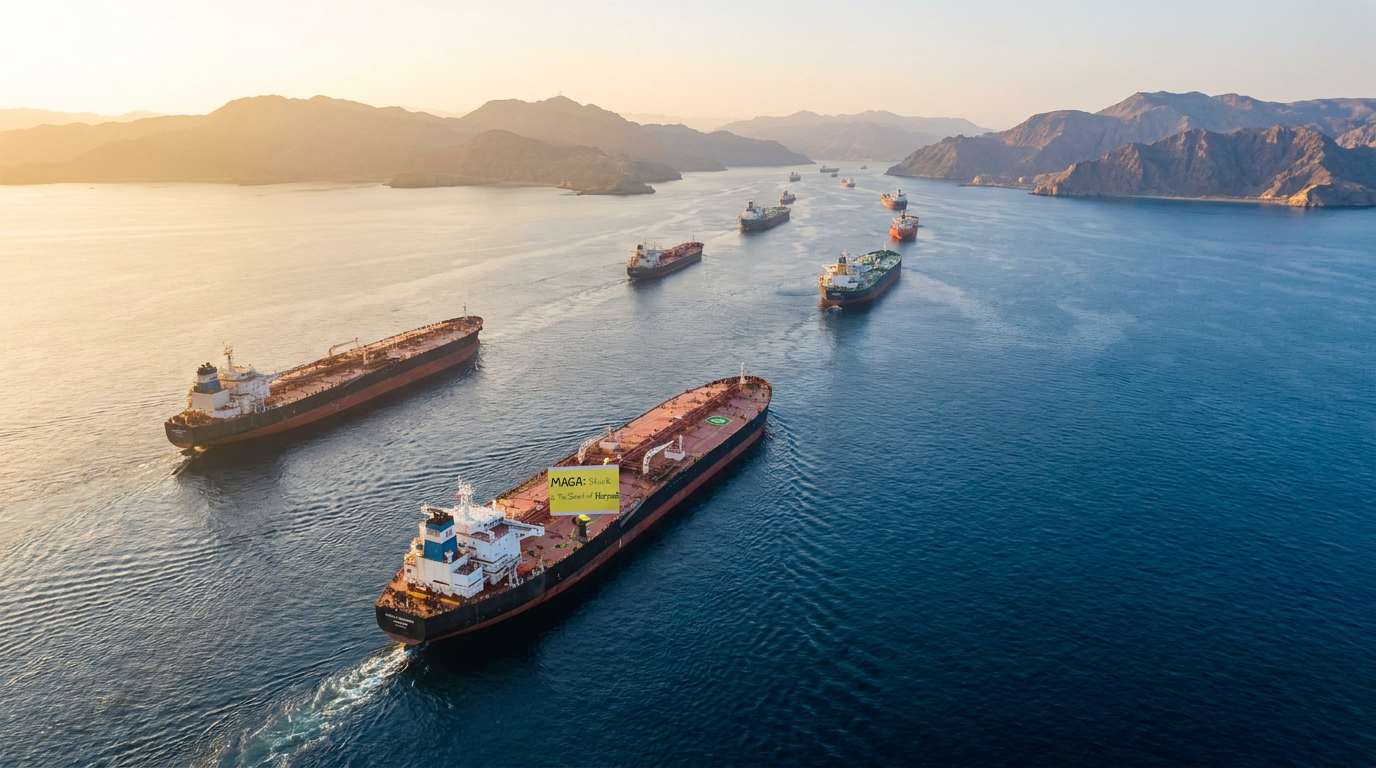
The immediate centerpiece of the deal is the reopening of the Strait of Hormuz. Under the terms dictated by U.S. officials, the United States will immediately lift its naval blockade, while Tehran has agreed to allow toll-free passage for commercial vessels for the next two months.[2][4]
President Donald Trump celebrated the signing on Truth Social, declaring the deal complete and urging the global shipping industry to resume operations. "Ships of the World, start your engines. Let the oil flow!" the president wrote, framing the MOU as a massive victory for the global economy.[4][5]

The economic relief was palpable almost immediately. By Thursday, maritime tracking data showed 25 commercial vessels transiting the Strait of Hormuz—the highest daily volume seen since mid-April.[1]
However, the physical reality of reopening the waterway remains complex. The Strait has been heavily mined during the 110-day war, and naval explosive ordnance disposal teams face a monumental task in clearing the shipping lanes. Experts warn that the underwater threat could outlast the diplomatic agreements, complicating the rapid resumption of pre-war traffic levels.[7]

Furthermore, Tehran is already testing the boundaries of the agreement. A newly formed Iranian agency, the Persian Gulf Strait Authority (PGSA), issued a directive on Friday demanding that all transiting ships hold an insurance policy explicitly approved by Tehran.[1]
The PGSA document also insists that vessels must request permission from the agency and follow strictly approved routes around Larak Island, signaling that Iran intends to maintain tight administrative control over the chokepoint despite the U.S. mandate for "free passage."[1]
Beyond the maritime concessions, the most explosive element of the MOU is its attempt to dictate terms to actors who were not in the room. Paragraph 1 of the agreement declares an "immediate and permanent termination of all military operations on every front, including in Lebanon."[3]
Beyond the maritime concessions, the most explosive element of the MOU is its attempt to dictate terms to actors who were not in the room.
This provision effectively requires Iran to rein in Hezbollah, but it also demands that Israel halt its ongoing military campaign in southern Lebanon. The inclusion of Lebanon has infuriated the Israeli government, which was excluded from the U.S.-Iran negotiations and does not consider itself bound by the text.[2][5]

Israeli Prime Minister Benjamin Netanyahu has vehemently rejected the concept of accommodation with Tehran, viewing the MOU as a capitulation that leaves Israel dangerously exposed. In Jerusalem, the prevailing view among the defense establishment is that Iran conceded nothing tangible regarding its nuclear program or proxy networks in exchange for the withdrawal of U.S. forces.[5]
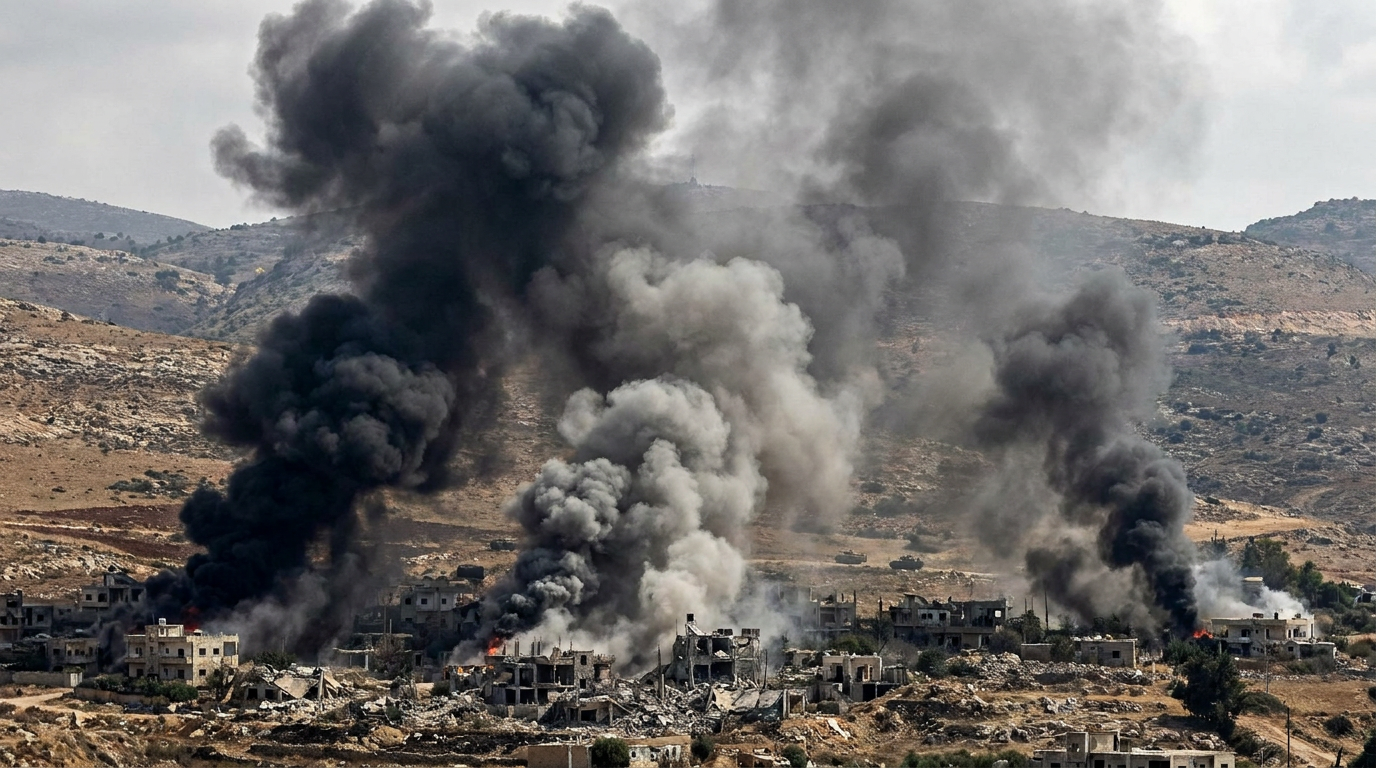
Defying the U.S.-brokered truce, the Israel Defense Forces launched fresh strikes against Hezbollah targets in Lebanon early Friday morning, citing "repeated violations" by the militant group.[1][6]
The Israeli strikes prompted a swift public rebuke from President Trump, who took to social media to demand compliance. "We expect a complete Ceasefire on all fronts, including Lebanon, Hezbollah, and Israel," Trump stated, urging all regional players to allow the negotiations to "beautifully unfold."[1]
The diplomatic friction is already threatening the fragile 60-day negotiation window. A planned follow-up meeting in Switzerland, which was scheduled to include U.S. Vice President JD Vance, was abruptly canceled on Friday, though lower-level talks are reportedly shifting to Cairo.[1]
The ultimate success of the MOU hinges on resolving the core issues deferred to the 60-day window: constraining Iran's nuclear ambitions, addressing its ballistic missile program, and finalizing a proposed $300 billion U.S.-backed economic reconstruction plan for Tehran.[3][4]

For now, the agreement has achieved its primary goal of halting direct U.S.-Iran hostilities and unlocking the world's most critical oil chokepoint. But with Israel actively defying the Lebanon ceasefire and Iran imposing new bureaucratic hurdles on shipping, the path to a permanent treaty remains heavily mined—both literally and diplomatically.[5][6][7]
How we got here
Feb 28, 2026
The conflict begins with joint U.S.-Israeli strikes on Iranian targets.
March - May 2026
A 110-day war ensues, heavily disrupting global shipping through the Strait of Hormuz.
June 17, 2026
The U.S. and Iran agree to a 14-point Memorandum of Understanding to halt hostilities.
June 19, 2026
Israel defies the MOU's ceasefire mandate, launching fresh strikes against Hezbollah in Lebanon.
Viewpoints in depth
U.S. Administration's view
Focuses on the economic victory of reopening the Strait of Hormuz and ending a costly 110-day war.
For the Trump administration, the MOU represents a massive economic and diplomatic win that halts a conflict draining American resources. By securing the immediate reopening of the Strait of Hormuz, the administration aims to stabilize global oil markets and project strength. Proponents argue that the 60-day window provides the necessary leverage to secure a lasting nuclear deal without further American bloodshed, viewing the inclusion of Lebanon as a necessary step to cool the entire region.
Israeli Defense Establishment's view
Views the MOU as a dangerous capitulation that rewards Iranian aggression and leaves Israel exposed.
Israeli leadership is furious at being sidelined during the negotiations and views the resulting agreement as a betrayal. From Jerusalem's perspective, the U.S. traded regional security for cheap oil, allowing Iran to keep its nuclear infrastructure and proxy networks intact. The mandate to cease operations in Lebanon is seen as an unacceptable infringement on Israel's sovereignty and right to self-defense against Hezbollah, prompting the IDF to actively defy the ceasefire.
Iranian Leadership's view
Frames the agreement as a victory of endurance while seeking to maximize economic relief.
Tehran is projecting the MOU as proof that it successfully withstood American military pressure, claiming the U.S. was forced to the table out of desperation over global shipping. Iranian officials intend to use the 60-day window to secure massive sanctions relief and the proposed $300 billion reconstruction package. Meanwhile, the creation of the Persian Gulf Strait Authority demonstrates Iran's intent to maintain de facto administrative control over the Strait of Hormuz, testing the limits of the U.S. mandate for free passage.
What we don't know
- Whether Israel will eventually comply with the U.S. demand to halt its military operations in Lebanon.
- How long it will take international explosive ordnance teams to fully clear the Strait of Hormuz of naval mines.
- If the U.S. and Iran can successfully negotiate a permanent treaty on nuclear enrichment within the tight 60-day window.
Key terms
- Memorandum of Understanding (MOU)
- A preliminary diplomatic agreement that outlines the broad terms of a deal before a final, binding treaty is signed.
- Strait of Hormuz
- A narrow, highly strategic waterway between the Persian Gulf and the Gulf of Oman through which a significant portion of the world's oil passes.
- Persian Gulf Strait Authority (PGSA)
- A newly formed Iranian agency attempting to regulate and mandate insurance for commercial vessels passing through the Strait.
- Naval Blockade
- A military operation in which ships are used to prevent vessels from entering or leaving a specific port or region.
Frequently asked
Is the war between the U.S. and Iran officially over?
The two nations have signed a memorandum of understanding to halt hostilities for 60 days while they negotiate a final, permanent treaty.
Is the Strait of Hormuz open for shipping?
Yes, the U.S. has lifted its naval blockade and Iran has agreed to allow toll-free passage, though Tehran is now demanding ships carry approved insurance.
Why is Israel upset about the agreement?
The U.S.-Iran deal includes a mandate to end all fighting in Lebanon. Israel, which was not part of the negotiations, refuses to stop its campaign against Hezbollah.
What happens after the 60-day window?
If a final deal is not reached regarding Iran's nuclear program and sanctions relief, the ceasefire could collapse, potentially resuming the conflict.
Sources
Source coverage
7 outlets
3 viewpoints surfaced







[1]CBS NewsU.S. Deal Brokers
Iran says ships transiting Strait of Hormuz will need insurance approved by Tehran
Read on CBS News →[2]The GuardianGlobal Maritime & Policy Analysts
US-Iran deal takeaways: reopening the strait of Hormuz, waived oil sanctions and Lebanon
Read on The Guardian →[3]Jewish InsiderU.S. Deal Brokers
Trump administration shares text of U.S.-Iran memorandum of understanding
Read on Jewish Insider →[4]Council on Foreign RelationsGlobal Maritime & Policy Analysts
Where the U.S.-Iran Deal Lands on Core Issues
Read on Council on Foreign Relations →[5]Atlantic CouncilIsraeli Defense Establishment
Experts react: What the US-Iran MOU means for the Middle East
Read on Atlantic Council →[6]Al JazeeraIsraeli Defense Establishment
‘Destruction is the goal’: Israel steers between the US, Iran, and Lebanon
Read on Al Jazeera →[7]The New York TimesGlobal Maritime & Policy Analysts
Demining the Strait of Hormuz
Read on The New York Times →
More in news politics
See all 8 stories →School Meals
Fact-Checking the Evidence on Universal Free School Meals: Impacts on Health, Behavior, and Budgets
7 sources

Middle East Peace
Israel and Hezbollah Renew Ceasefire After Deadly Flare-Up Delays U.S.-Iran Peace Talks
8 sources
Middle East Conflict
Israel and Hezbollah Agree to Renewed Ceasefire as Violence Delays US-Iran Talks
8 sources
Middle East Peace
Israel and Hezbollah Begin Ceasefire as U.S.-Iran Peace Talks Face Immediate Delays
8 sources
Every angle. Every day.
Get news politics stories with full source coverage and perspective breakdowns delivered to your inbox.