
World Cup 2026 Injury Tracker: The Race to be Fit and the Next Generation Stepping Up
As the 2026 World Cup group stage intensifies, national teams are navigating a complex landscape of last-minute injuries. These setbacks are testing squad depth, highlighting medical advancements, and creating unexpected opportunities for rising stars.
By Factlen Editorial Team
- National Team Managers
- Managers and analysts who view injuries as structural puzzles to solve with squad depth.
- Sports Medical Staff
- Professionals focused on player welfare, load management, and the science of recovery.
- Player Welfare Advocates
- Voices highlighting the emotional toll and grueling calendar causing these injuries.
What's not represented
- · Club Managers who lose their players to long-term injuries on international duty
- · The mental health professionals supporting players through devastating pre-tournament injuries
Why this matters
Understanding how elite teams manage devastating injuries and integrate last-minute replacements offers a masterclass in organizational resilience and adaptability. For fans, it shifts the focus from the despair of missing stars to the inspiring narratives of medical science and the next generation seizing their moment on the world's biggest stage.
Key points
- The expanded 2026 World Cup format and grueling club seasons have placed unprecedented physical demands on international squads.
- Teams are utilizing FIFA's 24-hour emergency replacement protocol to adapt to late injuries, testing the depth of their 26-man rosters.
- Medical staffs are successfully managing the fitness of major stars like Mohamed Salah and Lionel Messi through cutting-edge load management.
- Sudden in-game injuries have rallied teams emotionally, highlighted by Canada's Nathan Saliba dedicating a goal to his injured teammate.
The 2026 FIFA World Cup is testing the limits of human endurance and the depth of national team rosters like never before. With the expanded 48-team format and a grueling European club season in the rearview mirror, the narrative of the tournament is being shaped as much by the medical room as it is by the tactical board. Yet, for every devastating setback, the opening week of the tournament has offered a masterclass in resilience, medical science, and the power of the next-man-up mentality.[3][7]
The reality of modern international football is that a squad of 26 players is a living, breathing ecosystem that must adapt to sudden shocks. When a star falls, the structure must hold. This adaptability was put to the ultimate test on the eve of England’s opening fixture against Croatia. Manager Thomas Tuchel was forced into a late tactical reshuffle when versatile Newcastle United defender Tino Livramento sustained a calf injury during a Sunday training session, ruling him out of the entire tournament.[1]
Rather than dwell on the misfortune, the English Football Association immediately activated FIFA’s emergency squad protocol, which allows teams to replace an outfield player up to 24 hours before their opening match. Chelsea’s Trevoh Chalobah was drafted in, rapidly boarding a flight to the team’s basecamp in Kansas City. For Tuchel and his staff, the loss of Livramento’s rare ability to cover both flanks is a hurdle, but the seamless integration of Chalobah highlights the unprecedented depth available to top-tier nations.[1]

The emotional whiplash of tournament football was on full display in Vancouver, where co-hosts Canada secured a historic 6-0 victory over Qatar to put themselves on the brink of the knockout stages. The joyous occasion, however, was punctuated by a severe leg fracture suffered by 24-year-old midfielder Ismael Kone following a late challenge in the 51st minute.[2]
The incident left the stadium in stunned silence and manager Jesse Marsch visibly emotional on the touchline. Yet, the response from the Canadian squad encapsulated the brotherhood that defines deep tournament runs. Nathan Saliba, brought on to replace the stricken Kone, curled in a direct free-kick just 13 minutes later.[2]
In a moment that instantly became one of the defining images of the tournament's opening week, Saliba raced to the sideline to hold up Kone’s number eight jersey. It was a powerful demonstration of how a team can channel the heartbreak of losing a key player into a unifying force on the pitch, turning a moment of trauma into a catalyst for collective determination.[2]

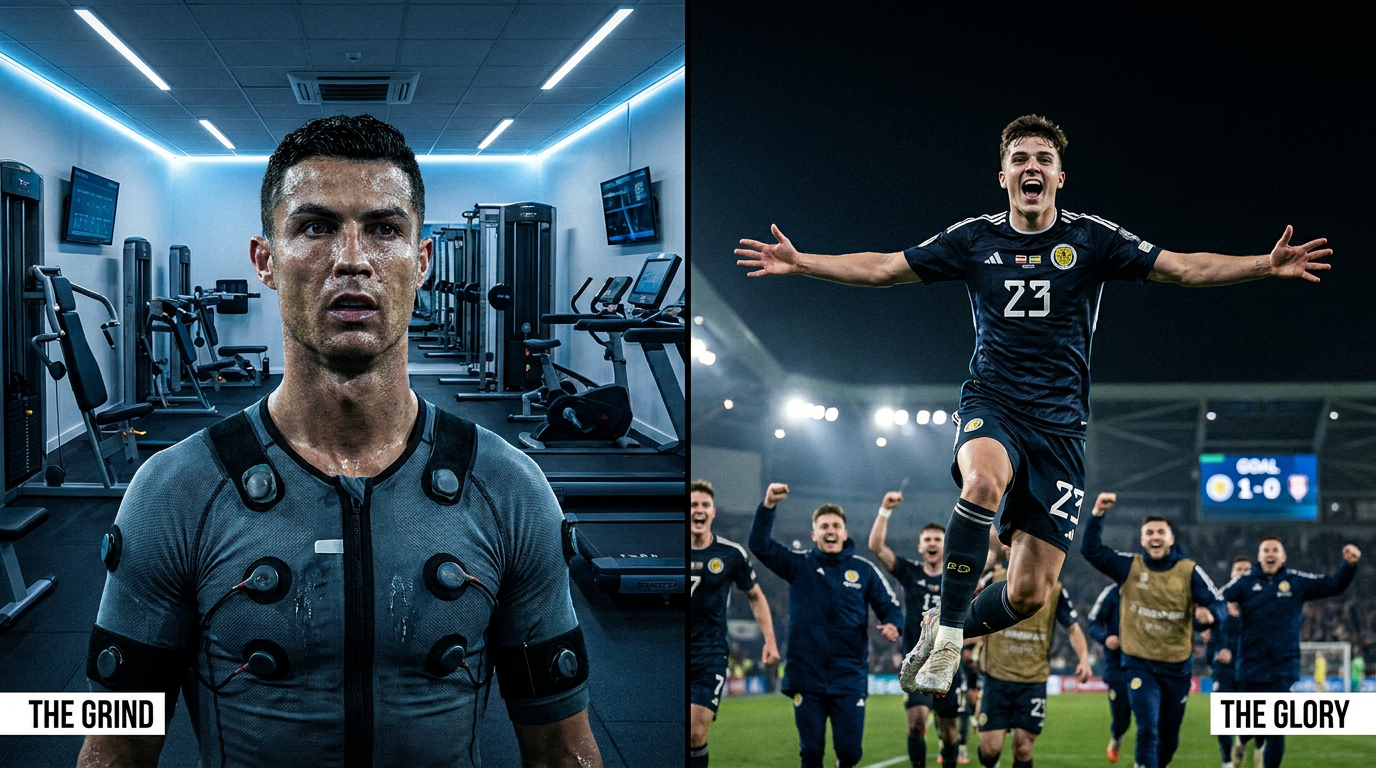
While sudden in-game injuries require immediate emotional and tactical pivots, the pre-tournament preparation phase is a calculated race against time. For the world’s elite sports medical staffs, the weeks leading up to the World Cup are a delicate balancing act of load management, cutting-edge rehabilitation, and calculated risk.[3]
While sudden in-game injuries require immediate emotional and tactical pivots, the pre-tournament preparation phase is a calculated race against time.
Egypt provided a shining example of successful medical intervention. Talismanic forward Mohamed Salah arrived at the national team camp carrying the lingering effects of a hamstring issue that had plagued his club season. Through a meticulously structured rehabilitation program coordinated between Liverpool and the Egyptian medical staff, Salah returned to action in a pre-tournament friendly, providing a massive psychological boost to his nation.[3]
Similarly, Belgium has successfully navigated the precarious fitness of Romelu Lukaku. After an injury-hit domestic campaign, the powerful striker was eased back into action, scoring against Croatia and gaining valuable minutes against Tunisia. These successful returns underscore the evolution of sports science, where players who might have missed tournaments a decade ago are now being expertly guided back to peak performance.[3]
Even the biggest stars on the planet are not immune to the physical toll, requiring bespoke management plans. Argentina’s Lionel Messi was held out of a warm-up match against Honduras due to muscle fatigue and a mild left hamstring strain. The defending champions are demonstrating extreme discipline, prioritizing clinical and functional progress over friendly minutes to ensure their captain is ready when the stakes are highest.[3]

In the Brazilian camp, panic briefly ensued when diagnostic scans revealed a 2-millimeter edema in Neymar’s right calf. However, the medical team, working under the rigorous fitness standards implemented by head coach Carlo Ancelotti, heavily downplayed the severity. Dr. Rodrigo Zogaib’s structured rehabilitation plan is designed to have the 34-year-old fully fit without compromising his long-term availability for the knockout rounds.[4]
Spain, too, is managing the fitness of a generational talent. Barcelona teenager Lamine Yamal is racing to be fully fit after a grueling domestic season. Manager Luis de la Fuente knows that even a partially fit Yamal alters the geometry of the pitch, making the medical staff's daily assessments one of the most critical components of Spain's tactical preparation.[7]
Of course, the medical miracles cannot save everyone, and the list of absentees is a sobering reminder of the sport's physical demands. Japan suffered a devastating blow when captain Takumi Minamino tore his anterior cruciate ligament, requiring a six-to-nine-month recovery. The Netherlands lost Jurrien Timber to a persistent groin issue that failed to heal in time for the tournament in a medically responsible manner.[5][6]

Scotland’s Billy Gilmour was ruled out after a cruel knee injury in a final warm-up match, a devastating blow for a player who was integral to their qualifying campaign. Brazil’s starting right-back Wesley suffered a torn adductor against Egypt, leaving the field in tears after just 17 minutes.[3][8]
Yet, even in these moments of profound personal disappointment, the machinery of the national team moves forward. For every Wesley or Gilmour forced to watch from the sidelines, an Ederson or a Tyler Fletcher is handed the opportunity of a lifetime. The 2026 World Cup is proving that while injuries are an unavoidable reality of the modern game, a team's true strength lies in its capacity to heal, adapt, and elevate the next player in line.[3][8]
How we got here
March-May 2026
The grueling European club season run-in claims several major stars, including Jurrien Timber and Takumi Minamino, ruling them out of the World Cup.
May 30, 2026
Scotland's Billy Gilmour suffers a devastating knee injury in a warm-up match against Curacao.
June 7, 2026
Brazil's starting right-back Wesley tears his adductor in a friendly against Egypt, forcing a late squad alteration.
June 16, 2026
England activates FIFA's emergency protocol to replace Tino Livramento with Trevoh Chalobah just 24 hours before their opening match.
June 18, 2026
Canada's Ismael Kone suffers a severe leg fracture against Qatar, prompting an emotional tribute from substitute Nathan Saliba.
Viewpoints in depth
National Team Managers' View
Focusing on tactical adaptability and leveraging the 26-man roster.
For international managers, pre-tournament injuries are an expected variable rather than a catastrophic anomaly. The expansion to 26-man rosters has provided coaches with the necessary buffer to absorb the loss of key personnel. Managers like Thomas Tuchel and Carlo Ancelotti approach these setbacks as tactical puzzles, relying on versatile utility players and emergency call-ups to maintain their team's structural integrity without completely overhauling their tactical philosophy.
Sports Medical Staffs' View
Prioritizing long-term player health and scientific load management.
The medical teams embedded within national camps operate under immense pressure to deliver fit players without compromising their long-term careers. Their approach relies heavily on biometric data, structured rehabilitation protocols, and calculated risk assessments. When dealing with minor issues like muscle edemas or fatigue, medical professionals often clash with the immediate demands of the coaching staff, advocating for conservative timelines to prevent catastrophic secondary injuries during the high-intensity environment of a World Cup.
The Next-Man-Up Players' View
Embracing unexpected opportunities on the world's biggest stage.
For the players drafted in at the last minute or promoted from the bench, injuries to teammates represent a bittersweet but career-defining opportunity. Entering a major tournament without the burden of a long, pressure-filled build-up can sometimes allow these replacements to play with a sense of freedom. The psychological readiness required to transition from a vacation mindset or a reserve role to starting in a World Cup match is immense, demanding instant integration into the squad's emotional and tactical rhythm.
What we don't know
- How the physical toll of the expanded 48-team tournament will affect the quality of play in the later knockout stages.
- Whether players rushed back from minor muscle strains will be able to sustain their performance levels throughout a month-long tournament.
Key terms
- Edema
- A medical term for swelling caused by excess fluid trapped in the body's tissues, often occurring in minor muscle strains.
- Adductor muscle
- A group of muscles in the thigh that pull the legs together, frequently injured in football due to rapid changes of direction.
- Anterior Cruciate Ligament (ACL)
- A key ligament that helps stabilize the knee joint; tearing it is one of the most severe injuries in sports, requiring months of rehabilitation.
- Load management
- The deliberate monitoring and restriction of a player's physical exertion during training and matches to prevent fatigue-related injuries.
Frequently asked
Can teams replace injured players during the World Cup?
Yes, under FIFA regulations, participating teams are allowed to replace an outfield player up to 24 hours before their opening fixture if the injury is deemed serious enough by medical officials.
Is Lionel Messi playing in the 2026 World Cup?
Yes, Lionel Messi is participating, though Argentina's medical staff have carefully managed his workload due to muscle fatigue and a mild hamstring strain to ensure he is fit for competitive matches.
Who replaced Ismael Kone after his injury?
Nathan Saliba was brought on as a substitute for Ismael Kone during Canada's match against Qatar, and he quickly scored a free-kick, dedicating the goal to his injured teammate.
How long is Takumi Minamino out for?
Japan's captain Takumi Minamino suffered an anterior cruciate ligament tear, requiring an estimated recovery time of six to nine months, ruling him out of the tournament.
Sources
Source coverage
8 outlets
3 viewpoints surfaced








[1]Goal.comNational Team Managers
England star ruled OUT of 2026 World Cup on eve of Croatia opener in huge injury blow for Thomas Tuchel
Read on Goal.com →[2]Sky SportsNational Team Managers
World Cup 2026: Canada 6-0 Qatar - Jonathan David scores treble but Ismael Kone suffers bad injury as Jesse Marsch's side sit on brink of knockouts
Read on Sky Sports →[3]Foot AfricaSports Medical Staff
World Cup injury update: Major absences and fitness doubts before kick-off
Read on Foot Africa →[4]The Daily CampusSports Medical Staff
Will Neymar Miss World Cup 2026 After Fresh Injury Blow?
Read on The Daily Campus →[5]beIN SPORTSPlayer Welfare Advocates
Timber ruled out of 2026 World Cup with groin injury
Read on beIN SPORTS →[6]OneFootballPlayer Welfare Advocates
Japan blow: Minamino tears ligaments, may miss World Cup 2026
Read on OneFootball →[7]Star SportsNational Team Managers
WORLD CUP 2026: Countdown Diary – Football & Racing News
Read on Star Sports →[8]FlashscorePlayer Welfare Advocates
Scotland midfielder Billy Gilmour ruled out of 2026 World Cup with knee injury
Read on Flashscore →
More in sports
See all 10 stories →Standings
San Diego Wave Seize NWSL Top Spot as League Enters World Cup Break
7 sources
Equipment Tech
Badminton's Quiet Revolution: The Engineering Race to Replace the Feather Shuttlecock
7 sources
Injury
Toronto Tempo Issue Hopeful Recovery Timelines for Brittney Sykes and Kiki Rice
6 sources
Standings
WNBA 2026 Standings: Aces Reclaim Top Spot as Expansion Teams Make Immediate Impact
6 sources
Every angle. Every day.
Get sports stories with full source coverage and perspective breakdowns delivered to your inbox.