
US and Iran Sign 14-Point Ceasefire Agreement to End 15-Week War
The United States and Iran have agreed to a memorandum of understanding that halts military operations, reopens the Strait of Hormuz, and initiates a 60-day negotiation period for a final nuclear pact.
By Factlen Editorial Team

- Trump Administration & Allies
- Argues the war successfully decimated Iran's military and forced an unconditional surrender.
- Democratic Critics
- Contends the U.S. spent billions on a war only to accept a deal weaker than previous diplomatic agreements.
- Regional Security Analysts
- Warns that the deal's failure to include Israel or address Lebanon makes the ceasefire highly unstable.
- International Observers
- Views the agreement as a necessary, albeit fragile, step to reopen global shipping and prevent further economic damage.
What's not represented
- · Israeli Government Officials
- · Lebanese Civilians
- · Gulf State Leadership
Why this matters
The agreement pauses a devastating 15-week conflict that choked global shipping and spiked energy prices, but its fragile terms leave the Middle East on edge. If the 60-day negotiation window collapses, the US and Iran could plunge back into a war that threatens to drag in Israel, Lebanon, and the broader Gulf.
Key points
- The U.S. and Iran signed a 14-point memorandum of understanding to end their 15-week conflict.
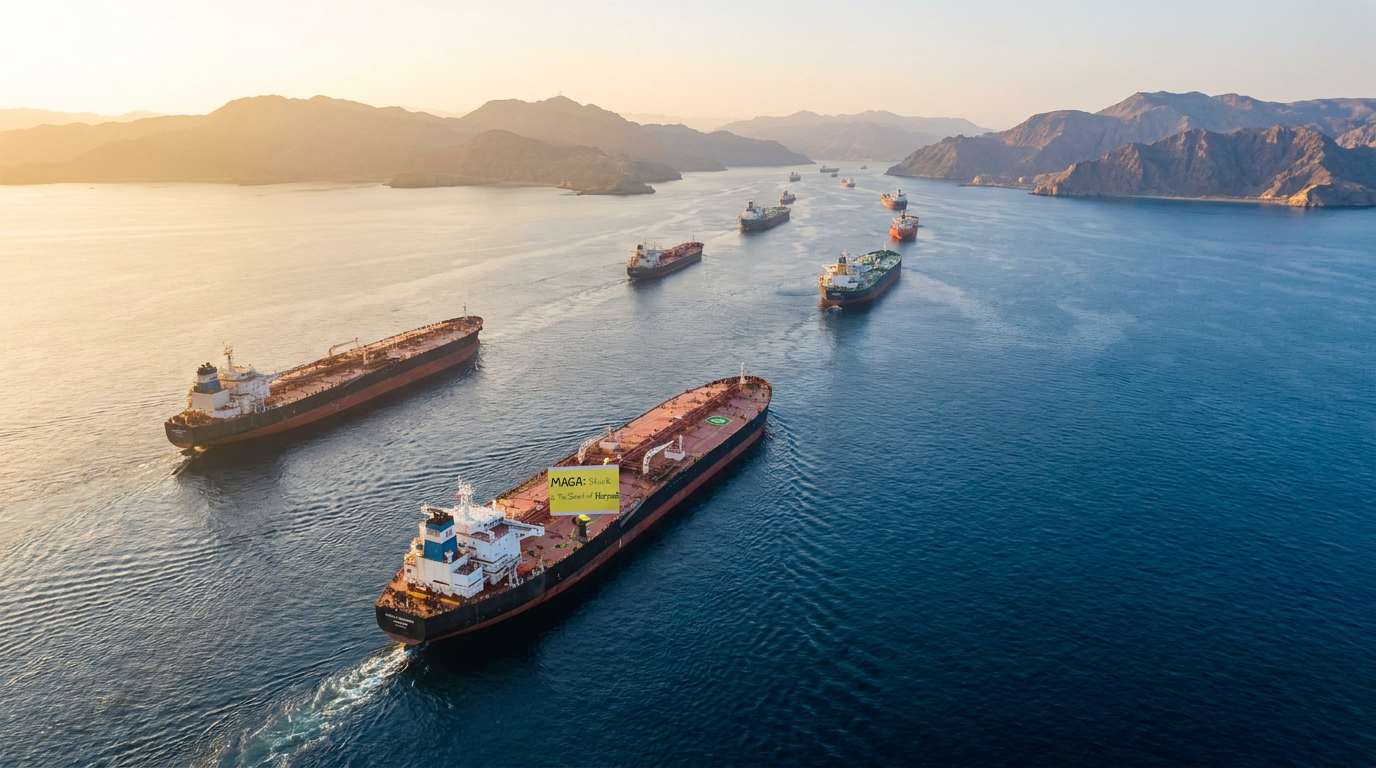
- The agreement reopens the Strait of Hormuz and lifts the U.S. naval blockade within 30 days.
- A 60-day window has been established to negotiate a final, comprehensive nuclear treaty.
- The U.S. agreed to immediate sanctions waivers for Iranian oil exports and endorsed a proposed $300 billion regional reconstruction fund.
- President Trump claimed the deal is an 'unconditional surrender' that decimated Iran's military.
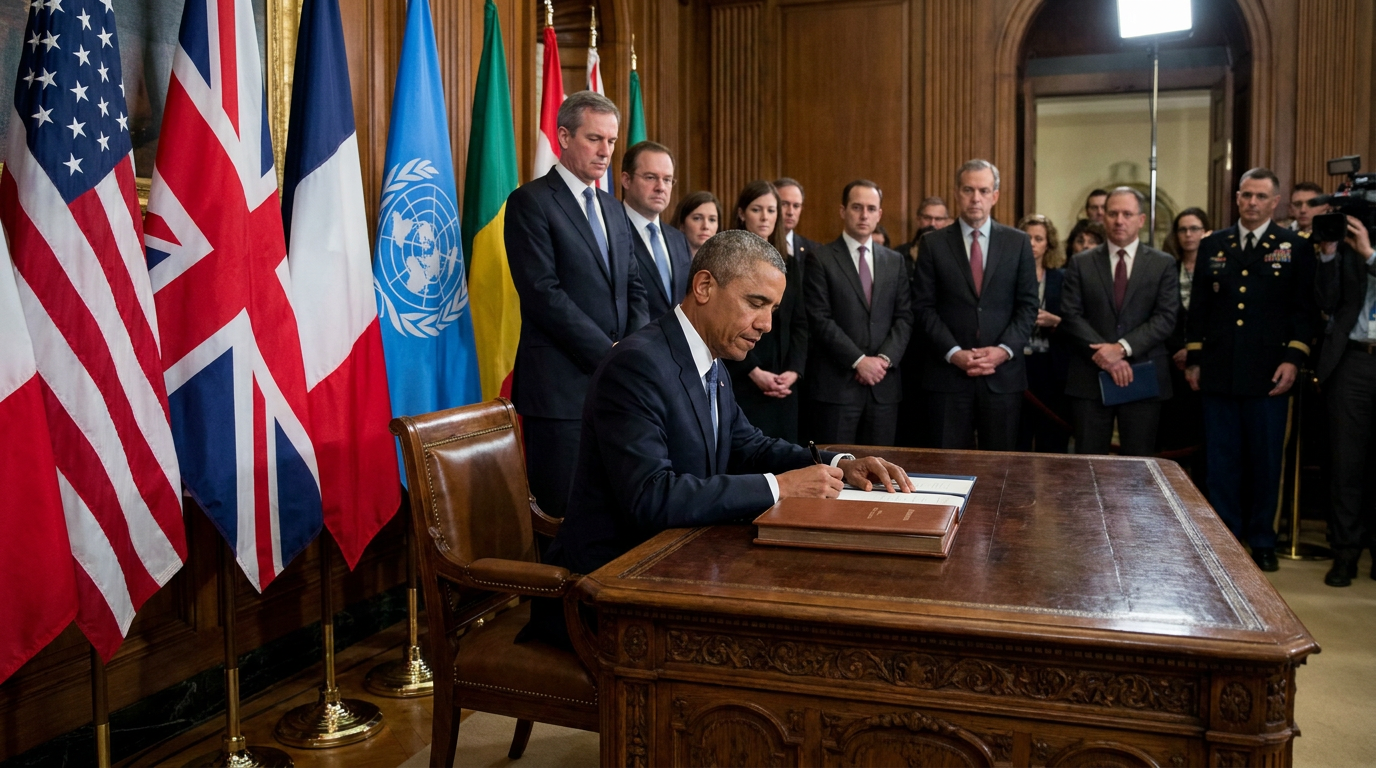
- Critics, including Barack Obama, argue the U.S. gave up significant leverage for a deal weaker than the 2015 JCPOA.
The United States and Iran have officially signed a 14-point memorandum of understanding (MOU) to end their devastating 15-week war, bringing a tentative halt to a conflict that has severely disrupted global energy markets. Brokered primarily by Pakistan, with assistance from Qatar and Oman, the 'Islamabad Agreement' was signed remotely by U.S. and Iranian leadership following the G7 summit in France. The sweeping pact mandates an immediate cessation of military operations, reopens the vital Strait of Hormuz to commercial shipping, and initiates a highly fragile 60-day window for both nations to negotiate a comprehensive, permanent nuclear treaty.[1][2]
Under the immediate terms of the newly signed agreement, the United States has committed to lifting its naval blockade of Iranian ports within 30 days. Furthermore, the U.S. Treasury Department will issue immediate waivers allowing Iran to resume exporting crude oil and petroleum products to the global market. In exchange for this sweeping economic relief, Iran has pledged to restore pre-war commercial shipping traffic through the Strait of Hormuz. Crucially, Tehran also agreed to maintain the 'status quo' of its nuclear program, formally reaffirming a commitment not to procure or develop nuclear weapons during the interim period.[1][4]
The most heavily scrutinized component of the agreement involves a massive financial commitment for Iranian reconstruction. The text explicitly requires the United States and its 'regional partners' to develop a mutually agreed plan to establish a recovery fund worth at least $300 billion. While the U.S. government is not expected to directly contribute domestic taxpayer dollars to this initiative, the clause has sparked intense outrage among Gulf states. Regional allies, who absorbed significant damage from Iranian missile and drone strikes during the 15-week war, are now implicitly expected to foot the bill for their adversary's economic recovery.[2][4][5]

The U.S. administration has aggressively defended the MOU, framing the diplomatic resolution as a total capitulation by Tehran. In a series of public statements, the White House declared that the Iranian regime is effectively 'finished' and that the U.S. military had entirely decimated Iran's conventional navy, air force, and radar capabilities. Officials argue that the U.S. did not meet out of desperation, but rather dictated terms to a crippled adversary. From this perspective, the administration dismisses concerns that the U.S. made too many upfront concessions to reopen global shipping lanes, insisting that Iran's physical inability to wage war guarantees compliance.[3][8]
administration has aggressively defended the MOU, framing the diplomatic resolution as a total capitulation by Tehran.
However, domestic critics and former officials argue that the administration has orchestrated a massive strategic retreat. Former President Barack Obama publicly stated that the U.S. is now 'worse off' than before the war began, noting that the conflict cost billions of dollars and American lives only to result in an agreement fundamentally weaker than the 2015 Joint Comprehensive Plan of Action (JCPOA). Democratic lawmakers have echoed this harsh assessment, pointing out that the MOU does not explicitly prohibit Iran from enriching uranium for civilian purposes—a strict red line the U.S. had previously demanded before launching military operations.[2][7]

Beyond the partisan debate in Washington, the diplomatic framework is already facing severe stress tests on the ground in the Middle East. The MOU explicitly calls for the permanent termination of military operations on 'all fronts, including in Lebanon,' and guarantees Lebanese territorial sovereignty. Yet Israel, which is not a signatory to the U.S.-Iran pact and operates independently of the agreement, has continued its intense military strikes against Hezbollah targets in southern Lebanon. Israeli defense officials maintain that their forces will remain in Lebanese territory to secure their northern border, directly contradicting Iranian expectations for a regional ceasefire.[1][3][4][5]
This ongoing violence in the Levant threatens to entirely derail the next phase of diplomacy before it even begins. U.S. Vice President JD Vance recently delayed a planned diplomatic trip to Switzerland, where the 60-day comprehensive nuclear negotiations were scheduled to commence, citing the escalating Israeli strikes in Beirut. Iranian officials have repeatedly warned that the broader peace deal remains strictly contingent on Israel halting its operations in Lebanon. This dynamic leaves the United States caught in a precarious position between its primary Middle Eastern ally and the survival of its newly signed ceasefire agreement.[2][3][5]

Despite the glaring vulnerabilities in the text, international observers and global markets have largely breathed a sigh of relief. United Nations Secretary-General António Guterres welcomed the MOU as a 'critical step' toward ending a conflict that had effectively choked off 20 percent of the world's liquefied natural gas and oil supply. Whether the 60-day window produces a lasting treaty—or merely serves as a brief tactical pause before a wider regional conflagration—now depends entirely on whether Washington and Tehran can enforce the ceasefire's terms across a deeply fractured and volatile Middle East.[4][6]
How we got here
February 2026
The U.S. and Israel launch military strikes across Iran, triggering a 15-week war.
April 2026
A temporary two-week ceasefire is announced but fails to hold as tit-for-tat strikes resume.
June 14, 2026
U.S. and Iranian representatives digitally sign the Islamabad Memorandum of Understanding.
June 17, 2026
President Trump and Iranian President Pezeshkian remotely sign the final MOU, officially halting military operations.
June 19, 2026
U.S. Vice President JD Vance delays a trip to Switzerland for follow-up negotiations amid ongoing Israeli strikes in Lebanon.
Viewpoints in depth
The Trump Administration's View
The White House argues the war successfully decimated Iran's military and forced Tehran to the negotiating table.
President Trump and his allies maintain that the 15-week conflict achieved its primary objective: neutralizing Iran's conventional military threat. By destroying Iranian radar, naval, and air assets, the administration argues it forced an 'unconditional surrender.' From this perspective, the MOU's concessions—such as lifting the naval blockade and unfreezing oil exports—are acceptable because Iran no longer possesses the physical capacity to project power, allowing the U.S. to dictate the terms of the upcoming 60-day nuclear negotiations.
Democratic and Diplomatic Critics
Critics argue the U.S. spent billions on a war only to accept a deal weaker than previous diplomatic agreements.
Former President Barack Obama and Democratic lawmakers contend that the MOU represents a massive strategic retreat. They point out that before the war, the U.S. had successfully contained Iran's nuclear ambitions through the 2015 JCPOA without firing a shot. Now, after 15 weeks of costly warfare, the U.S. has agreed to lift sanctions and endorse a $300 billion reconstruction fund without securing a total ban on Iranian uranium enrichment. Critics view the deal as a desperate attempt to reopen the Strait of Hormuz rather than a genuine diplomatic victory.
Regional Security Analysts
Middle East experts warn that the deal's failure to include Israel or address Lebanon makes it highly unstable.
Analysts at institutions like the Atlantic Council emphasize that the U.S.-Iran bilateral agreement ignores the reality on the ground in the Levant. Because Israel is not a signatory to the MOU, it is not bound by the clause demanding an end to military operations in Lebanon. As Israeli forces continue to strike Hezbollah targets, experts warn that Iran's hardliners will view the continued attacks as a violation of the ceasefire, potentially collapsing the 60-day negotiation window before a final nuclear treaty can be drafted.
What we don't know
- Whether Israel will agree to halt its military operations in Lebanon, which Iran views as a condition for the broader peace deal.
- Which 'regional partners' will actually contribute to the proposed $300 billion Iranian reconstruction fund.
- If the 60-day negotiation window will be enough time to resolve the highly complex details of Iran's nuclear enrichment limits.
Key terms
- Memorandum of Understanding (MOU)
- A formal, non-binding agreement between two or more parties outlining the terms of a future, more comprehensive treaty.
- Strait of Hormuz
- A vital shipping chokepoint between the Persian Gulf and the Gulf of Oman, through which roughly 20% of the world's oil passes.
- JCPOA
- The Joint Comprehensive Plan of Action, a 2015 agreement that limited Iran's nuclear program in exchange for sanctions relief, which the U.S. withdrew from in 2018.
- Uranium Enrichment
- The process of increasing the concentration of the U-235 isotope in uranium, which can be used for civilian nuclear power or, at high levels, nuclear weapons.
- Treasury Waivers
- Exceptions granted by the U.S. government allowing specific countries or entities to bypass economic sanctions without penalty.
Frequently asked
Does this agreement mean the war is completely over?
The MOU establishes an immediate ceasefire and halts military operations between the U.S. and Iran, but it is an interim step. A final peace treaty must be negotiated within the next 60 days.
Did Iran agree to give up its nuclear program?
Iran reaffirmed its commitment not to build a nuclear weapon and agreed to maintain the 'status quo.' However, the MOU does not explicitly ban Iran from enriching uranium for civilian purposes.
Who is paying for the $300 billion reconstruction fund?
The agreement states the U.S. and 'regional partners' will develop the fund. It is widely expected that Gulf states, rather than U.S. taxpayers, will be pressured to provide the capital.
How does this affect the conflict in Lebanon?
The MOU calls for an end to fighting on all fronts, including Lebanon. However, Israel is not a party to the agreement and has continued its strikes against Hezbollah, threatening the ceasefire's stability.
Sources
Source coverage
8 outlets
4 viewpoints surfaced








[1]Channel News AsiaInternational Observers
US and Iran seal agreement as 60-day countdown starts on a fragile truce
Read on Channel News Asia →[2]The GuardianDemocratic Critics
Iran peace deal makes clear how far US has been forced to retreat since 2025
Read on The Guardian →[3]Al JazeeraTrump Administration & Allies
Trump takes aim at critics of US-Iran MoU, says Iran ‘finished’
Read on Al Jazeera →[4]CBS NewsInternational Observers
What's in the U.S.-Iran peace deal
Read on CBS News →[5]Atlantic CouncilRegional Security Analysts
Experts react: What the US-Iran MOU means for the Middle East
Read on Atlantic Council →[6]UN NewsInternational Observers
Guterres welcomes US-Iran peace deal as 'critical step' toward ending conflict
Read on UN News →[7]U.S. SenateDemocratic Critics
Hickenlooper Statement on U.S.-Iran Memorandum of Understanding
Read on U.S. Senate →[8]JNSTrump Administration & Allies
Trump: US allies could secure Strait of Hormuz after Iran 'finished off'
Read on JNS →
More in news politics
See all 5 stories →Workplace Science
The Evidence on the Four-Day Workweek: Productivity, Burnout, and Where It Fails
7 sources

US-Iran Deal
US and Iran Sign Preliminary Agreement to End 110-Day War and Reopen Strait of Hormuz
8 sources
Islamabad Memorandum
US and Iran Sign Historic MOU to End War, but Israeli Defiance in Lebanon Threatens Truce
7 sources

Every angle. Every day.
Get news politics stories with full source coverage and perspective breakdowns delivered to your inbox.