
Home Assistant vs. Cloud Hubs: Choosing Your Smart Home Architecture
As smart homes mature, the choice between lightning-fast local processing and plug-and-play cloud convenience defines how your house operates.
By Factlen Editorial Team
- Local Control Advocates
- Prioritize privacy, speed, and offline reliability, accepting a steeper learning curve.
- Mainstream Cloud Users
- Value plug-and-play convenience, voice assistant integration, and zero-maintenance setups.
- Hybrid Integrators
- Bridge the gap by using local hubs for automation but connecting cloud voice assistants for convenience.
What's not represented
- · Renters who cannot modify their home's physical infrastructure
- · Elderly users who rely on smart homes for assisted living and require zero-maintenance setups
Why this matters
The hub you choose dictates whether your smart home works during an internet outage, how fast your lights respond, and whether tech companies can monitor your daily household routines.
Key points
- Cloud hubs offer plug-and-play convenience but rely on external servers for every command.
- Local hubs process automations inside the home, dropping response times to 10-20 milliseconds.
- Internet outages disable cloud-based smart homes, while local systems continue functioning normally.
- Local processing guarantees data privacy by keeping household habits off corporate servers.
- Home Assistant supports over 3,000 integrations, eliminating vendor lock-in.
- Cloud systems remain the best choice for users wanting zero-maintenance voice control.
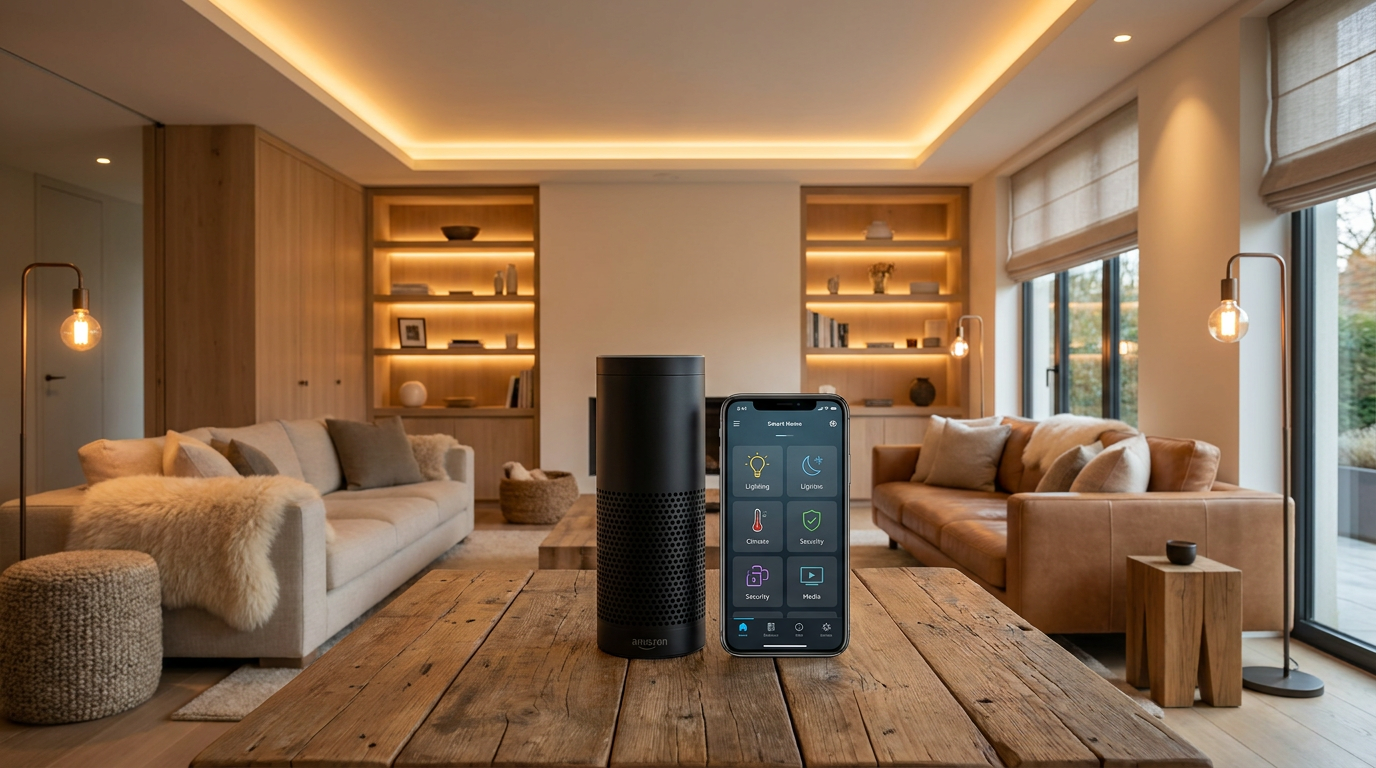
The smart home landscape in 2026 has fractured into two distinct philosophies, forcing consumers to make a fundamental choice about how their homes operate. On one side are mainstream cloud-based systems like Amazon Alexa, Google Home, and Samsung SmartThings, which offer frictionless setup and voice control out of the box. On the other side is the rapidly growing local-processing movement, championed by open-source platforms like Home Assistant. This architectural divide is no longer just a technical debate for enthusiasts; it directly dictates how fast your lights turn on, what happens when your internet drops, and who owns the data generated inside your living room.[1][7]
The central trade-off comes down to where the "brain" of your house lives. Cloud-based systems route every command through remote servers. When you ask a smart speaker to turn on a light, the audio is sent to an overseas data center, processed into text, translated into a command, and beamed back to your bulb. Local systems, by contrast, process everything on a physical hub sitting inside your house—such as a Raspberry Pi or the plug-and-play Home Assistant Green. This means the automation logic never leaves your local network, fundamentally altering the speed and reliability of the entire ecosystem.[2][6]
For users prioritizing performance, the evidence heavily favors local processing. Because local hubs eliminate the round-trip data transmission to external servers, they achieve latency rates as low as 10 to 20 milliseconds. The result is near-instantaneous execution; a motion sensor triggers a hallway light before your foot hits the floor. Cloud systems, burdened by internet routing, typically experience delays of 300 milliseconds to several seconds. During peak internet usage hours, this latency can stretch further, creating a noticeable and often frustrating lag between flipping a smart switch and seeing the room illuminate.[3]

Internet dependency introduces another critical vulnerability for cloud-centric homes. If your internet service provider experiences an outage, or if a manufacturer's server goes offline, cloud-based automations simply stop working. Lights cannot be controlled via apps, and scheduled routines fail to fire. Local systems provide absolute resilience against these disruptions. Because the automations are stored and executed on the physical hub inside the home, a severed internet connection has zero impact on daily operations. The house remains fully functional, proving that true smart homes should not regress to the Stone Age just because a fiber cable was cut down the street.[2][3][5]
Internet dependency introduces another critical vulnerability for cloud-centric homes.
Privacy represents the most polarizing dimension of this comparison. Mainstream cloud platforms are operated by data-driven tech giants, meaning your daily habits—when you wake up, when you leave the house, and which rooms you occupy—are transmitted to corporate servers. While these companies employ encryption, the data still resides outside your control. Local platforms like Home Assistant act as a digital fortress. Your data never leaves the premises unless you explicitly enable remote access. For households concerned about corporate surveillance or data monetization, local processing offers the only genuine guarantee of privacy in the modern smart home era.[4][6]
However, the evidence shifts dramatically in favor of cloud systems when evaluating accessibility and setup friction. Platforms like Alexa and SmartThings are engineered for the mass market. A user can purchase a smart plug, scan a QR code, and have it functioning within two minutes. The user interface is polished, and voice control is native and seamless. Conversely, while local hubs have become significantly more user-friendly with devices like the affordable Home Assistant Green, they still require a willingness to tinker. Users must manage their own backups, navigate occasional software updates, and invest time in designing their dashboards.[2][4]

When it comes to hardware flexibility, local systems offer unparalleled freedom. Cloud platforms often trap consumers in walled gardens, requiring them to purchase devices bearing specific compatibility badges. If a manufacturer discontinues a product or starts charging subscription fees, the hardware can become useless. Home Assistant, supported by a massive open-source community, boasts over 3,000 integrations. It acts as a universal translator, allowing an Apple HomeKit sensor, a Zigbee bulb, and a Z-Wave lock to communicate flawlessly on the same network, completely insulating the homeowner from vendor lock-in and corporate bankruptcies.[1][2]
Ultimately, a cloud-based system fits well when convenience is the absolute highest priority. If you want a capable smart home that works straight out of the box, relies heavily on voice commands, and integrates effortlessly with consumer appliances you already own, platforms like Google Home or SmartThings are the logical choice. They do not fit well when you demand instantaneous response times, live in an area with spotty internet connectivity, or harbor strict boundaries regarding data privacy and corporate tracking.[4][5]

Conversely, a local processing hub fits well when you view your smart home as long-term infrastructure rather than a collection of gadgets. If you want complete ownership of your data, lightning-fast automations, and a system that will outlast any single manufacturer's business model, investing the initial setup time into Home Assistant pays dividends for years. It does not fit well when you have zero interest in occasional troubleshooting, or if you simply want a smart speaker to set a kitchen timer without thinking about network architecture.[2][5][7]
How we got here
Pre-2014
Smart homes rely on expensive, dealer-installed local systems that are inaccessible to the average consumer.
2014
The cloud era booms with the launch of the Amazon Echo, making smart devices cheap and mainstream.
2021
Home Assistant launches the Yellow hub, making local control accessible to non-programmers for the first time.
2023
The Home Assistant Green is released, lowering the barrier to entry for local processing to under $100.
2026
Local processing becomes a mainstream consumer demand following several high-profile cloud server outages.
Viewpoints in depth
Local Control Purists
Advocates who believe smart homes must operate entirely offline for security and reliability.
This camp argues that relying on external servers for basic household functions is a fundamental architectural flaw. They point to historical instances where companies have shut down their cloud servers, instantly turning expensive smart devices into electronic waste. For purists, the initial learning curve of setting up a local hub is a small price to pay for absolute data privacy and the guarantee that their home will never be bricked by a corporate bankruptcy.
Mainstream Consumers
Users who prioritize ease of use, voice control, and frictionless setup over technical control.
Mainstream users view smart home technology as a convenience rather than an IT project. They argue that the plug-and-play nature of cloud ecosystems like Alexa and Google Home democratizes home automation, allowing anyone to set up a smart bulb in minutes. From this perspective, the theoretical risks of cloud outages or data collection are outweighed by the tangible benefits of seamless voice integration, polished mobile apps, and zero required maintenance.
Hybrid Integrators
Enthusiasts who combine local processing power with cloud-based voice assistants.
This pragmatic camp seeks the best of both worlds. They utilize local hubs like Home Assistant to handle the heavy lifting—ensuring automations run instantly and reliably without internet dependency. However, they willingly connect these local systems to cloud services like Alexa or Google Assistant purely for the convenience of voice control. They argue that this hybrid approach provides the robust infrastructure of a local network without sacrificing the modern luxury of shouting commands across the room.
What we don't know
- Whether mainstream cloud providers will eventually adopt more local processing to compete with open-source speeds.
- How the widespread adoption of the Matter protocol will blur the lines between local and cloud ecosystems over the next five years.
Key terms
- Local Processing
- Executing smart home commands on a physical device inside the home, rather than sending data to internet servers.
- Latency
- The time delay between triggering a command (like walking past a motion sensor) and the resulting action (a light turning on).
- Zigbee / Z-Wave
- Wireless communication protocols designed specifically for smart home devices, creating local mesh networks that don't rely on Wi-Fi.
- Vendor Lock-in
- A situation where a consumer is forced to continue using a specific brand's products because their existing devices won't work with competitors.
Frequently asked
Can I use voice control with a local smart home system?
Yes. While local systems prioritize offline control, platforms like Home Assistant allow you to securely connect Amazon Alexa or Google Assistant, or use their own privacy-focused local voice assistants.
Do I need to know how to code to use Home Assistant?
Not anymore. While it used to require programming knowledge, modern versions feature visual editors and plug-and-play hardware like the Home Assistant Green that require no coding.
What happens to my cloud smart home if the internet goes down?
Most cloud-based automations and app controls will stop working completely until the connection is restored, though basic physical switches will still function manually.
Is a local smart home more expensive to set up?
The initial cost is slightly higher since you must purchase a dedicated hub (around $99 to $150), but it eliminates the need for ongoing cloud subscription fees from various device manufacturers.
Sources
Source coverage
7 outlets
3 viewpoints surfaced





[1]How-To GeekHybrid Integrators
Why Home Assistant Is Better Than Alexa and Google Home
Read on How-To Geek →[2]WiredHausLocal Control Advocates
Home Assistant Green vs SmartThings: 2026 Comparison
Read on WiredHaus →[3]Home Automation Smart HomeLocal Control Advocates
Local vs Cloud Smart Home Systems: Which Should You Choose?
Read on Home Automation Smart Home →[4]Prompt QuorumMainstream Cloud Users
Home Assistant vs Alexa vs Google Home: Privacy, Local Control, and Effort Compared
Read on Prompt Quorum →[5]Your Home Tech GuyLocal Control Advocates
Home Assistant vs SmartThings: Which is Right for You?
Read on Your Home Tech Guy →[6]Cyborg AutomationLocal Control Advocates
Google Home and Alexa send your data overseas. Home Assistant keeps everything local.
Read on Cyborg Automation →[7]Factlen Editorial TeamHybrid Integrators
Synthesis by Factlen editorial team
Read on Factlen Editorial Team →


Every angle. Every day.
Get shopping stories with full source coverage and perspective breakdowns delivered to your inbox.