
The Modern Heat Pump Explainer: Heating and Cooling Your Home Efficiently
As heat pumps outsell gas furnaces for the second consecutive year, breakthroughs in cold-climate technology and unprecedented federal rebates are making electric heating the new standard for American homes.
By Factlen Editorial Team
- HVAC Professionals
- Prioritizes technical performance, proper equipment sizing, and pragmatic solutions like dual-fuel systems for extreme climates.
- Cost-Conscious Homeowners
- Evaluates the transition primarily through the lens of upfront installation costs, available rebates, and long-term utility bill savings.
- Electrification Advocates
- Focuses on the urgent need to decarbonize residential buildings by phasing out on-site fossil fuel combustion.
What's not represented
- · Natural Gas Industry Representatives
- · Renters without HVAC control
Why this matters
Heating and cooling account for roughly half of a typical home's energy use. Understanding the shift to heat pumps can save homeowners thousands of dollars in utility bills and installation costs over the next decade while significantly reducing their carbon footprint.
Key points
- Heat pumps outsold gas furnaces in the US in 2025, moving 3.6 million units compared to 3.2 million.
- Modern heat pumps move heat rather than generating it, achieving 200% to 400% efficiency.
- Cold-climate engineering allows new systems to operate efficiently in temperatures down to -13°F.
- Federal and state incentives can offset the higher upfront installation costs by up to $10,000.
- New A2L refrigerants introduced in 2026 drastically reduce the environmental impact of the equipment.
The American basement is undergoing a quiet but profound revolution. For decades, the standard residential HVAC setup was a predictable split system: a gas or oil furnace to handle the bitter winter months, paired with a traditional air conditioner to survive the summer heat. But in 2025, a historic crossover occurred in the United States market. Manufacturers shipped 3.6 million heat pumps compared to just 3.2 million gas furnaces, marking the definitive moment when electric heating officially became the dominant choice for new residential installations across the country.[1][7]
That momentum has only accelerated as we move through 2026. Driven by a powerful combination of technological breakthroughs, shifting building electrification codes in 15 states, and massive federal incentives designed to lower upfront costs, the heat pump is no longer viewed as a niche alternative technology suitable only for mild southern climates. Instead, it has become the default recommendation from contractors and energy advisors for modernizing home climate control, representing a fundamental shift in how we think about residential energy consumption and indoor comfort.[2][7]
Yet, despite their surging popularity and market dominance, heat pumps remain widely misunderstood by the general public. Many homeowners still harbor outdated assumptions about their performance in freezing temperatures, their reliability during winter storms, or their overall cost-effectiveness compared to legacy fossil fuel systems. To understand why the HVAC market has shifted so decisively toward electrification, it is necessary to look under the hood of modern heat pump technology, examine the cold-climate engineering breakthroughs, and break down the real-world economics driving its widespread adoption.[7]
The fundamental difference between a traditional furnace and a heat pump lies in the basic laws of thermodynamics. A gas, oil, or propane furnace generates heat through active combustion, burning fossil fuels to warm the air that is then blown through the home's ductwork. Even the most advanced, high-efficiency gas furnaces on the market today max out at around 96% efficiency, which means that at least 4% of the energy consumed is inevitably lost as waste exhaust vented out of the chimney or flue.[3][6]

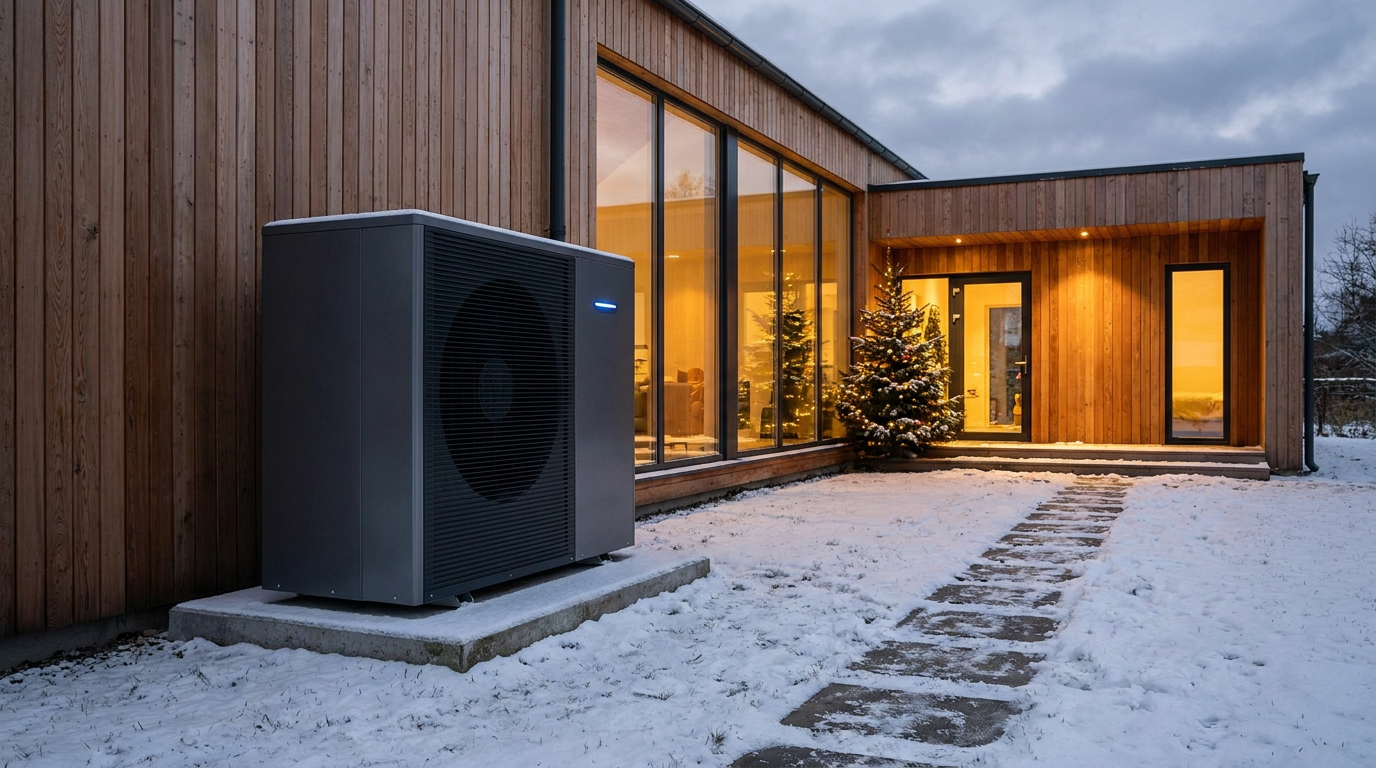
A heat pump, by contrast, does not generate heat at all; it simply moves it from one place to another. Using a sophisticated refrigeration cycle, the system extracts ambient thermal energy from the outdoor air, concentrates it using a compressor, and pumps it indoors. Because moving heat requires significantly less electrical energy than creating it from scratch, heat pumps routinely achieve a Coefficient of Performance (COP) of 2.0 to 4.0. This means they deliver two to four units of heat for every single unit of electricity consumed, effectively making them 200% to 400% efficient.[3][6]
The true magic of the heat pump, and the reason it is so cost-effective, is its reversibility. A specialized component called a reversing valve allows the system to switch the direction of the refrigerant flow based on the season. In the summer, the heat pump acts exactly like a standard central air conditioner, pulling unwanted heat out of the house and dumping it outside. In the winter, the valve flips, and the system extracts heat from the frigid outdoor air to warm the interior, providing a two-in-one climate solution.[3]
For years, the primary argument against heat pumps was their perceived failure in extreme cold. Early generations of the technology struggled to extract enough ambient heat when outdoor temperatures dropped below freezing, forcing the systems to rely on expensive, highly inefficient electric resistance backup strips to keep homes warm. In 2026, that historical limitation has been largely engineered out of existence through the rapid development and deployment of Cold Climate Air Source Heat Pumps (ccASHPs), which are specifically designed to conquer northern winters.[4]
For years, the primary argument against heat pumps was their perceived failure in extreme cold.
This cold-weather breakthrough relies on two key engineering innovations: variable-speed inverter compressors and Enhanced Vapor Injection (EVI). Unlike older single-stage compressors that blast on at 100% capacity and then shut off abruptly, modern inverter-driven compressors modulate their speed continuously, much like a car's accelerator pedal, to precisely match the home's heating demand. Meanwhile, EVI technology injects a secondary stream of refrigerant directly into the compressor, significantly boosting its heating capacity and allowing it to absorb thermal energy even when the outside air feels freezing to human skin.[3][5]

As a result of these advancements, modern cold-climate systems can maintain 100% of their rated heating capacity down to 5°F, and continue operating efficiently at temperatures as low as -13°F to -22°F. The Northeast Energy Efficiency Partnerships (NEEP) now maintains strict, independent certification standards for these units. This certification ensures that the equipment performs reliably in extreme northern climates without relying on emergency backup heat, giving homeowners in places like Minnesota, Maine, and Canada the confidence to fully disconnect their gas lines.[4]
The financial equation for heat pumps has also transformed dramatically over the last few years. On raw equipment and labor alone, a heat pump is undeniably more expensive to install than legacy systems. A mid-range gas furnace and air conditioning combo typically costs between $8,000 and $14,000 to install in a standard home. A comparable whole-home, cold-climate heat pump system—which replaces both units with a single, highly advanced appliance—runs between $15,000 and $28,000, creating a significant initial sticker shock for many buyers.[6]
However, the HVAC market in 2026 is defined by unprecedented incentive stacking that fundamentally alters the math. The federal Inflation Reduction Act (IRA) provides a 25C tax credit of up to $2,000 for qualifying heat pumps. More significantly, the High-Efficiency Electric Home Rebate Act (HEAR) offers point-of-sale discounts of up to $8,000 for low-to-moderate-income households. When combined with aggressive state and utility rebates—which can reach up to $10,000 in progressive states like New York, California, and New Jersey—the upfront cost of a premium heat pump often drops below that of a traditional gas furnace.[6]
Once the system is installed, the operational savings begin to compound immediately. Because of their 200% to 400% efficiency ratings, heat pumps cost roughly $800 to $1,400 per year to run in moderate climates, compared to $1,200 to $2,200 for a standard gas furnace. Over a typical 10-to-15-year lifespan, homeowners routinely save between $5,000 and $8,500 on their utility bills. These long-term savings, insulated from the volatile price spikes of the global natural gas market, make the return on investment highly attractive for most households.[6]

Beyond the economics, the HVAC industry is also navigating a major environmental transition in 2026. To comply with stringent new global warming regulations, manufacturers have phased out older, highly polluting refrigerants like R-410A in favor of next-generation A2L refrigerants, such as R290 (propane). These new refrigerants have a Global Warming Potential (GWP) of just 3, compared to over 2,000 for legacy chemicals. This shift makes modern heat pumps vastly more eco-friendly, even before accounting for the massive emissions reductions achieved by eliminating on-site fossil fuel combustion.[5]
Despite the overwhelming market momentum and environmental benefits, heat pumps are not a universal silver bullet for every single property. The economic advantage hinges heavily on the local ratio of electricity prices to natural gas prices. In regions with exceptionally high electricity rates and heavily subsidized, cheap natural gas, the monthly operating savings can narrow significantly or disappear entirely during the coldest months of the year, extending the payback period for the initial installation cost and making the financial decision much closer to a break-even proposition.[6]
Additionally, older homes may face hidden installation hurdles that complicate the transition. Switching from a standard gas furnace to a high-capacity electric heat pump often requires a 200-amp electrical panel upgrade to handle the increased load, which can add $1,500 to $3,500 to the total project cost. Homes with exceptionally poor insulation, drafty windows, or leaky ductwork will also see diminished returns, as the heat pump will have to work much harder to maintain comfort, underscoring the importance of weatherization before electrification.[7]

For homeowners in the most extreme sub-zero climates—or those who are simply hesitant to fully disconnect their gas lines due to grid reliability concerns—the "dual-fuel" or hybrid system remains a highly popular compromise in 2026. These hybrid setups pair a high-efficiency electric heat pump with a backup gas furnace. The heat pump handles the heating load for 90% of the winter, and the system automatically switches to gas only during the deepest, most inefficient freezes, offering both maximum efficiency and ultimate peace of mind.[3]
Ultimately, the widespread transition to heat pumps represents one of the most significant shifts in residential infrastructure in a generation. As the technology continues to mature, installation costs stabilize, and the broader electrical grid grows cleaner with the addition of renewable energy sources, the heat pump stands as a rare intersection of improved home comfort, lower long-term operating costs, and meaningful climate action. For millions of homeowners upgrading their systems in 2026, the debate is largely settled: the future of home heating and cooling is undeniably electric.[7]
How we got here
2022
The Inflation Reduction Act passes, establishing long-term tax credits for heat pump installations.
2023
New HSPF2 efficiency testing standards take effect, providing more accurate cold-weather performance ratings.
2025
Heat pump shipments surpass gas furnaces for the first time in United States history.
2026
A2L refrigerants become mandatory, significantly reducing the global warming potential of new HVAC systems.
Viewpoints in depth
Electrification Advocates
Focuses on the urgent need to decarbonize residential buildings by phasing out on-site fossil fuel combustion.
For environmental groups and climate policymakers, the heat pump is the linchpin of the clean energy transition. Because buildings account for a massive portion of global carbon emissions, advocates argue that replacing gas and oil furnaces with electric heat pumps is non-negotiable for meeting 2030 and 2050 climate targets. They emphasize that even when powered by a grid that still relies partially on fossil fuels, a heat pump's 300% efficiency makes it significantly cleaner than burning gas directly in the home. Furthermore, as the electrical grid continues to incorporate more wind and solar power, these homes will automatically become greener over time without any additional equipment changes.
HVAC Professionals
Prioritizes technical performance, proper equipment sizing, and pragmatic solutions like dual-fuel systems for extreme climates.
Contractors and installers view the heat pump transition through a highly technical and pragmatic lens. While they acknowledge the incredible advancements in cold-climate technology, they caution against a one-size-fits-all approach. HVAC professionals stress that proper sizing, ductwork evaluation, and home insulation are critical; a high-end heat pump installed in a drafty house will result in high bills and poor comfort. For clients in extreme northern climates or those with unreliable local power grids, many professionals still heavily advocate for dual-fuel hybrid systems, which offer the efficiency of a heat pump for 90% of the winter while retaining a gas furnace as a fail-safe for the deepest freezes.
Cost-Conscious Homeowners
Evaluates the transition primarily through the lens of upfront installation costs, available rebates, and long-term utility bill savings.
For the average homeowner, the decision to switch to a heat pump is driven almost entirely by household economics. The initial sticker shock of a $20,000 whole-home system is a major barrier, making the navigation of complex federal, state, and utility rebates essential to the purchase. This camp is highly sensitive to the local ratio of electricity to natural gas prices; if local electricity rates spike, the promised return on investment can evaporate. Consequently, these consumers are demanding greater transparency from installers regarding real-world operating costs, payback periods, and the hidden expenses of necessary electrical panel upgrades.
What we don't know
- How the electrical grid in older neighborhoods will handle the increased load as entire blocks transition to high-capacity electric heating simultaneously.
- Whether the supply chain for advanced inverter compressors can scale quickly enough to meet the surging global demand without causing price spikes.
Key terms
- Coefficient of Performance (COP)
- A metric that measures a heat pump's efficiency by comparing the amount of heat it produces to the amount of electricity it consumes.
- Reversing Valve
- A component inside a heat pump that changes the direction of the refrigerant flow, allowing the system to switch between heating and cooling modes.
- Enhanced Vapor Injection (EVI)
- A technology that injects extra refrigerant into the compressor, allowing cold-climate heat pumps to extract heat from freezing outdoor air efficiently.
- HSPF2
- Heating Seasonal Performance Factor 2; the current federal standard for measuring a heat pump's heating efficiency over an entire winter season.
- Dual-Fuel System
- A hybrid HVAC setup that pairs an electric heat pump with a backup gas furnace, automatically switching to gas only during extreme cold snaps.
Frequently asked
Are heat pumps cheaper to run than gas furnaces?
In most climates, yes. Because they move heat rather than generating it, heat pumps are 200-400% efficient, typically saving homeowners 25-45% on annual heating costs compared to a gas furnace.
Do heat pumps work in freezing temperatures?
Yes. Modern cold-climate heat pumps use variable-speed compressors and Enhanced Vapor Injection (EVI) to maintain heating capacity in temperatures as low as -13°F to -22°F.
What is the upfront cost of a heat pump?
Before rebates, a whole-home heat pump system costs between $15,000 and $28,000. However, federal tax credits and state rebates can reduce this cost by up to $10,000 for qualifying households.
Do I need to upgrade my electrical panel for a heat pump?
Often, yes. Older homes with 100-amp service typically require an upgrade to a 200-amp panel to handle the electrical load of a whole-home heat pump, which can add $1,500 to $3,500 to the project.
Sources
Source coverage
7 outlets
3 viewpoints surfaced







[1]RMIElectrification Advocates
Heat Pumps for Cooling and Heating Market Share
Read on RMI →[2]Grand View ResearchCost-Conscious Homeowners
United States Heat Pump Market Trends
Read on Grand View Research →[3]HVAC Pro SalesHVAC Professionals
Heat Pump vs Gas Furnace 2026: A Professional Guide
Read on HVAC Pro Sales →[4]Heat Pump NetworkHVAC Professionals
Cold Climate Heat Pumps Explained
Read on Heat Pump Network →[5]JNOD EnergyElectrification Advocates
Advancing Sustainable Heating with R290 and EVI
Read on JNOD Energy →[6]Energy Rebate CalculatorCost-Conscious Homeowners
Heat pump vs gas furnace 2026: Upfront costs and rebates
Read on Energy Rebate Calculator →[7]Factlen Editorial Team
Synthesis by Factlen editorial team
Read on Factlen Editorial Team →
Every angle. Every day.
Get home stories with full source coverage and perspective breakdowns delivered to your inbox.