
Reliance Jio Unveils $15 Billion Plan for Sovereign LEO Satellite Constellation
India's largest telecom provider plans to launch 1,650 low Earth orbit satellites to deliver direct-to-device broadband, challenging global players like Starlink while prioritizing digital sovereignty.
By Factlen Editorial Team
- Domestic Infrastructure Champions
- Argues that India must build sovereign, vertically integrated satellite networks to ensure national security and data control.
- Digital Inclusion Advocates
- Focuses on the potential of space-based broadband to bridge the rural-urban digital divide and connect isolated communities.
- Global Satellite Competitors
- Highlights the strict regulatory and security hurdles foreign operators face when attempting to enter the Indian market.
What's not represented
- · Rural Indian consumers waiting for connectivity
- · Environmental groups monitoring orbital debris
Why this matters
By building its own $15 billion satellite network, India's largest telecom provider is attempting to bypass foreign operators like Starlink and ensure the country's digital infrastructure remains domestically controlled. If successful, the project will bring high-speed internet to India's most remote villages while establishing a new global competitor in the space economy.
Key points
- Reliance Jio plans to build a sovereign Low Earth Orbit (LEO) satellite constellation comprising 1,600 to 1,650 satellites.
- The $10–15 billion project aims to deliver high-speed internet and direct-to-device connectivity across India.
- Jio's domestic focus contrasts with Elon Musk's Starlink, which faces regulatory hurdles in India over data routing security concerns.
- The initiative is designed to bridge the digital divide in remote villages while ensuring India's digital sovereignty.
- Jio is currently seeking regulatory approval from IN-SPACe and plans to roll out the network over the next two to three years.
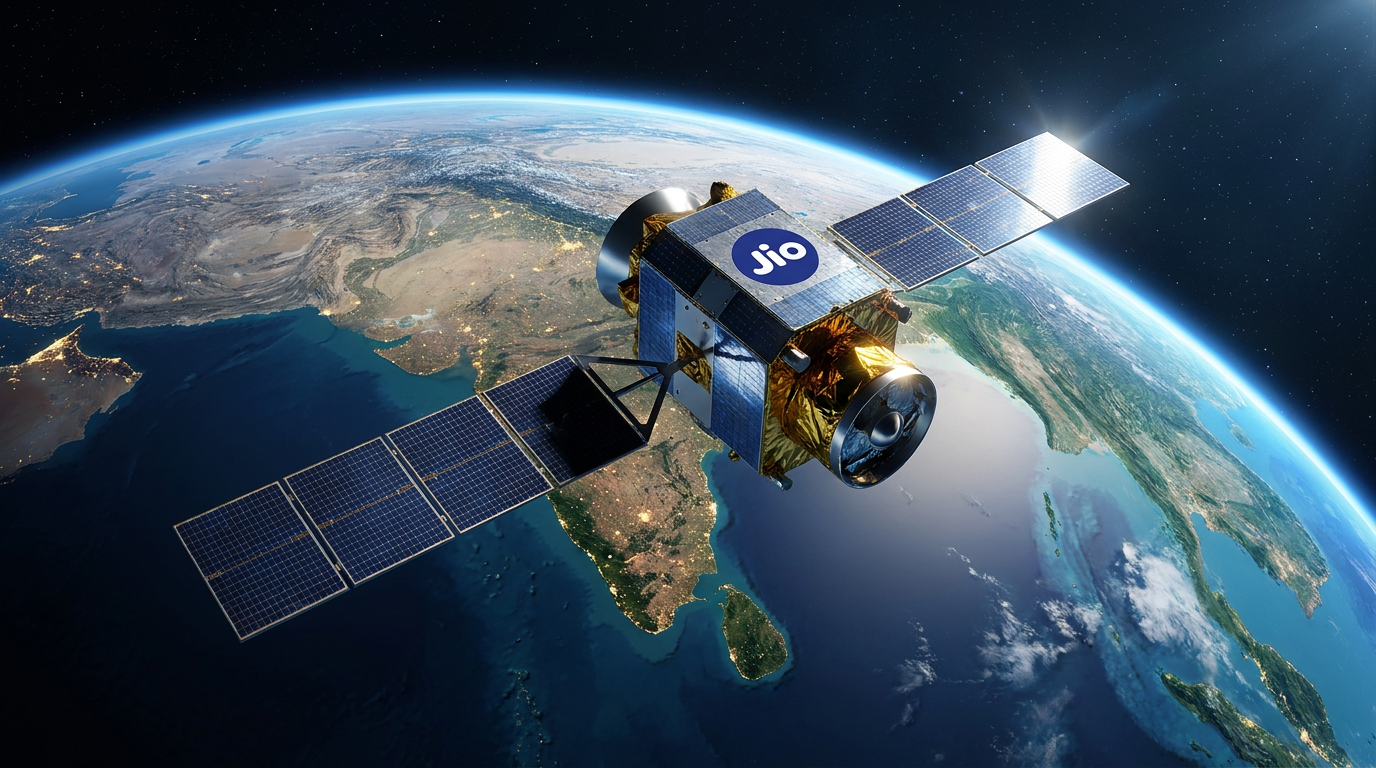
Reliance Jio, India's largest telecommunications provider, has unveiled an ambitious plan to extend its terrestrial dominance into orbit, marking a massive shift in the global space economy. During Reliance Industries' 49th Annual General Meeting on Friday, Jio Platforms announced it is evaluating the development of a sovereign Low Earth Orbit (LEO) satellite constellation. The mega-project, estimated to cost between $10 billion and $15 billion, aims to deploy 1,600 to 1,650 satellites to beam high-speed internet directly to devices across the Indian subcontinent. The announcement signals a direct challenge to global heavyweights like Elon Musk's Starlink and Amazon's Project Kuiper, positioning India to become a major player in the rapidly expanding satellite broadband market.[1][5][6]
The sheer scale of the initiative marks a historic pivot for India's space and telecommunications sectors. If approved by regulators, Reliance Jio would become the first domestic company to build and operate a wholly owned, large-scale orbital network. Positioned at an altitude of roughly 650 kilometers, the satellites are designed to slash data transmission delays and bypass the need for specialized receiving dishes. Instead, the constellation aims to deliver cellular signals directly to off-the-shelf smartphones, effectively eliminating terrestrial dark spots. This direct-to-device capability is widely viewed as the holy grail of modern telecommunications, allowing users to seamlessly transition between ground-based cell towers and space-based networks without requiring any additional hardware.[5][6]
For Jio, the primary objective is bridging the stubborn digital divide that persists in the world's most populous nation. While the company has successfully connected hundreds of millions of urban and suburban users via its vast 4G and 5G ground networks, geographical barriers have left many rural populations isolated. 'Jio connected India on the ground. Now, we must connect India from the skies,' Jio Platforms Managing Director Akash Ambani told shareholders during the presentation. He noted that satellite connectivity will serve as a vital bridge for remote villages, island communities, and border outposts where laying fiber-optic cables or building traditional cell towers is economically or physically unfeasible.[1][2]

Beyond digital inclusion, the multi-billion-dollar venture is heavily driven by New Delhi's push for digital sovereignty and self-reliance, known locally as 'Atmanirbharta.' In recent years, geopolitical friction has highlighted the strategic vulnerability of relying on foreign-owned space networks for critical communications infrastructure. By vertically integrating its telecom stack—controlling everything from ground fiber to space-based beams—Jio is positioning itself to build a sovereign communications layer. This ensures that India's future satellite communication framework remains fully domestic and immune to foreign corporate leverage, international sanctions, or conflicting demands from foreign governments during times of crisis.[2][5][7]
This domestic focus stands in stark contrast to the regulatory hurdles currently paralyzing global competitors in the Indian market. Elon Musk's Starlink, which operates the world's largest LEO constellation with roughly 10,000 active satellites, has seen its commercial launch in India effectively frozen. Indian security agencies under the Ministry of Home Affairs have withheld final clearances due to concerns over Starlink's data routing architecture and its potential use during geopolitical conflicts. Reports that Starlink terminals were utilized during Middle Eastern conflicts, despite lacking local licenses, have only heightened fears in New Delhi regarding the government's ability to control a US-based operator.[3][5][7]
This domestic focus stands in stark contrast to the regulatory hurdles currently paralyzing global competitors in the Indian market.
The core of the Indian government's apprehension centers on Starlink's use of Laser Inter-Satellite Links (LISL). This advanced technology allows newer generation Starlink satellites to beam data directly to one another in space, forming a mesh network that could theoretically allow Indian internet traffic to bypass domestic gateways and traverse foreign jurisdictions. Indian regulators, classifying satellite connectivity as critical national infrastructure, are demanding strict guarantees that all data originating from Indian terminals will downlink exclusively to local gateways. Because Starlink's global architecture relies heavily on these laser links for efficiency, adapting to India's bespoke security requirements has proven to be a complex and time-consuming challenge.[3][7]

Jio's proprietary constellation is being designed from the ground up to comply with these stringent national security mandates. By building its own ground station infrastructure within India and ensuring that data routing remains entirely domestic, Jio sidesteps the sovereignty concerns that have ensnared foreign operators. Industry sources indicate that the Indian government is preparing to aggressively sponsor Jio's regulatory filings with the International Telecommunication Union (ITU). Securing these vital orbital slots and spectrum priority is crucial before the global space highway becomes further congested by competing international mega-constellations.[1][6]
The transition to a fully owned LEO network represents a strategic evolution for Jio's broader connectivity roadmap. Previously, the company's space ambitions were anchored by 'JioSpaceFiber,' an initiative that relied on leased Medium Earth Orbit (MEO) capacity through a joint venture with Luxembourg-based satellite operator SES. While that partnership remains active and successfully demonstrated gigabit speeds at the India Mobile Congress, the new LEO constellation will provide significantly lower latency and greater capacity. This upgrade will allow Jio to offer specialized, high-speed services to enterprise customers and support robust mobile backhaul for its terrestrial 5G network across the entire subcontinent.[1][8]

The competitive landscape for satellite broadband in India is rapidly intensifying, even as regulatory frameworks are finalized. Eutelsat OneWeb, backed by Indian telecom rival Bharti Enterprises, has already deployed over 600 satellites and secured necessary licenses, though it too awaits final spectrum allocation from the Department of Telecommunications. Amazon's Project Kuiper is also eyeing the Indian market as it builds out its planned 3,200-satellite system. However, neither of these competitors currently plans to utilize the laser link technology that has complicated Starlink's approval process, potentially giving them a faster path to commercial launch than Musk's venture.[4][5]
As Jio's ambitious proposal undergoes technical review by the Indian National Space Promotion and Authorisation Centre (IN-SPACe), the company is simultaneously forging short-term global partnerships to accelerate service availability. This dual approach allows Jio to lease capacity from existing constellation providers to meet immediate connectivity needs while it constructs its sovereign infrastructure over the next two to three years. If executed at scale, the $15 billion project will not only redefine how India connects its most isolated citizens but also establish the nation as a formidable, vertically integrated power in the global satellite communications economy.[2][5][6]
How we got here
Feb 2022
Jio Platforms and SES form a joint venture to deliver broadband using Medium Earth Orbit satellites.
Oct 2023
Jio demonstrates 'JioSpaceFiber' at the India Mobile Congress, connecting four remote locations.
Mid 2025
Starlink's commercial launch in India is delayed as security agencies withhold final clearances.
Jun 2026
Jio announces plans to build its own sovereign Low Earth Orbit satellite constellation.
Viewpoints in depth
Domestic Infrastructure Champions
Advocates for building sovereign satellite networks to ensure national security and data control.
This camp, heavily represented in Indian business media, views Jio's LEO constellation as a necessary step for digital sovereignty. They argue that relying on foreign-owned satellite networks like Starlink poses an unacceptable national security risk, particularly during geopolitical conflicts. By vertically integrating its telecom stack from ground fiber to space beams, they believe India can ensure its critical communications infrastructure remains immune to foreign corporate leverage and international sanctions.
Digital Inclusion Advocates
Focuses on the potential of space-based broadband to bridge the rural-urban digital divide.
Proponents of this view emphasize the socioeconomic benefits of universal connectivity. They point out that while terrestrial 4G and 5G networks have transformed urban India, geographical barriers leave millions in remote villages and island communities isolated. For this camp, the primary value of Jio's $15 billion investment is its ability to deliver direct-to-device cellular signals to off-the-shelf smartphones, bypassing the need for expensive receiving dishes and finally bringing high-speed internet to the nation's most underserved populations.
Global Satellite Competitors
Highlights the strict regulatory hurdles foreign operators face in the Indian market.
Foreign satellite operators and international telecom analysts express frustration over India's stringent security mandates. They argue that requirements to disable laser inter-satellite links and route all data through domestic gateways stifle technological efficiency and delay commercial rollouts. From this perspective, the regulatory deep-freeze on Starlink's operations is seen as a protectionist measure that inadvertently shields domestic players like Jio from immediate global competition while they build out their own networks.
What we don't know
- Whether the Indian government will mandate that all foreign satellite operators disable laser inter-satellite links over Indian airspace.
- The exact pricing structure Jio will use for its direct-to-device satellite services once the network is operational.
- How quickly the International Telecommunication Union (ITU) will grant Jio the necessary orbital slots amidst a crowded global space highway.
Key terms
- Low Earth Orbit (LEO)
- An orbit relatively close to Earth's surface (typically 160-2,000 km) that allows satellites to provide faster internet speeds with lower latency than traditional satellites.
- Direct-to-Device (D2D)
- Technology that allows satellites to beam cellular signals directly to standard smartphones without requiring a specialized receiving dish.
- Laser Inter-Satellite Links (LISL)
- Advanced technology that allows satellites to transmit data directly to one another in space, creating a mesh network that can bypass ground stations.
- Digital Sovereignty
- A nation's ability to control its own digital destiny, including ensuring that citizen data is routed and stored within its own borders.
Frequently asked
When will Jio's satellite internet be available?
Jio plans to roll out its proprietary Low Earth Orbit satellite constellation over the next two to three years, though it is currently seeking short-term global partnerships to accelerate initial service.
How is this different from Jio's current network?
While Jio's current network relies on ground-based cell towers and fiber optic cables, the new system will beam internet directly from space, reaching remote areas where building towers is impossible.
Why hasn't Starlink launched in India yet?
Indian security agencies have withheld final clearances for Starlink due to concerns over its data routing technology, which could potentially allow Indian internet traffic to bypass domestic gateways.
Sources
Source coverage
8 outlets
3 viewpoints surfaced






[1]The New Indian ExpressDigital Inclusion Advocates
Jio enters satellite race; unveils plan for homegrown LEO network
Read on The New Indian Express →[2]RediffDomestic Infrastructure Champions
Jio to develop sovereign LEO satellite constellation, partner global providers
Read on Rediff →[3]Light ReadingGlobal Satellite Competitors
India's security concerns stall Starlink launch – report
Read on Light Reading →[4]MintDigital Inclusion Advocates
IPO-bound Jio maps out satellite, 5G and AI strategy for next growth phase
Read on Mint →[5]The Economic TimesDomestic Infrastructure Champions
$15 billion game-changer: Reliance Jio readies for a big bang in space
Read on The Economic Times →[6]IndianWeb2Global Satellite Competitors
Reliance Jio to Launch $15B LEO Satellite Constellation, Challenging Starlink
Read on IndianWeb2 →[7]Business TodayDomestic Infrastructure Champions
Jio's space race: Inside the $15 billion plan to counter Musk's Starlink dominance
Read on Business Today →[8]Fierce NetworkGlobal Satellite Competitors
India's Jio, Airtel scramble to provide satellite broadband
Read on Fierce Network →



Every angle. Every day.
Get business stories with full source coverage and perspective breakdowns delivered to your inbox.