
US-Iran Peace Talks in Switzerland Cancelled Amid Escalating Israel-Hezbollah Clashes
Planned negotiations to implement a landmark US-Iran ceasefire were abruptly postponed after deadly Israeli airstrikes in Lebanon prompted Tehran and Washington to withdraw their delegations.
By Factlen Editorial Team
- US Administration
- Focused on salvaging the diplomatic momentum and reopening the Strait of Hormuz despite logistical setbacks.
- Iranian & Allied Forces
- Argues that bilateral talks cannot proceed while Israel continues to bomb its regional allies in Lebanon.
- Israeli Security Establishment
- Maintains operational independence and refuses to be constrained by a US-brokered pact it did not sign.
- European Mediators
- Emphasizes the fragility of the 60-day negotiation window and the abrupt nature of the cancellation.
What's not represented
- · Lebanese Civilians
- · Global Energy Importers
Why this matters
The collapse of the talks threatens to unravel the fragile ceasefire between the US and Iran, injecting fresh volatility into global energy markets and raising the risk of a broader regional war.
Key points
- US and Iranian delegations cancelled their planned Friday meetings in Switzerland.
- The talks were intended to implement a 60-day interim ceasefire agreement.
- Iran withdrew after Israel launched deadly airstrikes in Lebanon against Hezbollah.
- Israel maintains it is not bound by the US-Iran memorandum of understanding.
- The diplomatic collapse raises fresh concerns over the reopening of the Strait of Hormuz.
US-Iran peace talks scheduled to begin Friday in Switzerland have been abruptly cancelled after a deadly surge in fighting between Israel and Hezbollah in Lebanon derailed the fragile diplomatic process.[1][7]
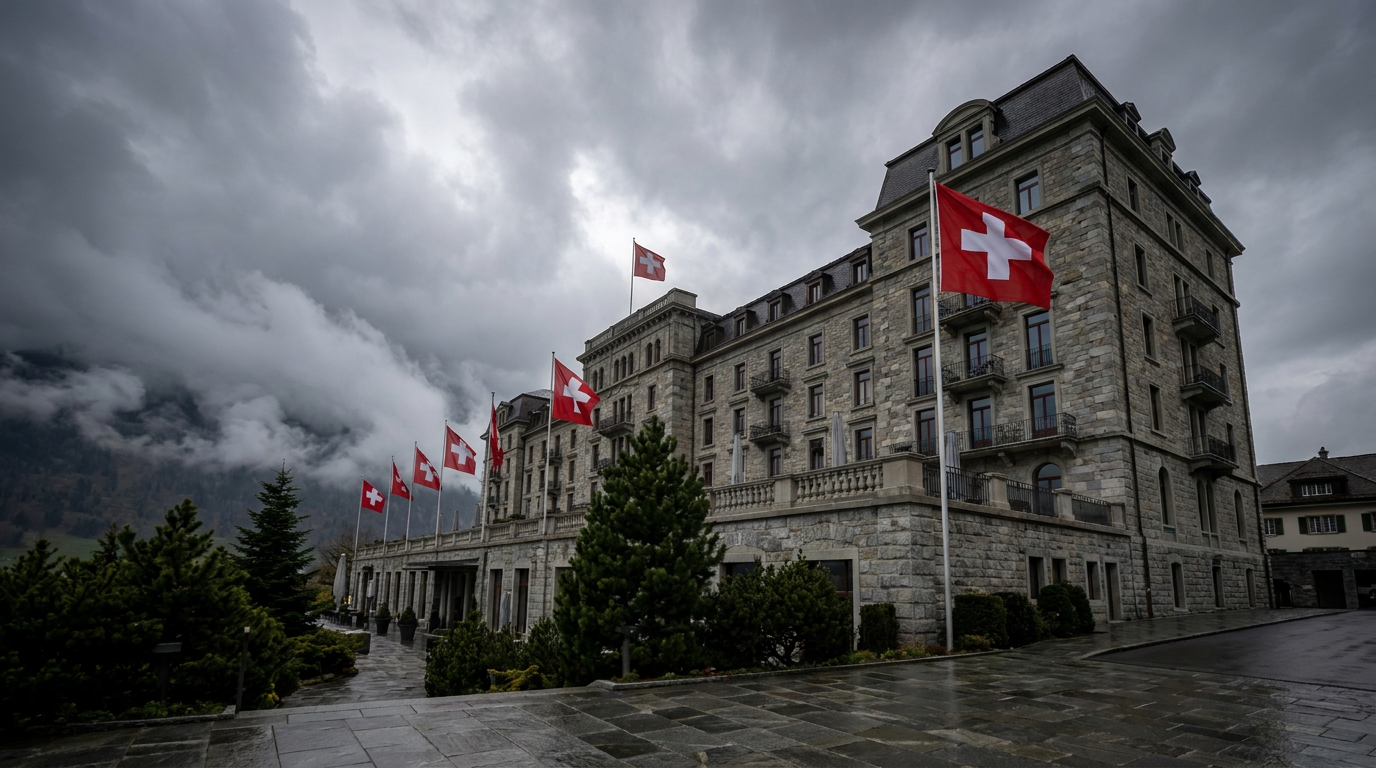
The talks at the Alpine Bürgenstock resort were meant to kick off a 60-day negotiation window established by the "Islamabad Memorandum of Understanding." Signed electronically on Wednesday by US President Donald Trump and Iranian President Masoud Pezeshkian, the interim deal aimed to end the months-long war, lift the US naval blockade on Iran, and reopen the Strait of Hormuz to global shipping.[3][5][6]
However, the diplomatic momentum collapsed overnight. Hezbollah militants killed four Israeli soldiers, prompting Israel to launch a wave of retaliatory airstrikes across southern Lebanon and the Bekaa Valley that killed at least 18 people.[1][4]

In response, Tehran suspended the departure of its delegation, led by chief negotiator Mohammad Bagher Ghalibaf. Iranian officials and Hezbollah-linked media stated that the US-Iran interim deal mandated an immediate end to military operations on all fronts, including Lebanon, and that talks could not proceed under bombardment.[2][4][5]
The White House subsequently announced that US Vice President JD Vance had cancelled his trip to Switzerland. While the US cited "logistical challenges" and stated it looked forward to beginning technical talks as soon as possible, the sudden reversal marks a significant blow to the Trump administration's efforts to secure a swift foreign policy victory.[2][5][6]

The White House subsequently announced that US Vice President JD Vance had cancelled his trip to Switzerland.
Israel, which is not a signatory to the US-Iran memorandum, has explicitly stated it is not bound by the agreement and will not halt its campaign against Hezbollah in Lebanon. Israeli politicians, facing upcoming October elections, have largely supported the continued military operations, complicating Washington's efforts to enforce a regional pause.[2][4]
The Swiss Foreign Ministry confirmed early Friday that the planned meetings between the US, Iran, Qatar, and Pakistan had been postponed. A spokesperson noted that while the Friday discussions are off, Switzerland remains ready to facilitate the talks and preparations at the resort are continuing on standby.[3][7]
The collapse of the Friday talks injects fresh uncertainty into global energy markets. While maritime traffic through the Strait of Hormuz briefly picked up following the MoU signing, the renewed hostilities threaten to reinstate the dual blockades that have severely constrained oil supplies, leaving Brent crude hovering around $79 per barrel.[2]

The delay also amplifies domestic US criticism of the agreement. Trump has faced bipartisan backlash for conceding sanctions relief and unfreezing assets to Tehran, with critics arguing the deal failed to secure binding commitments on Iran's nuclear program or its regional proxies.[4]
With the 60-day clock already ticking, mediators face a rapidly closing window to decouple the US-Iran bilateral negotiations from the escalating Israel-Hezbollah conflict. Until a comprehensive ceasefire can be guaranteed on the Lebanese front, the prospect of a permanent US-Iran settlement remains dangerously out of reach.[1][2][4][7]
How we got here
Feb 28, 2026
The US and Israel launch strikes on Iran, sparking a regional war and the blockade of the Strait of Hormuz.
Jun 17, 2026
US President Trump and Iranian President Pezeshkian sign the Islamabad Memorandum of Understanding.
Jun 18, 2026
Hezbollah kills four Israeli soldiers; Israel retaliates with deadly airstrikes across southern Lebanon.
Jun 18, 2026
US Vice President JD Vance and Iranian negotiators abruptly cancel their trips to Switzerland.
Jun 19, 2026
The Swiss Foreign Ministry officially confirms the postponement of the peace talks.
Viewpoints in depth
US Administration
The Trump administration is pushing to salvage the diplomatic momentum and reopen the Strait of Hormuz.
The White House has attempted to downplay the collapse of the Friday talks, attributing Vice President JD Vance's cancelled trip to unpredictable "logistics." President Trump is eager to secure a landmark foreign policy victory and alleviate the global energy crunch caused by the Hormuz blockade. However, the administration faces intense domestic criticism for offering Iran sanctions relief without securing immediate, binding concessions on its nuclear program or forcing Israel to halt its operations.
Iranian Leadership
Tehran insists that any bilateral peace process is contingent on a comprehensive regional ceasefire.
Iranian officials, including Supreme Leader Mojtaba Khamenei, have approached the US deal with deep skepticism. Tehran views the Israeli airstrikes in Lebanon as a direct violation of the memorandum of understanding, which mandated an end to hostilities on all fronts. By withholding chief negotiator Mohammad Bagher Ghalibaf's delegation, Iran is signaling that it will not decouple its bilateral negotiations with Washington from the survival of its regional allies, particularly Hezbollah.
Israeli Security Establishment
Israel maintains its operational independence and refuses to be constrained by a US-brokered pact.
Israeli leadership has explicitly distanced itself from the US-Iran memorandum, arguing that it cannot allow Hezbollah to maintain a threatening presence on its northern border. Following the deaths of four Israeli soldiers, the military views the retaliatory strikes in Lebanon as a non-negotiable security imperative. With domestic elections approaching in October, there is broad political consensus in Israel to continue the campaign against Hezbollah, regardless of Washington's diplomatic timetable.
What we don't know
- Whether the US and Iran will agree to a new date for technical talks within the 60-day window.
- If Iran will reinstate its blockade of the Strait of Hormuz in response to the delays.
- How the Trump administration plans to address Israel's continued military operations in Lebanon.
Key terms
- Islamabad Memorandum of Understanding
- The interim ceasefire agreement signed by the US and Iran, mediated by Pakistan, outlining a 60-day window for permanent peace talks.
- Strait of Hormuz
- A crucial maritime chokepoint between the Persian Gulf and the Gulf of Oman, through which a significant portion of the world's oil supply passes.
- Bürgenstock Resort
- The Swiss Alpine venue chosen as neutral ground for the US-Iran technical negotiations.
Frequently asked
Why were the US-Iran peace talks cancelled?
The talks were postponed after Israel launched deadly airstrikes in Lebanon in response to Hezbollah attacks. Iran refused to send its delegation, arguing the strikes violated the terms of the interim ceasefire.
Is the US-Iran peace deal completely dead?
Not officially. The White House cited "logistical challenges" and expressed a desire to begin technical talks soon, while Switzerland confirmed it remains ready to facilitate the negotiations.
How does Israel fit into the US-Iran agreement?
Israel is not a party to the US-Iran memorandum of understanding and has stated it is not bound by the ceasefire, maintaining its right to continue military operations against Hezbollah in Lebanon.
Will the Strait of Hormuz reopen?
The interim deal included an agreement to lift the US naval blockade and reopen the strait, but the cancellation of talks has created uncertainty about whether maritime traffic will fully resume.
Sources
Source coverage
7 outlets
4 viewpoints surfaced







[1]The GuardianEuropean Mediators
US-Iran peace talks abruptly cancelled amid renewed Israeli strikes in Lebanon
Read on The Guardian →[2]The Business TimesIsraeli Security Establishment
US, Iran delay peace talks after clashes in Lebanon
Read on The Business Times →[3]Anadolu AgencyIranian & Allied Forces
US-Iran talks scheduled for Friday canceled: Swiss Foreign Ministry
Read on Anadolu Agency →[4]The Straits TimesIranian & Allied Forces
US-Iran meeting in Switzerland scrapped as fighting flares in Lebanon
Read on The Straits Times →[5]South China Morning PostUS Administration
US-Iran peace talks delayed as Vance postpones trip to Switzerland
Read on South China Morning Post →[6]Channel News AsiaUS Administration
Switzerland says US-Iran talks planned for Friday are off
Read on Channel News Asia →[7]SWI swissinfo.chEuropean Mediators
US-Iran talks in Switzerland cancelled
Read on SWI swissinfo.ch →

Every angle. Every day.
Get news politics stories with full source coverage and perspective breakdowns delivered to your inbox.