
Modular Electronics Go Mainstream: The 2026 Shopper's Guide to Repairable Tech
With new Right to Repair laws in effect and premium modular devices hitting the market, buying tech you can actually fix has never been easier.
By Factlen Editorial Team
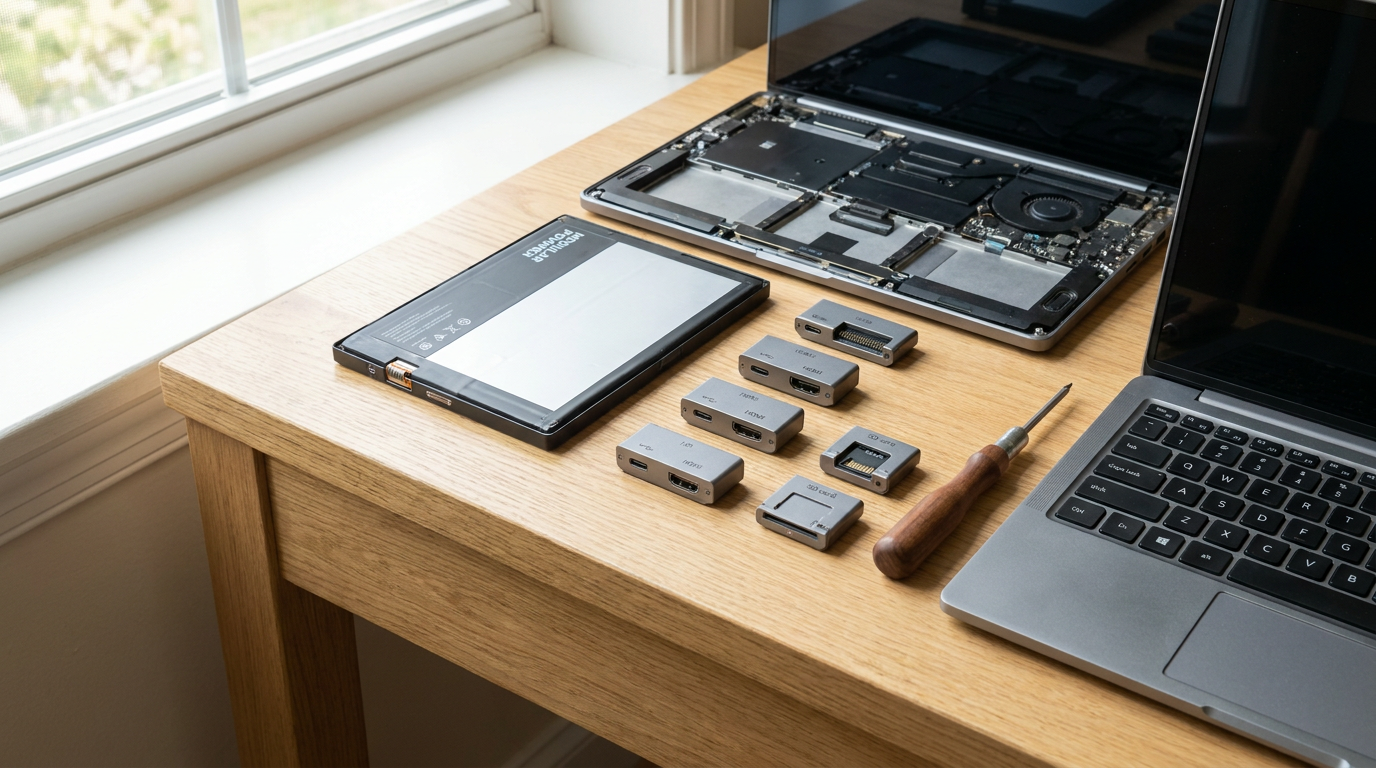
- Right-to-Repair Advocates
- Arguing that consumers should have total ownership and the ability to fix their own devices.
- Modular Hardware Manufacturers
- Proving that repairable, upgradeable devices can compete in the premium market.
- Tech Reviewers & Analysts
- Evaluating modular devices on their performance, build quality, and value proposition.
What's not represented
- · Traditional Consumer Electronics OEMs
- · Independent Repair Shop Owners
Why this matters
Choosing repairable electronics saves you money, drastically reduces e-waste, and frees you from the cycle of forced upgrades every two years. As modular tech reaches premium quality, you no longer have to sacrifice performance for sustainability.
Key points
- Comprehensive Right to Repair laws took effect in Colorado and Washington in January 2026, banning software 'parts pairing.'
- Framework's new Laptop 13 Pro brings premium CNC aluminum and 20-hour battery life to the modular computing space.
- The Fairphone 6 launched with a modern OLED screen, a user-replaceable battery, and guaranteed software support until 2033.
- Fairphone officially retired the Fairphone 3 in 2026 after achieving a record seven years of continuous software updates.
- Experts advise shoppers to look for devices assembled with standard screws and backed by publicly available repair manuals.
The era of the glued-together, disposable gadget is facing its biggest challenge yet. In 2026, modular electronics have officially graduated from niche hobbyist projects to premium, mainstream consumer choices.
For years, buying a repairable phone or laptop meant accepting compromises. Consumers who cared about sustainability often had to settle for thicker chassis, slower processors, and utilitarian designs. But a wave of new hardware releases and landmark legislation has fundamentally altered the electronics shopping landscape.
The shift is anchored by the implementation of major "Right to Repair" laws across the United States. On January 1, 2026, sweeping legislation went into effect in Colorado and Washington, forcing original equipment manufacturers (OEMs) to provide consumers and independent shops with the parts, tools, and manuals needed to fix their devices.[1][2][3]
Crucially, these new laws explicitly target "parts pairing"—a controversial software practice where manufacturers lock specific components to a device's motherboard. Under the new regulations, companies are prohibited from using software to prevent third-party replacements from functioning correctly or to trigger misleading warning alerts.[1][2][3]

With the legal landscape shifting in favor of consumer ownership, hardware makers dedicated to modularity are seizing the moment. Leading the charge in the laptop space is Framework, which released its highly anticipated Laptop 13 Pro in April 2026.[4][5]
The Framework 13 Pro represents a turning point for repairable computing. Previous iterations were praised for their modularity but criticized for chassis flex and basic trackpads. The 2026 Pro model introduces a premium CNC aluminum body and a seamless haptic touchpad that reviewers have compared directly to industry-leading ultrabooks.[4][5]
Under the hood, the 13 Pro utilizes Intel's Core Ultra Series 3 processors, built on the new Panther Lake architecture, alongside upgradeable LPCAMM2 memory. This combination delivers a massive leap in efficiency, with Framework claiming up to 20 hours of battery life—closing the gap with ARM-based competitors while retaining complete user repairability.[4]
Under the hood, the 13 Pro utilizes Intel's Core Ultra Series 3 processors, built on the new Panther Lake architecture, alongside upgradeable LPCAMM2 memory.
The appeal of this no-compromise approach is evident in the sales data. Following the launch of the 13 Pro, Framework confirmed that configurations shipping with the Linux-based Ubuntu operating system were actually outselling Windows versions, highlighting the device's massive popularity among developers and power users.[5]
For gamers and creative professionals, the early 2026 release of the Framework Laptop 16 (Gen 2) pushed the boundaries of what a modular system can do. It features an "Expansion Bay" that allows users to completely swap out the graphics card, such as upgrading to an NVIDIA RTX 5070 module, without replacing the rest of the computer.[6]

In the smartphone market, Dutch manufacturer Fairphone has achieved breakout mainstream momentum in 2026, driven by the successful launch of the Fairphone 6.[7]
Priced at £499 (around $600), the Fairphone 6 trades ultra-premium flagship processors for a capable mid-range Snapdragon 7s Gen 3 chip. However, it delivers a modern 6.3-inch 120Hz OLED screen, a recycled plastic body, and a rare microSD card slot for expandable storage.[7]
The Fairphone 6's true value proposition lies in its longevity. The back plate is held by two standard Torx screws, allowing users to easily swap the battery, camera modules, or charging port at home. The device comes with a five-year warranty and guaranteed software support until 2033.[7]
This promise of longevity is backed by a proven track record. In August 2026, Fairphone will officially end support for the Fairphone 3—a device launched in 2019. It achieved seven years of continuous software updates, two years longer than the company's original goal, proving that smartphones do not have to be replaced every two years.[8]

For consumers looking to navigate this new era of sustainable electronics, experts recommend looking for specific hallmarks of repairability before making a purchase. The first rule is to check how the device is assembled: standard screws are a repairer's best friend, while heavy adhesive is a major red flag.[9]
Shoppers should also verify the availability of replacement parts and official repair manuals. A device is only truly repairable if the manufacturer actively sells genuine components like batteries and screens directly to the public at reasonable prices.[9]
Finally, the modular tech movement is driving a broader mindset shift. It asks consumers to view their gadgets not as fleeting status symbols, but as valuable, maintainable tools. By choosing repairable devices, shoppers in 2026 are saving money, reducing electronic waste, and reclaiming ownership of the technology they rely on every day.[9]
How we got here
2019
Fairphone launches the Fairphone 3 with a goal of five years of support.
2021
Framework launches its first modular 13-inch laptop, proving the concept is viable.
Jan 2026
Comprehensive Right to Repair laws take effect in Colorado and Washington.
Feb 2026
Fairphone 6 launches with a modernized OLED screen and a promise of support until 2033.
Apr 2026
Framework unveils the Laptop 13 Pro, bringing premium CNC aluminum and 20-hour battery life to the modular space.
Aug 2026
Fairphone 3 receives its final software update, achieving a record seven years of support.
Viewpoints in depth
Right-to-Repair Advocates
Arguing that consumers should have total ownership and the ability to fix their own devices.
Advocacy groups and lawmakers argue that the traditional consumer electronics model is fundamentally broken, leading to massive electronic waste and unnecessary expenses for buyers. By pushing for legislation that bans 'parts pairing' and mandates the availability of repair manuals, this camp believes they are restoring basic property rights. They view the 2026 laws in Colorado and Washington as just the beginning of a nationwide shift toward sustainable consumption.
Modular Hardware Manufacturers
Proving that repairable, upgradeable devices can compete in the premium market.
Companies like Framework and Fairphone are building their entire business models around longevity. They argue that planned obsolescence is a choice, not a technical necessity. By releasing devices like the Framework 13 Pro and Fairphone 6, these manufacturers are demonstrating that modular tech no longer requires consumers to compromise on performance, aesthetics, or battery life. Their goal is to pressure the broader industry into adopting similar sustainable practices.
Traditional Electronics OEMs
Historically resistant to repair mandates, citing security and safety concerns.
While not explicitly represented by the modular brands, traditional tech giants have historically pushed back against broad right-to-repair legislation. They argue that tightly integrated, sealed devices allow for thinner designs, better water resistance, and enhanced biometric security. Some OEMs have cautioned that allowing untrained consumers to handle high-capacity lithium-ion batteries or sensitive internal components could lead to safety hazards, though many are now adapting their policies to comply with the new 2026 legal landscape.
What we don't know
- How aggressively traditional tech giants will redesign their flagship devices to comply with the new 2026 state laws.
- Whether modular laptops can capture a significant share of the mainstream enterprise market beyond developers and enthusiasts.
- How the secondary market for used, swappable components like laptop graphics modules will mature over the next few years.
Key terms
- Parts Pairing
- A practice where manufacturers use software to link specific hardware components to a device, preventing full functionality if a third-party replacement is installed.
- LPCAMM2
- A new, compact memory module standard that allows for upgradeable RAM in thin-and-light laptops without sacrificing speed or power efficiency.
- OEM
- Original Equipment Manufacturer; the company that originally built the device, such as Apple, Google, or Samsung.
- Right to Repair
- A legislative movement requiring manufacturers to provide consumers and independent shops with the parts, tools, and manuals needed to fix their own devices.
Frequently asked
What is 'parts pairing' in electronics?
Parts pairing is a software restriction used by manufacturers to lock specific components to a device's motherboard. If a part is replaced by an independent shop, the device may display warnings or disable features.
Can I upgrade the processor in a modular laptop?
Yes. Devices like the Framework Laptop allow users to swap out the entire mainboard, enabling processor upgrades years after the initial purchase without buying a whole new chassis.
Are modular phones water-resistant?
Modular designs make waterproofing more challenging, but progress is being made. The Fairphone 6, for example, carries an IP55 rating, meaning it is resistant to rain and splashes, though not full submersion.
Sources
Source coverage
9 outlets
3 viewpoints surfaced









[1]Colorado House DemocratsRight-to-Repair Advocates
Colorado Right to Repair Law HB24-1121 Takes Effect
Read on Colorado House Democrats →[2]H2 ComplianceTech Reviewers & Analysts
Washington HB 1483 Right to Repair Act
Read on H2 Compliance →[3]Waste DiveRight-to-Repair Advocates
Advocates hope a wave of laws newly enacted in 2026 will boost momentum for repair bills
Read on Waste Dive →[4]VibetricTech Reviewers & Analysts
Framework Laptop Pro 13 review 2026
Read on Vibetric →[5]MediumTech Reviewers & Analysts
The Framework Laptop 13 Pro is selling more Ubuntu than Windows
Read on Medium →[6]FiksasTech Reviewers & Analysts
Framework Laptop 16 (Gen 2) – a modular 16" laptop
Read on Fiksas →[7]The GuardianTech Reviewers & Analysts
Fairphone 6 review: sustainable smartphone takes a step forward
Read on The Guardian →[8]e/OS CommunityModular Hardware Manufacturers
Celebrating seven years of the Fairphone 3
Read on e/OS Community →[9]WebLogicNetRight-to-Repair Advocates
Sustainable and Repairable Consumer Electronics: A Practical Guide
Read on WebLogicNet →

More in shopping
See all 6 stories →Sleep Tech
What the Science Actually Says About Your Sleep Tracker
6 sources

Smart Home Hubs
Home Assistant vs. Cloud Hubs: Choosing Your Smart Home Architecture
7 sources
Wearable Tech
Do Smart Rings Actually Track Sleep Accurately? A Review of the Clinical Evidence
8 sources

Display Tech
OLED vs. Mini-LED in 2026: The Great Convergence in Premium TVs
6 sources
Every angle. Every day.
Get shopping stories with full source coverage and perspective breakdowns delivered to your inbox.