
How Restaurants Use Menu Engineering and Psychology to Guide Diner Choices
Behind every restaurant menu is a carefully calibrated system of behavioral psychology and data analytics designed to maximize profitability. By understanding the visual and pricing cues embedded in menus, diners can recognize how their choices are subtly influenced.
By Factlen Editorial Team
- Restaurant Operators
- Menu engineering is a vital tool for financial survival and operational efficiency.
- Behavioral Psychologists
- Menus are carefully constructed environments designed to bypass rational decision-making.
- Hospitality Strategists
- The best menu psychology enhances the guest experience rather than manipulating it.
What's not represented
- · Budget-Conscious Diners
- · Independent Chefs Resisting Corporate Tactics
Why this matters
Understanding the psychology behind menu design empowers you to make more mindful choices when dining out. By recognizing the subtle visual and pricing nudges restaurants use, you can navigate the menu on your own terms, balancing your budget with your appetite.
Key points
- Menu engineering combines data analytics and behavioral psychology to increase a restaurant's profitability by up to 15 percent.
- Dishes are categorized into a 'Menu Matrix' based on their popularity and profit margins, with 'Stars' being the most heavily promoted.
- Visual tricks like the 'Golden Triangle' and negative space are used to draw the diner's eye to high-margin items.
- Removing dollar signs and limiting choices to five to seven items per category reduces anxiety and the psychological 'pain of paying.'
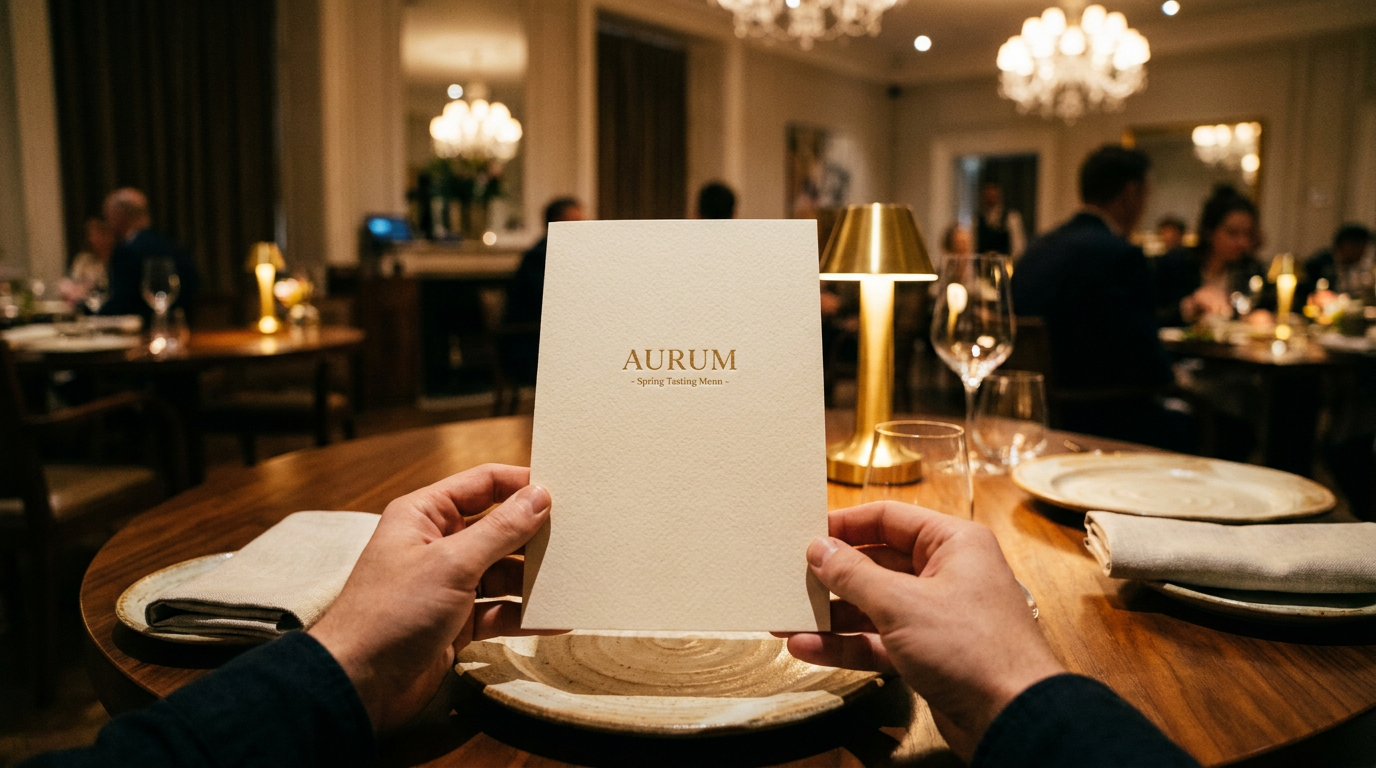
The next time you sit down at a restaurant and open the menu, pay close attention. You might think you are simply choosing what to eat, but the document in your hands is likely a highly calibrated piece of behavioral economics. Every color, placement, and descriptive word has been intentionally selected to influence your decision.[10]
Welcome to the world of menu engineering and menu psychology, a discipline that blends culinary arts with cognitive science and data analytics. For decades, the restaurant industry has studied how diners read, process, and react to menus, turning a simple list of dishes into a powerful revenue-generating tool.[2][8]
The practice is remarkably effective. Studies show that an expertly engineered menu can increase a restaurant's profits by 10 to 15 percent, all without changing the food itself. It relies on a combination of visual hierarchy, strategic pricing, and sensory language to subtly guide guests toward the most profitable choices.[1][10]
At the foundation of this practice is the "Menu Matrix," a managerial accounting framework introduced in the 1980s. Restaurants analyze every dish based on two vital metrics: popularity, which measures how often an item sells, and contribution margin, which measures how much profit it generates per plate.[6][8]
This data divides the menu into four distinct categories. "Stars" are highly popular and highly profitable—these are the dishes the restaurant actively wants you to order. "Plowhorses" are popular but have low profit margins, like a labor-intensive signature burger. "Puzzles" are highly profitable but rarely ordered, while "Dogs" are neither popular nor profitable.[6][7]

Once the culinary team knows which dishes are their Stars and Puzzles, behavioral psychology takes over. The goal is to draw the diner's eye directly to these high-margin items using subtle visual cues, ensuring they receive the most attention during the brief window a guest spends reading.[3][4]
One of the most famous concepts in menu design is the "Golden Triangle." Eye-tracking research suggests that when diners open a standard two-page menu, their eyes naturally gravitate first to the middle of the page, then travel to the top right corner, and finally to the top left.[4][7]
Savvy restaurateurs place their highest-margin Stars precisely in these sweet spots. They also use visual anchors—like a shaded box, a subtle border, or intentional negative space—to draw attention to specific items. A dish placed inside a box will naturally receive more attention, increasing the likelihood of it being ordered.[3][7]

Savvy restaurateurs place their highest-margin Stars precisely in these sweet spots.
But visual placement is only part of the equation; pricing psychology plays an equally crucial role. Have you noticed that many modern menus no longer use dollar signs, simply listing a price as "24" instead of "$24.00"?[9]
This is a deliberate tactic designed to reduce the "pain of paying." Research from Cornell University found that removing currency symbols from a menu can lead guests to spend roughly 8 percent more. The dollar sign acts as a subconscious trigger, reminding diners that they are spending money rather than simply enjoying a hospitality experience.[9]
Another powerful pricing strategy is "price anchoring" and the "decoy effect." Restaurants will often place an exceptionally expensive item—like a $150 seafood tower or a premium dry-aged steak—at the very top of a menu category.[9]
The restaurant does not necessarily expect you to order the $150 steak. Instead, its presence resets your internal sense of what is reasonable. Suddenly, the $45 roasted chicken or the $38 pasta dish right below it feels like a sensible, value-driven choice. By presenting a high extreme, the profitable middle option becomes the psychological safe zone.[9]

The length of the menu is also strictly controlled to combat the "paradox of choice." When faced with a sprawling, multi-page menu boasting dozens of options, diners often experience decision fatigue and anxiety, which can lead them to default to the cheapest, safest option.[7]
To prevent this, modern menu engineers recommend limiting each section—such as appetizers, mains, and desserts—to exactly five to seven items. This curated approach makes the diner feel confident in their choice, speeds up table turnover, and ensures the kitchen is not overwhelmed by a massive inventory.[7]
Finally, the words themselves are engineered. Sensory and descriptive language is used to trigger "embodied cognition"—meaning the diner's brain literally begins to simulate the taste and texture of the food before they even place an order.[9]
A label like "chocolate cake" is easily overlooked. But "Grandma's warm, double-fudge chocolate cake with hand-whipped vanilla bean cream" evokes nostalgia, implies artisanal quality, and justifies a higher price point. The shift from data to story activates emotional memory, making the dish nearly irresistible.[1][5]

Some forward-thinking operators are even moving away from traditional categories like "Appetizers" and "Mains," opting instead for mood-based routing. Sections titled "Comfort Cravings" or "Light & Bright" tap directly into the guest's emotional intent, making the ordering process feel deeply personalized and intuitive.[5]
Ultimately, menu engineering is not about tricking the guest; it is about structuring the decision environment to create a seamless, enjoyable experience that also sustains the business. By understanding these subtle nudges, diners can appreciate the invisible architecture of their meal—and perhaps make more mindful choices the next time they dine out.[5][10]
How we got here
1982
Academics Michael L. Kasavana and Donald I. Smith introduce the concept of menu engineering and the Menu Matrix.
2009
Cornell University researchers publish findings showing that removing dollar signs from menus increases guest spending.
2020s
Restaurants increasingly adopt 'Menu Psychology 2.0,' focusing on emotional routing and mood-based menu categories.
Viewpoints in depth
Restaurant Operators
Menu engineering is a vital tool for financial survival and operational efficiency.
For restaurant owners, the menu is the primary sales engine. Operating on notoriously thin margins, restaurants use the Menu Matrix to ensure their most profitable items—the 'Stars'—are ordered frequently enough to subsidize the rising costs of labor and ingredients. By guiding diners toward these dishes, operators can maintain profitability without having to enact across-the-board price hikes. Furthermore, limiting menu options to a curated few helps streamline kitchen operations, reducing food waste and ensuring faster service during peak hours.
Behavioral Psychologists
Menus are carefully constructed environments designed to bypass rational decision-making.
From a psychological perspective, a menu is a fascinating study in choice architecture. Experts note that tactics like the 'decoy effect' and 'price anchoring' exploit predictable cognitive biases. By placing an artificially high-priced item at the top of a list, the brain's perception of value is instantly recalibrated, making mid-tier options feel like a bargain. Similarly, removing currency symbols reduces the cognitive friction associated with spending money, allowing the diner to make choices based on emotion and appetite rather than strict budget constraints.
Hospitality Strategists
The best menu psychology enhances the guest experience rather than manipulating it.
Industry strategists argue that menu engineering, when done correctly, is an act of hospitality. Diners today are often overwhelmed by decision fatigue; a sprawling menu can cause anxiety rather than excitement. By curating the list to five to seven items per category and using evocative, story-driven language, restaurants relieve that cognitive burden. The goal is to make the ordering process feel effortless and emotionally satisfying, ensuring the guest leaves with a positive memory and a desire to return.
What we don't know
- How the widespread shift to digital QR-code menus will permanently alter traditional eye-tracking models like the Golden Triangle.
- The exact threshold where psychological nudging crosses from helpful curation into consumer frustration.
Key terms
- Menu Engineering
- The practice of analyzing and strategically designing a restaurant menu to maximize profitability and guide guest choices.
- Contribution Margin
- The amount of profit a specific dish generates for the restaurant after subtracting the cost of its ingredients.
- Price Anchoring
- A psychological tactic where a high-priced item is placed on a menu to make the surrounding, slightly cheaper items look like a better value.
- Decoy Effect
- The phenomenon where consumers change their preference between two options when presented with a third, less attractive option.
- Paradox of Choice
- A psychological concept stating that having too many options causes anxiety and makes it harder for people to make a decision.
- Embodied Cognition
- The theory that our thoughts are shaped by our physical sensations; in dining, reading sensory words can make the brain simulate tasting the food.
Frequently asked
What is a 'Star' in menu engineering?
A 'Star' is a menu item that is both highly popular with diners and highly profitable for the restaurant. Operators use visual cues to draw attention to these dishes.
Why do restaurants remove dollar signs from their menus?
Removing currency symbols reduces the psychological 'pain of paying.' Studies show that guests spend roughly 8% more when prices are listed simply as numbers without the dollar sign.
What is the 'Golden Triangle' on a menu?
The Golden Triangle refers to the natural path the human eye takes when looking at a two-page menu: starting in the middle, moving to the top right, and finishing at the top left.
How many items should be in a menu category?
Menu engineers recommend limiting categories to five to seven items. This prevents 'decision fatigue' and makes diners feel more confident in their choices.
Sources
Source coverage
10 outlets
3 viewpoints surfaced










[1]PopmenuHospitality Strategists
Menu Engineering Basics Every Restaurateur Should Know
Read on Popmenu →[2]TableoRestaurant Operators
Defining restaurant menu engineering principles
Read on Tableo →[3]Revenue Management SolutionsBehavioral Psychologists
Psychology of restaurant menus
Read on Revenue Management Solutions →[4]Aaron Allen & AssociatesBehavioral Psychologists
Psychology of Menu Design
Read on Aaron Allen & Associates →[5]Hospitality HeadlineHospitality Strategists
This Is Menu Psychology 2.0
Read on Hospitality Headline →[6]ForteRestaurant Operators
Restaurant Menu Design: How to Guide Choices and Improve Margins
Read on Forte →[7]WebstaurantStoreRestaurant Operators
Menu Psychology by Restaurant Type
Read on WebstaurantStore →[8]LightspeedRestaurant Operators
Menu Engineering and Psychology
Read on Lightspeed →[9]The Restaurant CPAsBehavioral Psychologists
Menu Psychology Principles
Read on The Restaurant CPAs →[10]Factlen Editorial TeamHospitality Strategists
Synthesis by Factlen editorial team
Read on Factlen Editorial Team →

Every angle. Every day.
Get lifestyle stories with full source coverage and perspective breakdowns delivered to your inbox.