
The European Sleeper Train Renaissance of 2026
Driven by climate consciousness and a desire for 'slow travel,' Europe is experiencing a massive revival of overnight rail in 2026, with new routes, luxury fleets, and solo pods replacing short-haul flights.
By Factlen Editorial Team
- Climate Advocates & Slow Travelers
- View the night train renaissance as a crucial, zero-guilt alternative to highly polluting short-haul aviation.
- Rail Operators & Startups
- Focus on the massive capital investments required and the bureaucratic hurdles of operating across fragmented national borders.
- Budget Travelers & Skeptics
- Argue that while romantic and green, premium sleeper cabins remain significantly more expensive than budget airlines.
What's not represented
- · Aviation industry lobbyists
- · National infrastructure managers setting track tolls
Why this matters
As short-haul flights face regulatory bans and climate pressure mounts, night trains offer a practical, low-carbon alternative that turns travel time into hotel time, fundamentally reshaping how tourists and business travelers navigate the continent.
Key points
- The European night train network is experiencing a massive expansion in 2026, driven by climate concerns and new private operators.
- Startups like European Sleeper are launching major cross-border routes, including Paris-Berlin and Brussels-Milan.
- Austria's ÖBB is deploying a €500 million fleet of next-generation trains featuring private showers and solo 'Mini Cabins.'
- Electrified night trains are up to 51 times greener than equivalent short-haul flights, aligning with new EU climate regulations.
- Despite surging demand, operators still struggle with high track tolls, fragmented national networks, and the lack of a centralized booking system.
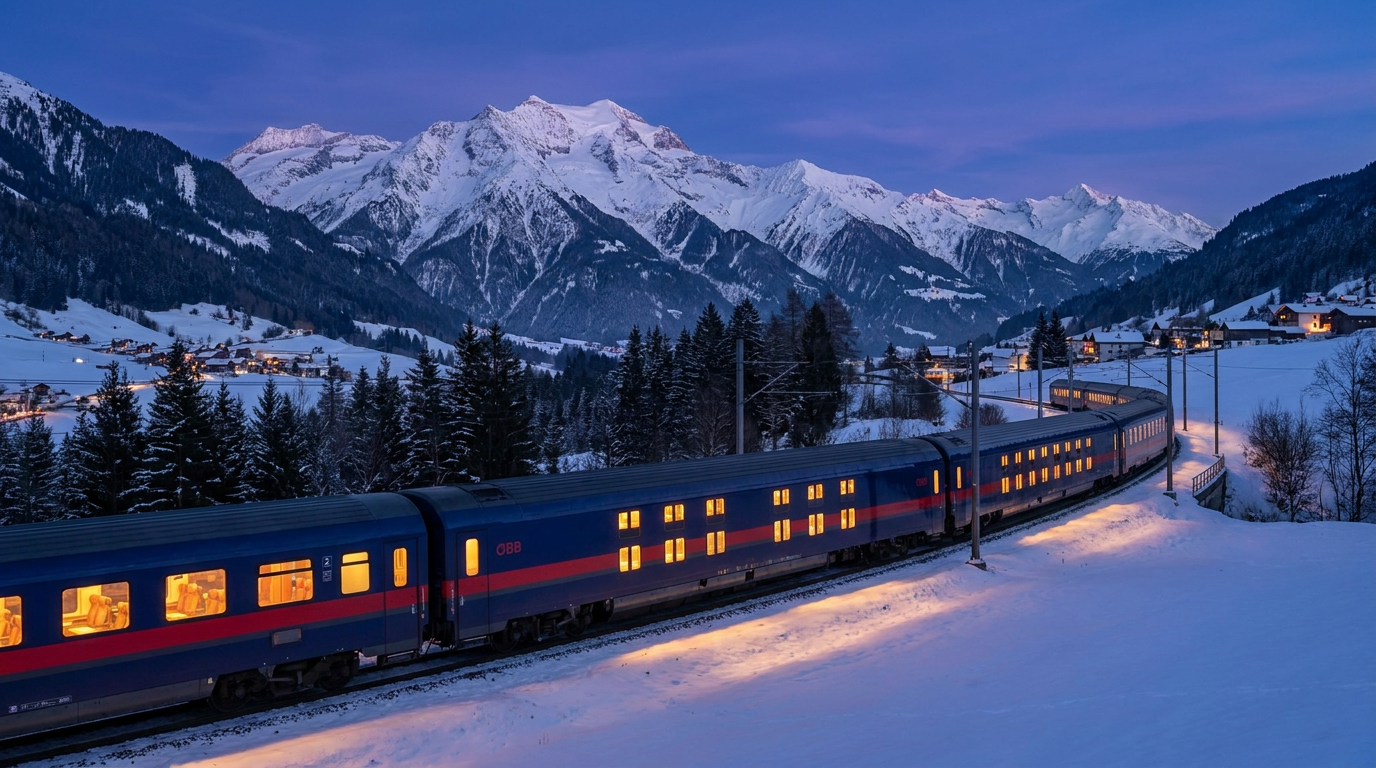
For decades, the European night train was treated as a romantic relic, slowly being suffocated by the rise of ultra-cheap budget airlines and high-speed daytime rail. The idea of falling asleep in one country and waking up in another was relegated to nostalgia, with aging rolling stock and dwindling routes dominating the early 21st century. But in 2026, the narrative has entirely flipped. Driven by a potent mix of climate anxiety, a cultural shift toward 'slow travel,' and massive capital investments from both state operators and private startups, the sleeper train is experiencing a spectacular renaissance. Across the continent, travelers are increasingly willing to trade the indignities of airport security lines and cramped middle seats for the civilized pace of a hotel on wheels.[1][3]
The year 2026 marks a definitive tipping point for this revival, transitioning the movement from a niche eco-trend into a mainstream logistical network. New routes are aggressively expanding the map from the Baltic Sea to the Mediterranean coast, while next-generation train cars are finally replacing the outdated, Soviet-era carriages that plagued early revival efforts. This is no longer just about the romance of the rails; it is a highly competitive transportation sector aiming to directly challenge short-haul aviation. With major operators rolling out premium private cabins and innovative solo pods, the industry is betting that passengers will pay for comfort, privacy, and the sheer convenience of arriving directly in a city center at dawn.[3][5]
Leading the charge among private operators is European Sleeper, a Dutch-Belgian cooperative that has rapidly become a major player in the cross-border market. In March 2026, the company achieved a significant milestone by taking over the highly coveted Paris-to-Berlin route. The connection had previously been operated by Austria's ÖBB Nightjet, which abruptly discontinued the service in late 2025 following the withdrawal of French state subsidies. European Sleeper stepped into the void, launching a thrice-weekly service that departs Gare du Nord in the early evening and pulls into Berlin Hauptbahnhof the next morning. The route, which also includes a stop in Brussels and an upcoming extension to Hamburg, proved that agile startups could successfully navigate the complex web of European rail bureaucracy.[7][8]
European Sleeper's ambitions extend far beyond northern Europe. In September 2026, the cooperative is launching its most scenic and logistically complex route yet: a direct overnight connection from Brussels to Milan. The journey will trace the historic Simplon Pass, offering passengers spectacular dawn views as the train winds through the Swiss Alps before descending into Italy. The 17-hour journey represents a major north-south artery for the continent, connecting the de facto capital of the European Union with Italy's financial hub. By December 2026, the route will expand to include stops in the Dutch cities of Breda and Eindhoven, further knitting the Netherlands into the expanding overnight network.[1][7]

The renaissance is also flourishing domestically, particularly in Italy, where state-backed initiatives are blending transportation with high-end tourism. FS Treni Turistici Italiani has reintroduced a classic mode of travel infused with 1930s glamour, launching the Espresso Cadore. This retro-styled sleeper train connects Rome directly to Cortina d'Ampezzo, the chic Alpine resort town nestled in the Dolomites. Timed perfectly to build momentum for the 2026 Winter Olympics, which Cortina is co-hosting, the train features white-tablecloth dining, dedicated sleeping cabins, and a bar car that stays open through the night. It is a deliberate pivot away from pure utility, framing the journey itself as the first day of a luxury vacation.[2][5]
While startups and boutique lines grab headlines, the undisputed heavyweight of the European night train revival is ÖBB, the Austrian national railway. Recognizing the potential early, ÖBB purchased Deutsche Bahn's discarded sleeper cars a decade ago and branded them as the Nightjet. Now, the company is reaping the rewards of that gamble, executing a massive €500 million investment to completely overhaul its fleet. Throughout 2025 and 2026, ÖBB has been rolling out 33 custom-built, seven-car Siemens trains across its network. This staggering capital injection is designed to solve the most persistent complaints about overnight rail: noise, lack of privacy, and outdated sanitation.[3][5]
While startups and boutique lines grab headlines, the undisputed heavyweight of the European night train revival is ÖBB, the Austrian national railway.
The crown jewel of ÖBB's new fleet is the introduction of the 'Mini Cabin,' an innovative single-berth sleep pod designed specifically for solo travelers. For decades, budget-conscious individuals had to choose between sitting upright all night or sharing a cramped couchette with up to five strangers. The Mini Cabin offers a lockable, private cocoon complete with charging ports, reading lights, and a sliding privacy door, bridging the gap between a cheap seat and an expensive private room. For those willing to spend more, the new Nightjet sleeper compartments now feature en-suite bathrooms with private showers, electronic keycard access, and significantly upgraded soundproofing, finally delivering on the promise of a true hotel on rails.[5][6]

The driving force behind this massive capital deployment is undeniably environmental. As the realities of climate change become impossible to ignore, both consumers and policymakers are scrutinizing the carbon footprint of short-haul aviation. The math heavily favors the rails. According to ÖBB's internal data, traveling on a Nightjet train is, on average, 51 times greener than taking an equivalent flight. A passenger flying from Vienna to Paris generates roughly 130 kilograms of CO2; the same journey on an electrified night train produces just a fraction of that amount. For a growing demographic of eco-conscious travelers, this drastic reduction in emissions is worth the longer travel time and, occasionally, the higher ticket price.[3]
This consumer shift is being accelerated by aggressive legislative action across the European Union. In a landmark move, France implemented a ban on domestic short-haul flights where a direct train alternative of under two and a half hours exists. While this specific ban primarily affects daytime high-speed rail, it signals a broader regulatory hostility toward unnecessary aviation that is rippling across the continent. Countries like Austria and the Netherlands are actively exploring similar measures, and corporate travel policies are increasingly mandating rail over air for regional business trips. The night train perfectly captures this regulatory tailwind, offering a zero-guilt alternative that doesn't sacrifice a full working day to transit.[3][4]

However, the 2026 renaissance is not without its casualties and structural roadblocks. The collapse of Midnight Trains serves as a stark reminder of the industry's brutal economics. The highly publicized French startup had promised a network of luxury 'hotels on rails' radiating from Paris, backed by venture capital and selected as an EU Commission pilot project. But in May 2024, the company abruptly folded without ever operating a single service, citing an inability to secure the massive upfront funding required to purchase custom rolling stock. The failure highlighted the immense barriers to entry in a sector where trains cost tens of millions of euros and profit margins remain razor-thin.[1][4][5]
Beyond capital constraints, operators face a deeply fragmented and often hostile infrastructure landscape. Unlike the aviation industry, which operates on standardized international protocols, European rail is a patchwork of national monopolies. Startups like European Sleeper must negotiate track access charges, safety certifications, and locomotive rentals separately with every country they cross. Furthermore, Europe lacks a centralized booking platform for international rail travel. Passengers cannot simply go to a single website to compare all night train options; they must navigate a confusing array of national operators, third-party apps, and dynamic pricing models, creating a friction point that airlines solved decades ago.[4][8]
Then there is the question of cost. Skeptics frequently point out that a budget airline ticket from Ryanair or EasyJet can often be secured for under €50, while a private sleeper cabin on a night train can easily exceed €200. Operators counter this by arguing that a night train ticket combines the cost of transportation with the cost of a hotel night, saving travelers both money and daylight hours. While a basic seat or shared couchette remains affordable for backpackers, the industry's clear pivot toward premium, private accommodations suggests that the future of the night train is targeting the middle-class and business traveler, rather than competing directly with rock-bottom airfares.[1][7]
Despite the logistical hurdles and economic fragility, the trajectory for the European night train remains overwhelmingly positive as 2026 unfolds. New players are already stepping up to fill the gaps left by failed ventures, with Berlin-based startup Nox Mobility announcing plans to launch premium services by 2027. Meanwhile, established operators like Poland's PKP Intercity are quietly expanding their overnight networks across Central Europe. As the new fleets hit the tracks and routes stretch from the Baltic to the Mediterranean, the sleeper train has successfully transformed from a nostalgic novelty into a vital, sustainable pillar of Europe's 21st-century transportation infrastructure.[1][5]
How we got here
May 2023
European Sleeper launches its inaugural route connecting Brussels and Berlin.
May 2024
French luxury rail startup Midnight Trains collapses due to an inability to secure capital.
Dec 2025
Austria's ÖBB discontinues the Paris-Berlin Nightjet route following the loss of state subsidies.
March 2026
European Sleeper successfully takes over the Paris-Berlin overnight route.
Sept 2026
A new 17-hour overnight route launches connecting Brussels to Milan via the Swiss Alps.
Viewpoints in depth
Climate Advocates & Slow Travelers
Viewing the night train as a vital weapon against aviation emissions.
For environmental groups and the growing 'slow travel' movement, the 2026 renaissance is a necessary corrective to decades of unchecked aviation growth. They point to the stark mathematics of carbon emissions: an electrified night train produces a fraction of the greenhouse gases of a short-haul flight. This camp strongly supports government interventions, such as France's ban on short domestic flights, arguing that the convenience of a two-hour flight does not justify its environmental cost. For these travelers, the journey itself is reclaimed as part of the vacation, prioritizing low-impact, civilized transit over frantic airport sprints.
Rail Operators & Startups
Navigating a hostile bureaucratic landscape to build a unified network.
The companies actually running the trains view the renaissance through a lens of brutal economics and logistical friction. Startups like European Sleeper and established giants like ÖBB must navigate a fragmented continent where every country has different track access charges, safety regulations, and signaling systems. They argue that while consumer demand is surging, the industry is structurally disadvantaged compared to airlines, which enjoy tax-free aviation fuel and standardized international protocols. This camp advocates for lower track tolls and a unified European booking platform to help them compete fairly with subsidized budget carriers.
Budget Travelers & Skeptics
Questioning the accessibility and affordability of the new luxury fleets.
While applauding the environmental benefits, budget-conscious travelers and industry skeptics worry that the night train revival is leaving the working class behind. They note that the heavily advertised new routes focus on premium experiences—private en-suite bathrooms, white-tablecloth dining, and solo pods—which often push ticket prices well above €200. When a Ryanair flight can cross the same distance for €40, skeptics argue that night trains risk becoming a boutique luxury product for wealthy eco-tourists rather than a mass-transit solution. They point to the collapse of startups like Midnight Trains as evidence that the financial model remains highly precarious.
What we don't know
- Whether private startups can maintain profitability without the state subsidies that national carriers rely on.
- If the European Union will eventually mandate a centralized, cross-border booking platform to simplify ticket purchases.
- How budget airlines will adjust their pricing and lobbying strategies as night trains capture more of the short-haul market.
Key terms
- Couchette
- A basic, shared sleeping compartment on a train, typically featuring four to six fold-down bunk beds.
- Mini Cabin
- A modern, single-berth sleep pod designed to give solo travelers privacy without the cost of a full private room.
- Open-access operator
- A private railway company that runs commercial services on state-owned tracks without receiving government subsidies.
- Track access charges
- The tolls that train operators must pay to national infrastructure managers for the right to run trains on their rails.
Frequently asked
Are night trains cheaper than flying?
Often not on paper, as budget airlines offer heavily subsidized fares. However, booking a night train saves the cost of a hotel room for that night, making the total trip cost highly competitive.
Do I have to share a cabin with strangers?
No. While shared couchettes remain available for budget travelers, modern trains now offer private en-suite sleeper cabins and lockable solo 'Mini Cabins'.
Can I book all European night trains on one website?
Not yet. Because Europe's rail network is fragmented among different national and private operators, travelers usually need to book directly through the specific company running the route.
Why do some night train routes get canceled?
Operating trains across borders is incredibly expensive due to high track tolls and the cost of custom train cars. Without state subsidies, some routes struggle to remain profitable.
Sources
Source coverage
8 outlets
3 viewpoints surfaced








[1]ObserverRail Operators & Startups
Europe's Night Trains Are Picking Up Steam
Read on Observer →[2]ForbesBudget Travelers & Skeptics
5 New European Trains: A Revolution In High-Speed & Night Trains
Read on Forbes →[3]RoadbookClimate Advocates & Slow Travelers
The return of European sleeper trains
Read on Roadbook →[4]The CitizenClimate Advocates & Slow Travelers
Bumpy return for night trains in Europe
Read on The Citizen →[5]PixidiaRail Operators & Startups
European Night Trains 2026: 10 New Routes You Need to Know
Read on Pixidia →[6]Backroad PlanetBudget Travelers & Skeptics
9 New European Trains Launching in 2026 and Beyond
Read on Backroad Planet →[7]Night RideRail Operators & Startups
European Sleeper: Routes, Cabins, Prices
Read on Night Ride →[8]WikipediaRail Operators & Startups
European Sleeper
Read on Wikipedia →

Every angle. Every day.
Get lifestyle stories with full source coverage and perspective breakdowns delivered to your inbox.