
As a Potentially Historic El Niño Forms, Scientists Debate Climate Change's Role
With a new El Niño officially underway in 2026, researchers are vigorously debating whether human-caused global warming is fundamentally altering the intensity of the climate phenomenon.
By Factlen Editorial Team
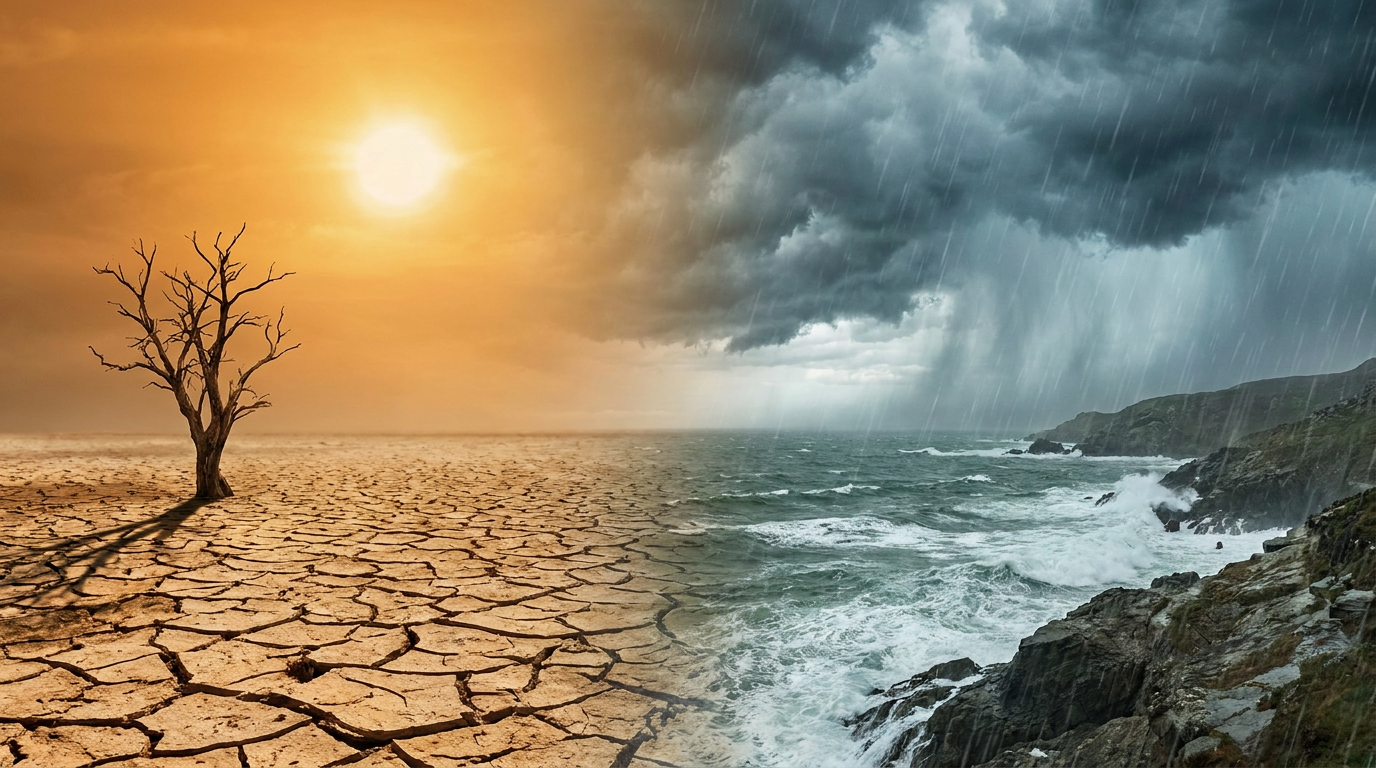
- Natural Variability Proponents
- Emphasize that ENSO is a chaotic system and recent intense events cannot yet be statistically separated from historical noise.
- Impact Forecasters
- Focus on the compounding effects, warning that a hotter baseline guarantees more extreme weather regardless of the underlying ENSO mechanics.
- Attribution Researchers
- Argue that human-caused warming is directly altering the frequency and intensity of the ENSO cycle itself, pointing to recent record-breaking events.
What's not represented
- · Agricultural economists assessing the specific crop yield impacts of the 2026 forecast
- · Local emergency management officials in high-risk coastal or wildfire zones
Why this matters
A potentially record-breaking El Niño is developing in 2026, threatening to supercharge global weather extremes. Understanding whether climate change is amplifying this cycle is critical for governments and communities preparing for unprecedented heatwaves, droughts, and floods.
Key points
- NOAA and the WMO have officially declared the onset of El Niño conditions in the tropical Pacific for 2026.
- Forecasters predict a 63% chance the event will become a "very strong" El Niño by winter, potentially rivaling historic records.
- Scientists agree that a hotter global baseline will amplify El Niño's impacts, leading to more severe floods and droughts.
- However, researchers vigorously debate whether climate change is altering the underlying mechanics and frequency of the El Niño cycle itself.
- The IPCC currently maintains that changes in the cycle's behavior cannot yet be definitively distinguished from natural climate variability.
The tropical Pacific Ocean is heating up, signaling the arrival of a climate phenomenon that routinely reshapes global weather. In June 2026, both the National Oceanic and Atmospheric Administration (NOAA) and the World Meteorological Organization (WMO) officially declared the onset of El Niño conditions.[2][3]
This naturally occurring climate pattern, characterized by unusually warm sea-surface temperatures in the central and eastern equatorial Pacific, occurs every few years when trade winds weaken. The shift in ocean heat triggers a cascade of atmospheric changes, altering jet streams and precipitation patterns worldwide.[3][5]
But as this new El Niño develops, a vigorous debate is unfolding within the scientific community: Is human-caused climate change fundamentally altering the mechanics of El Niño, making the phenomenon itself more intense?[1][6]

The stakes of this question are immense. NOAA currently forecasts a 63 percent chance that the 2026 event will become a "very strong" El Niño by the Northern Hemisphere winter, meaning sea-surface temperatures could rise more than 2.0 degrees Celsius above average.[3]
If those forecasts hold, the world could be facing an ocean heat engine rivaling the historic, highly destructive El Niño events of 1997-1998 and 2015-2016.[3]
To understand the debate over climate change's role, researchers divide the issue into two distinct questions: the "baseline effect" and the "mechanistic effect." The evidence for the former is absolute; the evidence for the latter remains highly contested.[6]

On the baseline effect, the scientific consensus is unified. Because the planet's average temperature is already significantly higher due to greenhouse gas emissions, any natural El Niño event is now occurring on top of a hotter foundation.[2][4]
On the baseline effect, the scientific consensus is unified.
The WMO warns that this combination will "pour fuel on the fire of a warming world." A previous El Niño helped drive global average temperatures to a record 1.55 degrees Celsius above preindustrial levels, and the 2026 event threatens to push the mercury even higher.[2]
Because the atmosphere is warmer, it holds more moisture. The Intergovernmental Panel on Climate Change (IPCC) concluded in its Sixth Assessment Report that it is "very likely" that the precipitation variance related to El Niño will increase in the long term.[4]
In practical terms, this means the extremes are amplified. When El Niño brings rain to the southern United States or parts of South America, the downpours are heavier and more prone to causing catastrophic flooding.[4][6]

Conversely, when it brings dry conditions to Australia or Southeast Asia, the droughts are more severe, supercharging the risk of wildfires across millions of acres of vulnerable terrain and threatening global crop yields.[2]
However, the mechanistic effect—whether climate change is actually causing the ocean-atmosphere cycle of El Niño to swing more violently—remains the subject of intense academic dispute.[1]
Some attribution researchers point to the fact that the most intense El Niño events on record have all occurred in recent decades. They argue that the immense accumulation of upper-ocean heat is altering the frequency and amplitude of the El Niño-Southern Oscillation (ENSO) cycle.[1][6]
Yet, the IPCC's official stance urges caution. The AR6 report states there is currently "no clear evidence" of long-term trends in ENSO behavior that can be definitively distinguished from natural, internal climate variability.[4]

The climate system is inherently chaotic. Climate models run over thousands of simulated years without human greenhouse gas emissions still produce periods where El Niño events cluster together or become unusually strong, purely by chance.[4][6]
Regardless of whether the engine itself is changing, the immediate impacts of the 2026 El Niño are already materializing. Coastal communities face a "double whammy" of decades of sea-level rise combined with El Niño-driven storm surges, proving that while the mechanics of El Niño may be natural, the damages it inflicts are increasingly man-made.[3][6]
How we got here
Spring 2026
Sea-surface temperatures in the central-eastern Equatorial Pacific begin rapidly approaching El Niño thresholds.
June 2026
NOAA and the WMO officially declare the onset of El Niño conditions.
July-August 2026
WMO forecasts an 80% likelihood of El Niño dominating global weather patterns through the summer.
November 2026
The projected window where NOAA forecasts a 63% chance the event will peak as a "very strong" El Niño.
Viewpoints in depth
Attribution Researchers
This camp argues that the mechanics of El Niño are fundamentally changing due to human activity.
Researchers focused on climate attribution point out that the most intense El Niño events in recorded history have all clustered in recent decades. They argue that the unprecedented accumulation of heat in the upper ocean is not just raising the baseline temperature, but is actively altering the frequency and amplitude of the El Niño-Southern Oscillation (ENSO) cycle, causing the "pendulum" to swing more violently.
Natural Variability Proponents
This camp maintains that recent El Niño extremes are still within the bounds of historical, natural chaos.
Relying on paleoclimate data and long-term modeling, these scientists—and the consensus view of the IPCC—emphasize that the climate system is inherently chaotic. Models run without any human greenhouse gas emissions still produce periods where El Niño events cluster together or become unusually strong. Therefore, they argue, there is not yet enough statistical evidence to prove that the underlying mechanics of the ENSO cycle have been permanently altered by climate change.
Impact Forecasters
This camp prioritizes the compounding effects of the event over the academic debate regarding its mechanics.
For meteorological agencies and disaster response organizations, the debate over whether the El Niño engine is changing is secondary to the immediate reality of its impacts. Because the planet's baseline temperature is undeniably hotter, they warn that any El Niño event will inevitably result in more extreme precipitation variance—meaning heavier floods and more severe droughts—requiring urgent global preparation regardless of the cycle's underlying mechanics.
What we don't know
- Whether the 2026 El Niño will definitively surpass the intensity of the record-breaking 1997-1998 and 2015-2016 events.
- If the recent clustering of high-intensity El Niño events is a permanent shift driven by greenhouse gases or a temporary phase of natural variability.
- Exactly how the shifting ocean temperatures will interact with other atmospheric phenomena, such as the Atlantic hurricane season's wind shear.
Key terms
- El Niño-Southern Oscillation (ENSO)
- The coupled ocean-atmosphere system in the tropical Pacific that drives significant, recurring variations in global temperature and precipitation.
- Sea-Surface Temperature Anomaly
- The difference between the current temperature of the ocean's top layer and the long-term historical average for that specific region.
- Precipitation Variance
- The degree to which rainfall amounts fluctuate between extreme highs, causing floods, and extreme lows, causing droughts.
- Internal Climate Variability
- Natural, unforced fluctuations in the climate system that occur without any external triggers like greenhouse gas emissions or volcanic eruptions.
Frequently asked
What is El Niño?
El Niño is a natural climate pattern characterized by unusually warm sea-surface temperatures in the equatorial Pacific Ocean, which significantly alters global weather patterns.
How strong will the 2026 El Niño be?
NOAA forecasts a 63% chance of a "very strong" event by winter, meaning ocean temperatures could rise more than 2.0 degrees Celsius above average, potentially rivaling historic records.
Does climate change cause El Niño?
No, El Niño is a naturally occurring cycle. However, because the planet's baseline temperature is now hotter due to climate change, the heatwaves and floods associated with El Niño are becoming more extreme.
Will this El Niño affect hurricane season?
Typically, El Niño increases vertical wind shear in the Atlantic Ocean, which can tear storms apart and suppress hurricane formation, while simultaneously fueling stronger storms in the Pacific.
Sources
Source coverage
6 outlets
3 viewpoints surfaced






[1]The New York TimesAttribution Researchers
Is Climate Change Supercharging El Niño?
Read on The New York Times →[2]World Meteorological OrganizationImpact Forecasters
WMO El Niño/La Niña Update
Read on World Meteorological Organization →[3]National Oceanic and Atmospheric AdministrationImpact Forecasters
El Niño Advisory: Conditions are present and expected to strengthen
Read on National Oceanic and Atmospheric Administration →[4]Intergovernmental Panel on Climate ChangeNatural Variability Proponents
Sixth Assessment Report (AR6): The Physical Science Basis
Read on Intergovernmental Panel on Climate Change →[5]European Space AgencyImpact Forecasters
Satellite measurements show early signal that El Niño is back
Read on European Space Agency →[6]Factlen Editorial TeamNatural Variability Proponents
Synthesis by Factlen editorial team
Read on Factlen Editorial Team →


Every angle. Every day.
Get science stories with full source coverage and perspective breakdowns delivered to your inbox.