
US-Iran Peace Talks Abruptly Cancelled Amid Escalating Israeli Strikes in Lebanon
A highly anticipated summit in Switzerland to solidify a 60-day US-Iran ceasefire has been called off after Vice President JD Vance cancelled his trip. The collapse follows a severe flare-up in fighting between Israel and Hezbollah, threatening the fragile 14-point agreement.
By Factlen Editorial Team
- US Administration
- Prioritizes securing a diplomatic win, reopening maritime trade, and avoiding a wider war.
- Israeli Hardliners
- Refuses to halt military operations against Hezbollah until border security is guaranteed.
- Iranian Leadership
- Demands total Israeli ceasefire and immediate sanctions relief before continuing talks.
- Global Markets
- Focused entirely on the stability of energy supplies and the Strait of Hormuz.
What's not represented
- · Lebanese civilians caught in the crossfire of the renewed Israeli-Hezbollah strikes.
- · European allies relying heavily on the Strait of Hormuz for energy imports.
Why this matters
The cancellation jeopardizes a landmark attempt to stabilize the Middle East and secure global maritime traffic through the Strait of Hormuz. If the 60-day ceasefire collapses, the resulting regional war could send global energy prices soaring and draw the US into a deeper military entanglement.
Key points
- US Vice President JD Vance cancelled his trip to Switzerland, indefinitely postponing historic peace talks with Iran.
- The summit was intended to implement a 14-point agreement that established a 60-day ceasefire and aimed to reopen the Strait of Hormuz.
- The collapse was triggered by a severe escalation in fighting between Israel and Hezbollah in Lebanon.
- Iran and Hezbollah stated that negotiations cannot proceed without a comprehensive halt to Israeli military operations.
- Global markets reacted immediately, with oil prices rising nearly 1% over fears of a wider regional conflict.
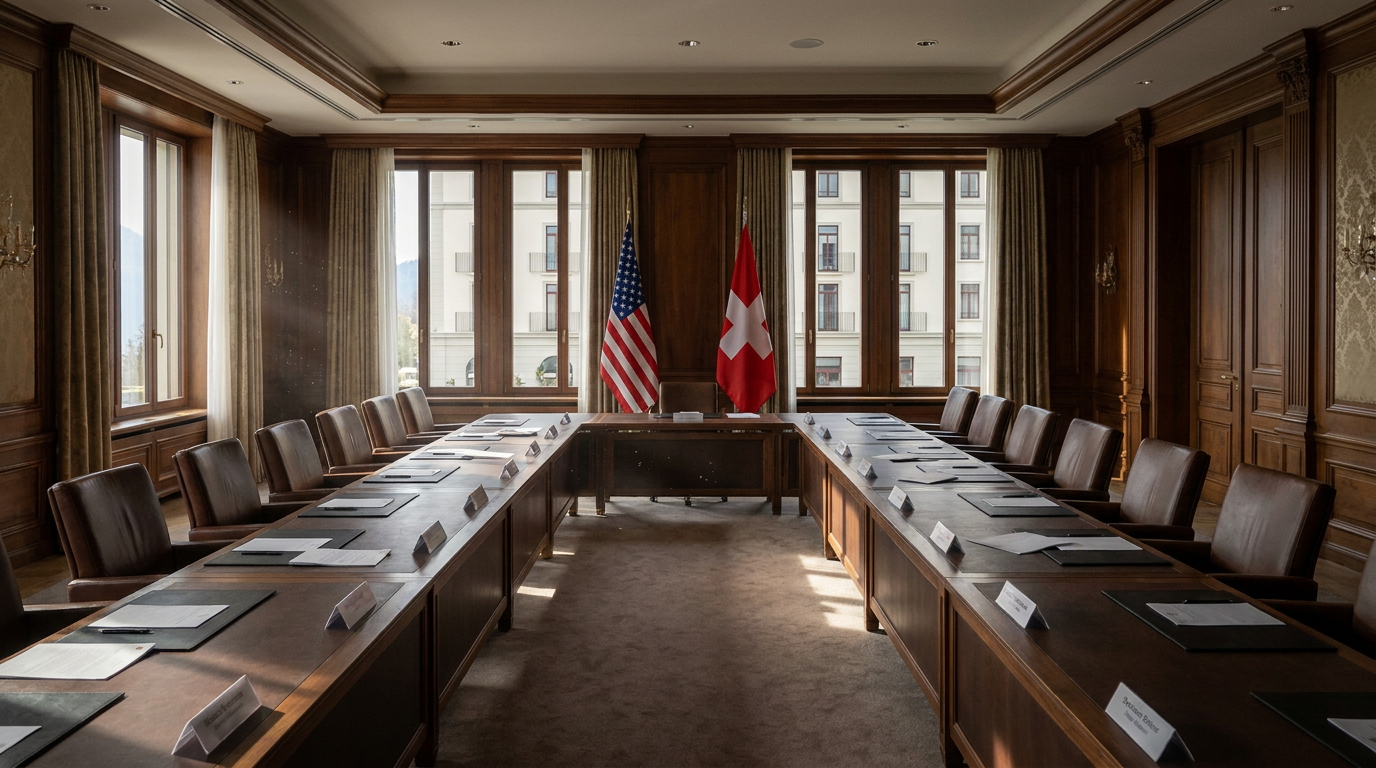
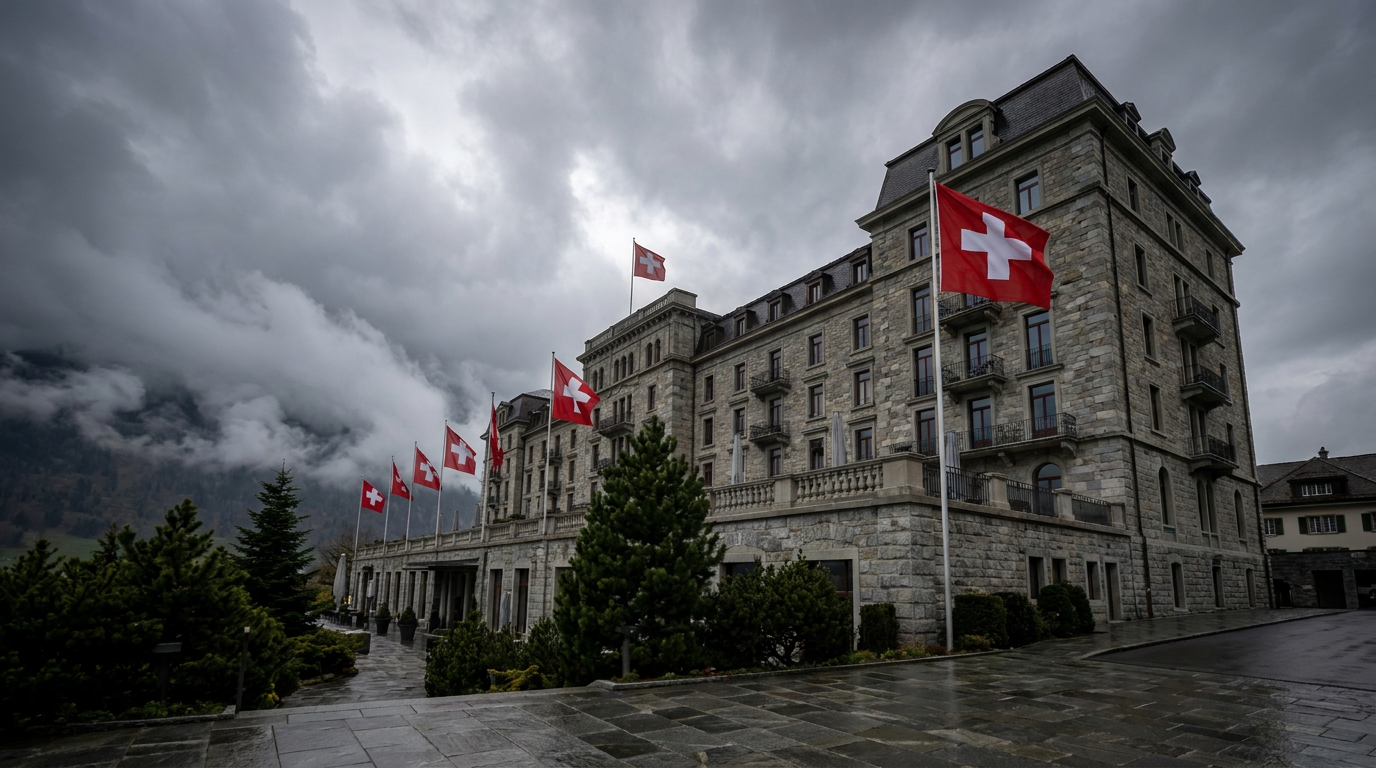
The White House has abruptly cancelled Vice President JD Vance's trip to Switzerland for historic peace talks with Iran, indefinitely postponing negotiations that were meant to solidify a fragile new ceasefire in the Middle East. The highly anticipated talks, scheduled for Friday in the Swiss mountain resort of Bürgenstock, were intended to implement a 14-point memorandum of understanding signed just two days prior. That breakthrough agreement had opened a 60-day window to negotiate a permanent end to regional hostilities, address international concerns over Iran's nuclear program, and reopen the critical Strait of Hormuz to global commercial shipping.[1][3][4][6]
But the diplomatic effort collapsed late Thursday as the region witnessed its most violent military exchanges since the truce was first announced. The White House confirmed that Vance would not depart for Geneva, with a spokesperson citing the inherently unpredictable "logistics of these negotiations." Shortly after, the Swiss foreign ministry officially declared the summit delayed, though it noted that Switzerland remains ready to facilitate the talks whenever the parties are prepared. The sudden reversal leaves the broader peace framework in limbo, raising immediate questions about whether the United States can successfully broker a deal while active combat continues.[2][5][6]
The immediate catalyst for the breakdown is a severe and sudden military escalation in Lebanon, exposing a glaring vulnerability in the bilateral framework. Israel, which was notably excluded from the US-Iran memorandum, launched a wave of retaliatory airstrikes across southern Lebanon and the Bekaa Valley. The intense strikes killed at least 18 people, while the initial Hezbollah attacks that prompted the retaliation resulted in the deaths of four Israeli soldiers. The violence represents a major barrier to the peace discussions, as the 14-point deal explicitly calls for the "permanent termination" of the war in Lebanon.[1][2][3]

In response to the bloodshed, Iranian officials and Hezbollah leadership informed international mediators that negotiations with the United States could not possibly proceed without a comprehensive halt to Israeli military operations. A senior Hezbollah lawmaker stated publicly that Tehran had instructed the group that Washington is solely responsible for ensuring Israel halts its attacks. This dynamic places the Trump administration in the difficult position of attempting to forge a direct peace with Tehran while key US ally Israel continues an active military campaign against Iranian proxy forces.[2][3]
A senior Hezbollah lawmaker stated publicly that Tehran had instructed the group that Washington is solely responsible for ensuring Israel halts its attacks.
President Donald Trump has vigorously defended the 14-point agreement, telling interviewers that the deal equates to his prior demand for Iran's "unconditional surrender" and is absolutely necessary to avert a global economic catastrophe. The preliminary deal reportedly offers Iran significant sanctions relief and the unfreezing of billions in assets in exchange for a permanent halt to hostilities. Vance, who is spearheading the negotiations, publicly criticized Israeli opposition to the deal on Thursday. He argued that Trump remains the most sympathetic world leader to Israel's cause, but expressed pointed frustration with hardline factions in Jerusalem that are actively opposing the proposed de-escalation.[3][6]
That frustration is directed largely at figures like Israel's far-right National Security Minister Itamar Ben-Gvir, who has publicly and vehemently rejected the US-led truce. Taking to social media, Ben-Gvir declared that the security of Israeli citizens is "not up for bargaining" and stated provocatively that "all of Lebanon must burn." His comments underscore the immense domestic pressure within Israel to dismantle Hezbollah's military infrastructure regardless of Washington's diplomatic timeline, as Israeli officials maintain they have no intention of withdrawing from the northern front until their security objectives are met.[2][4]

Meanwhile, in Tehran, the rhetoric has been equally uncompromising and hostile toward the American diplomatic push. Iran's Supreme Leader Ayatollah Mojtaba Khamenei characterized the recent US overtures as an act of sheer "desperation." In a written statement released to state media, Khamenei warned that Iran would not accept overly demanding terms from the US delegation. Iran's Supreme National Security Council echoed this sentiment, vowing a reciprocal response to any violation by the "untrustworthy" American side and promising to show "no leniency" until the nation's full economic and security rights are secured.[2][4]
The sudden cancellation of the summit immediately rattled global financial markets, which had briefly stabilized following the announcement of the 60-day ceasefire. Brent crude oil prices rose by nearly 1% on Friday morning, and Eurozone government bond yields ticked noticeably higher as international investors braced for the possibility of a wider regional conflict disrupting Middle Eastern energy supplies. For now, the 60-day ceasefire technically remains in effect on paper, but without face-to-face technical talks to implement the complex unfreezing of assets and the lifting of economic sanctions, the preliminary memorandum risks becoming a dead letter.[3][4][5]

As the diplomatic window narrows, the international community is left waiting to see if back-channel communications can salvage the Bürgenstock summit. Iranian media has reported that Tehran is seeking concrete signs that the United States is genuinely implementing the initial phases of the peace deal before committing to the next round of high-level talks. Until Washington can bridge the widening gap between Israel's security imperatives and Iran's demands for a comprehensive regional truce, the ambitious 14-point agreement will remain frozen, leaving the Middle East on the brink of renewed, large-scale conflict.[2][6]
How we got here
June 17, 2026
The US and Iran sign a 14-point memorandum of understanding, establishing a 60-day ceasefire window.
June 18, 2026
Israel and Hezbollah exchange heavy fire in Lebanon, resulting in dozens of casualties and threatening the truce.
Late June 18, 2026
The White House announces Vice President JD Vance will not travel to Switzerland for the technical talks.
June 19, 2026
The Swiss foreign ministry officially confirms the summit is delayed indefinitely.
Viewpoints in depth
US Negotiators
The Trump administration views the agreement as a necessary step to avert economic disaster.
US officials, led by Vice President JD Vance, argue that the 14-point memorandum is a diplomatic victory that forces Iranian concessions without requiring a prolonged military engagement. They maintain that the deal equates to an 'unconditional surrender' by Tehran regarding its nuclear ambitions, and they express deep frustration with Israeli hardliners who they believe are actively undermining a necessary regional de-escalation to pursue an unwinnable war in Lebanon.
Israeli Security Establishment
Israeli leaders view the bilateral US-Iran agreement as a betrayal that leaves them vulnerable.
For Israel, any ceasefire that grants Iran sanctions relief without simultaneously dismantling Hezbollah's military infrastructure is a non-starter. Hardline figures like National Security Minister Itamar Ben-Gvir argue that the US is bargaining away Israeli security for a politically convenient truce. They insist that the military campaign in Lebanon must continue until the northern border is entirely secure, regardless of Washington's diplomatic timeline or the broader US-Iran negotiations.
Iranian Leadership
Tehran frames the negotiations as an American capitulation and demands a halt to Israeli strikes.
Iranian officials, including Supreme Leader Ayatollah Mojtaba Khamenei, project confidence that the US is operating out of economic desperation. They argue that Washington cannot be trusted to uphold its end of the bargain—specifically the unfreezing of assets and lifting of sanctions—while it continues to supply and support Israel. Tehran has drawn a hard line, instructing its proxies that no permanent deal will be signed unless the US forces Israel to completely halt its military operations in Lebanon.
What we don't know
- Whether back-channel communications can salvage the 60-day ceasefire before it completely collapses.
- How the Trump administration plans to bridge the gap between Israel's security demands and Iran's conditions for peace.
- If the delay in talks will lead to an immediate closure of the Strait of Hormuz by Iranian forces.
Key terms
- Strait of Hormuz
- A crucial maritime chokepoint between the Persian Gulf and the Gulf of Oman, through which a significant portion of the world's oil supply passes.
- Memorandum of Understanding (MoU)
- A formal, non-binding agreement between two or more parties outlining the terms and details of a mutual understanding.
- Hezbollah
- A heavily armed, Iran-backed Shia Islamist political party and militant group based in Lebanon.
Frequently asked
Why were the peace talks cancelled?
The talks were postponed after a severe escalation in fighting between Israel and Hezbollah in Lebanon, prompting US Vice President JD Vance to cancel his trip to Switzerland.
What was the 14-point agreement?
Signed just days prior, the memorandum established a 60-day ceasefire, aiming to lift sanctions on Iran and reopen the Strait of Hormuz in exchange for halting hostilities.
Is Israel part of the ceasefire?
No. Israel was not included in the US-Iran memorandum and has continued its military operations against Hezbollah, which it views as an ongoing security threat.
How did global markets react?
The cancellation immediately rattled investors, causing Brent crude oil prices to rise by nearly 1% and Eurozone government bond yields to tick higher.
Sources
Source coverage
6 outlets
4 viewpoints surfaced




[1]The GuardianIranian Leadership
US-Iran peace talks abruptly cancelled amid renewed Israeli strikes in Lebanon | First Thing
Read on The Guardian →[2]CommonSpace.euIranian Leadership
US-Iran peace talks postponed
Read on CommonSpace.eu →[3]The Straits TimesGlobal Markets
US-Iran meeting in Switzerland scrapped as fighting flares in Lebanon
Read on The Straits Times →[4]The Irish TimesIsraeli Hardliners
Talks in Switzerland on ending Iran war cancelled
Read on The Irish Times →[5]ArgaamGlobal Markets
US-Iran peace talks in Switzerland canceled
Read on Argaam →[6]Investing.comUS Administration
Planned U.S.-Iran peace talks on Friday called off, Switzerland says
Read on Investing.com →

More in news politics
See all 5 stories →Electoral Reform
Fact-Checking the Claims: Does Ranked-Choice Voting Actually Reduce Political Polarization?
7 sources
Voice Forensics
Can You Actually Detect AI-Generated Political Audio? An Evidence Pack
6 sources

US-Iran Relations
US-Iran Peace Talks in Switzerland Cancelled Amid Escalating Israel-Hezbollah Clashes
7 sources
Every angle. Every day.
Get news politics stories with full source coverage and perspective breakdowns delivered to your inbox.