
Office-to-Apartment Conversions Hit Record 90,300 Units as Downtowns Pivot to Housing
Driven by $213 billion in maturing commercial debt and high vacancy rates, developers are transforming empty office towers into residential neighborhoods at an unprecedented scale.
By Factlen Editorial Team
- Urban Redevelopment Advocates
- Argue that conversions are essential for revitalizing hollowed-out downtowns and adapting to the post-pandemic reality of remote work.
- Commercial Real Estate Skeptics
- Emphasize the severe structural and economic barriers, noting that demolition often makes more financial sense than residential conversion.
- Housing Policy Analysts
- Focus on the necessity of government subsidies and zoning reforms to ensure these projects include affordable units.
What's not represented
- · Existing Commercial Tenants
- · Construction Trade Unions
Why this matters
The transformation of empty office towers into apartments is the most significant reshaping of American downtowns in a half-century. For renters, it promises an influx of unique housing options in transit-rich urban cores, while for taxpayers, it represents a critical strategy to prevent the economic collapse of central business districts.
Key points
- More than 90,300 office-to-apartment conversion units are currently in development across the U.S., a 28% year-over-year increase.
- New York City leads the nation with over 16,000 units, while secondary markets like Denver and Philadelphia have doubled their pipelines.
- The trend is heavily driven by financial distress, with $213 billion in office loans maturing by 2027 amid 20% vacancy rates.
- Structural challenges, such as deep floor plates and complex plumbing requirements, make conversions expensive and technically difficult.
- While conversions won't single-handedly solve the national housing shortage, experts highlight their profound impact on revitalizing downtown neighborhoods.
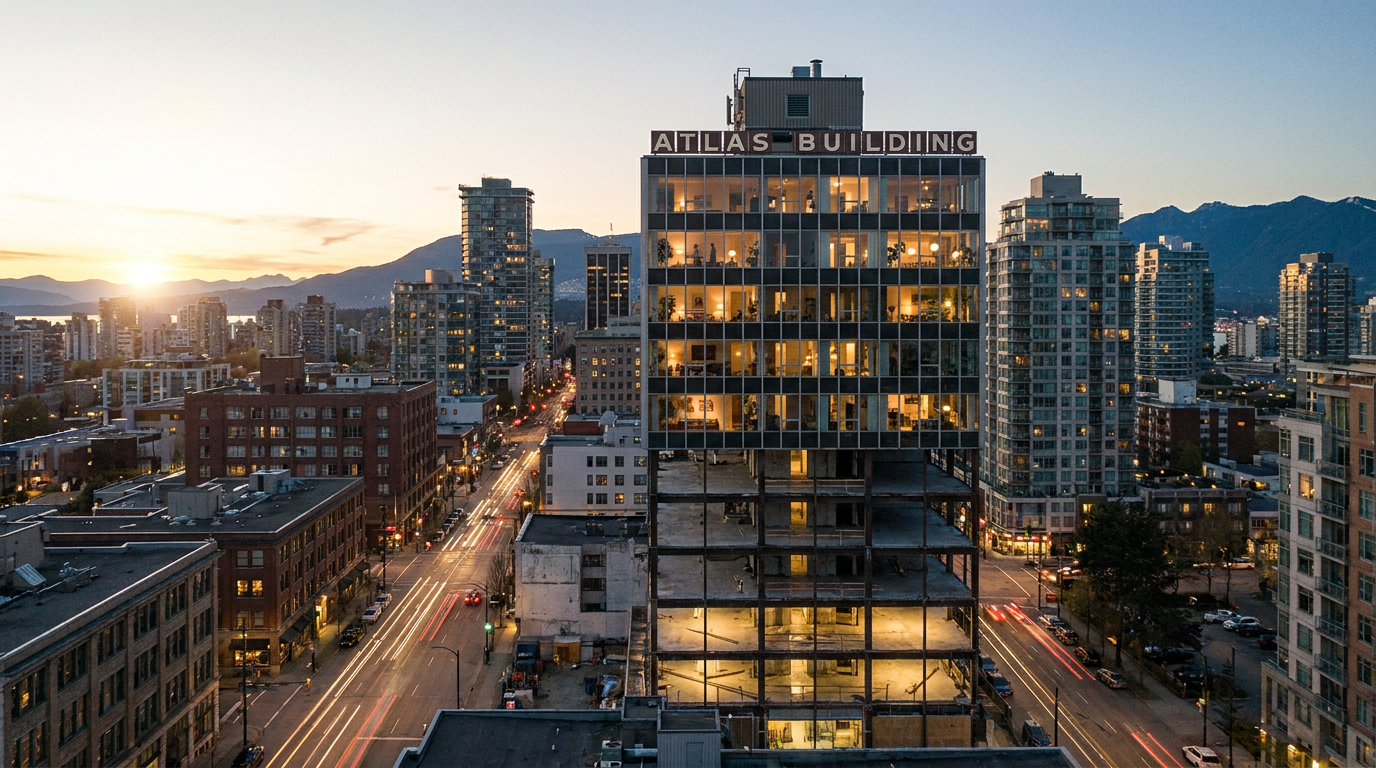
For decades, the American downtown was defined by a rigid rhythm: millions of workers flowing into concrete and glass towers at dawn, only to abandon them to the shadows by dusk. The pandemic shattered that rhythm, leaving behind a landscape of structurally sound but economically obsolete office buildings. Now, in 2026, the real estate market has decisively shifted from waiting for a return-to-office miracle to executing a massive structural pivot. The empty towers are being gutted, re-piped, and partitioned into apartments, marking a profound transformation in how urban centers function.
The scale of this transition has moved from a niche architectural experiment to a dominant force in commercial real estate. According to a March 2026 report by RentCafe and Yardi Matrix, there are currently 90,300 apartments in the office-to-residential conversion pipeline across the United States.[1]
This represents a 28 percent year-over-year increase from early 2025, and a staggering 290 percent surge since 2022, when the pipeline held just 23,100 units. Office buildings now account for 47 percent of all future adaptive reuse projects nationwide, easily surpassing hotels and industrial properties.[2][3][5][7]

The geographic distribution of these projects highlights where the pressure of empty offices meets the desperation for housing. New York City leads the nation by a massive margin, with 16,358 conversion units currently underway—accounting for nearly 62 percent of all adaptive reuse activity in the metropolitan area.[3][5]
Washington, D.C. follows with 8,479 units, while Chicago and Los Angeles each have over 4,300 units in development. In Chicago, historic structures like the nearly century-old Millinery Mart Building are being transformed into hundreds of apartments, proving that even legacy architecture can be adapted for modern living.[1][5][7]
But the trend is no longer confined to the largest coastal hubs. Secondary markets are experiencing explosive growth in adaptive reuse as local developers recognize the opportunity. Philadelphia and Denver both more than doubled their conversion pipelines in a single year, recording year-over-year jumps of 119 percent and 114 percent, respectively.[1][2]

Dallas, Atlanta, and Cleveland are also seeing thousands of units enter the planning stages. This widespread adoption indicates that the underlying economics driving conversions are systemic rather than localized, reflecting a nationwide recalibration of commercial real estate.[5]
The primary catalyst forcing developers' hands is a looming wall of financial distress in the commercial sector. Roughly one-third of all U.S. office loans—totaling more than $213 billion—are scheduled to mature by 2027.[3]
With national office vacancy rates hovering near 20 percent and physical occupancy in many buildings stuck between 50 and 55 percent, owners of underperforming properties are facing a brutal reality. They cannot refinance empty buildings at today's interest rates, leaving them with three stark choices: default, demolish, or adapt.[3][7]
This financial pressure is finally driving the acquisition cost of Class B and C office buildings down to levels where residential conversion makes mathematical sense. For years, the gap between the current value of an office building and its projected post-conversion value was too narrow to justify the massive capital expenditure required.[4]
But as property values for older, un-amenitized office stock plummet, developers are able to acquire these distressed assets at a steep discount, creating the financial runway needed to fund complex renovations.[2][3]
Despite the surging pipeline, the structural and architectural barriers to conversion remain formidable, and industry analysts caution against viewing adaptive reuse as a universal panacea. Commercial real estate advisory firm Hughes Marino notes that direct office-to-residential conversion faces severe physical obstacles.[6]
Commercial real estate advisory firm Hughes Marino notes that direct office-to-residential conversion faces severe physical obstacles.
Most modern office buildings were designed with floor plates that are 40 to 60 feet deep, maximizing interior cubicle space. However, residential building codes typically mandate that no bedroom can be more than 28 feet from a window line, creating a "dark core" problem that forces architects to carve massive lightwells through the center of a building.[4][6]

Beyond the floor plate, the mechanical retrofitting is equally daunting. Office buildings were engineered with centralized bathrooms and HVAC systems. Converting a single floor into a dozen apartments requires dense plumbing penetrations—known as wet stacks—to accommodate individual kitchens, bathrooms, and in-unit laundry, a process that requires extensive core drilling through reinforced concrete.[6]
The economic reality of these structural challenges means that conversions are inherently expensive, often costing nearly as much per square foot as ground-up construction. Furthermore, purpose-built residential buildings typically command a 10 to 20 percent premium in rent or sale price compared to converted office spaces.[6]
Because of these tight margins, developers are increasingly targeting newer office properties constructed between the 1990s and 2010s, which now account for 6.4 percent of future projects, up from just 2 percent of completed conversions.[2]
Because the free-market math is so precarious, government intervention has become the deciding factor in whether a conversion project breaks ground. The Brookings Institution highlights that the prospect of losing the economic and social value of prime downtown real estate has motivated local and state governments to step in with heavy subsidies.[4]
At the federal level, the proposed Revitalizing Downtowns and Main Streets Act aims to provide a tax credit subsidy to conversion projects in exchange for the inclusion of affordable housing. At the municipal level, cities are rewriting decades-old zoning codes to facilitate the transition.[4]
Los Angeles expanded its pioneering Citywide Adaptive Reuse Ordinance, which streamlines approvals and removes bureaucratic barriers that previously killed projects in the planning phase. In Buffalo, city officials are actively partnering with developers to use conversions as a dual-purpose tool: eliminating blighted space while injecting affordable housing into the core.[3][5]
While the momentum is undeniable, housing policy experts are careful to contextualize the macro impact of the 2026 conversion boom. Nationwide estimates suggest that the current wave of office conversions will ultimately deliver roughly 75,000 to 100,000 residential units.[1][6]

Against a national housing shortage that is estimated to range between four million and ten million units, adaptive reuse is a statistical drop in the bucket. It will not single-handedly solve the American housing crisis or meaningfully lower aggregate rent prices on a national scale.[6]
However, evaluating conversions solely by their total unit count misses their primary value: profound urban placemaking. The Brookings Institution's simulated outcomes for six major cities revealed that while conversions may not produce massive aggregate supply, they fundamentally alter downtown dynamics.[4]
In legacy cities like St. Louis, converting vacant offices could increase the size of the downtown housing market by over 50 percent. This transforms a sterile 9-to-5 commercial district into a vibrant, 24-hour neighborhood with the foot traffic necessary to support local retail and restaurants.[4]
As 2026 progresses, the evidence is clear that the era of the monolithic central business district is ending. The 90,300 units currently in the pipeline represent more than just a real estate pivot; they represent a permanent reimagining of the urban skyline.[1][3]
By forcing obsolete commercial infrastructure to serve urgent human needs, cities are slowly curing the architectural hangover of the pandemic and proving that the most sustainable building is often the one that already exists.
How we got here
1999
Los Angeles adopts its pioneering Adaptive Reuse Ordinance, paving the way for downtown conversions.
2022
The national office-to-apartment pipeline sits at just 23,100 units as the pandemic's long-term impact on remote work becomes clear.
Early 2025
National office vacancy rates hit 20 percent, triggering a wave of commercial distress and plummeting property values.
March 2026
RentCafe reports a record 90,300 conversion units in development, cementing adaptive reuse as a dominant real estate trend.
Viewpoints in depth
Urban Redevelopment Advocates
Argue that conversions are essential for revitalizing hollowed-out downtowns and adapting to the post-pandemic reality of remote work.
This camp, heavily represented by city planners and adaptive reuse architects, views the $213 billion in distressed office debt not as a crisis, but as a generational opportunity. They argue that single-use central business districts were always a flawed urban design. By subsidizing the conversion of these towers, cities can simultaneously solve commercial blight and create vibrant, 24/7 neighborhoods with built-in transit access.
Commercial Real Estate Skeptics
Emphasize the severe structural and economic barriers, noting that demolition often makes more financial sense than residential conversion.
Industry analysts and commercial brokers point to the unforgiving math of adaptive reuse. They highlight that 40-to-60 foot deep floor plates and centralized HVAC systems make residential retrofitting prohibitively expensive. This camp argues that without massive government subsidies, the 10 to 20 percent premium that purpose-built apartments command will always make ground-up construction or industrial reuse a safer bet for institutional capital.
Housing Policy Analysts
Focus on the necessity of government subsidies and zoning reforms to ensure these projects include affordable units.
Researchers and housing advocates acknowledge the placemaking benefits of conversions but warn against subsidizing luxury apartments for high-income earners. They argue that if municipalities are going to offer tax credits and waive zoning restrictions to bail out distressed commercial landlords, those developers must be mandated to set aside 20 to 30 percent of the new units for low- and middle-income residents, ensuring the revitalized downtowns are economically diverse.
What we don't know
- How many of the 90,300 planned units will actually reach completion given the volatile cost of construction materials and labor.
- Whether federal tax incentives like the Revitalizing Downtowns and Main Streets Act will pass Congress to subsidize future projects.
- The long-term impact of these conversions on municipal tax revenues, as commercial properties historically pay higher property taxes than residential buildings.
Key terms
- Adaptive Reuse
- The process of repurposing an existing building for a use other than what it was originally designed or built for.
- Floor Plate
- The total leasable square footage of a single floor in a commercial building, which dictates how far interior spaces are from natural light.
- Wet Stack
- The vertical alignment of plumbing pipes in a multi-story building, which must be heavily modified when converting open offices into individual apartments.
- Class B and C Office Space
- Older or lower-tier commercial buildings that lack modern amenities, making them the most vulnerable to high vacancy rates and prime candidates for conversion.
Frequently asked
Will office conversions solve the housing shortage?
No. While conversions will provide roughly 90,000 new units, the national housing shortage is estimated to be between four and ten million units. However, they are highly effective at revitalizing specific downtown neighborhoods.
Why is it so expensive to convert an office building?
Offices were built with deep floor plates and centralized plumbing. Adding individual bathrooms, kitchens, and ensuring every bedroom has a window requires massive structural and mechanical retrofitting, including core drilling through concrete.
Which cities are doing this the most?
New York City leads the nation by a wide margin, followed by Washington D.C., Chicago, and Los Angeles. Secondary markets like Philadelphia and Denver are also seeing rapid growth.
Sources
Source coverage
7 outlets
3 viewpoints surfaced






[1]RentCafe / Yardi MatrixUrban Redevelopment Advocates
2026 Adaptive Reuse Report: Office-to-Apartment Conversions Hit 90,300 Units
Read on RentCafe / Yardi Matrix →[2]The Real DealHousing Policy Analysts
Office-to-residential conversions hit record high
Read on The Real Deal →[3]GlobeStUrban Redevelopment Advocates
Office-to-Apartment Pipeline Hits Record 90,300 Units
Read on GlobeSt →[4]Brookings InstitutionHousing Policy Analysts
Simulated outcomes of office-to-residential conversion in six cities
Read on Brookings Institution →[5]Construction DiveUrban Redevelopment Advocates
Office-to-apartment conversions jump 28% in 2026
Read on Construction Dive →[6]Hughes MarinoCommercial Real Estate Skeptics
The Office-to-Residential Shift: Demolition, Not Conversion
Read on Hughes Marino →[7]Scotsman GuideUrban Redevelopment Advocates
Office-to-residential conversions gain traction
Read on Scotsman Guide →
Every angle. Every day.
Get real estate stories with full source coverage and perspective breakdowns delivered to your inbox.