
The Science of Allulose: How a 'Rare Sugar' is Rewriting the Rules of Baking
Allulose offers the browning, moisture, and taste of traditional sugar with only a fraction of the calories. By bypassing human metabolism, this rare carbohydrate is transforming sugar-free desserts without spiking blood glucose.
By Factlen Editorial Team
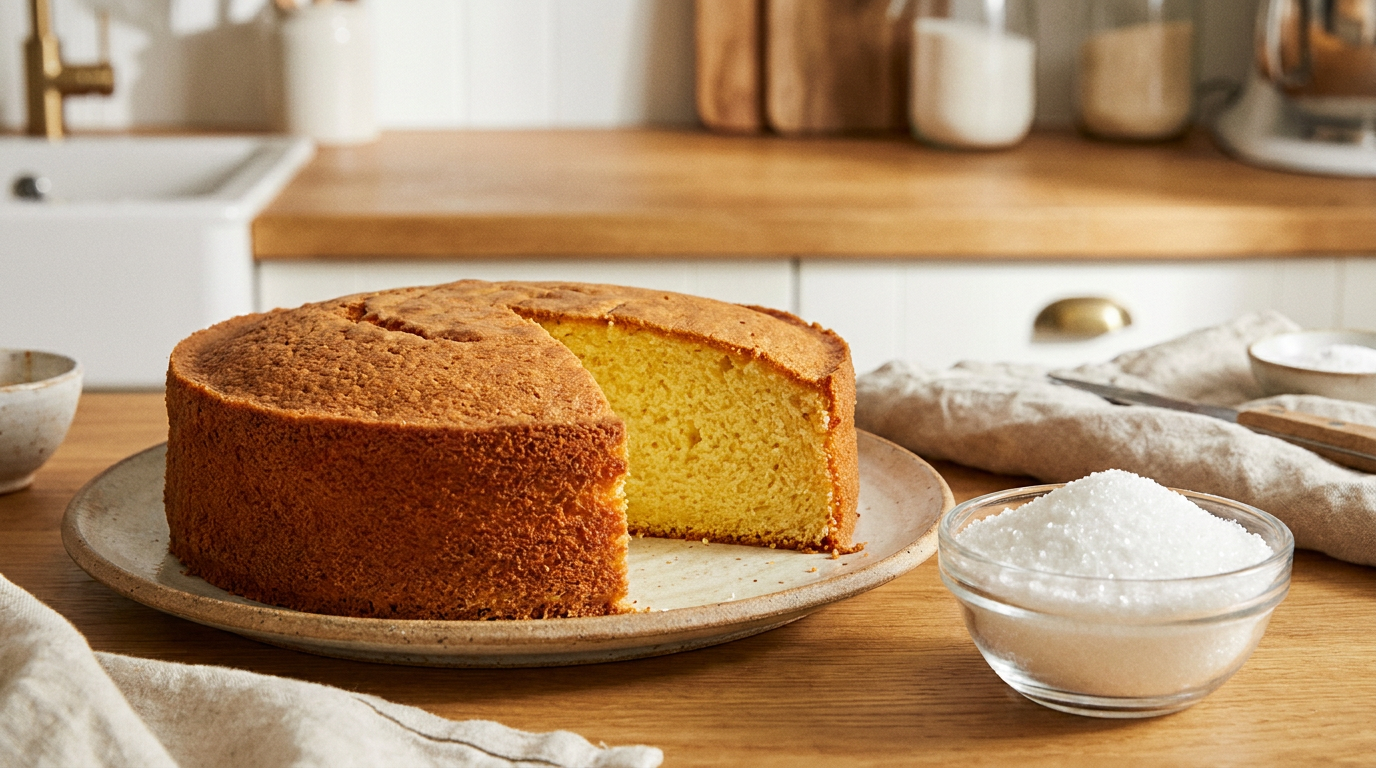
- Food Scientists & Bakers
- Value allulose for its functional properties, specifically its ability to brown, retain moisture, and depress freezing points like real sugar.
- Metabolic Health Advocates
- Focus on the zero glycemic index and the potential for allulose to blunt post-meal glucose spikes for diabetics.
- Regulatory Skeptics
- Emphasize the need for moderation due to potential gastrointestinal distress and point out the lack of approval in the EU and UK.
What's not represented
- · Corn farmers supplying the raw fructose
- · Traditional sugar cane industry
Why this matters
For decades, reducing sugar meant sacrificing the texture, browning, and mouthfeel of baked goods while risking digestive upset or chemical aftertastes. Allulose offers a biologically elegant solution that allows diabetics and health-conscious consumers to enjoy real desserts without the metabolic consequences.
Key points
- Allulose is a naturally occurring rare sugar that provides the taste and baking properties of sucrose with only 10% of the calories.
- Because the human body cannot metabolize it, allulose does not raise blood glucose or insulin levels.
- Unlike stevia or erythritol, allulose undergoes the Maillard reaction, allowing baked goods to brown and caramelize.
- The FDA allows manufacturers to exclude allulose from the 'Added Sugars' line on nutrition labels.
The holy grail of modern food science has long been a sweetener that behaves exactly like sugar in the oven but acts like water in the bloodstream. For decades, health-conscious bakers and diabetic consumers have settled for compromises. High-intensity extracts like stevia often bring a bitter, licorice-like aftertaste. Sugar alcohols like erythritol leave a distinct, minty cooling sensation on the palate and stubbornly refuse to dissolve into smooth caramels or syrups.[2]
But a relatively obscure carbohydrate known as allulose is rapidly rewriting the rules of sugar-free cooking. Chemically classified as a "rare sugar," allulose—or D-psicose—is a naturally occurring monosaccharide found in trace amounts in foods like figs, raisins, maple syrup, and wheat. While it has existed in nature for millennia, it is only in recent years that enzymatic breakthroughs have allowed it to be produced at commercial scale, transforming it from a botanical curiosity into a disruptive culinary ingredient.[3][4]
The secret to allulose's magic lies in its molecular architecture. It shares the exact same chemical formula as fructose (C6H12O6), but its atoms are arranged in a slightly different configuration, making it an epimer. This microscopic structural shift makes all the difference in human digestion. When you consume traditional sucrose, the body rapidly breaks it down into glucose and fructose, spiking blood sugar and triggering a cascade of insulin to shuttle that energy into cells.[3]
Allulose bypasses this metabolic machinery almost entirely. When ingested, roughly 70% to 90% of the rare sugar is rapidly absorbed through the small intestine and enters the bloodstream. However, because the human body lacks the specific enzymes required to metabolize this unique molecular shape, it cannot be converted into usable energy. Instead, it circulates briefly before being excreted through the kidneys, essentially unchanged.[5]

The result is a sweetener that delivers roughly 70% of the sweetness of table sugar but contributes a mere 0.4 calories per gram—one-tenth the caloric load of sucrose. Because it is not metabolized for energy, allulose boasts a glycemic index of zero. Multiple clinical trials have demonstrated that it does not raise blood glucose or insulin levels, making it a highly attractive option for individuals managing diabetes or adhering to ketogenic diets.[1][4]
In fact, some emerging research suggests its metabolic benefits may go beyond simply being a neutral passenger. Studies published in peer-reviewed nutrition journals indicate that consuming allulose alongside carbohydrate-rich meals may actually blunt the postprandial glucose spike. The mechanism is still being studied, but researchers hypothesize that allulose may compete with other sugars for absorption pathways in the gut, effectively slowing down the rate at which glucose enters the bloodstream.[3][5]
But where allulose truly separates itself from the crowded field of alternative sweeteners is in the kitchen. Unlike high-intensity extracts or sugar alcohols, allulose is a genuine carbohydrate. This means it undergoes the Maillard reaction—the complex chemical cascade between amino acids and reducing sugars that gives baked goods their golden-brown crusts, toasted bread its savory depth, and caramel its rich color.[2][3]

But where allulose truly separates itself from the crowded field of alternative sweeteners is in the kitchen.
For pastry chefs and food manufacturers, this functional mimicry is revolutionary. Allulose provides the physical bulk and moisture retention that cakes and muffins require to stay soft and tender over time. It melts smoothly into buttercreams and frostings without the gritty, recrystallized texture that plagues erythritol-based desserts. In traditional Indian sweets like gulab jamun or halwa, it maintains a smooth, syrupy consistency even after cooling.[2]
The rare sugar also solves one of the most persistent challenges in the sugar-free dessert space: frozen treats. Traditional sugar lowers the freezing point of water, which is what keeps premium ice cream soft and scoopable straight from the freezer. Because most artificial sweeteners lack this physical property, sugar-free ice creams often freeze into impenetrable blocks of ice. Allulose, however, depresses the freezing point just like sucrose, yielding a creamy, smooth texture without icy crystallization.[2]

Recognizing its unique physiological profile, the U.S. Food and Drug Administration (FDA) issued a landmark draft guidance in 2019 that fundamentally changed how allulose is treated on food packaging. While it must still be listed in the ingredients, the FDA allowed manufacturers to exclude allulose from the "Total Sugars" and "Added Sugars" lines on the Nutrition Facts panel. This regulatory green light opened the floodgates for food brands to formulate low-sugar products that appeal to label-conscious consumers.[1]
To meet this surging demand, the ingredient industry had to solve the supply problem. Because extracting trace amounts of allulose from figs is economically impossible, companies developed a process to convert fructose—typically derived from corn—into allulose using a specific, naturally occurring enzyme called D-psicose 3-epimerase. The FDA considers this enzymatic conversion a natural process, allowing the final product to maintain a clean-label appeal.[3]
Despite its impressive resume, allulose is not without its caveats. The primary limitation is digestive tolerance. While the majority of allulose is absorbed in the small intestine and excreted in urine, the fraction that reaches the large intestine can be fermented by gut bacteria. In moderate doses, this is harmless, but consuming large quantities in a single sitting can lead to gastrointestinal discomfort, including bloating and gas.[4]
Furthermore, the global regulatory landscape remains fragmented. While allulose enjoys "Generally Recognized As Safe" (GRAS) status in the United States and is approved for use in Japan, Mexico, South Korea, and Singapore, it has not yet been authorized for sale in the European Union or the United Kingdom. European regulators are currently evaluating its safety and metabolic profile under the region's strict novel food frameworks.[4]

For home bakers eager to experiment, working with allulose requires a few technical adjustments. Because it is only 70% as sweet as table sugar, recipes typically require a 1-to-1.3 substitution ratio to achieve the same sweetness, though many bakers blend it with a touch of monk fruit extract to bridge the gap. More importantly, because allulose browns significantly faster than sucrose, oven temperatures must generally be reduced by 10 to 20 degrees Celsius to prevent cakes and cookies from burning before they are fully baked.[2]
As the food industry continues to grapple with the public health crisis of metabolic disease and sugar overconsumption, rare sugars represent a promising frontier. By offering the uncompromising taste and functional chemistry of traditional sugar without the metabolic tax, allulose is proving that consumers might not have to choose between their health and their dessert.[6]
How we got here
1940s
Allulose is first identified as a naturally occurring rare sugar in wheat.
1990s
Researchers in Japan develop an enzymatic process to produce allulose at commercial scale.
2014
The FDA grants allulose 'Generally Recognized As Safe' (GRAS) status.
2019
The FDA issues guidance allowing allulose to be excluded from 'Total Sugars' and 'Added Sugars' on nutrition labels.
Viewpoints in depth
Food Scientists & Bakers
Value allulose for its functional properties, specifically its ability to brown, retain moisture, and depress freezing points like real sugar.
For culinary professionals, the value of a sweetener goes far beyond its taste. Sugar plays a structural role in baking—it holds moisture, provides bulk, and creates the chemical reactions necessary for browning and caramelization. Food scientists champion allulose because it is the only low-calorie sweetener that successfully mimics these physical properties. By undergoing the Maillard reaction and depressing the freezing point of water, allulose allows manufacturers to create sugar-free ice creams that are actually scoopable and cakes that don't dry out after a day.
Metabolic Health Advocates
Focus on the zero glycemic index and the potential for allulose to blunt post-meal glucose spikes for diabetics.
Nutritionists and metabolic researchers view allulose as a critical tool in combating the global rise of type 2 diabetes and obesity. Because the body's enzymes cannot break down the D-psicose molecule, it passes through the system without triggering an insulin response. Furthermore, advocates point to emerging clinical trials suggesting that allulose may actively compete with other carbohydrates during digestion, effectively blunting the postprandial glucose spike when consumed alongside a meal.
Regulatory Skeptics
Emphasize the need for moderation due to potential gastrointestinal distress and point out the lack of approval in the EU and UK.
While the FDA has embraced allulose, regulatory bodies in the European Union and the United Kingdom remain cautious, classifying it as a novel food that requires further long-term safety data before approval. Skeptics highlight that because a portion of allulose reaches the large intestine unabsorbed, it ferments and can cause significant gastrointestinal distress—including bloating, gas, and diarrhea—if consumed in large quantities. They argue that consumers should treat it as an occasional substitute rather than a free pass to overeat sweet foods.
What we don't know
- The exact long-term effects of daily, high-volume allulose consumption on the human gut microbiome.
- When or if the European Union and the United Kingdom will officially approve allulose for commercial food use.
Key terms
- Rare Sugar
- A monosaccharide that exists in nature but only in very small quantities, such as allulose or tagatose.
- Epimer
- A molecule that has the exact same chemical formula as another but differs in the spatial arrangement of a single atom, changing how the body interacts with it.
- Maillard Reaction
- A chemical reaction between amino acids and reducing sugars that gives browned food its distinctive flavor and color.
- Glycemic Index
- A system that ranks foods on a scale from 1 to 100 based on their effect on blood-sugar levels.
Frequently asked
Is allulose an artificial sweetener?
No. Allulose is a naturally occurring 'rare sugar' found in small amounts in foods like figs and raisins, though commercial versions are produced enzymatically from corn fructose.
Does allulose raise blood sugar?
No. Because the human body cannot metabolize allulose for energy, it has a glycemic index of zero and does not spike blood glucose or insulin levels.
Can I use allulose exactly like regular sugar in baking?
Mostly, but with slight adjustments. It is only 70% as sweet, so you may need slightly more, and it browns faster, meaning you should lower your oven temperature by 10 to 20 degrees Celsius.
Does allulose cause stomach upset?
In moderate amounts, it is generally well-tolerated. However, consuming large quantities in a single sitting can lead to bloating and gas as the unabsorbed sugar ferments in the large intestine.
Sources
Source coverage
6 outlets
3 viewpoints surfaced





[1]Allulose.orgRegulatory Skeptics
FDA Exempts Allulose from Added Sugar Labeling Requirements
Read on Allulose.org →[2]Beyond The SugarFood Scientists & Bakers
Quick Answer: How to Use Allulose in Cooking & Baking
Read on Beyond The Sugar →[3]Smarter TreatsFood Scientists & Bakers
The Complete Guide to the Rare Sugar Revolution
Read on Smarter Treats →[4]ZOERegulatory Skeptics
What is allulose? Benefits, side effects, and more
Read on ZOE →[5]Regulations.govMetabolic Health Advocates
Allulose Metabolism and Health Benefits
Read on Regulations.gov →[6]Factlen Editorial TeamMetabolic Health Advocates
Synthesis by Factlen editorial team
Read on Factlen Editorial Team →
Every angle. Every day.
Get food drink stories with full source coverage and perspective breakdowns delivered to your inbox.