
House Passes Faster Labor Contracts Act, Mandating Binding Arbitration for First Union Contracts
The U.S. House of Representatives has passed bipartisan legislation that would impose strict deadlines and binding arbitration on initial collective bargaining agreements. The bill aims to end years-long negotiation delays but faces fierce opposition from business groups who warn of government-imposed contracts.
By Factlen Editorial Team
- Organized Labor & Pro-Worker Advocates
- Argues the bill closes a loophole that allows companies to stall indefinitely.
- Business & Employer Groups
- Warns that binding arbitration forces unworkable terms on private companies.
- Legal & Policy Analysts
- Notes the bill fundamentally shifts the balance of power in union organizing.
What's not represented
- · Non-unionized workers who might be affected by industry-wide wage shifts
- · Federal arbitrators who would be tasked with drafting the contracts
Why this matters
If enacted, the legislation would fundamentally alter U.S. labor law by removing an employer's ability to indefinitely stall first-contract negotiations. It shifts the balance of power to newly formed unions, guaranteeing a contract within months rather than years, but forces businesses to accept terms dictated by federal arbitrators.
Key points
- The House passed the Faster Labor Contracts Act 230-193.
- The bill imposes a strict 120-day timeline for first-contract negotiations.
- Failing to reach an agreement triggers binding arbitration.
- 20 Republicans joined Democrats to force the vote via a discharge petition.
- The bill heads to the Senate where its future is uncertain.
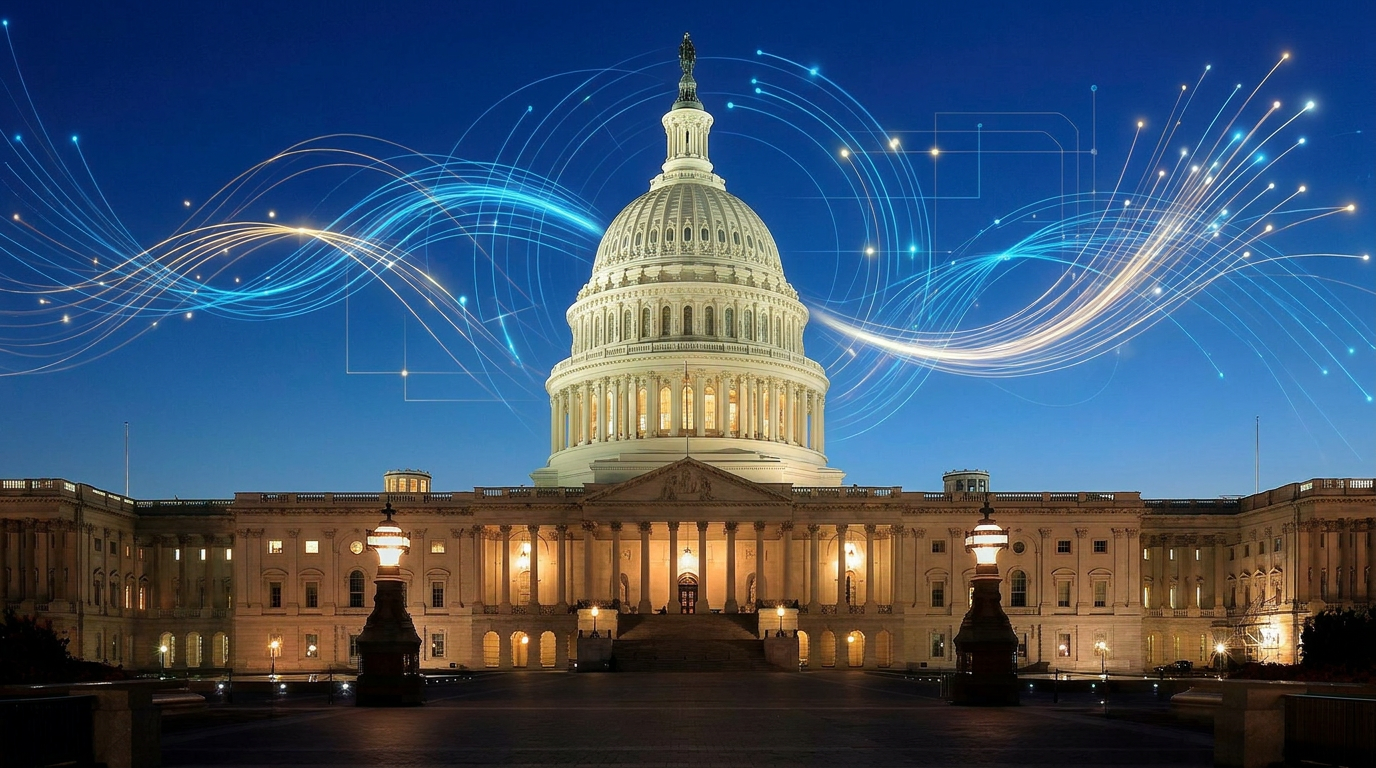
The U.S. House of Representatives has passed a landmark labor bill that would fundamentally rewrite the rules of collective bargaining in the private sector. The Faster Labor Contracts Act (FLCA), passed on June 9 by a vote of 230 to 193, aims to eliminate the years-long delays that often plague newly formed unions attempting to secure their first contract. By imposing a strict timeline that culminates in binding arbitration, the legislation removes an employer's ability to indefinitely stall negotiations. The vote represents a significant legislative maneuver, as proponents utilized a discharge petition to bypass Republican House leadership and force the bill to the floor, drawing support from all voting Democrats and 20 Republicans.[1][2][10]
Under the existing National Labor Relations Act (NLRA), employers and newly certified unions are required to bargain in "good faith," but there is no statutory deadline for reaching an agreement. Neither side is compelled to make concessions or accept specific proposals. As a result, first-contract negotiations frequently drag on for extended periods. Recent data indicates that it takes an average of 458 to 465 days to reach an initial collective bargaining agreement. In many cases, employers use this open-ended framework to run out the clock, hoping that worker enthusiasm will wane or that the union will eventually be decertified before a contract is ever signed.[4][6][7]
The FLCA would replace this open-ended system with a rigid, federally mandated timeline. Under the proposed law, an employer must commence bargaining within 10 days of receiving a written request from a newly certified union. If the two sides cannot reach an agreement within 90 days of that first session, either party can request intervention from the Federal Mediation and Conciliation Service (FMCS). This triggers a 30-day mandatory mediation period. If mediation fails to produce a contract, the dispute is automatically referred to a three-person arbitration panel. This panel is then empowered to draft and impose a comprehensive, binding two-year contract covering wages, benefits, and working conditions.[3][4][5]

Labor organizations have hailed the bill's passage as a massive victory for workers' rights. The International Brotherhood of Teamsters and the International Brotherhood of Electrical Workers (IBEW) aggressively lobbied for the legislation, arguing that the current system contains a "union-busting loophole." Union leaders point out that the right to organize is meaningless if companies can simply refuse to agree to a contract. By guaranteeing a resolution within roughly five months, labor advocates believe the FLCA will ensure that workers who take the risk of voting for a union actually experience the benefits of collective bargaining, rather than being trapped in endless legal limbo.[6][7][10]
Labor organizations have hailed the bill's passage as a massive victory for workers' rights.
Conversely, the business community has mounted fierce opposition to the FLCA, warning that it constitutes unprecedented government overreach. A coalition of nearly 400 business organizations, led by the U.S. Chamber of Commerce and the National Federation of Independent Business (NFIB), argues that the bill strips employers of their fundamental right to voluntarily agree to contract terms. Critics contend that government-appointed arbitrators lack the specialized industry knowledge required to dictate complex operational rules, supply chain logistics, and wage structures. For industries with tight margins, such as retail or freight, business advocates warn that an unworkable, government-imposed contract could render operations unprofitable and force companies to shut down entirely rather than operate under mandated terms.[1][8][9]

Legal analysts note that the FLCA would drastically alter the strategic leverage in labor disputes. Currently, the difficulty of securing a first contract serves as a natural deterrent to union organizing; workers understand that a successful union vote is only the beginning of a grueling battle. Under the FLCA, organizers could promise workers a guaranteed contract within 144 days. Furthermore, because initial contracts often set the baseline for all future negotiations, the terms imposed by an arbitration panel could lock companies into permanent structural changes that are difficult to roll back in subsequent bargaining rounds.[3][5][10]

The passage of the FLCA highlights a growing political realignment regarding labor issues. While traditional Republican orthodoxy has aligned closely with business interests and opposed mandatory arbitration, the 20 GOP votes in favor of the House bill reflect a rising populist, pro-worker faction within the party. This faction is increasingly willing to break with corporate lobbying groups to support private-sector union members. The successful use of a discharge petition—which required 218 signatures to bypass Speaker Mike Johnson's control of the floor schedule—demonstrates the potency of this bipartisan coalition when mobilized by major labor organizations.[1][2][10]
The legislation now heads to the U.S. Senate as S. 844, where its path to enactment remains highly uncertain. To overcome a legislative filibuster, the bill will need 60 votes, requiring significant Republican support. While a handful of populist Republican senators, including Josh Hawley, Roger Marshall, and Bernie Moreno, have signaled support for the measure, it is unclear if proponents can assemble a filibuster-proof majority. Furthermore, even if the Senate passes the bill, it remains an open question whether President Donald Trump would sign a measure that business groups argue contradicts his administration's stated goals of reducing federal bureaucracy and regulatory burdens.[2][4][10]
How we got here
1935
The National Labor Relations Act is passed, establishing the right to organize but setting no deadlines for contract negotiations.
May 20, 2026
A discharge petition for the Faster Labor Contracts Act reaches 218 signatures, bypassing House committee chairs.
June 9, 2026
The U.S. House of Representatives passes the FLCA by a vote of 230 to 193.
Viewpoints in depth
Organized Labor
Unions argue the bill closes a loophole that allows companies to stall indefinitely.
Labor advocates contend that the current system incentivizes bad-faith bargaining, allowing employers to run out the clock until workers give up. By imposing a strict timeline, they argue the FLCA ensures that a democratic vote to unionize translates into a tangible contract, rather than years of legal delays and frustration.
Business & Employer Groups
Employers warn that binding arbitration forces unworkable terms on private companies.
Business organizations argue that the FLCA violates the fundamental principle of voluntary agreement. They warn that third-party arbitrators lack the industry-specific knowledge needed to set wages and operational rules, and that imposing a two-year contract could bankrupt small businesses or force companies to close locations.
Legal & Policy Analysts
Analysts note the bill fundamentally shifts the balance of power in union organizing.
Labor law experts emphasize that the FLCA would drastically change the calculus of union drives. Knowing that a contract is guaranteed within five months would likely spur a wave of new organizing efforts, while employers would lose their primary leverage—the ability to withstand a strike or stall negotiations until the union loses momentum.
What we don't know
- Whether the Senate will take up the companion bill (S. 844) or if it can secure the 60 votes needed to overcome a filibuster.
- Whether President Trump would sign or veto the legislation if it reaches his desk.
- How federal arbitration panels would practically determine wages and benefits for complex, highly specialized industries.
Key terms
- Binding Arbitration
- A process where an independent third party imposes a legally enforceable contract on both sides.
- Discharge Petition
- A parliamentary procedure allowing a majority of House members to bring a bill to the floor without the Speaker's approval.
- First Contract
- The initial collective bargaining agreement negotiated after a workplace votes to unionize.
- National Labor Relations Act (NLRA)
- The foundational 1935 U.S. labor law that guarantees the right of private sector employees to organize into trade unions and engage in collective bargaining.
Frequently asked
What happens if an employer refuses to agree to a contract?
Under the FLCA, a three-person arbitration panel would write and impose a binding two-year contract.
How long does it currently take to get a first contract?
On average, it takes over 450 days, and many newly formed unions never reach an agreement.
Will this become law?
It must pass the Senate and be signed by the President, which remains uncertain despite bipartisan House support.
Sources
Source coverage
10 outlets
3 viewpoints surfaced









[1]FreightWavesBusiness & Employer Groups
The Faster Labor Contracts Act passed the House
Read on FreightWaves →[2]People's WorldOrganized Labor & Pro-Worker Advocates
Defying GOP leaders, House OKs pro-worker Faster Labor Contracts Act
Read on People's World →[3]Jackson LewisLegal & Policy Analysts
Top Five Labor Law Developments for May 2026
Read on Jackson Lewis →[4]Ogletree DeakinsLegal & Policy Analysts
U.S. House Passes Bill That Aims to Speed Up Collective Bargaining
Read on Ogletree Deakins →[5]Franczek P.C.Legal & Policy Analysts
Congress Advances “Faster Labor Contracts Act,” Imposing Strict Timelines and Binding Arbitration for First Union Agreements
Read on Franczek P.C. →[6]IBEWOrganized Labor & Pro-Worker Advocates
House Passes Bill to Shrink First-Contract Delays
Read on IBEW →[7]TeamstersOrganized Labor & Pro-Worker Advocates
Take Action - Faster Labor Contracts Act
Read on Teamsters →[8]U.S. Chamber of CommerceBusiness & Employer Groups
Faster Labor Contracts Act: What Workers Must Know
Read on U.S. Chamber of Commerce →[9]NFIBBusiness & Employer Groups
NFIB Key Votes Overreaching Labor Contracts Bill
Read on NFIB →[10]Factlen Editorial TeamLegal & Policy Analysts
Synthesis by Factlen editorial team
Read on Factlen Editorial Team →



Every angle. Every day.
Get news politics stories with full source coverage and perspective breakdowns delivered to your inbox.