
How AI Tutors Are Democratizing the 'Two Sigma' Learning Effect
Recent randomized controlled trials reveal that pedagogically fine-tuned AI tutors are delivering massive learning gains, offering a scalable solution to education's oldest problem.
By Factlen Editorial Team

- AI Scale Optimists
- Researchers and economists focused on the unprecedented ability to deliver high-quality instruction at a massive scale.
- Hybrid Learning Advocates
- Educators and policymakers who view AI as a powerful supplement that must be paired with human emotional intelligence.
- Cautious Synthesizers
- Analysts weighing the massive standard deviation gains against the ongoing need for human oversight and empathy.
What's not represented
- · Students without broadband access
- · Special education professionals
Why this matters
For decades, one-on-one tutoring was the gold standard of education but remained economically out of reach for most families. The proven efficacy of $48-a-year AI tutors means expert-level, personalized academic support is finally becoming accessible to students across all socioeconomic backgrounds.
Key points
- A 2025 Nature RCT found AI tutors deliver learning gains between 0.73 and 1.3 standard deviations.
- Students using AI tutors achieved mastery 11 minutes faster than those in traditional classrooms.
- Modern AI tutors use the Socratic method to guide critical thinking rather than simply providing answers.
- At roughly $48 per student annually, AI tutoring is highly cost-effective compared to human tutors.
- Experts advocate for a hybrid model where AI handles repetitive practice and humans provide emotional mentorship.
In 1984, educational psychologist Benjamin Bloom identified what became known in academic circles as the "Two Sigma Problem." He discovered that students who received dedicated, one-on-one tutoring performed two standard deviations better than those learning in traditional classroom environments—effectively outperforming 98% of their peers. For four decades, this finding has haunted educators and policymakers alike. The absolute gold standard of learning was known and quantified, but it was economically and logistically impossible to provide a dedicated human tutor for every single student on Earth. The result was a persistent achievement gap dictated largely by who could afford private instruction.[7]
Today, that mathematical impossibility is rapidly unraveling. The dramatic maturation of generative artificial intelligence throughout 2025 and 2026 has transformed the landscape of online learning, shifting AI from a novelty to a highly effective pedagogical engine. We are no longer talking about simple, rules-based chatbots that merely regurgitate encyclopedia entries or offer generic encouragement; we are looking at pedagogically fine-tuned systems capable of guiding students through complex, multi-step problem-solving. This shift represents one of the most significant technological interventions in the history of modern education, promising to scale individualized instruction to millions of learners simultaneously.[5]
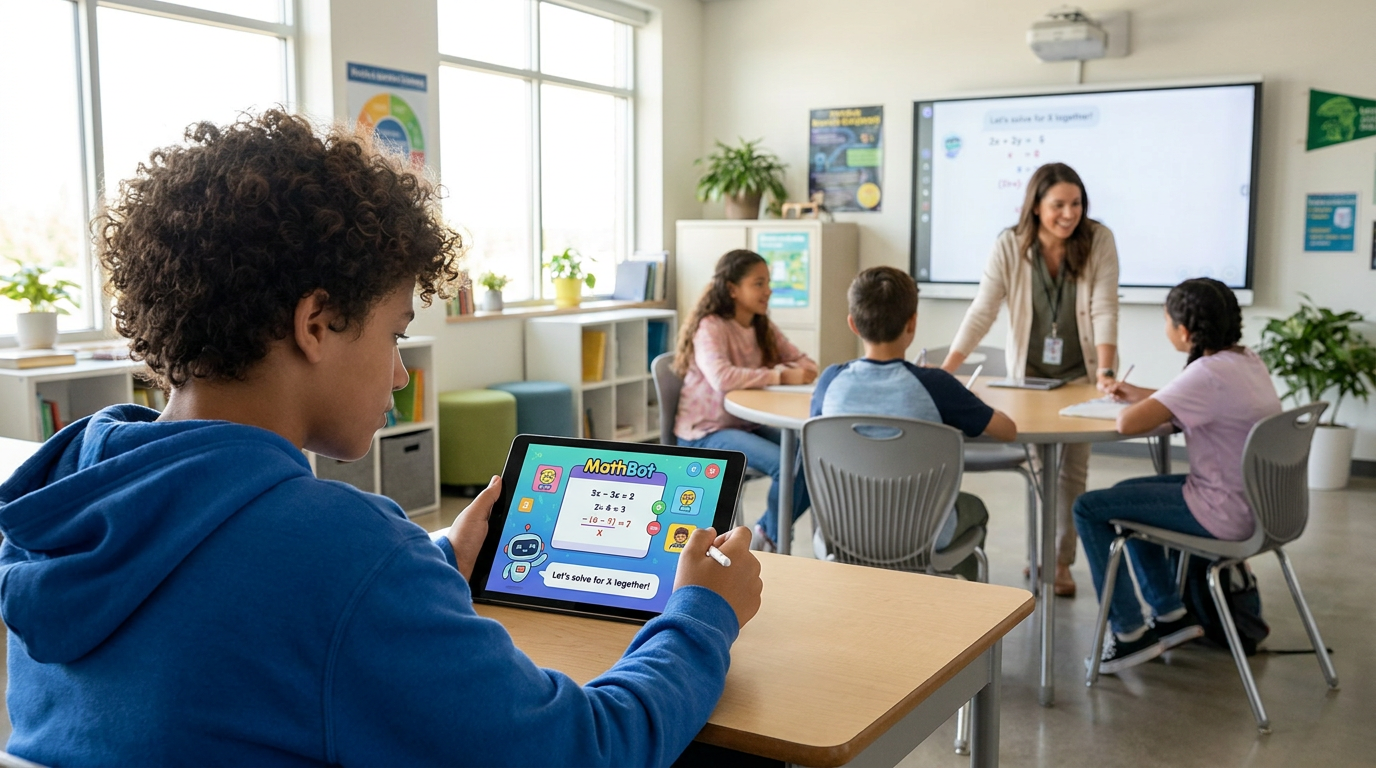
The critical distinction between a basic "answer bot" and a genuine "AI tutor" is the core mechanism driving this revolution. Early iterations of educational technology often short-circuited the learning process by simply providing the correct answer when a student got stuck, leading to passive consumption rather than active retention. Modern systems, such as Khan Academy's Khanmigo, are explicitly designed to withhold the final answer. Instead, they employ the Socratic method, asking probing questions, clarifying underlying concepts, and forcing the learner to articulate their own reasoning before moving forward.[3]
This Socratic approach requires immense computational nuance and context awareness. The AI must understand not just the subject matter at hand, but the specific, underlying misconception the student is harboring based on their incorrect input. For example, when a student miscalculates an algebraic equation, the AI tutor identifies the exact step where the logic failed and prompts the student to re-evaluate that specific operation, perfectly mirroring the targeted intervention of a skilled human teacher. It transforms a moment of failure into a structured opportunity for critical thinking.[7]
The empirical evidence supporting these generative systems has moved swiftly from theoretical optimism to rigorous, peer-reviewed validation. A landmark 2025 randomized controlled trial published in Nature Scientific Reports evaluated the efficacy of AI tutoring against traditional active-learning classrooms in a university setting. The results were striking and definitive: students using the AI tutor demonstrated massive learning gains, with an effect size measuring between 0.73 and 1.3 standard deviations over the control group. This data provided the first concrete proof that artificial intelligence could genuinely approach the legendary two-sigma benchmark.[1]
In the realm of educational research, an effect size of 0.8 is generally considered exceptionally large, making the Nature findings a watershed moment for the industry. But the study revealed another critical advantage that goes beyond raw test scores: extreme efficiency. Students utilizing the AI tutor achieved these superior learning outcomes in a median of 49 minutes, compared to the 60 minutes required by the traditional classroom group. They learned significantly more material, achieved deeper comprehension, and did so in significantly less time, highlighting the power of personalized pacing.[1]

Similar, highly encouraging gains are being documented across different platforms, age groups, and demographics. A joint study conducted by Stanford University and the National Bureau of Economic Research (NBER) examined the real-world deployment of Khanmigo in middle school mathematics. The researchers found that students actively using the AI tutor showed a 0.2 standard deviation improvement over control groups. While this specific implementation falls short of Bloom's original two-sigma benchmark, it represents a highly statistically significant gain that is achievable at a massive, global scale without requiring new physical infrastructure.[4]
Similar, highly encouraging gains are being documented across different platforms, age groups, and demographics.
Google's recent research into its own pedagogically fine-tuned model, known as LearnLM, further underscores the technology's capability to foster deep, transferable comprehension. In extensive trials, supervised LearnLM proved exceptionally adept at helping students resolve complex misconceptions, achieving a 95.4% success rate in guiding students to the correct methodology. More importantly, students guided by the AI were 5.5 percentage points more likely to successfully solve novel, unseen problems on subsequent topics compared to those who only received traditional human tutoring, proving the AI was teaching underlying concepts rather than just rote memorization.[6]
The economic implications of this proven efficacy are staggering and have the potential to reshape public policy. High-quality human tutoring remains prohibitively expensive for the vast majority of families, often costing anywhere between $40 and $100 per hour depending on the subject and market. This steep cost barrier has historically exacerbated educational inequality, reserving the most effective form of academic instruction almost exclusively for wealthy households while leaving lower-income students to rely solely on overburdened classroom teachers. By democratizing access to personalized guidance, AI has the potential to level a playing field that has been tilted for generations.[2]
AI tutoring fundamentally rewrites this deeply entrenched economic equation. According to a comprehensive 2026 cost-effectiveness analysis published by the Brookings Institution, the per-pupil cost of deploying generative AI tutoring platforms is approximately $48 annually, with marginal costs for additional students dropping as low as $9. This situates AI tutoring among the most cost-effective educational interventions ever evaluated by economists, offering governments and school boards the unprecedented potential to deliver expert-level, individualized support to under-resourced school districts globally for a fraction of traditional budgets.[2]

Recognizing this transformative potential, state and federal education agencies are rapidly moving from isolated pilot programs to widespread, systemic implementation. The U.S. Department of Education notes that school districts across states like Indiana, Iowa, and Arizona have aggressively integrated AI-based tutoring tools to deliver personalized academic support during the 2025-2026 school year. Crucially, these tools are not being deployed to replace human teachers; rather, they are being utilized to extend instructional capacity, providing a safety net for struggling students without requiring impossible, budget-breaking staffing increases.[5]
However, the rapid integration of artificial intelligence into the educational ecosystem is not without its severe limitations, uncertainties, and valid criticisms. The most glaring deficit of any AI tutor, regardless of its underlying parameter count, is its complete and total lack of emotional intelligence. A machine cannot read a student's closed-off body language, recognize the tears of frustration welling in their eyes, or understand the complex external socioeconomic factors—like food insecurity or a turbulent home life—that might be severely impeding their ability to focus on a given day.[7]
Human educators excel at mentorship, accountability, and emotional motivation—vital pedagogical qualities that remain stubbornly outside the domain of even the most advanced algorithms. When a student is entirely demoralized and ready to give up on a subject, a human teacher can provide the empathy, context, and encouragement needed to persevere. Furthermore, while hallucination rates have plummeted in recent years, generative AI can still occasionally produce plausible but mathematically or factually incorrect explanations, necessitating ongoing human oversight and critical thinking from the user.[1][6]
Because of these inherent algorithmic limitations, the consensus among leading educational researchers and policymakers is rapidly converging on a 'hybrid model' rather than total technological automation. In this optimized paradigm, the AI handles the bulk of repetitive practice, foundational content review, and immediate, 24/7 feedback. It acts as an infinitely patient cognitive apprentice that never tires of explaining the rules of fractions or the mechanics of a thesis statement for the tenth consecutive time, absorbing the instructional friction that normally burns out human teachers.[7]

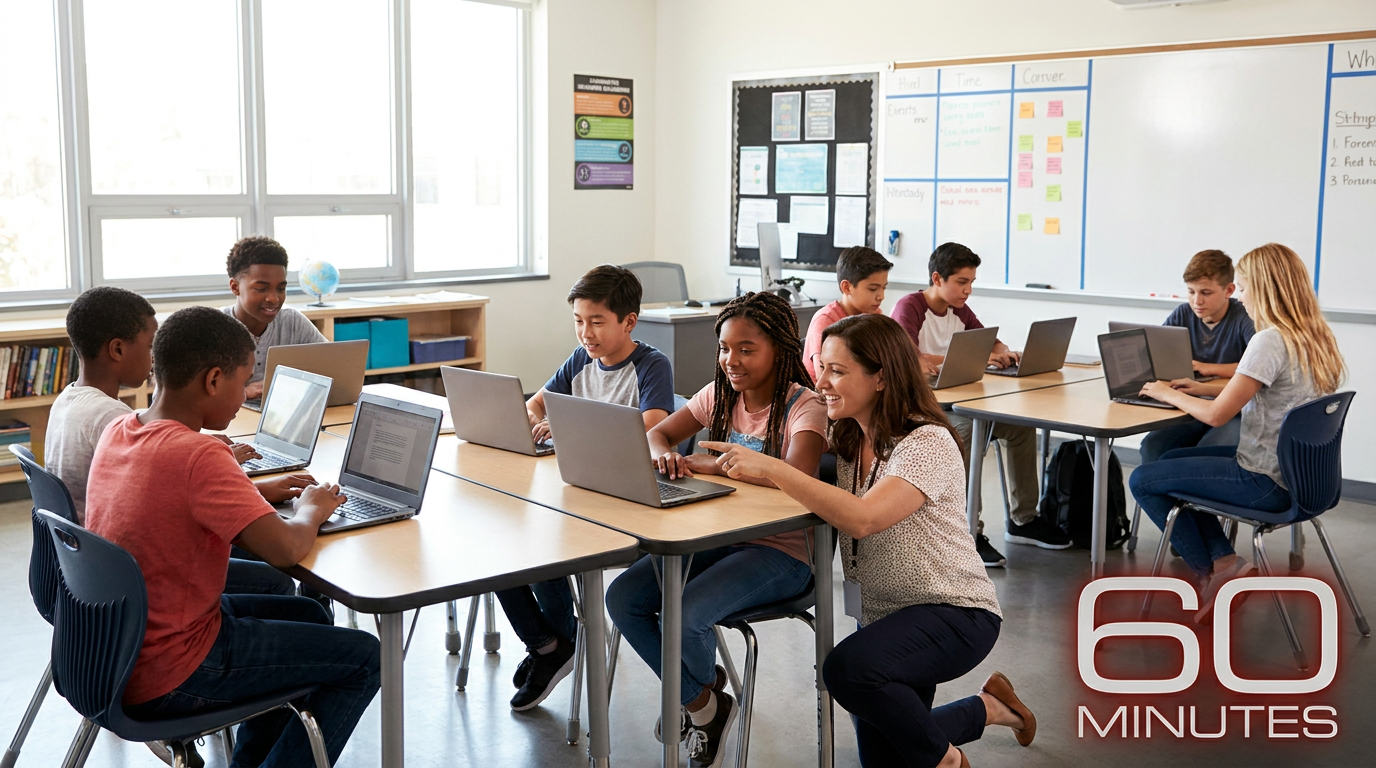
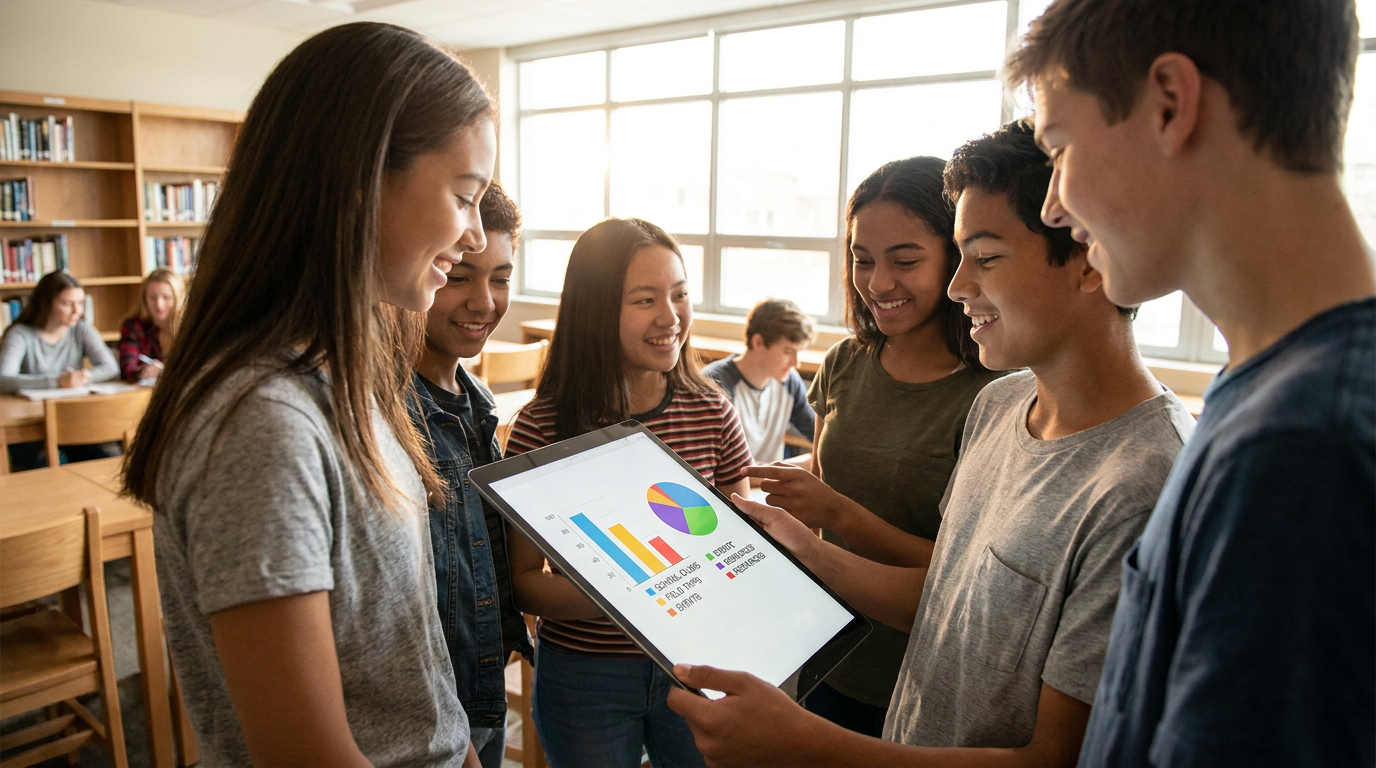
Human educators are then freed from the exhausting drudgery of grading endless worksheets and answering the same foundational questions repeatedly. Armed with detailed, real-time analytics generated by the AI tutor—which highlight exactly which concepts the entire class is struggling with—teachers can dramatically elevate their role in the classroom. They can focus their finite energy on high-level mentorship, complex behavioral interventions, facilitating nuanced group debates, and fostering the collaborative social learning that machines cannot replicate.[5]
The transition toward this hybrid ecosystem is already visibly reshaping the daily mechanics of learning in progressive school districts. Students now have continuous access to an on-demand explainer, writing partner, and coding assistant, while instructors utilize the exact same underlying generative models to accelerate their lesson planning, draft grading rubrics, and instantly prepare differentiated learning materials tailored to students with specific learning disabilities. It is a comprehensive infrastructural upgrade to the entire educational pipeline.[5]
Ultimately, the rise of generative AI tutoring is not a dystopian story about cold machines replacing warm teachers. It is a profoundly optimistic story about democratizing access to mastery learning. By combining the infinite patience, deep knowledge, and massive scalability of artificial intelligence with the irreplaceable empathy, inspiration, and moral guidance of human educators, the education sector is finally closing in on the promise of the Two Sigma problem—making the absolute gold standard of learning available to every student, regardless of their zip code.[7]
How we got here
1984
Benjamin Bloom publishes his 'Two Sigma' paper, establishing 1-on-1 tutoring as the gold standard.
March 2023
Khan Academy announces Khanmigo, one of the first major generative AI tutors.
Late 2024
Early efficacy studies show positive but modest gains for AI tutors in math.
2025-2026
Large-scale RCTs, including a landmark Nature study, prove AI tutors can deliver massive standard deviation improvements.
Viewpoints in depth
AI Scale Optimists
Researchers and economists focused on the unprecedented ability to deliver high-quality instruction at a massive scale.
This camp emphasizes the sheer mathematics of the educational crisis: there will never be enough human teachers to provide 1-on-1 tutoring to every student. By focusing on the massive standard deviation gains seen in recent RCTs and the plummeting marginal costs of AI deployment, they argue that generative AI is the only viable mechanism to close the global achievement gap. They point to data showing AI can accelerate mastery learning by 20% or more, viewing the technology as a fundamental human rights equalizer.
Hybrid Learning Advocates
Educators and policymakers who view AI as a powerful supplement that must be paired with human emotional intelligence.
Rather than viewing AI as a replacement for teachers, this perspective champions a symbiotic relationship. They argue that learning is inherently social and emotional; a student's failure to grasp a concept is often rooted in anxiety, outside stress, or lack of motivation—factors an AI cannot diagnose. They advocate for using AI to handle the 'drudgery' of repetitive practice and instant feedback, thereby freeing human educators to act as mentors, coaches, and emotional anchors for their students.
Pedagogical Skeptics
Critics concerned about data privacy, algorithmic bias, and the loss of human connection in learning.
While acknowledging the impressive test scores generated by AI tutors, skeptics warn of second-order effects. They raise concerns about the privatization of student data, the potential for AI models to hallucinate plausible but incorrect information, and the risk of creating a two-tiered education system where wealthy students receive human mentorship while lower-income students are relegated to screens. They demand rigorous, long-term studies on how AI interaction affects a child's social development and peer-to-peer collaboration skills.
What we don't know
- The long-term impact of AI tutoring on student socialization and peer-to-peer collaborative skills.
- How effectively AI tutors can adapt to students with severe learning disabilities or neurodivergent needs.
- Whether the massive learning gains seen in controlled trials will hold up across underfunded districts with poor internet infrastructure.
Key terms
- Two Sigma Problem
- The educational phenomenon where students receiving one-on-one tutoring perform two standard deviations better than classroom peers.
- Socratic Method
- A form of cooperative argumentative dialogue that stimulates critical thinking by asking questions rather than giving direct answers.
- Standard Deviation (SD)
- A statistical measure of variance; in education, an SD gain of 0.8 or higher is considered a massive improvement in learning outcomes.
- Pedagogical Fine-Tuning
- The process of training an AI model specifically on educational theories and teaching strategies, rather than just general knowledge.
Frequently asked
Does AI tutoring replace human teachers?
No. Research strongly supports a hybrid model where AI handles repetitive practice and instant feedback, freeing human teachers to focus on mentorship, motivation, and complex interventions.
How much does AI tutoring cost?
Recent analyses estimate the cost of generative AI tutoring platforms at around $48 per student annually, a fraction of the cost of traditional human tutoring.
Does the AI just give students the answers?
Modern pedagogically fine-tuned AI tutors, like Khanmigo, are explicitly designed not to give direct answers. They use the Socratic method to guide students to find the solution themselves.
Is AI tutoring effective for all subjects?
While the strongest evidence currently exists for STEM subjects like mathematics, emerging data shows positive impacts on grammar, writing, and language learning as well.
Sources
Source coverage
7 outlets
3 viewpoints surfaced







[1]Nature Scientific ReportsAI Scale Optimists
AI tutoring outperforms in-class active learning: an RCT
Read on Nature Scientific Reports →[2]Brookings InstitutionAI Scale Optimists
The cost-effectiveness of generative AI tutoring platforms
Read on Brookings Institution →[3]Khan AcademyHybrid Learning Advocates
Khanmigo Efficacy and Impact Studies
Read on Khan Academy →[4]National Bureau of Economic ResearchHybrid Learning Advocates
The Impact of AI Tutoring on Math Achievement
Read on National Bureau of Economic Research →[5]U.S. Department of EducationHybrid Learning Advocates
Artificial Intelligence and the Future of Teaching and Learning
Read on U.S. Department of Education →[6]arXivAI Scale Optimists
Efficacy of Pedagogically Fine-Tuned AI Tutoring Systems
Read on arXiv →[7]Factlen Editorial TeamCautious Synthesizers
Synthesis by Factlen editorial team
Read on Factlen Editorial Team →
Every angle. Every day.
Get education stories with full source coverage and perspective breakdowns delivered to your inbox.