
Meta Donates AI Smart Glasses to 130,000 Blind Veterans as Wearables Pivot to Accessibility
Meta has launched a nationwide program to provide free Ray-Ban AI glasses to every legally blind U.S. veteran, highlighting a broader shift in smart glasses from consumer novelties to essential mobility tools.

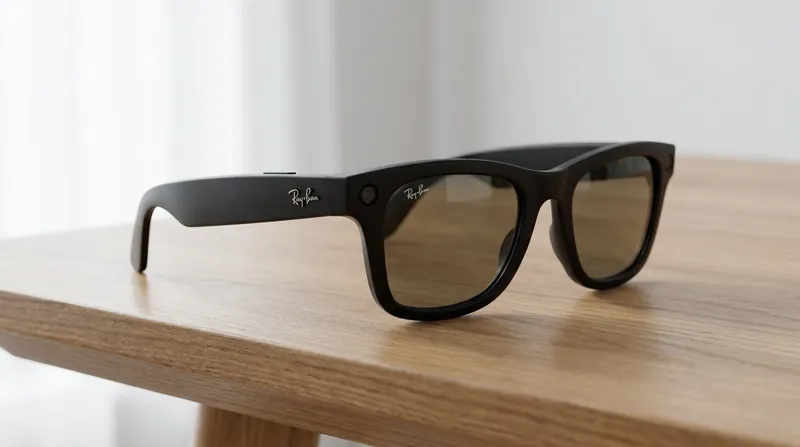
In a major shift for wearable technology, Meta has announced a nationwide initiative to provide free Ray-Ban Meta AI smart glasses to every legally blind veteran in the United States. The program, unveiled in mid-June 2026, represents one of the largest public-facing deployments of artificial intelligence hardware for accessibility to date. More than 130,000 American veterans are estimated to be eligible for the devices, which use onboard cameras and AI voice assistants to read text, describe surroundings, and identify objects in real time.[1]
The initiative was heavily inspired by Don Overton, a U.S. Army veteran of the 82nd Airborne Division who lost his eyesight to a bunker explosion during Operation Desert Storm. Overton recently spoke publicly about how the wearable technology allowed him to reclaim a profound sense of autonomy. "When I lost my eyesight... I also lost my independence," Overton stated during the program's launch. "The moment I put on my Ray-Ban Meta glasses, I got my independence back."[1]
For the visually impaired community, the true breakthrough of AI smart glasses lies in their hands-free nature. Traditional smartphone-based accessibility apps require users to hold a device, point a camera, and tap a screen—a significant hurdle for individuals who are simultaneously navigating with a white cane, holding a guide dog's harness, or carrying groceries. By moving the camera to eye level and relying entirely on voice commands, the glasses allow users to seamlessly integrate digital assistance into their physical environment.[1]
Beyond its own proprietary AI, Meta has deepened its integration with Be My Eyes, a global volunteer visual-assistance network. Through a recent software update, users can now say, "Hey Meta, Call a Volunteer on Be My Eyes," to instantly initiate a hands-free video call. The glasses stream a live feed of the user's perspective to a sighted volunteer or a trusted family member, who can then verbally guide the user through complex tasks like navigating an unfamiliar hotel lobby or reading a confusing medication label.[2]
This human-in-the-loop system is critical because, despite rapid advancements, computer vision models can still hallucinate or misinterpret nuanced contexts. By blending machine-speed object recognition for routine tasks with human judgment for sensitive situations, the platform offers a highly reliable hybrid safety net. The Be My Eyes integration has even expanded to corporate customer service, allowing users to connect directly with trained representatives from brands like Amtrak, Hilton, and Tesco for specialized, real-time visual assistance.[1]
Meta is also addressing the "data desert" that often plagues artificial intelligence development. Historically, the massive datasets used to train AI models have lacked the specific visual context of how blind and low-vision individuals interact with the world, leading to inherent biases and blind spots in the technology.
To correct this, Be My Eyes has partnered with Meta to provide anonymized, multimodal video data collected from its platform. This lived-experience data is now being used to train Meta's foundational models, ensuring future iterations of the AI are fundamentally more inclusive and capable of understanding accessibility-specific queries.[2]
The accessibility push extends beyond vision loss. With the recent introduction of the higher-end Meta Ray-Ban Display model—which features a full-color waveguide microprojector etched directly into the right lens—the company has rolled out real-time captioned calls. This feature provides live, in-lens transcriptions during phone calls, WhatsApp conversations, and Facebook Messenger chats, offering a discreet and powerful tool for the deaf and hard-of-hearing communities, particularly in noisy public environments.[3]
While the $799 Display model currently supports live translation for six generally available languages, the broader smart glasses market is rapidly expanding its linguistic capabilities. Competitors and specialized hardware developers are pushing the boundaries of real-time translation, with some purpose-built captioning glasses now supporting over 60 languages. Meta's entry into the display space, however, brings the massive scale of its social ecosystem to the table, making these tools more mainstream.[3]
To ensure the hardware actually benefits its intended audience, Meta is taking steps to prevent the "gadget drawer" phenomenon, where complex assistive devices are abandoned due to steep learning curves. The veteran donation program is being executed in partnership with the Blinded Veterans Association (BVA) and TechSoup. Every pair of glasses distributed through the program comes with mandatory hands-on training, either at in-person events across the country or through specialized guides tailored to teach voice-command activation, privacy controls, and daily task management.[1]
Meta has also opened its Wearables Device Access Toolkit (DAT) to third-party developers, signaling a desire to turn the glasses into a foundational platform rather than a closed ecosystem. Early adopters of the toolkit include OOrion, an application specifically designed to help blind users locate misplaced personal items like keys or wallets using spatial audio cues.
Hardware reviewers have noted that while the technology is transformative, it is not without limitations. Battery life remains a constraint for all-day continuous use, and the AI's transcription accuracy can degrade in environments with heavy background noise. Furthermore, some advocates caution that smart glasses should be viewed as a powerful supplement to, rather than a replacement for, traditional mobility aids like canes and guide dogs.[3]
Nevertheless, the pivot from consumer novelty to essential medical utility marks a maturing of the wearable technology sector. By embedding advanced AI into a form factor that looks indistinguishable from standard designer sunglasses, Meta is helping to erase the stigma often associated with bulky assistive devices. As the technology scales, it promises to redefine independence for millions of people navigating a world that was not built with them in mind.[1]
Key points
- Meta is donating free Ray-Ban AI smart glasses to all legally blind U.S. veterans, an estimated 130,000 individuals.
- The glasses use onboard cameras and voice-activated AI to read text, identify objects, and describe surroundings hands-free.
- A deep integration with Be My Eyes allows users to initiate live video calls with sighted volunteers and corporate support teams.
- Meta is also using anonymized video data from the platform to train its foundational AI models to better understand low-vision contexts.
Open questions
- It remains unclear how Meta will handle hardware replacements or long-term software support for the donated devices once the initial warranty periods expire.
- The exact timeline for expanding the live-captioning and translation features to a wider array of global languages has not been finalized.
Timeline
September 2023
Meta launches the second generation of Ray-Ban Meta smart glasses with upgraded cameras and audio.
November 2024
Be My Eyes launches its initial 'Call a Volunteer' integration on Meta smart glasses in select countries.
Late 2025
Meta introduces the Ray-Ban Display model, featuring an in-lens screen for live captions and translations.
March 2026
Be My Eyes expands its Meta partnership, allowing users to connect hands-free with corporate service centers like Amtrak and Hilton.
June 2026
Meta announces a nationwide program to provide free AI smart glasses to every legally blind U.S. veteran.
- Accessibility Advocates & Users
- Views the glasses as a life-changing tool for independence, emphasizing the importance of hands-free operation and human-in-the-loop support.
- Technology Developers
- Focuses on the technical milestones of deploying AI at scale and the necessity of inclusive training data to prevent algorithmic bias.
- Hardware Reviewers
- Praises the hardware innovation but highlights practical limitations like battery life, AI hallucinations, and ecosystem constraints.
Perspectives this story doesn't cover
- Veterans who live in rural areas with poor cellular connectivity, which is required for the AI features to function.
- Privacy advocates concerned about always-on cameras in public spaces.
Sources
Source coverage
3 outlets
3 viewpoints surfaced



- [1]Earth TimesAccessibility Advocates & Users
How Meta's Free AI Glasses Are Changing The Lives Of Blind Veterans
Read on Earth Times → - [2]Be My EyesTechnology Developers
Be My Eyes Announces Collaboration with Meta to Help Train Inclusive AI Models
Read on Be My Eyes → - [3]PCMagHardware Reviewers
Meta Ray-Ban Display Review
Read on PCMag →

More in Content Types
See all →AI Economy
The AI Bubble: Central Bankers Warn Debt-Fuelled AI Spending Risks Global Financial Crash
5 sources

Wearable AI
Meta Unveils $299 AI Smart Glasses Powered by New 'Muse Spark' Model
6 sources
Local Journalism
Nonprofit Models and Philanthropy Breathe New Life Into Local Journalism
2 sources

Superconductors
Nanoscale Sculpting Breakthrough Pushes Superconductors Closer to Real-World Use
2 sources

Comments
Every angle. Every day.
Get Content Types stories with full source coverage and perspective breakdowns, free every day.