
U.S. and Iran Sign Preliminary Agreement to End Conflict as Violence in Lebanon Threatens Ceasefire
President Trump and Iranian President Pezeshkian have signed a 14-point memorandum of understanding to reopen the Strait of Hormuz and negotiate a final nuclear deal. However, the pact faces immediate peril as Israel continues to strike Hezbollah in Lebanon, prompting a sharp rebuke from U.S. Vice President JD Vance.
By Factlen Editorial Team
- U.S. Administration
- Prioritizes global economic stability and shifting the financial burden of Middle East reconstruction to regional allies.
- Israeli Security Establishment
- Views any deal that leaves Iran's nuclear infrastructure and proxy network intact as an existential threat.
- Iranian Government
- Seeks the permanent removal of crippling economic sanctions and international investment to rebuild its infrastructure.
- Global Markets & Shippers
- Focused entirely on the secure, uninterrupted flow of oil and commercial goods through the Strait of Hormuz.
What's not represented
- · Lebanese civilians caught in the ongoing crossfire between Israel and Hezbollah.
- · Gulf Arab states expected to finance the bulk of the $300 billion reconstruction fund.
Why this matters
The reopening of the Strait of Hormuz immediately stabilizes global oil markets and averts a severe economic shock. However, the growing diplomatic rift between the U.S. and Israel, coupled with ongoing fighting in Lebanon, risks dragging the Middle East back into a broader, unpredictable conflict.
Key points
- The U.S. and Iran signed a 14-point preliminary agreement establishing a 60-day window for final nuclear negotiations.
- The deal immediately reopens the Strait of Hormuz, lifting the U.S. naval blockade on Iranian ports.
- A proposed $300 billion reconstruction fund for Iran will rely on Gulf and private investors, not U.S. taxpayers.
- Israel, not a party to the deal, continues to bomb Hezbollah in Lebanon, threatening the broader ceasefire.
- Vice President JD Vance sharply criticized Israeli leadership for opposing the agreement, highlighting a growing U.S.-Israel rift.
The United States and Iran have officially signed a 14-point preliminary agreement aimed at ending a devastating 110-day conflict that has roiled global markets, spiked energy prices, and choked off international shipping. The memorandum of understanding, which establishes a framework for a permanent peace treaty, marks a sudden and dramatic diplomatic de-escalation between Washington and Tehran. However, the ink is barely dry on the document, and the pact is already facing severe stress tests from regional allies, ongoing proxy battles, and the complex realities of Middle Eastern geopolitics.[1][2]
Signed remotely by U.S. President Donald Trump—who was attending the G7 summit in France—and Iranian President Masoud Pezeshkian in Tehran, the agreement establishes a 60-day ceasefire and negotiation window. During this two-month period, diplomats from both nations are expected to hammer out the technical details of a final, binding treaty. The preliminary framework requires an immediate halt to all military operations and sets the stage for complex discussions regarding international sanctions and the future of Iran's nuclear program.[2]
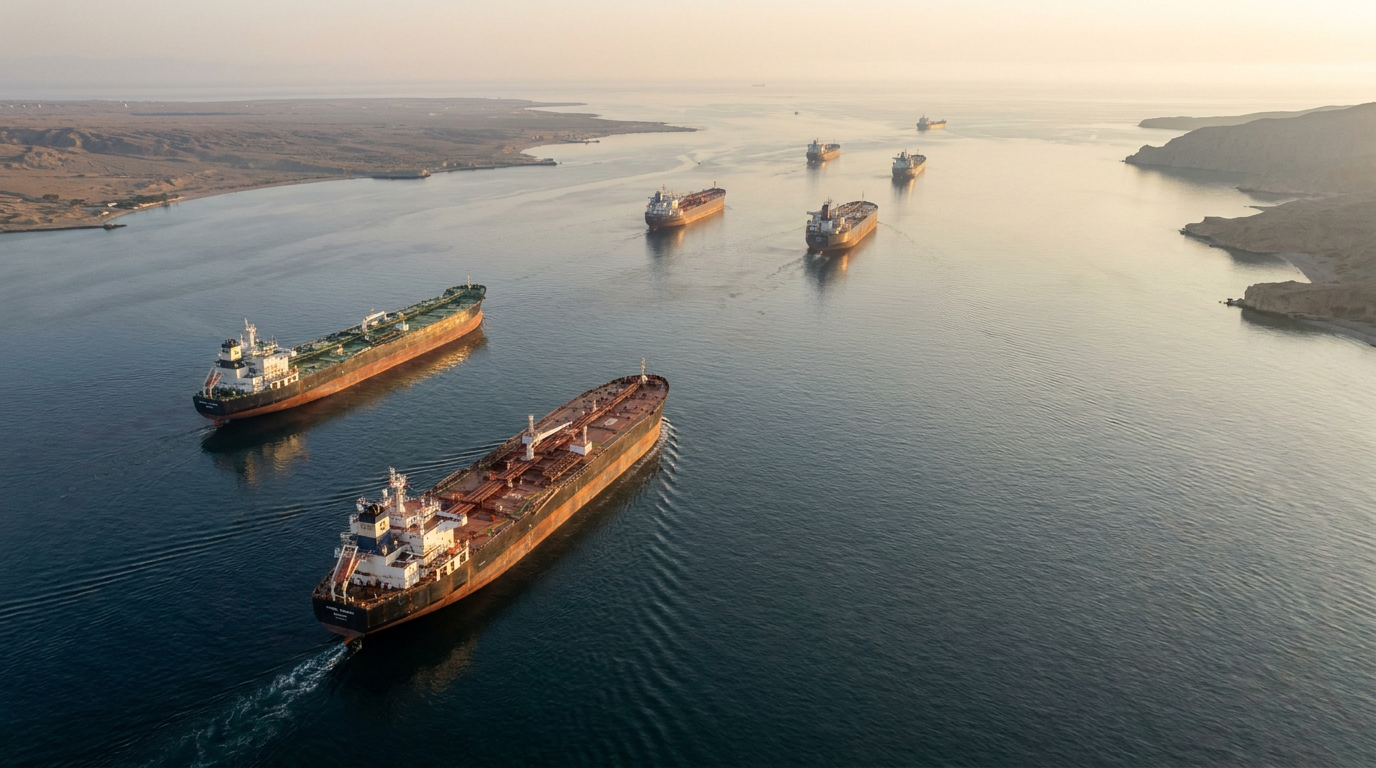
The immediate, tangible centerpiece of the deal is the reopening of the Strait of Hormuz, a critical maritime choke point responsible for the transit of nearly one-fifth of the world's oil supply. Under the terms of the agreement, the United States has authorized the immediate removal of its naval blockade on Iranian ports. In exchange, Iran has committed to allowing the toll-free passage of commercial vessels and oil tankers through the strait for the duration of the 60-day negotiation window, providing instant relief to anxious global energy markets.[2][3]

Despite the immediate economic relief provided by the reopening of the shipping lanes, the agreement is already threatening to unravel. This fragility stems primarily from the fact that its ambitious terms extend to regional proxies and active combat fronts where the United States and Iran are not the only heavily armed participants. The diplomatic framework attempts to impose a broad, sweeping regional calm, but it fundamentally clashes with the ongoing security objectives of sovereign nations and entrenched militant groups that were not invited to the negotiating table.[4]
The text of the memorandum explicitly declares an "immediate and permanent termination of military operations on all fronts, including in Lebanon." This specific clause is highly significant, as it effectively requires Tehran to rein in Hezbollah, the heavily armed Lebanese militant group it sponsors and supplies. By including Lebanon in the ceasefire terms, the United States aims to neutralize one of the most volatile flashpoints in the Middle East and secure Israel's northern border from further rocket and drone attacks.[1][3]
The glaring complication is that Israel, which has been engaged in a fierce, protracted war with Hezbollah, is not a signatory to the U.S.-Iran agreement. Israeli officials across the political spectrum have expressed deep concern and outright anger over the deal, arguing that it provides Iran with immediate economic relief while leaving its proxy network intact. Furthermore, Israeli leadership fears the 60-day window fails to permanently dismantle Tehran's nuclear infrastructure, viewing the diplomatic pause as a dangerous concession to an existential threat.[3][5]
Defying the ceasefire framework outlined by Washington and Tehran, the Israeli military launched extensive airstrikes across southern and eastern Lebanon on Thursday and Friday. Lebanese state media reported that the bombardment killed at least 18 people amid intense fighting. The Israeli military stated that the strikes were a direct response to ongoing Hezbollah attacks that killed four Israeli soldiers, including a battalion commander, underscoring the reality that the war on the ground has not paused for the diplomatic agreements signed in Europe.[4][7]
The escalating violence in Lebanon threatens to completely derail the fragile U.S.-Iran pact before formal, detailed negotiations can even begin. The immediate diplomatic fallout from the continued airstrikes and rocket fire was the abrupt postponement of planned weekend talks in Switzerland. U.S. Vice President JD Vance was originally scheduled to travel to Europe to lead an American delegation in hammering out the deal's technical implementation alongside Iranian counterparts. However, those high-stakes meetings were indefinitely delayed as international diplomats scrambled to salvage the broader ceasefire framework from collapsing.[4]

The escalating violence in Lebanon threatens to completely derail the fragile U.S.-Iran pact before formal, detailed negotiations can even begin.
The friction over the Lebanon strikes has exposed an extraordinary and highly public rift between the Trump administration and the government of Israeli Prime Minister Benjamin Netanyahu. While the U.S. and Israel have historically maintained an ironclad alliance, the unilateral nature of the Iran agreement has generated unprecedented diplomatic hostility. The White House views the deal as a necessary step to avert a global economic depression, while Israeli leadership views it as a betrayal of their shared security interests.[5]
In a remarkably sharp rebuke delivered from the White House briefing room, Vice President Vance castigated Israeli cabinet members for their vocal criticism of the agreement. Vance suggested that Israeli officials were suffering from a "weird panic" and told them to "wake up and smell the reality" of the geopolitical landscape. He warned that Israel was alienating much of the globe with its continued military campaigns and bluntly reminded Israeli leadership that "Donald J. Trump is the only head of state in the entire world who is sympathetic to the nation of Israel at this moment in time."[1][5]
Vance did not stop at rhetorical warnings; he pointedly noted the vast scale of American military support that underpins Israel's defense capabilities. The Vice President reminded critics in Netanyahu's cabinet that two-thirds of Israel's defensive weapons are "built by American hands and paid for by American tax dollars." This stark reminder of dependency signaled that the Trump administration expects compliance with its broader regional strategy, and that continued Israeli defiance of the Lebanon ceasefire clause could carry severe diplomatic consequences.[1][5]
Beyond the geopolitical maneuvering and military standoffs in the Middle East, the financial mechanics of the deal have sparked intense domestic debate within the United States. The controversy centers on a proposed $300 billion "Reconstruction and Development Fund" designed to rebuild Iran's shattered economy and war-damaged infrastructure. As details of the memorandum leaked to the press, conflicting narratives quickly emerged regarding who exactly would foot the bill for this massive project, leading to fierce partisan accusations that the U.S. was orchestrating a historic financial payout to a long-standing adversary.[6]
Early reports and political commentators suggested the U.S. government was directly funding the reconstruction, prompting President Trump to take to his social media platform to label claims of American payouts as "Fake News." Addressing reporters, Trump was unequivocal about the source of the capital. "We are not investing. We are not putting up 10 cents," the President stated, emphasizing that while a massive fund was part of the broader diplomatic discussions, it would not be subsidized by the American taxpayer.[6]
The reality of the $300 billion fund is a complex hybrid of private equity and regional capital. The framework envisions a private investment vehicle, backed primarily by wealthy Gulf Arab states and international businesses spanning Asia, South America, and Africa. This capital is earmarked to rebuild Iran's war-damaged infrastructure, including oil refineries, airports, and manufacturing complexes. More than half of the required amount has reportedly already been pledged by international entities eager to access a newly opened Iranian market.[6]

Vice President Vance clarified that "not a single dime" of U.S. taxpayer money is involved in the reconstruction vehicle, but he acknowledged that the Gulf-led fund serves as a core incentive of the broader diplomatic settlement. Access to this immense pool of capital, however, remains strictly conditional on Iranian behavior. White House officials have repeatedly stressed that the fund will only become operational if Tehran strictly adheres to the security mandates and nuclear compliance terms that are scheduled to be negotiated during the current 60-day window.[3][6]
The nuclear question remains the most difficult and consequential hurdle for negotiators moving forward. The memorandum of understanding deliberately intertwines economic sanctions relief with verifiable, permanent curbs on Iran's nuclear ambitions. The United States has committed to terminating all unilateral and international sanctions on an "agreed-upon schedule," but this sweeping relief is entirely dependent on Iran taking concrete steps. Tehran must dilute its existing stockpile of highly enriched uranium and submit its subterranean nuclear facilities to a stringent, unfettered international inspection regime to prove it is not developing a weapon.[1][3]
For now, the global economy is reacting positively to the immediate, tangible relief provided by the preliminary agreement. With the U.S. naval blockade officially lifted, more than 12.5 million barrels of oil shipped through the Strait of Hormuz on Wednesday night alone. The resumption of commercial maritime traffic has eased widespread fears of a worldwide economic depression, stabilizing energy markets that had been deeply rattled by the 110-day conflict and the threat of prolonged supply chain disruptions.[2]

Yet, the ultimate success of the agreement hangs in the balance. The next 60 days will determine whether this preliminary memorandum can evolve into a durable, comprehensive peace treaty. Negotiators must bridge massive gaps regarding nuclear enrichment and sanctions relief, all while navigating the immediate crisis of ongoing bloodshed in Lebanon. If the deep mistrust between Israel, Iran, and the United States cannot be managed, the fragile ceasefire could easily collapse, dragging the entire region back into open, devastating warfare.[4][5]
How we got here
March 2026
A major conflict erupts, leading to the closure of the Strait of Hormuz and a U.S. naval blockade of Iran.
June 17, 2026
The U.S. and Iran remotely sign a 14-point memorandum of understanding to halt hostilities.
June 18, 2026
Vice President JD Vance publicly rebukes Israeli cabinet members for criticizing the agreement.
June 19, 2026
Israel launches deadly airstrikes in Lebanon in response to Hezbollah attacks, prompting the postponement of U.S.-Iran talks in Switzerland.
Viewpoints in depth
The U.S. Administration's View
The Trump administration views the deal as a necessary step to avert global economic disaster and stabilize the region.
U.S. officials, led by President Trump and Vice President Vance, argue that the preliminary agreement successfully reopens the Strait of Hormuz without conceding U.S. taxpayer dollars. They maintain that the deal forces Iran to the negotiating table over its nuclear program and shifts the financial burden of reconstruction to Gulf states and private investors. The administration has expressed deep frustration with Israeli criticism, insisting that the U.S. remains Israel's strongest ally but requires cooperation to secure regional stability.
The Israeli Government's View
Israeli leadership fears the agreement empowers Iran and fails to dismantle its nuclear and proxy threats.
Israeli officials, who are not party to the U.S.-Iran pact, view the agreement with profound skepticism. They argue that the deal provides Iran with immediate economic relief and a pathway to rebuild its infrastructure while leaving its nuclear capabilities largely intact. Furthermore, Israel refuses to be bound by the ceasefire's inclusion of Lebanon, maintaining that it must continue military operations to neutralize the threat posed by Hezbollah on its northern border.
The Iranian Perspective
Tehran sees the agreement as a diplomatic victory that breaks the U.S. naval blockade and promises economic revitalization.
For Iran, the memorandum of understanding represents a critical lifeline after months of devastating conflict and economic strangulation. Iranian officials highlight the lifting of the U.S. naval blockade and the prospect of a $300 billion reconstruction fund as major concessions extracted from Washington. However, Tehran insists that its compliance with nuclear curbs is contingent on the permanent removal of all international sanctions, and it views continued Israeli strikes in Lebanon as a violation of the ceasefire's spirit.
What we don't know
- Whether Israel and Hezbollah will agree to a separate ceasefire or if their ongoing conflict will collapse the U.S.-Iran deal.
- If Iran will fully comply with demands to dilute its highly enriched uranium stockpile during the 60-day window.
- How the proposed $300 billion private investment fund will be administered and whether Gulf states will fully commit the capital.
Key terms
- Memorandum of Understanding (MOU)
- A formal, non-binding agreement between two or more parties outlining the terms and details of a mutual understanding, often serving as the foundation for a final treaty.
- Strait of Hormuz
- A narrow, strategically vital waterway between the Persian Gulf and the Gulf of Oman through which roughly one-fifth of the world's oil supply passes.
- Highly Enriched Uranium
- Uranium that has been processed to increase the concentration of the U-235 isotope, which is necessary for creating nuclear weapons.
- Naval Blockade
- A military operation in which ships are used to prevent vessels from entering or leaving a country's ports, often to cut off trade and supplies.
Frequently asked
Is the U.S. paying Iran $300 billion?
No. The proposed $300 billion Reconstruction and Development Fund is designed to be financed by Gulf Arab states and private international investors, not U.S. taxpayers.
Why is Israel still bombing Lebanon?
Israel is not a party to the U.S.-Iran agreement and maintains it must continue military operations to neutralize the threat from Hezbollah, an Iran-backed militant group in Lebanon.
Is the Strait of Hormuz open now?
Yes. The U.S. has lifted its naval blockade, and Iran has agreed to allow toll-free passage for commercial vessels for the next 60 days.
What happens after the 60-day ceasefire?
The U.S. and Iran are supposed to negotiate a final, permanent agreement regarding sanctions relief and the dismantling of Iran's nuclear weapons program.
Sources
Source coverage
7 outlets
4 viewpoints surfaced







[1]The GuardianIranian Government
US-Iran deal takeaways: reopening the strait of Hormuz, waived oil sanctions and Lebanon
Read on The Guardian →[2]CBS NewsU.S. Administration
U.S. and Iran sign memorandum of understanding to end war
Read on CBS News →[3]Council on Foreign RelationsGlobal Markets & Shippers
Where the U.S.-Iran Deal Lands on Core Issues
Read on Council on Foreign Relations →[4]The Washington PostIsraeli Security Establishment
Four Israeli soldiers killed as combat in Lebanon imperils U.S.-Iran deal
Read on The Washington Post →[5]TimeU.S. Administration
JD Vance Warns Israeli Critics Over Iran Deal: Trump Is Your Only Ally
Read on Time →[6]ReutersIranian Government
U.S.-Iran deal features $300B private investment fund
Read on Reuters →[7]Al JazeeraIsraeli Security Establishment
Israeli strikes kill at least 18 amid intense fighting in southern Lebanon
Read on Al Jazeera →

More in news politics
See all 5 stories →Federal Grants
Trump Administration Proposes Rule Giving Political Appointees Final Say Over Federal Research Grants
6 sources
Information Integrity
The Science of Fact-Checking: Which Verification Methods Actually Work
7 sources

US-Iran Relations
US-Iran Peace Talks in Switzerland Postponed Amid Renewed Strikes in Lebanon
8 sources
Every angle. Every day.
Get news politics stories with full source coverage and perspective breakdowns delivered to your inbox.