
US and Iran Sign Preliminary Agreement to End Hostilities, Reopen Strait of Hormuz
The US and Iran have signed a memorandum of understanding to halt military operations and reopen the Strait of Hormuz, initiating a 60-day window for a final nuclear settlement. However, the deal faces immediate hurdles as Israel refuses to halt its campaign in Lebanon, a key condition for Tehran.
By Factlen Editorial Team
- US Administration
- Frames the deal as a diplomatic triumph that restores global energy flows and leverages economic incentives to dismantle Iran's nuclear program.
- Iranian Officials
- Views the agreement as a victory that broke the US naval blockade, but insists the deal is void if the US cannot force Israel to halt its operations in Lebanon.
- Israeli Government
- Maintains that its national security cannot be dictated by a bilateral US-Iran pact and insists on maintaining military pressure on Hezbollah.
- Global Markets & Investors
- Focuses on the immediate relief to energy markets and the potential opportunities within the proposed $300 billion reconstruction fund.
What's not represented
- · Lebanese civilians caught in the crossfire of ongoing Israeli operations.
- · European allies who rely on the Strait of Hormuz but were largely sidelined in the bilateral US-Iran talks.
Why this matters
The agreement pauses a devastating 110-day conflict that has battered the global economy and disrupted energy markets. But its success hinges on complex regional dynamics, including Israel's ongoing war in Lebanon and domestic political battles over a proposed $300 billion reconstruction fund for Iran.
Key points
- The US and Iran signed a memorandum of understanding to end their 110-day conflict.
- The agreement immediately reopens the Strait of Hormuz and lifts the US naval blockade.
- Negotiators have a 60-day window to reach a final deal on Iran's nuclear program and sanctions relief.
- Israel rejected a clause requiring an end to military operations in Lebanon, vowing to continue fighting Hezbollah.
- A proposed $300 billion private reconstruction fund for Iran is contingent on strict nuclear compliance.
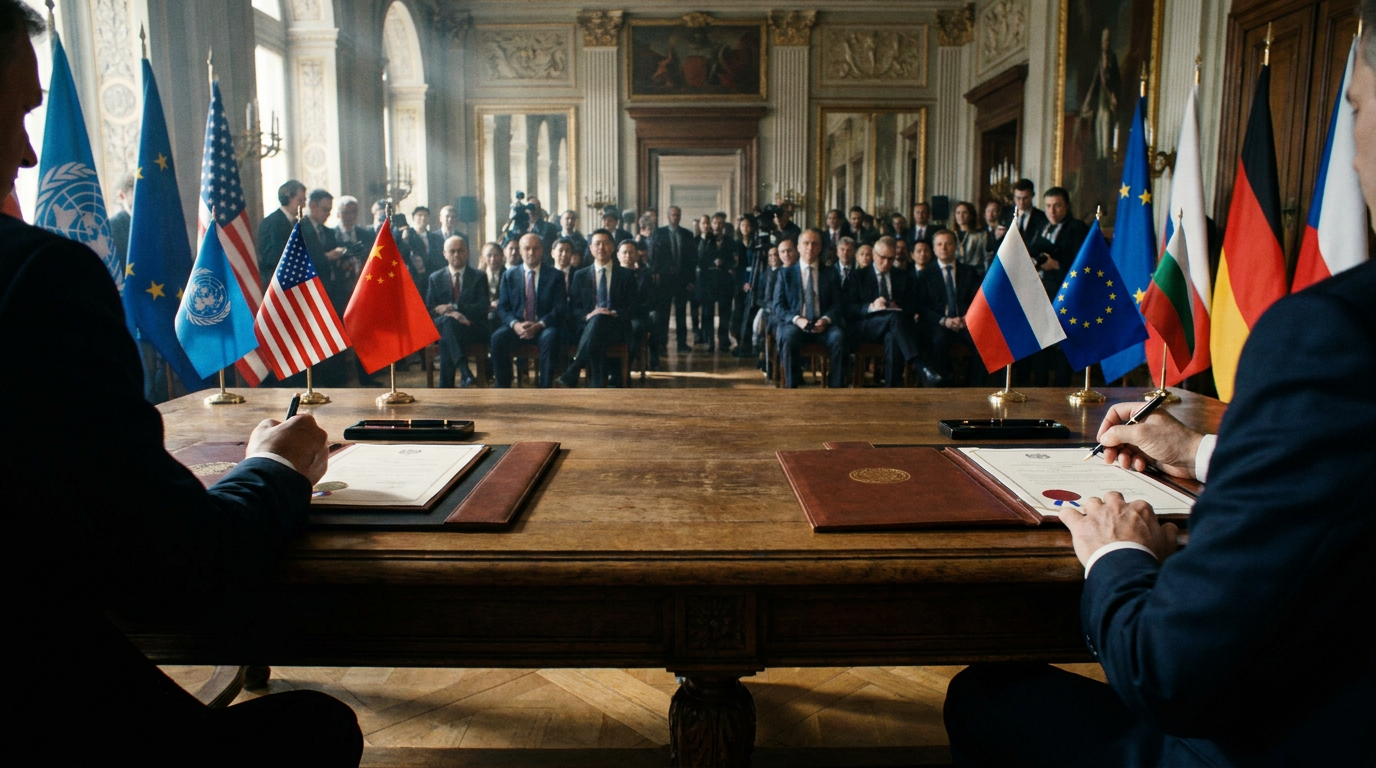
US President Donald Trump and Iranian President Masoud Pezeshkian have formally signed a preliminary memorandum of understanding (MOU) to end their 110-day direct conflict. The landmark agreement immediately lifts the US naval blockade on the Strait of Hormuz and establishes a 60-day diplomatic window to negotiate a comprehensive settlement regarding Iran's nuclear program and Western sanctions. The signing, which took place with Trump in France and Pezeshkian signing remotely, marks a sudden halt to a war that has devastated regional infrastructure and battered the global economy.[1][2][3]
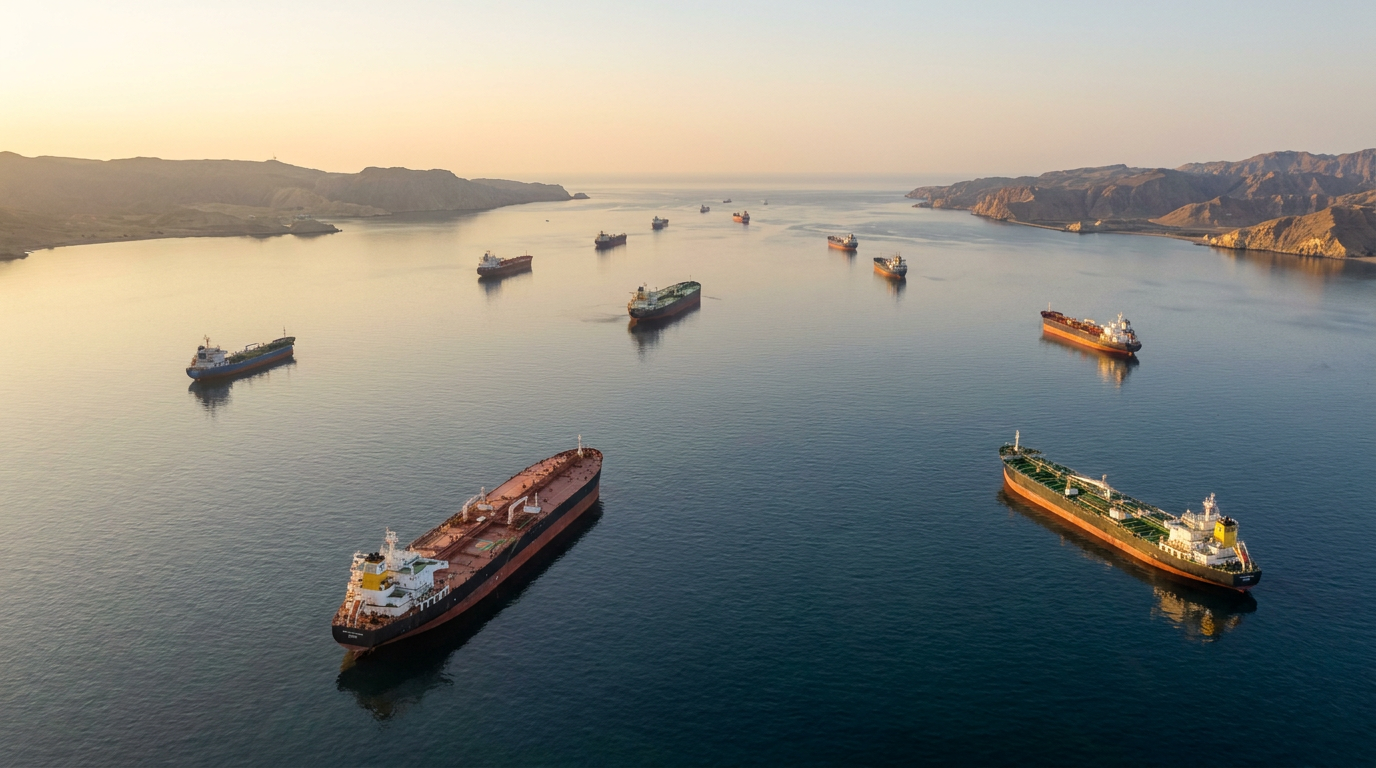
The immediate economic impact of the truce was swift. Oil prices tumbled as commercial vessels resumed transit through the critical Middle Eastern waterway. Trump celebrated the reopening on social media, declaring "Let the oil flow!" and authorizing the immediate removal of the US naval blockade. The agreement promises to restore maritime traffic to pre-war volumes within 30 days, providing immediate relief to global energy markets that had been severely constrained by the months-long standoff.[2][3]

However, the fragility of the preliminary deal is already being tested by regional allies who were excluded from the negotiations. A central pillar of the 14-point MOU explicitly calls for the "immediate and permanent termination of military operations on all fronts, including in Lebanon." This clause effectively requires Iran to rein in its proxy forces, but it also demands a halt to military campaigns against them—a condition that immediately clashed with realities on the ground.[2][3][7]
Israel, which was not a party to the US-Iran talks, has flatly rejected the Lebanon ceasefire condition. Israeli Defense Minister Israel Katz stated unequivocally that the Israel Defense Forces (IDF) will not be bound by the bilateral agreement and will not withdraw from southern Lebanon. Israeli officials maintain that their military will remain in the security zone to combat Hezbollah and protect Israel's northern residents, regardless of the diplomatic framework signed in Versailles.[5][7]

Israel, which was not a party to the US-Iran talks, has flatly rejected the Lebanon ceasefire condition.
The Israeli defiance poses a direct threat to the survival of the US-Iran pact. Hours before the deal was finalized, Israel launched fresh airstrikes on the Dahiyeh district of Beirut. In response, Iranian officials, including Foreign Ministry spokesperson Esmail Baghaei, stated that ending the war in Lebanon is an "inseparable part" of the ceasefire. Tehran has placed the burden squarely on Washington, asserting that the US must ensure Israeli compliance or risk the collapse of the entire agreement.[4][7]
Beyond the battlefield, the financial mechanics of the deal are drawing intense scrutiny and political debate. The framework reportedly includes plans for a $300 billion private investment and reconstruction fund for Iran. Backed by international and Gulf businesses, the fund is designed to rebuild war-damaged infrastructure, including refineries and airports. However, access to this massive capital pool is strictly contingent on Tehran dismantling its nuclear program and submitting to a stringent international inspection regime.[6]
The prospect of a $300 billion fund has sparked immediate political backlash in the United States, with critics accusing the administration of rewarding Tehran. Vice President JD Vance defended the structure, emphasizing that the money would only unlock if Iran honors its strict nuclear obligations. Trump also pushed back against domestic critics, emphasizing that the vehicle relies entirely on private and international capital, stating that the US government is "not putting up 10 cents."[3][6]

Negotiators now face a grueling 60-day sprint to convert the preliminary MOU into a binding final agreement, with initial technical talks set to begin in Switzerland. The core challenge remains Iran's stockpile of highly enriched uranium. While the MOU freezes the status quo, the final deal must address the permanent dismantling of Iran's nuclear weapons capabilities in exchange for a scheduled termination of all Western sanctions.[1][2]
If the sides fail to reach a resolution within the 60-day window—which can be extended by mutual consent—the consequences could be severe. US officials have warned that if talks collapse, Washington is prepared to walk away and significantly tighten economic and military pressure. For now, the world watches to see if a fragile pause in hostilities can survive the deeply entrenched regional conflicts that threaten to unravel it.[2][3]
How we got here
March 2026
Direct conflict escalates, leading to a US naval blockade of the Strait of Hormuz and widespread regional fighting.
June 14, 2026
The US and Iran announce a framework agreement to halt hostilities and reopen maritime trade.
June 17, 2026
US President Donald Trump and Iranian President Masoud Pezeshkian formally sign the memorandum of understanding.
June 19, 2026
Initial technical negotiations are scheduled to begin in Switzerland to hammer out a final nuclear and sanctions deal.
Viewpoints in depth
The US Administration's view
The deal is a necessary diplomatic step to restore global energy markets and dismantle Iran's nuclear capabilities.
US officials, including President Trump and Vice President JD Vance, argue that the preliminary agreement achieves immediate relief for the global economy by reopening the Strait of Hormuz. They maintain that the proposed $300 billion reconstruction fund is a powerful leverage tool, as it relies entirely on private capital and will only be unlocked if Iran completely dismantles its nuclear program. From Washington's perspective, the 60-day window forces Tehran to choose between economic revitalization and its nuclear ambitions.
The Iranian Government's view
The agreement is a victory against the US blockade, but its survival depends on halting Israeli operations in Lebanon.
Tehran views the lifting of the US naval blockade and the reopening of maritime trade as a significant concession by Washington. However, Iranian officials are adamant that the memorandum of understanding is a package deal that includes an end to hostilities on all fronts. They argue that Israel's continued airstrikes and ground operations in Lebanon are a direct violation of the agreement, placing the responsibility squarely on the US to control its ally if the diplomatic track is to survive.
The Israeli Government's view
Israel is not bound by a bilateral US-Iran pact and must prioritize neutralizing threats on its northern border.
Israeli leaders, including Defense Minister Israel Katz, have made it clear that they were not party to the negotiations and will not sacrifice their national security for a US-Iran diplomatic win. Israel views Hezbollah's presence in southern Lebanon as an existential threat that must be dismantled militarily. Consequently, the IDF intends to maintain its security zone and continue operations in Lebanon indefinitely, regardless of the ceasefire terms dictated in the memorandum of understanding.
What we don't know
- Whether the US has any leverage to force Israel to halt its military operations in southern Lebanon.
- The exact mechanisms and international contributors for the proposed $300 billion reconstruction fund.
- If Iran will permanently dismantle its highly enriched uranium stockpile during the 60-day negotiation window.
Key terms
- Memorandum of Understanding (MOU)
- A preliminary, non-binding agreement outlining the broad terms of a deal before a final, detailed contract is negotiated.
- Strait of Hormuz
- A critical maritime chokepoint between the Persian Gulf and the Gulf of Oman, through which a significant portion of the world's oil supply passes.
- Highly Enriched Uranium
- Uranium that has been processed to increase the concentration of the U-235 isotope, bringing it closer to the purity required for nuclear weapons.
Frequently asked
Does this agreement mean the war in the Middle East is over?
Not entirely. While the US and Iran have paused direct hostilities, Israel has refused to halt its military operations against Hezbollah in Lebanon, which Iran considers a violation of the deal.
Is the US giving Iran $300 billion?
No. The proposed $300 billion reconstruction fund would be financed by private international and Gulf businesses, not US taxpayer money, and is contingent on Iran dismantling its nuclear program.
What happens after the 60-day window?
The US and Iran aim to negotiate a final, binding agreement on nuclear oversight and sanctions relief within 60 days. If talks fail, the US has threatened to resume intense economic and military pressure.
Sources
Source coverage
7 outlets
4 viewpoints surfaced







[1]NPRUS Administration
What you need to know about the preliminary U.S.-Iran agreement signed by Trump
Read on NPR →[2]The GuardianGlobal Markets & Investors
US-Iran deal takeaways: reopening the strait of Hormuz, waived oil sanctions and Lebanon
Read on The Guardian →[3]CBS NewsUS Administration
Trump calls critics of U.S.-Iran deal 'fools'
Read on CBS News →[4]Al JazeeraIranian Officials
Can US-Iran peace ‘deal’ survive Israeli bombing of Lebanon?
Read on Al Jazeera →[5]Jerusalem PostIsraeli Government
Israel will not withdraw from southern Lebanon as part of the newly agreed to US-Iran deal
Read on Jerusalem Post →[6]Seeking AlphaGlobal Markets & Investors
U.S.-Iran deal features $300B private investment fund - report
Read on Seeking Alpha →[7]CBC NewsIsraeli Government
A newly announced U.S.-Iran peace agreement faces a threat of collapse as an excluded Israel refuses to withdraw
Read on CBC News →
More in news politics
See all 5 stories →US-Iran Deal
U.S. and Iran Sign Preliminary Agreement to End Conflict as Violence in Lebanon Threatens Ceasefire
7 sources
Labor Law
House Passes Faster Labor Contracts Act, Mandating Binding Arbitration for First Union Contracts
10 sources
US-Iran Relations
U.S. and Iran Sign Preliminary Agreement as Regional Tensions and Sanctions Hurdles Persist
7 sources
Every angle. Every day.
Get news politics stories with full source coverage and perspective breakdowns delivered to your inbox.