
The Solid-State Battery Breakthrough: How 2026 is Changing the Future of EVs
After decades in the lab, solid-state batteries are finally entering early production, promising electric vehicles that charge in minutes, travel further, and operate flawlessly in extreme cold.
By Factlen Editorial Team
- Legacy Automakers
- Established car brands taking a measured approach, prioritizing safety validation and massive scale for late-2020s passenger vehicles.
- Battery Innovators
- Startups and specialized manufacturers pushing aggressive timelines to commercialize solid-state tech in niche markets.
- Industrial Adopters
- Aviation and robotics sectors leveraging semi-solid technology today for immediate high-density power needs.
What's not represented
- · Raw Material Suppliers
- · Battery Recycling Industry
Why this matters
Solid-state batteries solve the three biggest anxieties of electric vehicle ownership: range, charging speed, and fire safety. By doubling energy density and eliminating flammable liquids, this technology paves the way for lighter, safer cars that can drive over 600 miles on a single 10-minute charge.
Key points
- Solid-state batteries replace flammable liquid electrolytes with stable solid materials like ceramics or polymers.
- The technology doubles energy density, enabling 600+ mile ranges or significantly lighter vehicles.
- Solid electrolytes eliminate winter range anxiety by maintaining 95% capacity in sub-zero temperatures.
- Early commercial applications are launching in 2026 for motorcycles, drones, and prototype vehicles.
- Mass-market passenger cars with solid-state batteries are targeted for the 2027 to 2028 window.
For years, the "solid-state battery" has been the electric vehicle industry's holy grail—a mythical technology perpetually five years away. But in 2026, the narrative is shifting from laboratory breakthroughs to factory production lines.[5][6]
The fundamental difference between today's EV batteries and tomorrow's lies in the electrolyte. In conventional lithium-ion batteries, a liquid electrolyte shuttles lithium ions back and forth between the anode and cathode to store and release energy.[6]
While effective, this liquid comes with significant compromises. It is highly flammable, creating the risk of thermal runaway if the battery is punctured in a crash or severely overheats. It also adds dead weight and limits how fast the battery can safely accept a charge.[6]
Solid-state technology replaces this liquid solvent with a solid material—typically an advanced ceramic, polymer, or sulfide glass. This single architectural change unlocks a cascade of performance benefits that fundamentally alter the math of electric mobility.[5][6]
The most immediate impact is safety. Because solid electrolytes are non-flammable, the threshold for thermal events jumps dramatically. Traditional lithium-ion batteries can begin to experience thermal runaway at around 90°C (194°F), whereas solid-state systems remain stable up to 247°C (476°F).[6]

This inherent stability allows engineers to use pure lithium metal for the anode instead of the heavier graphite used today. Solid electrolytes physically suppress the growth of "dendrites"—microscopic metallic whiskers that can pierce battery separators and cause short circuits in liquid systems.[6]
By utilizing lithium metal, solid-state batteries achieve a massive leap in energy density. Today's best lithium-ion cells max out around 250 to 300 Watt-hours per kilogram (Wh/kg). The solid-state cells entering early production in 2026 are hitting 400 to 500 Wh/kg.[1][2]
For the consumer, this translates directly to range and weight. Automakers can either double the driving range of a vehicle using the same size battery pack—pushing past the 600-mile (1,000 km) mark—or they can halve the battery weight while maintaining current ranges, resulting in lighter, more efficient cars.[2][5]

Charging speeds also see a paradigm shift. Because the solid materials face less internal resistance and generate less heat, these batteries can accept massive amounts of current. Early commercial applications are demonstrating 0% to 80% charge times in under 10 minutes.[1][4]
Because the solid materials face less internal resistance and generate less heat, these batteries can accept massive amounts of current.
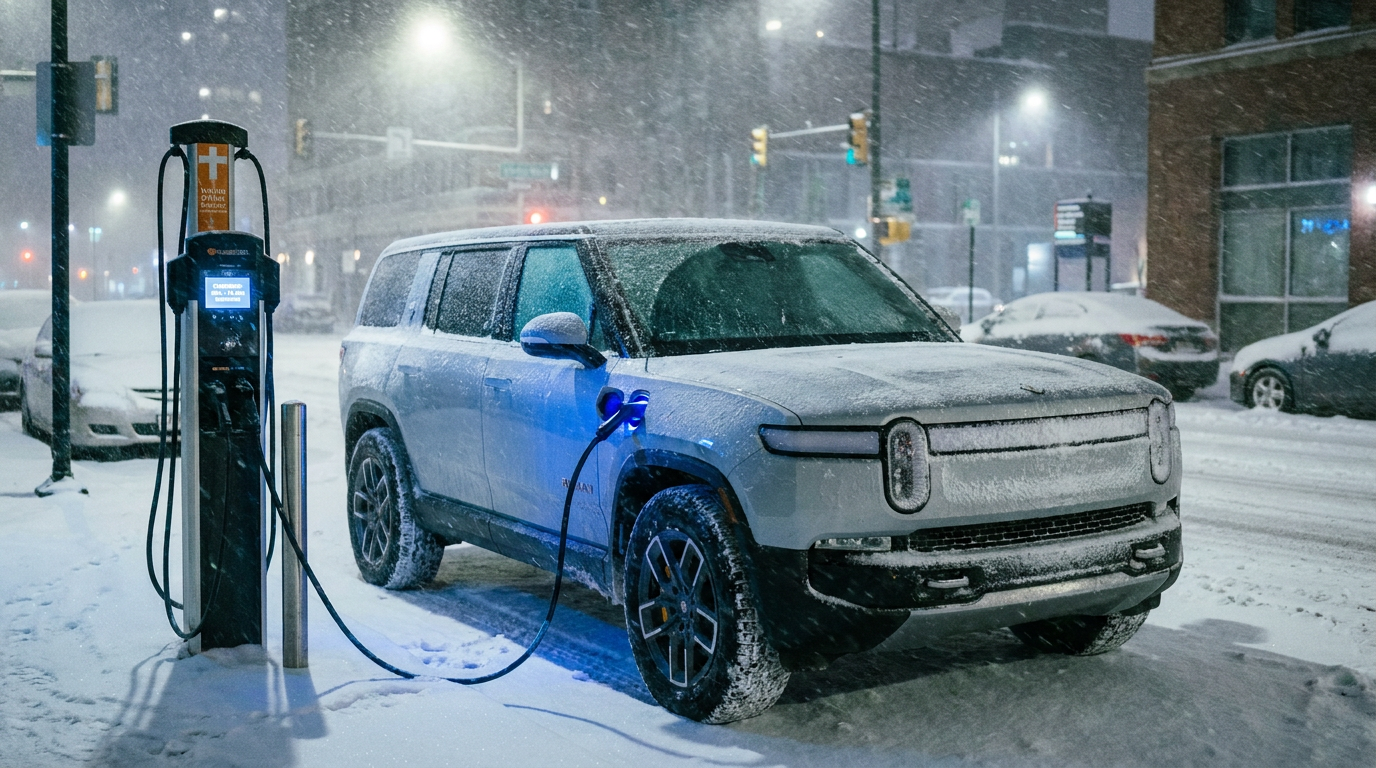
Furthermore, solid-state batteries solve one of the most frustrating aspects of EV ownership: winter range degradation. Liquid electrolytes thicken in freezing temperatures, slowing ion movement and slashing range by up to 40%.[6]
Solid ceramics and polymers do not freeze. Testing shows that solid-state cells maintain up to 95% of their capacity even in -20°C (-4°F) weather, providing reliable performance and faster cabin heating without draining the battery.[6]

So, where is the technology in 2026? While you cannot yet walk into a dealership and buy a mass-market solid-state electric family SUV, the technology has officially left the lab and entered early commercialization.[5]
In China, manufacturers like Greater Bay Technology (GBT) have rolled "A-sample" all-solid-state cells off production lines, successfully passing extreme needle penetration and thermal shock tests without igniting.[1]
Meanwhile, semi-solid batteries—a stepping stone that uses a hybrid of solid and minimal liquid electrolytes—are already commercially deployed. They are powering industrial drones and even early passenger eVTOL (electric vertical takeoff and landing) aircraft, where high energy density is non-negotiable.[3]
The first true consumer vehicle applications are appearing in two-wheelers. Startups like Donut Lab have integrated solid-state packs into electric motorcycles rolling out in early 2026, boasting 10-minute charge times and massive range improvements.[4]

For passenger cars, legacy automakers are playing a slightly longer game. Toyota, which holds thousands of solid-state patents, is targeting 2027 to 2028 for its first mass-produced solid-state EVs, aiming for a 10-minute charge and 620-mile range.[2][5]
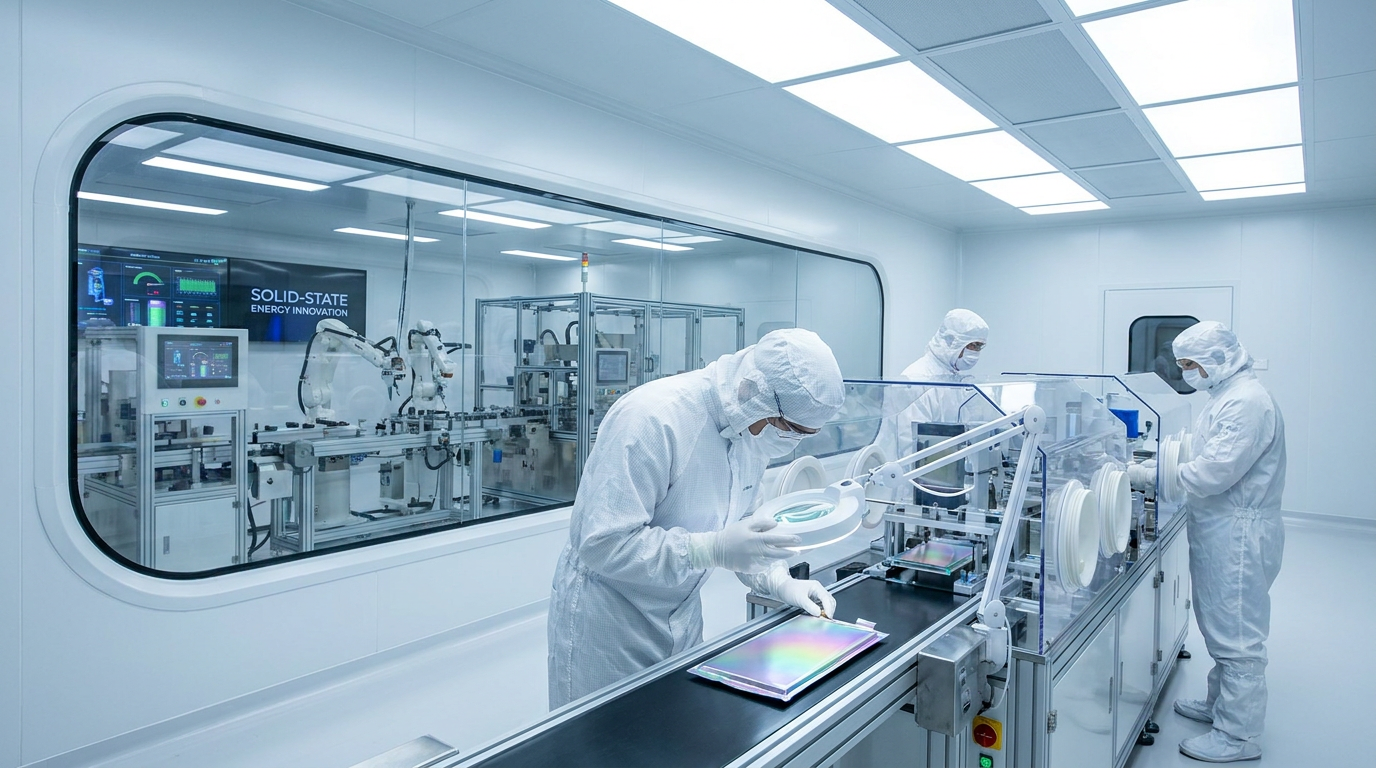
The remaining hurdles are no longer scientific, but industrial. Manufacturing solid electrolytes requires entirely new factory equipment, pristine cleanroom conditions, and immense pressure to ensure the solid layers maintain perfect contact as the battery expands and contracts.[3][6]
Scaling these complex manufacturing processes to produce millions of cells cheaply is the final bottleneck. Early solid-state batteries will carry a premium price tag, likely debuting in luxury vehicles and high-performance sports cars before trickling down to budget models.[3][5]
Despite these scaling challenges, the milestone achieved in 2026 is undeniable. The foundational chemistry has been proven, the pilot lines are running, and the transition away from liquid electrolytes has begun.[1][6]
As production volumes increase and costs fall over the next five years, solid-state technology will not just improve electric vehicles—it will make them objectively superior to internal combustion engines on every metric of range, refueling speed, and reliability.[6]
How we got here
2024
Early semi-solid batteries begin powering industrial drones and prototype devices.
2025
Major automakers showcase advanced solid-state prototypes and finalize pilot production lines.
Early 2026
First consumer applications launch, including solid-state electric motorcycles and A-sample automotive cells.
2027–2028
Target window for legacy automakers to release mass-market passenger EVs with solid-state packs.
Viewpoints in depth
Battery Innovators
Startups and specialized manufacturers pushing aggressive timelines to commercialize solid-state tech in niche markets.
For battery startups and specialized manufacturers, the waiting game is over. Rather than waiting to perfect massive automotive-scale production, these innovators are proving the technology today in smaller, high-margin applications. By deploying solid-state and semi-solid cells in drones, eVTOL aircraft, and electric motorcycles, they are generating real-world data and revenue. They argue that this iterative approach is the fastest way to refine the manufacturing process and drive down costs before tackling the immense volume demands of the passenger car market.
Legacy Automakers
Established car brands taking a measured approach, prioritizing safety validation and massive scale for late-2020s passenger vehicles.
Major automakers like Toyota and Volkswagen view solid-state batteries as a generational shift, but they are unwilling to rush integration. Their perspective is anchored in the reality of mass production: building a few thousand cells for a motorcycle is vastly different from producing millions of flawless cells for a global fleet of family SUVs. They emphasize the need for rigorous, multi-year validation testing to ensure these new batteries can survive a decade of daily abuse, extreme weather, and ultra-fast charging without failure. For them, 2027 to 2028 is the realistic window for true mass-market readiness.
Industrial Adopters
Aviation and robotics sectors leveraging semi-solid technology today for immediate high-density power needs.
In the aerospace and industrial sectors, the exact chemistry matters less than the immediate performance gains. These adopters are championing 'semi-solid' batteries—a pragmatic halfway point that uses mostly solid materials with a tiny amount of liquid to ease manufacturing. For an electric vertical takeoff and landing (eVTOL) aircraft, the 60% to 90% range increase provided by these high-density cells is the difference between a prototype and a commercially viable air taxi. They view the 2026 breakthroughs not as a future promise, but as an immediate operational upgrade.
What we don't know
- Exactly how quickly manufacturing costs will fall to make solid-state batteries affordable for entry-level, budget EVs.
- The long-term degradation curve of solid-state cells after a decade of real-world, high-voltage fast charging.
- Which specific solid electrolyte chemistry—ceramics, polymers, or sulfides—will ultimately dominate the automotive market.
Key terms
- Solid-State Battery
- A battery that uses a solid material, like ceramic or polymer, to conduct ions instead of a liquid solvent.
- Electrolyte
- The medium inside a battery that allows electrical charge (ions) to flow between the cathode and anode.
- Energy Density
- A measure of how much energy a battery can hold relative to its weight, usually expressed in Watt-hours per kilogram (Wh/kg).
- Thermal Runaway
- A dangerous chain reaction where a battery overheats uncontrollably, often leading to a fire in traditional liquid-based cells.
- Dendrites
- Microscopic, needle-like metallic structures that can grow inside a battery and cause short circuits.
- Semi-Solid Battery
- A transitional technology that uses a hybrid of solid materials and a small amount of liquid electrolyte to improve safety and density.
Frequently asked
What makes solid-state batteries better?
They use a non-flammable solid electrolyte, which drastically reduces fire risk, allows for much faster charging, and practically doubles the energy density compared to current lithium-ion batteries.
Can I buy a solid-state electric car today?
As of 2026, fully solid-state passenger cars are not yet in mass-market showrooms. However, the technology is currently rolling out in electric motorcycles, drones, and early automotive prototypes.
Do solid-state batteries lose range in the cold?
Unlike liquid electrolytes that thicken and lose efficiency in freezing temperatures, solid electrolytes remain stable, allowing the battery to retain up to 95% of its capacity even in extreme cold.
Why are they taking so long to reach cars?
While the chemistry works in the lab, manufacturing solid electrolytes at a massive scale requires entirely new factory equipment, pristine cleanrooms, and complex engineering to ensure the solid layers maintain perfect contact.
Sources
Source coverage
6 outlets
3 viewpoints surfaced






[1]ElectrekBattery Innovators
China ramps up solid-state EV battery production
Read on Electrek →[2]EV Infrastructure NewsLegacy Automakers
Solid-state batteries promise safer, faster-charging EVs
Read on EV Infrastructure News →[3]XT BatteryIndustrial Adopters
Are solid state batteries commercially available in 2026?
Read on XT Battery →[4]Donut LabBattery Innovators
Donut Lab Introducing New High-Performance Solid State Batteries
Read on Donut Lab →[5]Electric Car SchemeLegacy Automakers
Solid-state: the battery everyone is waiting for
Read on Electric Car Scheme →[6]Factlen Editorial TeamIndustrial Adopters
Synthesis by Factlen editorial team
Read on Factlen Editorial Team →
Every angle. Every day.
Get automotive stories with full source coverage and perspective breakdowns delivered to your inbox.