
How the Premier League Builds Its 380-Match Schedule: Inside the 2026-27 Fixture Release
The Premier League has released its 2026-27 fixture list, kicking off a massive logistical operation that balances a £6.7 billion TV deal, police requirements, and the demands of 20 clubs.
By Factlen Editorial Team
- Broadcasters & Commercial Partners
- Focus on maximizing global viewership and protecting the value of their £6.7 billion investment by scheduling the biggest matches in prime television slots.
- Match-Going Supporters
- Prioritize predictable scheduling, affordable travel, and traditional weekend kickoffs, often frustrated by late television-driven date changes.
- League & Logistical Planners
- Tasked with balancing sporting fairness, police crowd-control requirements, and the complex algorithm of sequencing 380 matches.
What's not represented
- · Lower-league EFL clubs whose attendances are impacted by Premier League TV scheduling.
- · Players' unions concerned about the physical toll of condensed winter scheduling.
Why this matters
The release of the Premier League schedule dictates the travel plans, weekends, and television viewing habits of millions of fans worldwide, while triggering the operational rollout of a £6.7 billion sports entertainment industry.
Key points
- The 2026-27 Premier League season kicks off on August 21 with Arsenal hosting Coventry City.
- The 380-match schedule is generated by a complex algorithm that balances sporting rules, police requests, and broadcast demands.
- No team will play more than two consecutive home or away matches during the league season.
- Broadcasters Sky Sports and TNT Sports dictate kickoff times to maximize audiences for their £6.7 billion investment.
- Match-going fans often face logistical hurdles when fixtures are moved to Friday or Monday nights for television.
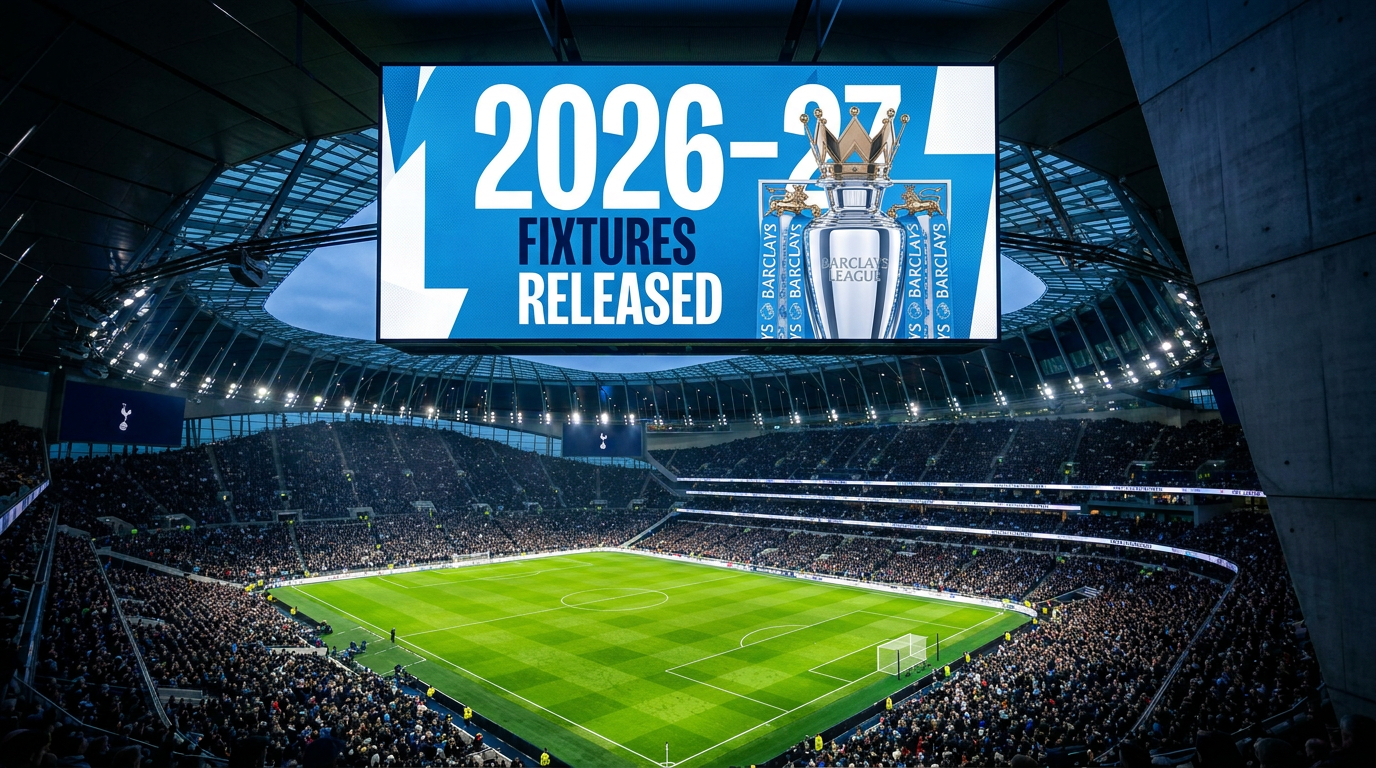
At 9:00 AM on June 19, 2026, the Premier League hit publish on its highly anticipated 2026-27 schedule, officially firing the starting gun on the new English football calendar. Defending champions Arsenal will open their title defense against newly promoted Coventry City in a Friday night showcase, while Liverpool travels to face Newcastle United in a marquee Sunday clash. For millions of supporters across the country, the immediate reaction is a frantic morning of calendar-checking, booking advance train tickets, and circling the dates of fierce local derbies. But behind the excitement of release day lies a massive logistical operation.[1][2][3]
The Premier League does not simply pull names from a hat to build its nine-month season. The 380-match fixture list is the product of a highly sophisticated scheduling algorithm, carefully balanced against the demands of a multi-billion-pound television rights deal, strict local policing requirements, and the physical toll on elite athletes. It is widely considered one of the most complex logistical and financial operations in global sports, requiring months of meticulous planning before a single ball is kicked. The process is overseen by Atos, an international IT services company, and veteran fixture compiler Glenn Thompson, who must sequence matches across 33 weekends and five midweek rounds without breaking a myriad of competitive rules.[4][5]
The scheduling algorithm is bound by strict sequencing rules designed to maintain sporting integrity. Chief among them is the guarantee that no team will ever play more than two home or two away matches consecutively in the league. Furthermore, over any five-match period throughout the season, a club will always have a balanced split of three home fixtures and two away, or vice versa. This ensures that no team faces an insurmountable wall of road games during crucial stretches of the title race or a relegation battle.[4]

Geography plays a massive role in how the computer plots the calendar. Clubs located in the same city are deliberately "paired" to ensure they do not play at home on the same day. Manchester United and Manchester City, or Arsenal and Tottenham Hotspur, are kept on opposite home and away cycles. This pairing system is essential to prevent local transport networks from collapsing under the weight of 100,000 traveling fans and to ease the immense operational burden on metropolitan police forces.[4][5]
The police also hold a powerful veto over the final schedule. High-risk matches—such as fierce local derbies or historic rivalries with a history of crowd trouble—are deliberately kept away from certain dates. Authorities will request that these volatile fixtures avoid Bank Holidays, major local festivals, or late evening kickoff slots where prolonged alcohol consumption could exacerbate crowd control issues. The fixture computer must route around these blackout dates while keeping the rest of the league's schedule intact.[5]
The police also hold a powerful veto over the final schedule.
But the biggest invisible hand shaping the modern Premier League schedule belongs to the broadcasters. The 2026-27 season marks the second year of a record-breaking four-year UK broadcast agreement that runs until the summer of 2029. Under this staggering £6.7 billion domestic deal, the television networks effectively underwrite the financial dominance of English football on the global stage. In return for this massive investment, the broadcasters are granted the power to dictate exactly when the biggest and most attractive matches are played, pulling them away from traditional time slots to maximize their viewing audiences.[4]

Sky Sports holds the lion's share of this broadcasting pie, holding the rights to show a minimum of 215 live matches per season. TNT Sports carries an additional 52 live matches, ensuring that more than two-thirds of the entire Premier League season is broadcast live in the UK. Because these networks pay billions for exclusive rights, the traditional Saturday 3:00 PM kickoff—which is protected by a UK broadcast blackout to encourage attendance at lower-league games—is no longer the center of gravity for top-tier fans.[4][6]
Instead, the biggest draws are shifted to made-for-TV slots designed to capture the undivided attention of the viewing public. The opening weekend of the 2026-27 season perfectly illustrates this modern reality. Arsenal’s clash with Coventry City is a Friday night showcase under the floodlights, Brentford hosts Tottenham Hotspur on Saturday evening, and Chelsea travels to Fulham for a prime-time Monday Night Football derby. These staggered kickoffs allow a global audience spanning 212 territories and hundreds of millions of homes to watch multiple live matches back-to-back without overlap, maximizing advertising revenue and subscription value.[2][5]
This financial reality creates a persistent tension between television executives and match-going supporters. While the global audience enjoys staggered kickoffs from the comfort of their living rooms, the traveling fans who provide the vital stadium atmosphere bear the brunt of the logistics. A Monday night fixture between Newcastle and Liverpool, for example, requires away supporters to navigate hundreds of miles of travel on a working weekday, often with limited or non-existent public transport options late at night.[3][5]

Broadcasters and the league attempt to mitigate this friction by announcing television selections in structured batches. Today’s release confirmed the exact dates and times for the opening weekend, but fans must wait for subsequent announcements to know exactly when August and September matches will actually be played. This rolling schedule means supporters often have to delay booking non-refundable train tickets or hotels until the TV networks finalize their picks, adding a layer of logistical anxiety to the season.[5]
The clubs themselves also actively lobby the fixture computer to protect their sporting interests and the physical health of their squads. Teams competing in the expanded UEFA Champions League, Europa League, and Conference League regularly submit requests to avoid long domestic away trips immediately following grueling European midweek fixtures. Balancing these club requests against the rigid sequencing rules, strict police vetoes, and unyielding broadcaster demands requires the scheduling algorithm to process millions of permutations before arriving at the final published list that fans see today.[1][4]
As the 2026-27 season approaches, the fixture list stands as a masterclass in compromise and complex data management. It is a mathematical puzzle that must satisfy the commercial imperatives of a multi-billion-pound global entertainment product while maintaining the sporting integrity of a grueling 38-game marathon. For the fans circling dates on their calendars today, the schedule is a roadmap of hope and anxiety; for the league, it is the blueprint of a £6.7 billion industry roaring back to life.[4][5]
How we got here
1992
The Premier League is formed, breaking away from the Football League to capitalize on lucrative new television rights.
2025
The new £6.7 billion domestic broadcast cycle begins, cementing the league's financial dominance.
June 19, 2026
The 2026-27 fixture list is officially published, mapping out the 380-match season.
August 21, 2026
The new season kicks off with Arsenal hosting Coventry City on Friday Night Football.
Viewpoints in depth
Broadcasters' View
Maximizing the global entertainment product.
For networks investing billions into domestic and international rights, the Premier League is a premium entertainment asset. Broadcasters argue that staggering kickoffs across Fridays, Sundays, and Mondays allows fans to watch more live football than ever before. By placing marquee matchups in uncontested time slots, they maximize advertising revenue and global viewership, which in turn funds the massive central payments that allow clubs to sign the world's best players.
Match-Going Supporters' View
Protecting the traditional stadium experience.
Advocacy groups for stadium-going fans argue that the relentless shift toward made-for-TV scheduling treats loyal supporters as mere television props. Moving a fixture to a Monday night or a Sunday evening often makes public transport impossible for away fans traveling hundreds of miles. They lobby for earlier notice of TV selections and a cap on how many times a single club can be forced to play outside the traditional weekend slots.
Logistical Authorities' View
Maintaining public safety and infrastructure.
For local police forces and transit authorities, the fixture list is a major public safety variable. Their primary concern is preventing flashpoints between rival fanbases and avoiding the collapse of local transport networks. They actively veto high-risk derbies from taking place on Friday nights or Bank Holidays, insisting that the commercial desire for a prime-time spectacle must never override crowd control and civic safety.
What we don't know
- Exactly which matches in late autumn and winter will be moved for television broadcast, as those picks are made on a rolling basis.
- How deep runs in expanded European competitions will force late-season fixture congestion and rescheduling for top clubs.
Key terms
- Fixture Computer
- The algorithm and software system used to generate the 380-match schedule while balancing thousands of competing variables.
- 3:00 PM Blackout
- A long-standing rule in UK football prohibiting live television broadcasts of matches between 2:45 PM and 5:15 PM on a Saturday to protect lower-league stadium attendances.
- Pairing
- The scheduling rule ensuring two clubs from the same city do not play home matches on the same day, easing the strain on local infrastructure.
Frequently asked
When does the 2026-27 Premier League season start?
The season begins on Friday, August 21, 2026, with defending champions Arsenal hosting newly promoted Coventry City.
Why are some matches moved to Friday or Monday nights?
Matches are rescheduled from the traditional Saturday afternoon slot to fulfill the demands of broadcasters, who pay billions for exclusive live TV slots.
When will the rest of the TV fixtures be announced?
TV selections are announced in batches throughout the season. The picks for the opening weekend are confirmed on release day, with August and September selections following shortly after.
Sources
Source coverage
6 outlets
3 viewpoints surfaced






[1]ESPNBroadcasters & Commercial Partners
Premier League 2026-27 fixtures: When will the top contenders play?
Read on ESPN →[2]Sky SportsBroadcasters & Commercial Partners
Arsenal kick off 2026/27 Premier League season vs Coventry - live on Sky
Read on Sky Sports →[3]BBC SportMatch-Going Supporters
Coventry play champions Arsenal in Premier League opener
Read on BBC Sport →[4]Premier LeagueLeague & Logistical Planners
PL broadcast deals for 2025-28
Read on Premier League →[5]Daily ExpressMatch-Going Supporters
Premier League fixtures officially released
Read on Daily Express →[6]Live Football on TVLeague & Logistical Planners
Live Premier League On TV Schedule
Read on Live Football on TV →



Every angle. Every day.
Get sports stories with full source coverage and perspective breakdowns delivered to your inbox.