
Strait of Hormuz Reopens Under US-Iran Truce, But Economic Toll Remains 'Baked In'
A 60-day interim peace deal between the US and Iran has reopened the world's most critical energy chokepoint, sending oil prices to a three-month low. However, analysts warn that the logistical hurdles of resuming shipping and the lingering inflation from the 100-day disruption will take months to unwind.
By Factlen Editorial Team
- Energy Markets & Importers
- Focused on the physical supply of oil, restocking depleted reserves, and ensuring safe maritime logistics.
- US Administration
- Prioritizing immediate economic relief from high gas prices while seeking a framework to curb Iran's nuclear program.
- Iranian Government
- Demanding the rapid lifting of sanctions and unfreezing of assets in exchange for reopening the waterway.
- Security Analysts
- Skeptical of the truce's longevity, viewing it as a temporary pause that leaves underlying conflicts unresolved.
What's not represented
- · Maritime Insurance Underwriters
- · OPEC+ Producing Nations
- · Renewable Energy Investors
Why this matters
The Strait of Hormuz handles roughly 20% of the world's oil supply, and its 100-day closure triggered a global energy shock. While the reopening averts a worst-case recession scenario, consumers will still face elevated inflation and energy costs for months as the global supply chain slowly normalizes.
Key points
- The US and Iran signed a 60-day interim peace deal at Versailles, immediately halting hostilities.
- The agreement reopens the Strait of Hormuz, which handles 20% of global oil supplies.
- Brent crude prices fell to around $80 a barrel, down from a crisis peak of $126.
- Analysts warn the economic toll is "baked in" due to depleted emergency stockpiles and lingering inflation.
- Shipping traffic is resuming slowly as fleet operators await mine clearance and security guarantees.
- The conflict has accelerated global investment in renewable energy to bypass fossil fuel chokepoints.
After more than 100 days of unprecedented disruption to global energy markets, the United States and Iran have signed a 14-point interim peace agreement that immediately halts hostilities and reopens the Strait of Hormuz. The memorandum of understanding, signed at the Palace of Versailles, extends a tenuous ceasefire by 60 days to allow for broader negotiations.[6][8]
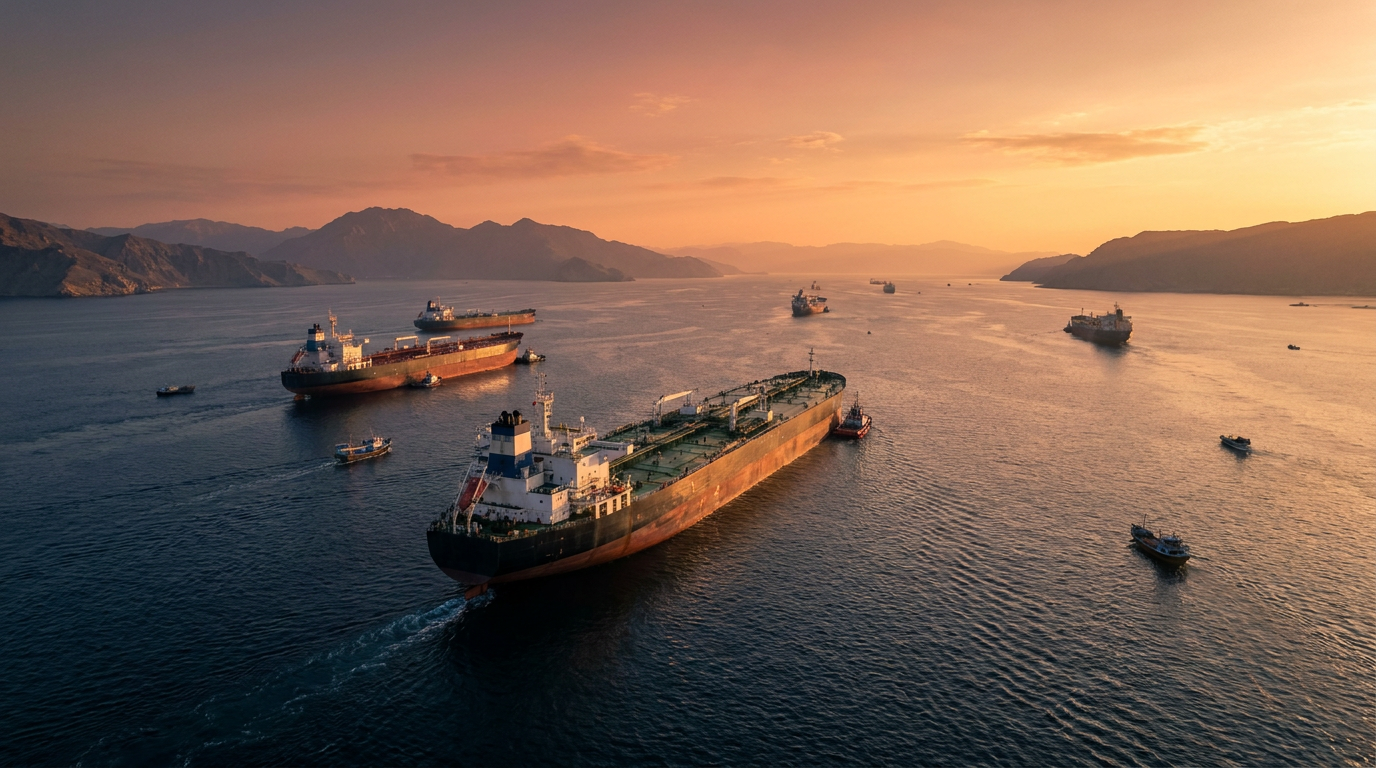
The diplomatic breakthrough brings a sudden pause to a conflict that had effectively severed one of the world's most critical economic arteries. The Strait of Hormuz, a narrow waterway between the Persian Gulf and the Gulf of Oman, typically facilitates the transit of about 20% of the world's oil and liquefied natural gas.[4][7]
The immediate financial reaction was swift. Brent crude, the international oil benchmark, tumbled to around $80 a barrel—a three-month low and a massive retreat from the crisis peak of $126 a barrel.[4][5]
The drop in futures prices reflects a collective sigh of relief on trading floors, as the worst-case scenarios of a prolonged global recession and runaway energy inflation appear to have been averted.[5][7]

However, energy analysts and economists are warning that the optimism in financial markets may be outpacing the physical reality on the water. The economic toll of the 100-day blockade is already "baked in" to the global supply chain, meaning consumers and businesses will not see immediate relief.[1]
The primary mechanism keeping costs elevated is the severe depletion of global emergency crude stockpiles. During the blockade, importing nations were forced to drain their strategic reserves to keep their economies running.[5]
Even with the strait reopening, buyers are now racing to refill those heavily depleted inventories just as the Northern Hemisphere enters its peak summer travel season. This surging demand is expected to keep physical crude markets tight, preventing prices from fully returning to pre-war levels for several months.[4][5]
Furthermore, the physical resumption of shipping through the Strait of Hormuz is proving to be a slow and cautious process. While the US has lifted its naval blockade and Iran has pledged toll-free transit, shipowners remain highly risk-averse.[2][6]

Traffic through the waterway actually thinned on Friday as maritime logistics companies opted to err on the side of safety. Insurers and fleet operators are awaiting concrete security guarantees and the completion of mine-sweeping operations, which could take weeks.[2][8]
Traffic through the waterway actually thinned on Friday as maritime logistics companies opted to err on the side of safety.
"Markets tend to assume a reopening means a reset," noted one investment chief, but the logistical reality of repositioning massive tanker fleets and unwinding rerouted supply chains is immensely complex.[7]
The macroeconomic damage also has a long tail. The prolonged spike in energy costs over the past three months has already seeped into the broader economy, driving up manufacturing and transportation costs that have been passed on to consumers.[1][5]
Central banks, which had been hoping to cut interest rates this year, were forced to pivot as the conflict fueled a fresh wave of inflation. The delayed effect of these elevated rates means that global GDP growth will likely remain sluggish through the third quarter, even if energy prices stabilize.[5][7]
The geopolitical foundation of the reopening is also fragile. The Versailles agreement is strictly an interim measure—a 60-day window intended to pave the way for a permanent treaty addressing Iran's nuclear program and regional security.[6][8]

Signs of friction have already emerged. Scheduled follow-up talks in Switzerland were abruptly delayed, underscoring the deep mistrust that remains between Washington and Tehran.[1][6]
Security analysts caution that the 60-day truce may simply serve as a tactical pause, allowing both sides to regroup politically and militarily without resolving the underlying structural conflicts that ignited the war.[6]
For the Iranian government, the immediate priority is economic survival. Tehran requires the rapid lifting of sanctions and the unfreezing of foreign assets to alleviate crushing domestic pressure, making the resumption of oil exports an existential necessity.[7]
In Washington, the administration faces intense domestic pressure to lower gasoline prices ahead of the midterm elections, making the rapid normalization of global energy flows a top political imperative.[5]

One lasting legacy of the crisis may be a permanent shift in how nations approach energy security. The vulnerability exposed by the Hormuz blockade has dramatically accelerated international interest and investment in renewable energy projects and alternative supply routes.[3]
Multilateral lenders report a surge in capital allocation toward green infrastructure, as importing nations seek to insulate themselves from the geopolitical chokepoints of the fossil fuel era.[3]
Ultimately, while the Versailles agreement has successfully pulled the global economy back from the brink, the path to full recovery remains fraught. The next 60 days will test whether this fragile truce can evolve into lasting stability, or if the world's energy markets remain at the mercy of a single, narrow strait.[5][8]
How we got here
Feb 2026
Conflict erupts, leading to the effective closure of the Strait of Hormuz.
March - May 2026
Global oil prices surge to $126 a barrel; importing nations drain emergency stockpiles.
Mid-June 2026
US and Iran agree to a preliminary framework for a ceasefire.
June 18, 2026
The 14-point interim peace deal is formally signed at the Palace of Versailles.
June 19, 2026
Initial shipping traffic cautiously resumes, though follow-up talks in Switzerland face delays.
Viewpoints in depth
Energy Importers & Markets
Relieved by the reopening but cautious about the timeline for physical supply recovery.
Financial markets and importing nations view the interim deal as a vital off-ramp from a worst-case economic scenario. However, they emphasize that the physical oil market remains tight. Because strategic reserves were drained during the 100-day blockade, buyers must now aggressively restock, which will keep a floor under prices. Furthermore, maritime insurers and shipping companies are demanding rigorous security protocols and mine-clearance before fully committing their fleets back to the strait.
The US Administration
Focused on securing immediate economic relief and preventing a nuclear breakout.
For Washington, the 60-day truce serves a dual purpose: it immediately lowers global energy prices—alleviating domestic inflation pressures ahead of crucial elections—while establishing a framework to negotiate a permanent end to Iran's nuclear ambitions. The administration views the toll-free reopening of the strait as a non-negotiable baseline for any future diplomatic engagement, though it faces domestic skepticism over whether the truce merely allows Tehran time to regroup.
The Iranian Government
Prioritizing the immediate lifting of sanctions and the resumption of vital oil revenues.
Tehran views the interim agreement as a necessary mechanism to relieve crushing economic pressure. By agreeing to reopen the strait, Iran expects the immediate lifting of naval blockades, the unfreezing of international assets, and the unimpeded ability to sell its oil on the global market. Iranian officials have made it clear that their participation in the broader 60-day negotiation window is strictly contingent on the US fulfilling these economic commitments.
Security Skeptics
Warning that the underlying geopolitical conflicts remain entirely unresolved.
Defense analysts and regional security experts argue that the Versailles memorandum is merely a tactical pause rather than a genuine peace accord. They point out that the core drivers of the conflict—regional proxy influence and military posturing—were not addressed in the 14-point interim deal. From this perspective, the 60-day window simply allows both sides to rebuild their military and financial resources, leaving the global economy vulnerable to a sudden resumption of hostilities.
What we don't know
- Whether the 60-day interim truce will successfully translate into a permanent peace treaty.
- Exactly how long it will take to clear the Strait of Hormuz of potential naval mines and restore full shipping capacity.
- If the delayed follow-up talks in Switzerland signal a breakdown in the broader diplomatic framework.
Key terms
- Strait of Hormuz
- A narrow, strategically critical waterway between the Persian Gulf and the Gulf of Oman, through which roughly a fifth of the world's oil passes.
- Brent Crude
- The primary international benchmark price for purchasing oil worldwide.
- Strategic Petroleum Reserve
- Emergency stockpiles of crude oil maintained by countries to mitigate the economic impact of severe supply disruptions.
- Memorandum of Understanding (MoU)
- A formal agreement between two or more parties that establishes a framework for cooperation, often preceding a final, binding treaty.
- Naval Blockade
- The use of military ships to prevent vessels from entering or leaving a country's ports, effectively cutting off its maritime trade.
Frequently asked
Why aren't gas prices dropping immediately?
The 100-day blockade forced countries to drain their emergency oil reserves. Buyers are now rushing to refill those stockpiles, which keeps demand high and prevents prices from falling instantly.
Is the Strait of Hormuz fully open now?
Legally, yes, but physically it is opening slowly. Shipping companies are waiting for the waterway to be cleared of potential mines and for insurers to lower their risk premiums before sending full fleets through.
What happens after the 60-day truce?
The US and Iran are supposed to use this 60-day window to negotiate a permanent peace treaty. If talks fail, hostilities could resume, and the strait could be threatened again.
How much oil goes through the strait?
During peacetime, the Strait of Hormuz handles approximately 20% of the world's total oil supply and a significant portion of its liquefied natural gas.
Sources
Source coverage
8 outlets
4 viewpoints surfaced






[1]CNBCSecurity Analysts
Hormuz relief may not ease the economic toll that's already 'baked in,' analysts warn
Read on CNBC →[2]BloombergEnergy Markets & Importers
Hormuz Traffic Thins Friday as Shipowners Err on Side of Safety
Read on Bloomberg →Iran War Fuels Interest in Renewables, Multilateral Lender Says
Read on Bloomberg →[4]ReutersUS Administration
Oil hits 3-month low as US, Iran reach peace deal to reopen Strait of Hormuz
Read on Reuters →[5]The GuardianEnergy Markets & Importers
Oil and gas unlikely to return to prewar prices for months even if Hormuz reopens
Read on The Guardian →[6]Al JazeeraSecurity Analysts
US and Iran reach tentative deal for 60-day truce extension, officials say
Read on Al Jazeera →[7]The Straits TimesIranian Government
Oil prices sink towards pre-war levels as US and Iran sign peace deal
Read on The Straits Times →[8]The NationalUS Administration
Trump signing Iran deal at Versailles 'history in the making', says French minister
Read on The National →
Every angle. Every day.
Get business stories with full source coverage and perspective breakdowns delivered to your inbox.