
How Kyoto is Rewriting the Rules of Local Travel to Beat Overtourism
Facing record-breaking visitor numbers, Japan's cultural capital is rolling out aggressive new taxes, luggage bans, and neighborhood boundaries in 2026 to pioneer a regenerative model of tourism.
By Factlen Editorial Team
- Local Residents
- Prioritizing daily quality of life, privacy, and functional public infrastructure over unrestricted tourism.
- Municipal Government
- Balancing the economic engine of global tourism with the urgent need for infrastructure funding and crowd control.
- Tourism & Hospitality Sector
- Adapting to new regulations while seeking to maximize the economic value of high-end, sustainable travelers.
- Sustainable Travel Advocates
- Championing 'locally honored tourism' that disperses crowds and fosters meaningful cultural exchange.
What's not represented
- · Budget Travelers & Backpackers
- · International Tour Operators
Why this matters
As global travel surges to unprecedented levels, Kyoto's transition from passive sightseeing to strictly managed 'locally honored tourism' serves as a vital blueprint for how the world's most popular destinations can save their local culture without shutting their doors.
Key points
- Kyoto is implementing a revised five-tier accommodation tax in March 2026, charging up to ¥10,000 per night for luxury stays.
- The city is aggressively promoting 'Empty-Handed Tourism' to keep oversized luggage off local commuter buses.
- Grassroots neighborhood councils in Gion have banned tourists from private alleys to protect resident privacy.
- Digital congestion maps and pre-booked parking are being deployed to disperse crowds away from major heritage sites.
For decades, Kyoto has been the undisputed crown jewel of Japanese tourism, drawing millions of global admirers to its serene Zen temples, towering bamboo groves, and meticulously preserved traditional wooden machiya townhouses. But the sheer volume of visitors has rapidly transformed the ancient capital into a modern cautionary tale of overtourism. In recent years, the city’s modest population of 1.4 million has been routinely overwhelmed by an influx of travelers that exceeded 43 million annually before the pandemic and is now surging past those historic peaks, fundamentally altering the rhythm of daily life.[1]
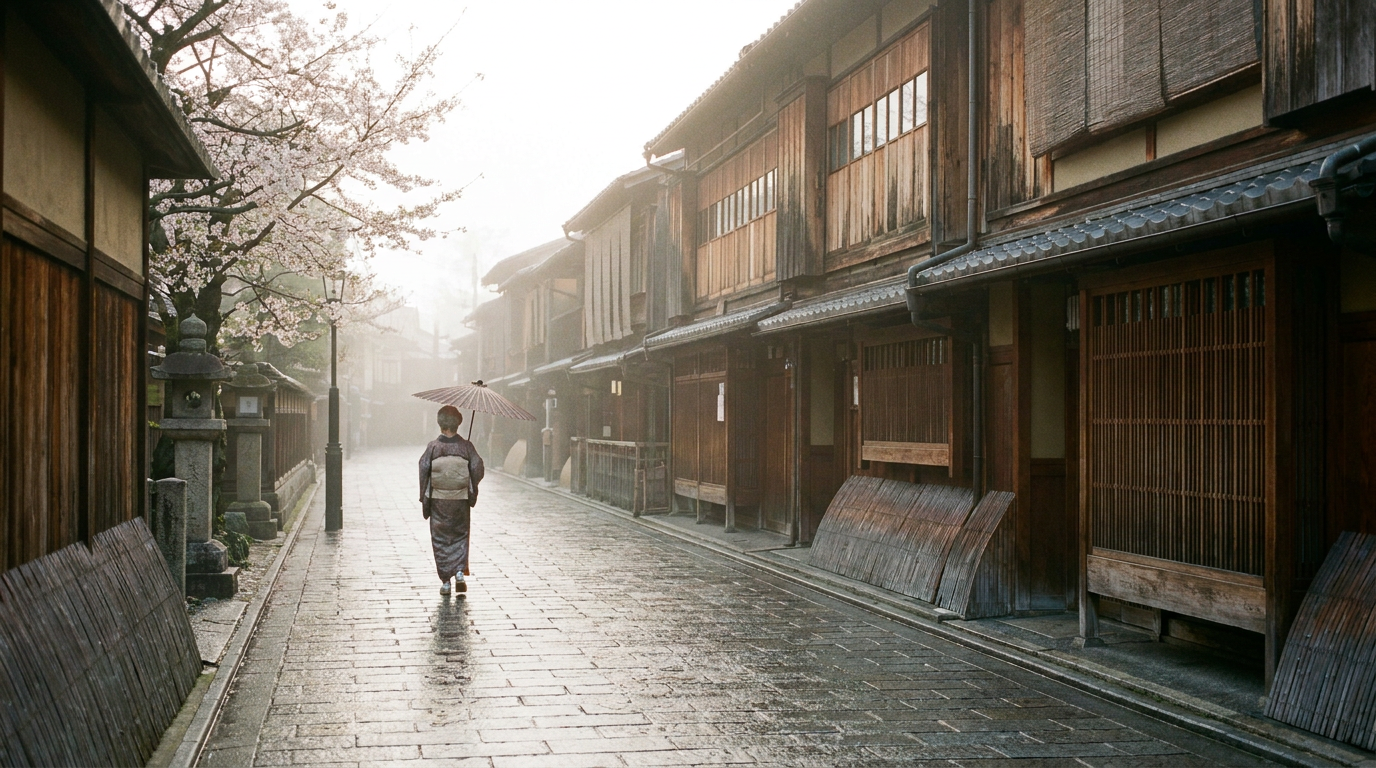
The friction between the economic windfall of tourism and the daily lives of residents has reached a breaking point. Local commuters frequently find themselves unable to board city buses packed with foreign tourists hauling oversized suitcases. In the historic Gion district, apprentice geisha (maiko) have faced aggressive behavior from paparazzi-style photographers, while narrow residential streets have been clogged with lost or trespassing sightseers. As one longtime resident noted, the city was rapidly becoming a 'free-for-all' where the pursuit of hospitality was actively degrading the local quality of life.[1][2]
But 2026 marks a definitive pivot for Kyoto's approach to its visitor economy. Rather than merely asking tourists to behave better through polite public awareness campaigns, the municipal government and local neighborhood councils are implementing structural, financial, and logistical barriers designed to fundamentally change how people travel within the city. Kyoto is actively transitioning from a high-volume, passive destination to a global laboratory for regenerative tourism—a model that demands visitors leave the city better than they found it, while actively funding its preservation.[6]

The most immediate and impactful change is financial, targeting the wallets of those who visit. Beginning in March 2026, Kyoto is drastically overhauling its accommodation tax to shift the financial burden of city maintenance directly onto luxury travelers. While the city has levied a modest, flat-rate tourist tax since 2018, the new five-tier system introduces significantly higher rates for premium stays, marking a departure from the one-size-fits-all approach of the past. This policy acknowledges that the costs of maintaining a world-class heritage site have outpaced the revenue generated by standard municipal taxes.[4]
Under the revised structure, budget accommodations will see only minor increases, but high-end lodging will face steep premiums. For room rates exceeding ¥50,000 per night, the tax jumps to ¥4,000, and for ultra-luxury stays over ¥100,000, the tax reaches ¥10,000 (roughly $65) per person, per night. This progressive tax model is explicitly designed to make the cost of tourism more equitable, ensuring that those who can afford luxury experiences contribute proportionately to the city's upkeep.[4][6]
The revenue generated from this unprecedented tax hike is strictly earmarked for local quality-of-life improvements rather than general marketing. Funds will be directed toward upgrading aging public infrastructure, deploying advanced digital crowd-control measures, and preserving the very historic assets that draw visitors in the first place. By intentionally raising the cost of premium stays, policymakers also hope to encourage longer, more thoughtful visits rather than rapid, high-impact weekend trips that clog the transit arteries.[4][6]

Beyond municipal finances, Kyoto is tackling its most visible and universally despised logistical nightmare: the proliferation of oversized luggage on public transit. The city has aggressively launched an 'Empty-Handed Tourism' (Te-bura Kanko) initiative, urging visitors to utilize Japan's highly efficient luggage forwarding services rather than dragging massive suitcases onto crowded city buses. This initiative aims to restore dignity and usability to the daily commute of Kyoto's residents. By intercepting luggage at the station or the airport, the city hopes to seamlessly separate the traveler from their heavy cargo before they ever reach the historic center.[3]
Beyond municipal finances, Kyoto is tackling its most visible and universally despised logistical nightmare: the proliferation of oversized luggage on public transit.
To actively support this logistical shift, the city introduced dedicated 'Hands Free Buses' that circulate on specific routes between major transit hubs, popular hotels, and key tourist attractions. The innovative system allows travelers to leave their heavy bags secured aboard the bus while they disembark to explore various neighborhoods, effectively keeping the standard municipal buses clear for local residents commuting to work, school, and daily errands. This dual-transit approach is a direct response to years of complaints from locals who were routinely left waiting at bus stops because the vehicles were entirely filled with tourists and their baggage.[2][3]
However, changing entrenched traveler behavior remains a steep uphill battle for local authorities. Early rollouts of the Hands Free Bus and luggage forwarding campaigns have struggled to catch on universally with international visitors, many of whom are unaccustomed to separating from their luggage or remain unaware of Japan's highly reliable domestic forwarding services. Municipal officials openly acknowledge that building the infrastructure alone isn't a cure-all; it requires a massive, multi-lingual educational campaign to successfully shift the default habits of millions of new arrivals.[2][6]

Where municipal policy moves slowly, grassroots community action has stepped in with immediate effect. Neighborhood councils, particularly in the highly trafficked Higashiyama and Gion districts, have begun drawing hard, physical boundaries to protect their privacy and sanity. In response to escalating etiquette violations and trespassing, local associations have installed strict, multi-lingual signage prohibiting tourists from entering private residential roads and narrow alleys, backed by the explicit threat of fines for non-compliance. These measures were deemed absolutely necessary after residents reported feeling like exhibits in a museum rather than citizens in their own homes.[2]
These neighborhood boundaries are part of a broader cultural push toward what the city calls 'locally honored tourism.' The Kyoto City Official Travel Guide now explicitly asks visitors to reflect on their behavior, shifting the mindset from passive consumption of a destination to active, respectful engagement with a living community. The city has even launched certification programs for businesses that adhere to sustainable practices, rewarding operators who prioritize local harmony over sheer volume.[3][6]
To alleviate the crushing density at world-famous sites like the Arashiyama bamboo forest and the Fushimi Inari shrine, the Japan Tourism Agency and local officials are deploying sophisticated digital dispersal strategies. New digital maps track real-time crowd congestion via mobile data, actively nudging tourists toward less crowded areas of the city. Simultaneously, mandatory pre-booking systems for parking slots aim to eliminate the gridlock of massive tour buses endlessly circling historic neighborhoods in search of a spot. These technological interventions are designed to smooth out the peaks and valleys of daily visitor traffic.[5]
The dispersal strategy also extends well beyond the city limits. Tourism boards are actively promoting excursions to the surrounding countryside, such as the regenerative art projects in Kyotango and the rural homestays around Lake Biwa in neighboring Shiga Prefecture. By pulling visitors out of the urban core, these initiatives spread the economic benefits of tourism to depopulating rural areas while giving Kyoto's center a much-needed chance to breathe and recover.[3][6]
Even the city's approach to lucrative corporate travel is being entirely rewritten to align with these new values. Kyoto's 2030 promotion plan for MICE (Meetings, Incentives, Conferences, and Exhibitions) now explicitly mandates that business events must support the sustainable development of the city. Organizers are financially incentivized to host public lectures for residents and utilize unique local venues, ensuring that corporate gatherings leave a positive intellectual and economic footprint on the local population rather than just filling hotel rooms.[4][6]

Despite these sweeping and innovative initiatives, the core macro-economic tension remains largely unresolved. Japan's national government has set an incredibly ambitious target of welcoming 60 million foreign visitors annually by 2030, driven by a historically weak yen that makes the country an irresistible bargain for international travelers. Last year alone, foreign visitors injected a record ¥5.3 trillion into the national economy, creating a powerful financial incentive for the central government to keep the borders wide open. This national mandate often directly conflicts with Kyoto's hyper-local desire to slow the influx.[1][5]
For Kyoto's residents, this macro-economic success often feels like a micro-level crisis. While the new taxes, luggage bans, and private road closures offer immediate relief, some locals fear these measures are merely band-aids on a structural imbalance between global supply and local demand. The ultimate test will be whether these friction points can successfully filter for more respectful, slower-paced travelers without alienating the international community that the broader Japanese economy relies upon.[2][6]
Ultimately, Kyoto is doing what few major global tourist hubs have dared to attempt: it is actively and unapologetically prioritizing the daily lives of its residents over the frictionless convenience of its visitors. If successful, Kyoto's 2026 initiatives will provide a vital, tested blueprint for other heritage cities worldwide, proving that tourism can be carefully managed as an engine for cultural preservation rather than an unchecked catalyst for its destruction. The world is watching to see if the ancient capital can successfully save its soul without closing its gates.[6]
How we got here
2018
Kyoto implements its first modest accommodation tax to help fund tourism management.
2022
Annual visitor numbers to Kyoto exceed 43 million, heavily straining local infrastructure.
Late 2024
Neighborhood councils in Gion install strict signage banning tourists from private alleys.
September 2024
Kyoto launches the 'Hands Free Bus' to encourage empty-handed tourism.
March 2026
The city implements a revised, five-tier accommodation tax targeting luxury stays.
2030
The target year for Japan's national goal of 60 million foreign visitors and Kyoto's sustainable MICE promotion plan.
Viewpoints in depth
Local Residents & Neighborhood Councils
Prioritizing daily quality of life, privacy, and functional public infrastructure over unrestricted tourism.
For residents, the economic benefits of tourism have been overshadowed by the daily friction of crowded buses, littered streets, and privacy invasions. Neighborhood councils argue that without strict boundaries—such as banning tourists from private alleys in Gion—the city's unique cultural fabric will be hollowed out into a mere theme park. They view the new taxes and luggage rules as necessary, albeit overdue, steps to reclaim their city.
Municipal Policymakers
Balancing the economic engine of global tourism with the urgent need for infrastructure funding and crowd control.
City officials are walking a tightrope. They recognize that tourism is a vital economic pillar, but they also face intense political pressure from exhausted constituents. By implementing the progressive accommodation tax and the 2030 MICE strategy, policymakers aim to extract higher value from fewer, more affluent visitors, using the revenue to subsidize the hidden costs of maintaining a world-class heritage destination.
Sustainable Travel Advocates
Championing 'locally honored tourism' that disperses crowds and fosters meaningful cultural exchange.
Sustainable tourism experts argue that the problem isn't the number of tourists, but their concentration in time and space. They advocate for structural nudges—like digital congestion maps, off-peak pricing, and promoting rural excursions to Shiga and Kyotango. This camp believes that if travelers are educated to use luggage forwarding and respect local etiquette, tourism can become a regenerative force that funds preservation rather than degrading it.
What we don't know
- It remains unclear if higher luxury taxes will actually deter the sheer volume of budget and mid-tier travelers drawn by a weak yen.
- Authorities are still determining how to effectively educate first-time international visitors about luggage forwarding services before they arrive in the city.
Key terms
- Overtourism
- A phenomenon where the volume of visitors to a destination degrades the quality of life for local residents and the quality of the experience for tourists.
- Machiya
- Traditional wooden townhouses found throughout Kyoto, many of which are being preserved or converted into sustainable accommodations.
- Empty-Handed Tourism (Te-bura Kanko)
- A Japanese travel concept promoting the use of luggage delivery services so tourists can explore without carrying heavy bags.
- MICE
- An acronym for Meetings, Incentives, Conferences, and Exhibitions; a highly profitable sector of business tourism that Kyoto is aligning with sustainable goals.
- Locally Honored Tourism
- A regenerative travel philosophy asking visitors to actively respect and adapt to the daily life, rules, and customs of the host community.
Frequently asked
When does Kyoto's new tourist tax take effect?
The revised five-tier accommodation tax goes into effect in March 2026, significantly raising fees for luxury stays to fund city infrastructure.
What is 'Empty-Handed Tourism'?
It is a city-backed initiative encouraging visitors to use luggage forwarding services and dedicated 'Hands Free Buses' to keep large suitcases off crowded local transit.
Are tourists banned from visiting Gion?
No, tourists are still welcome on the main public streets of Gion. However, local neighborhood councils have banned entry and photography on private residential alleys to protect the privacy of locals and apprentice geisha.
How is Kyoto trying to disperse the crowds?
The city is using real-time digital congestion maps, requiring pre-booked parking at major sites, and actively promoting travel to lesser-known surrounding regions like Lake Biwa.
Sources
Source coverage
6 outlets
4 viewpoints surfaced






[1]The GuardianLocal Residents
Kyoto residents struggle with 'tourism pollution' as visitor numbers surge
Read on The Guardian →[2]Asian News NetworkLocal Residents
Kyoto struggles with overtourism amid booming inbound demand
Read on Asian News Network →[3]Kyoto City Official Travel GuideTourism & Hospitality Sector
Sustainable Tourism Guidelines for Kyoto
Read on Kyoto City Official Travel Guide →[4]Kyoto City GovernmentMunicipal Government
Revision of the Kyoto City Accommodation Tax
Read on Kyoto City Government →[5]Japan Tourism AgencyMunicipal Government
Inbound Tourism Strategy and Overtourism Countermeasures
Read on Japan Tourism Agency →[6]Factlen Editorial TeamSustainable Travel Advocates
Synthesis by Factlen editorial team
Read on Factlen Editorial Team →
Every angle. Every day.
Get travel stories with full source coverage and perspective breakdowns delivered to your inbox.