
How the Matter 1.6 Standard is Finally Unifying the Smart Home
The latest updates to the Matter protocol bring tap-to-pair setup, seamless multi-platform sharing, and advanced energy management, delivering on the promise of a truly interoperable smart home.
By Factlen Editorial Team

- Everyday Consumers
- Values ease of use, interoperability, and local control without cloud dependence or ecosystem lock-in.
- Hardware Developers
- Values a single standard to build against, reducing R&D costs and ecosystem fragmentation.
- Energy Optimizers
- Values the integration of solar, EV, and HVAC for automated cost savings and grid resilience.
What's not represented
- · Renters who cannot install hardwired smart home infrastructure
- · Small boutique device manufacturers struggling with certification costs
Why this matters
For years, building a smart home meant getting locked into a single brand's ecosystem. The maturation of the Matter standard means consumers can now buy the best hardware for their needs, knowing it will seamlessly integrate with their existing setup while actively lowering their energy bills.
Key points
- Matter 1.6 introduces NFC tap-to-pair, eliminating the need to scan QR codes during device setup.
- The 'Joint Fabric' feature allows multiple platforms like Apple Home and Alexa to seamlessly share the same network.
- Advanced energy management allows solar panels, EV chargers, and heat pumps to autonomously optimize power usage.
- Matter operates locally over Wi-Fi and Thread, ensuring devices work even without an internet connection.
The smart home has long promised a frictionless future, but for years, it delivered a frustrating reality of fragmented ecosystems. Consumers were forced to choose between Apple Home, Google Assistant, or Amazon Alexa, often finding that a smart plug or thermostat only worked with one platform and ignored the others.[2]
That walled-garden approach is finally crumbling. The Connectivity Standards Alliance (CSA)—a consortium that includes Apple, Google, Amazon, and Samsung—has been steadily rolling out the Matter standard, a universal translator designed to make all connected devices speak the same language.[1][4]
With the release of Matter 1.6 in June 2026, the standard has matured from a promising concept into a robust, household-ready framework. Rather than simply adding new device categories, the latest update focuses on eliminating the friction of everyday use, setup, and multi-user management.[1][3]
The most immediate consumer upgrade is NFC-based commissioning. Previously, adding a device required scanning a QR code—a cumbersome process if the code was printed on the back of an installed ceiling light or an in-wall switch. Now, users can securely pair compatible devices simply by tapping their smartphone against the hardware.[2][3]
Matter 1.6 also tackles the reality of multi-platform households through a feature called "Joint Fabric." In the past, sharing a device between an iPhone user's Apple Home and a partner's Google Home required complex backend handoffs. Joint Fabric allows multiple controllers to co-administer a single shared network, making mixed-ecosystem homes entirely seamless.[1][2]

But the standard's most profound impact extends beyond convenience and into household economics. Starting with the 1.4 update and refined in recent versions, Matter has deeply integrated Home Energy Management Systems (HEMS), transforming the smart home into a financial tool.[4][5]
But the standard's most profound impact extends beyond convenience and into household economics.
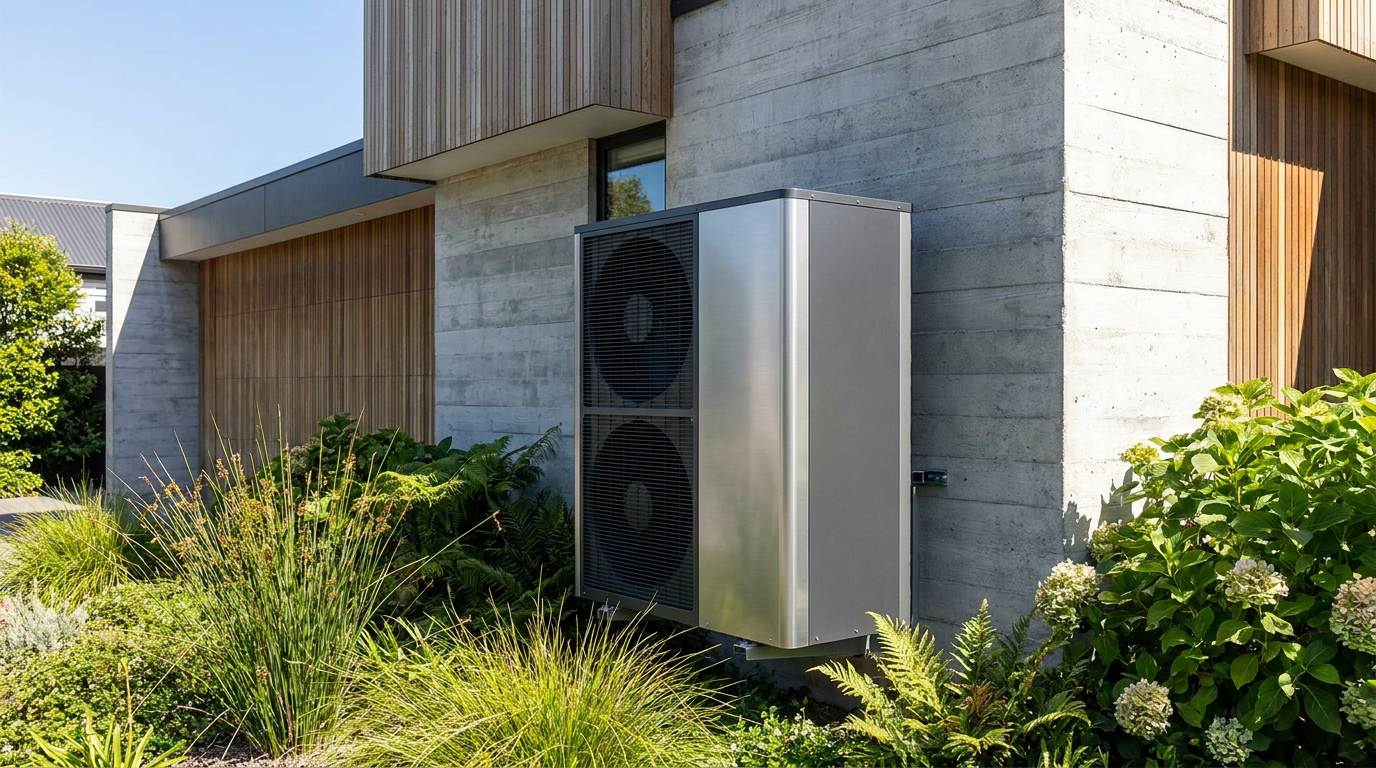
This means high-draw appliances, solar inverters, battery storage units, and electric vehicle (EV) chargers can now communicate autonomously. A Matter-enabled home can automatically route excess rooftop solar power directly to an EV charger, or delay a heat pump's cycle until grid electricity rates drop during off-peak hours.[4][6]

To prevent these automated systems from clashing with human comfort, Matter 1.6 introduces "Thermostat Suggestions." Instead of utility programs or software automations forcing a temperature change, they send a recommendation. The thermostat evaluates this against the user's manual settings and humidity preferences before acting, ensuring energy savings don't override a comfortable living room.[1][2][3]
Crucially, Matter operates entirely on local networks using Wi-Fi and Thread, a low-power mesh protocol. This local-first architecture ensures sub-200-millisecond response times and guarantees that light switches, locks, and sensors will continue to function flawlessly even if the home's internet connection drops.[3][7]
A major piece of this local puzzle is the integration of Home Routers and Access Points (HRAP). By certifying standard Wi-Fi routers and modems to act as Thread Border Routers, Matter ensures that the foundational infrastructure for a smart home is already built into the equipment providing the home's internet.[6]
This harmonization prevents a common headache: parallel networks. In older setups, different brands would often create their own competing mesh networks, causing interference and draining the batteries of wireless sensors as they constantly searched for a stable connection.[5]

Battery life itself has seen massive improvements through the Long Idle Time (LIT) protocol. Intermittently connected devices, like window sensors or wireless buttons, can now sleep for extended periods and check in less frequently without losing their status on the network, allowing them to run for years on a single coin cell.[5][6]
While the software foundation is now rock-solid, the hardware rollout remains a gradual process. Manufacturers implement these updates on their own timelines, meaning consumers may need to wait for firmware patches or purchase next-generation devices to unlock features like NFC tapping and advanced energy routing.[3]
How we got here
October 2022
Matter 1.0 is published, introducing the first unified standard for basic smart home devices like lights and plugs.
May 2024
Matter 1.3 expands the standard to include major appliances like microwaves, ovens, and EV chargers.
November 2024
Matter 1.4 introduces deep energy management features, supporting solar panels, battery storage, and heat pumps.
June 2026
Matter 1.6 is released, adding NFC tap-to-pair commissioning, Joint Fabric for multi-ecosystem homes, and Thermostat Suggestions.
Viewpoints in depth
Everyday Consumers
Views Matter as the ultimate fix for ecosystem lock-in and complicated setups.
For years, buyers have been frustrated by ecosystem lock-in, where a device bought for Apple Home wouldn't work with Alexa. This camp views Matter's 'Joint Fabric' and NFC commissioning as the ultimate fix, turning smart home setup from a technical chore into a simple plug-and-play experience. The guarantee of local control also alleviates long-standing privacy concerns regarding cloud-dependent hardware.
Hardware Developers
Views Matter as a way to streamline production and reduce redundant software engineering.
Building separate software integrations for every major tech company was a massive drain on resources. Manufacturers view Matter as a way to build a product once and sell it to everyone, allowing them to redirect R&D budgets toward better hardware and energy efficiency rather than maintaining redundant APIs and cloud servers.
Energy Optimizers
Views the smart home primarily as a financial tool for managing electricity costs.
With the rise of dynamic electricity pricing and home solar, this camp sees the smart home not just as a convenience, but as a financial necessity. They focus on Matter's ability to autonomously route power to high-draw appliances when grid rates are lowest, turning the home into a unified, cost-saving energy ecosystem.
What we don't know
- How quickly major platforms like Apple and Google will fully implement the Joint Fabric feature in their consumer apps.
- Whether older, first-generation Matter devices will receive firmware updates to support NFC commissioning.
Key terms
- Matter
- A universal, open-source connectivity standard developed by major tech companies to ensure smart home devices work together seamlessly regardless of the brand.
- Thread
- A low-power, wireless mesh networking protocol designed specifically for smart home devices, allowing them to communicate locally without draining batteries.
- Joint Fabric
- A Matter 1.6 feature that allows multiple smart home platforms (like Apple Home and Google Home) to seamlessly co-administer a single network of devices.
- Commissioning
- The technical process of securely adding a new smart device to a home network so it can be controlled.
- Home Energy Management System (HEMS)
- A centralized platform that monitors and optimizes a home's electricity usage, balancing grid power, solar generation, and appliance demand.
Frequently asked
Do I need to replace my old smart home devices?
Not necessarily. Many existing hubs from major brands act as 'Matter Bridges,' translating older Zigbee or proprietary devices into the Matter ecosystem so they can be controlled alongside new hardware.
Does Matter require an active internet connection?
No. Matter operates entirely on local networks using Wi-Fi and Thread. This means your devices will still communicate and execute automations even if your home's internet goes down.
What is NFC commissioning?
Introduced in Matter 1.6, NFC commissioning allows users to set up a new device simply by tapping their smartphone against it, bypassing the need to scan QR codes or manually enter pairing pins.
How does Matter help save energy?
Matter allows high-draw devices like EV chargers, heat pumps, and solar inverters to communicate their energy needs to a central system, which can autonomously delay cycles until electricity rates are cheapest.
Sources
Source coverage
7 outlets
3 viewpoints surfaced







[1]Connectivity Standards AllianceHardware Developers
Matter 1.6 is a focused feature release offering device makers new tools
Read on Connectivity Standards Alliance →[2]ForbesEveryday Consumers
Matter 1.6 Smart Home Update Adds NFC Tapping To The Mix
Read on Forbes →[3]CNETEveryday Consumers
Matter 1.6 brings easier control options for the smart home
Read on CNET →[4]EcoFlowEnergy Optimizers
Matter 1.4 Reduces Costs and Improves Energy Reliability
Read on EcoFlow →[5]Matter-Smarthome.deEnergy Optimizers
Energy management has been part of the smart home standard since Matter 1.3
Read on Matter-Smarthome.de →[6]InfineonHardware Developers
Matter 1.4 specification updates
Read on Infineon →[7]YourMatterHomeEveryday Consumers
What Is Matter and Why Does It Matter for Your Smart Home?
Read on YourMatterHome →


Every angle. Every day.
Get home stories with full source coverage and perspective breakdowns delivered to your inbox.