
Shingles Vaccine Linked to 24% Lower Dementia Risk in Major Nursing Home Study
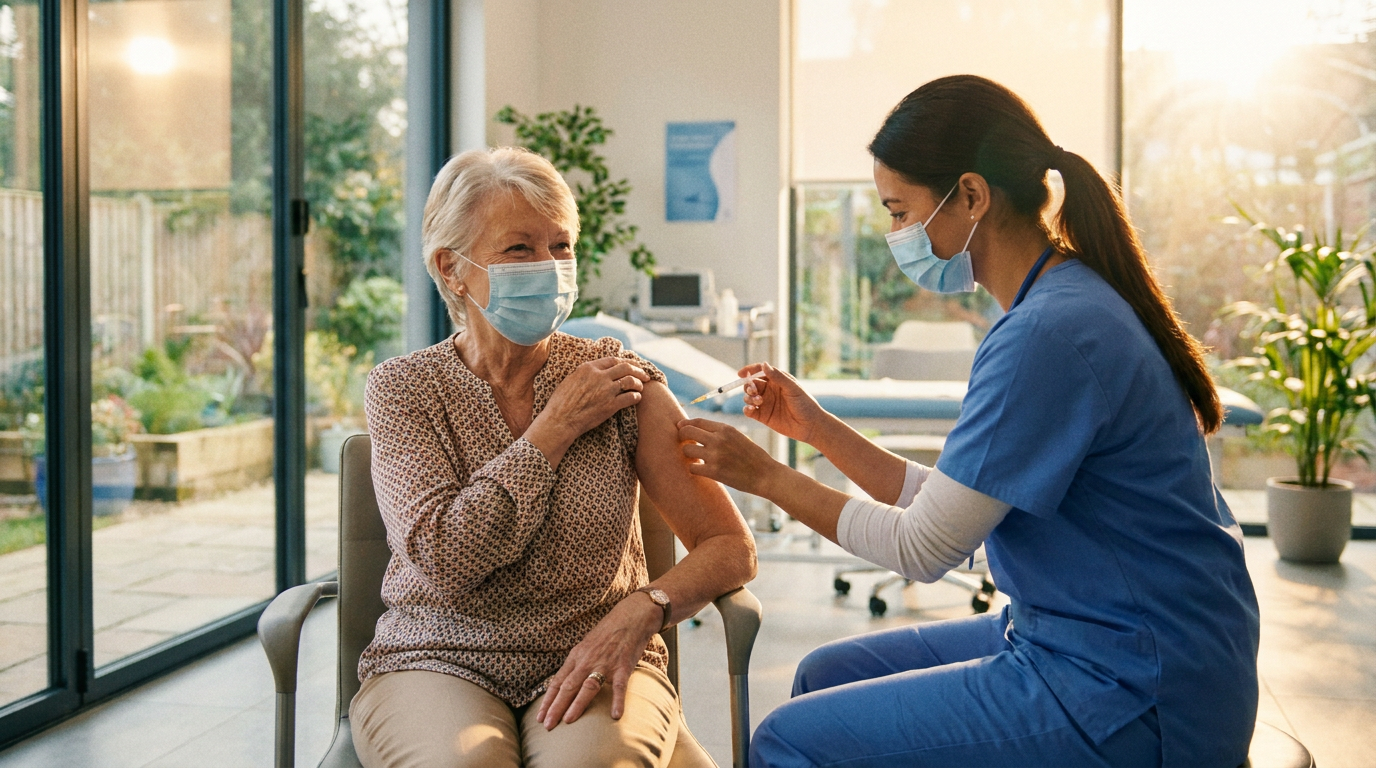
A new analysis of 500,000 Medicare patients finds that the recombinant shingles vaccine is associated with a significantly reduced risk of dementia, adding to growing evidence that routine immunizations may offer neuroprotective benefits.
By Factlen Editorial Team
- Epidemiologists & Public Health Researchers
- Focus on the population-level data showing a clear, statistically robust association between the vaccine and lower dementia rates, advocating for higher uptake in nursing homes.
- Immunologists & Neurologists
- Interested in the biological mechanism, debating whether the protection comes from preventing viral inflammation or from the vaccine's adjuvant stimulating the brain's immune defenses.
- Clinical Skeptics
- Emphasize the healthy vaccinee bias, cautioning that observational studies cannot definitively prove the vaccine directly prevents dementia until randomized controlled trials are conducted.
What's not represented
- · Patients currently living with dementia
- · Long-term care facility administrators
Why this matters
With no definitive cure for dementia, identifying accessible preventative measures is one of the most urgent priorities in global health. If a routine, widely available vaccine can reduce cognitive decline by nearly a quarter, it represents a massive, immediate opportunity to protect the aging population's independence and quality of life.
Key points
- A new study of 500,000 Medicare patients links the recombinant shingles vaccine to a 24% lower risk of dementia.
- Over a four-year period, 18.8% of vaccinated nursing home residents developed dementia, compared to 24.6% of unvaccinated residents.
- Researchers used 'target trial emulation' to adjust for the fact that vaccinated individuals are often healthier overall.
- Scientists theorize the vaccine protects the brain either by preventing viral inflammation or by boosting the immune system to clear toxic proteins.
- Despite the clear benefits, uptake of the shingles vaccine remains low in skilled nursing facilities.
For decades, the search for a way to prevent or delay dementia has focused heavily on complex therapeutics and targeted neurological drugs. But a growing body of epidemiological evidence suggests that one of the most effective tools for protecting cognitive health might already be sitting in the standard adult immunization schedule. A massive new study has added robust weight to this theory, finding that the routine shingles vaccine is associated with a significantly lower risk of developing dementia in older adults.[1][6]
The research, published this week in the Annals of Internal Medicine, focused on a highly vulnerable and often under-studied population: older adults residing in skilled nursing facilities. Led by researchers at the Brown University School of Public Health, the study analyzed the electronic health records and Medicare data of more than 500,000 patients aged 66 and older. The sheer scale of the data provides one of the clearest pictures yet of how routine immunizations interact with long-term brain health.[2][3][4]
The core finding is striking. Patients who received at least one dose of the recombinant zoster vaccine—the modern shingles shot marketed as Shingrix—had a 24 percent lower relative risk of being diagnosed with dementia over a four-year period compared to their unvaccinated peers. This protective association held true across multiple demographic slices, though it appeared slightly more pronounced in women than in men.[2][3][4]
In absolute terms, the clinical divergence between the two groups was substantial. Over the four-year follow-up, 24.6 percent of the unvaccinated patients developed dementia. Among those who received the vaccine, the incidence rate dropped to 18.8 percent. According to the study's lead author, Dr. Kaleen Hayes, this 5.8 percentage point absolute risk reduction translates to roughly one in 17 dementia cases potentially being prevented within this high-risk population.[2][3][4]

To reach these conclusions, the researchers utilized an advanced statistical framework known as "target trial emulation." Because it is ethically and logistically difficult to run a multi-year randomized controlled trial deliberately withholding vaccines from older adults, epidemiologists use this method to mimic the rigorous conditions of a clinical trial using retrospective observational data. The technique strictly aligns the baseline characteristics of both the vaccinated and unvaccinated groups to ensure an apples-to-apples comparison.[2][4][6]
The primary hurdle in this type of research is the "healthy vaccinee bias"—the well-documented phenomenon where people who proactively get vaccinated also tend to exercise more, eat better, and have better access to healthcare. These broader lifestyle factors naturally lower dementia risk, threatening to make the vaccine look artificially effective. To account for this, the Brown University team used inverse probability weighting to adjust for dozens of variables, confirming that the protective association persisted even when controlling for underlying health and socioeconomic status.[2][3][5][6]
These broader lifestyle factors naturally lower dementia risk, threatening to make the vaccine look artificially effective.
While the statistical link is becoming undeniable, the biological mechanism remains a subject of intense scientific debate. Immunologists and neurologists are currently exploring two primary theories to explain why a shot designed to prevent a skin rash might protect the brain.[5][6]
The first theory centers on the prevention of severe viral inflammation. Shingles is caused by the varicella-zoster virus—the same pathogen responsible for chickenpox. After a childhood infection, the virus lies dormant in the nervous system for decades. When it reactivates in older age, it triggers widespread, painful inflammation. Because chronic systemic inflammation is a known driver of neurodegeneration and cognitive decline, preventing the virus from waking up may spare the brain from collateral inflammatory damage.[3][4][5][6]

The second, increasingly popular theory focuses not on the virus, but on the vaccine itself. The modern recombinant shingles vaccine contains an adjuvant called AS01, a chemical compound designed to provoke a robust immune response. Some researchers hypothesize that this powerful adjuvant acts as a general immune system booster, activating peripheral immune cells that cross the blood-brain barrier and help clear out the toxic amyloid and tau proteins associated with Alzheimer's disease and other dementias.[5][6]
This adjuvant theory gained significant traction following a landmark 2024 study published in Nature Medicine. That research demonstrated that the newer recombinant vaccine, which contains AS01, was associated with a significantly lower risk of dementia than the older, live-attenuated shingles vaccine, which did not contain the adjuvant and is no longer available in the United States. The fact that the newer formulation offers superior cognitive protection strongly suggests the immune-boosting ingredients play a direct neuroprotective role.[3][5][6]
The Brown University study builds on this foundation by proving that the benefits extend to the frailest populations. Older adults entering skilled nursing facilities are at an elevated risk for both shingles outbreaks and cognitive decline, yet they have historically been excluded from major clinical trials. Demonstrating a 24 percent risk reduction in this specific demographic highlights a massive, untapped public health opportunity.[2][3][4]

Despite the clear benefits, the clinical reality is that uptake of the recombinant shingles vaccine remains remarkably low, particularly in long-term care settings. The study's authors argue that admission to a nursing facility should serve as a natural trigger for clinicians to evaluate a patient's immunization status and administer the vaccine if they are not up to date.[1][2][4]
The scientific community acknowledges that observational data, no matter how rigorously adjusted, cannot definitively prove causation. A randomized controlled trial specifically designed to measure cognitive outcomes is the only way to confirm with absolute certainty that the vaccine directly prevents dementia. However, given the length and cost of such trials, public health officials must make decisions based on the best available epidemiological evidence.[3][4][6]
In the meantime, the clinical calculus for patients and doctors is straightforward. The shingles vaccine is already approved and highly recommended to prevent a debilitating and painful nerve infection. The mounting evidence that it may also serve as a shield against cognitive decline transforms it from a routine preventative measure into a vital cornerstone of healthy aging.[1][3][6]
How we got here
2017
The FDA approves the recombinant zoster vaccine (Shingrix), replacing older live-attenuated versions as the standard of care.
2024
A major Nature Medicine study links the newer recombinant vaccine to a significantly lower dementia risk compared to the older vaccine.
2025
Studies from Wales and Australia show similar neuroprotective associations for older shingles vaccines, bolstering the link between immunizations and brain health.
June 2026
Brown University researchers publish the largest study to date on nursing home residents, confirming a 24% dementia risk reduction over four years.
Viewpoints in depth
Epidemiologists & Public Health Researchers
Advocating for higher vaccine uptake based on robust population-level data.
Public health experts view the 24 percent risk reduction as a massive, immediate opportunity to protect the aging population. Because the study focused on nursing home residents—a demographic at high risk for both shingles and cognitive decline—epidemiologists argue that the data provides a clear mandate. They are pushing for admission to a skilled nursing facility to become a standard trigger for evaluating and updating a patient's immunization status, turning a routine preventative measure into a cornerstone of cognitive care.
Immunologists & Neurologists
Debating the biological mechanism behind the vaccine's neuroprotective effects.
For researchers focused on the biology of the brain, the statistical link is less interesting than the 'why.' The debate centers on two theories: the viral inflammation theory and the adjuvant theory. Some neurologists believe that preventing the varicella-zoster virus from reactivating simply spares the brain from collateral inflammatory damage. However, many immunologists are increasingly convinced that the AS01 adjuvant in the vaccine acts as a general immune system booster, waking up peripheral immune cells that cross the blood-brain barrier to clear out the toxic amyloid and tau proteins associated with dementia.
Clinical Skeptics
Cautioning that observational studies cannot definitively prove causation.
While acknowledging the rigorous statistical adjustments made by the Brown University team, clinical skeptics emphasize the limitations of observational data. They point to the 'healthy vaccinee bias,' noting that people who proactively seek out vaccinations often have healthier lifestyles, better diets, and superior access to healthcare—all of which independently lower dementia risk. Until a multi-year randomized controlled trial is conducted specifically to measure cognitive outcomes, these skeptics argue that the medical community should refrain from labeling the shingles shot a 'dementia vaccine.'
What we don't know
- Whether the vaccine directly causes the reduction in dementia, or if residual healthy lifestyle factors still play a role despite statistical adjustments.
- Exactly how the vaccine protects the brain—whether by preventing viral inflammation or through the immune-boosting effects of its adjuvant.
- How long the neuroprotective benefits of the vaccine last beyond the four-year follow-up period.
Key terms
- Recombinant Zoster Vaccine (RZV)
- The modern shingles vaccine (marketed as Shingrix), which uses a piece of the virus combined with an immune-boosting adjuvant.
- Target Trial Emulation
- An advanced statistical method that uses observational health data to mimic the rigorous design and conditions of a randomized controlled trial.
- Healthy Vaccinee Bias
- A statistical distortion where people who choose to get vaccinated also tend to have healthier lifestyles overall, making the vaccine look artificially effective.
- Adjuvant
- An ingredient used in some vaccines that helps create a stronger, longer-lasting immune response in the person receiving the shot.
- Varicella-Zoster Virus
- The virus that causes chickenpox in childhood and can reactivate decades later to cause shingles.
Frequently asked
Does the shingles vaccine cure dementia?
No. The vaccine is associated with a lower risk of developing dementia in the first place, but it is not a treatment or cure for those who already have cognitive decline.
Which shingles vaccine was studied?
The study focused on the newer recombinant zoster vaccine (RZV), commonly known as Shingrix, which has been the standard in the U.S. since 2017.
Why would a vaccine protect the brain?
Researchers suspect it either prevents severe viral inflammation from damaging the brain, or the vaccine's immune-boosting ingredients help the body clear out toxic proteins associated with dementia.
Should I get the vaccine just to prevent dementia?
The vaccine is currently only approved to prevent shingles. However, experts note that the potential cognitive benefits are an excellent secondary reason to stay up to date on immunizations.
Sources
Source coverage
6 outlets
3 viewpoints surfaced





[1]STAT NewsClinical Skeptics
Shingles vaccine may lower dementia risk, new study finds
Read on STAT News →[2]Annals of Internal MedicineEpidemiologists & Public Health Researchers
Dementia Risk After Recombinant Herpes Zoster Vaccination in Older Adults With a Recent Skilled-Nursing Facility Stay: A Target Trial Emulation
Read on Annals of Internal Medicine →[3]Brown UniversityEpidemiologists & Public Health Researchers
Shingles vaccine linked to lower dementia risk in older adults, study suggests
Read on Brown University →[4]MedPage TodayClinical Skeptics
Study Looks at Risk for Dementia After Shingles Vaccine in High-Risk Group
Read on MedPage Today →[5]GaviImmunologists & Neurologists
Why vaccines might protect against dementia
Read on Gavi →[6]Factlen Editorial TeamImmunologists & Neurologists
Synthesis by Factlen editorial team
Read on Factlen Editorial Team →
Every angle. Every day.
Get health stories with full source coverage and perspective breakdowns delivered to your inbox.