
Next-Generation Nuclear Power Moves from Blueprint to Construction in Historic 2026 Push
Small modular reactors and advanced non-light-water designs have officially broken ground, marking a turning point for 24/7 clean energy and the tech giants hungry to buy it.

For years, the promise of a "nuclear renaissance" has felt like a mirage—a collection of ambitious press releases and futuristic renderings that rarely translated into concrete and steel. But in the first half of 2026, the advanced nuclear industry crossed a critical threshold. Next-generation reactors, designed to be smaller, safer, and faster to build than their massive predecessors, have officially moved from the regulatory waiting room to active construction sites.
The most visible symbol of this shift is rising in Kemmerer, Wyoming. In April 2026, TerraPower—the nuclear innovation company co-founded by Bill Gates—officially broke ground on its flagship Natrium plant. Built near the site of a retiring coal-fired power plant, the facility is on track to become the first utility-scale advanced nuclear power plant in the United States when it comes online in 2030.[1]
Getting shovels in the ground required a historic regulatory breakthrough. Just weeks prior, the U.S. Nuclear Regulatory Commission (NRC) issued a construction permit for the Kemmerer project. It was the first construction permit the agency had ever issued for a commercial "non-light-water" power reactor, and the first time in more than 40 years it had even docketed an application for one. The NRC completed its safety review ahead of schedule and under budget, signaling a newfound regulatory agility.
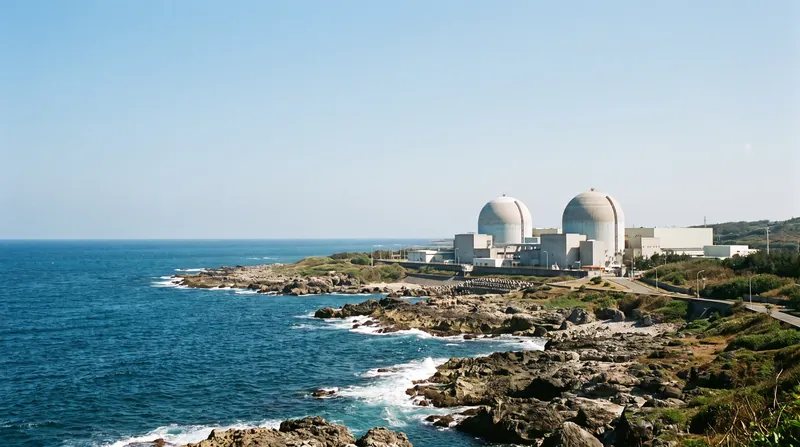
The Natrium reactor represents a radical departure from traditional nuclear architecture. Conventional plants rely on water to cool their uranium cores, requiring massive, highly pressurized containment domes. The Natrium design is a sodium-cooled fast reactor. Because liquid sodium has a much higher boiling point than water, the reactor operates at normal atmospheric pressure, eliminating the need for heavy, expensive pressure vessels and relying on passive physics to cool itself safely in an emergency.[1]
But the true innovation of the Natrium plant lies outside the reactor core. The system features an integrated molten salt energy storage system—essentially a massive thermal battery. While the reactor generates a steady baseline of 345 megawatts (MW) of heat, the molten salt can store that thermal energy and release it on demand, boosting the plant's electrical output to 500 MW when grid demand peaks.
This storage capability solves one of the oldest tensions in energy policy: how to pair nuclear power with renewables. Traditional nuclear plants prefer to run at 100% capacity around the clock, making them clumsy partners for solar and wind, which fluctuate wildly. By using molten salt to absorb the reactor's heat when solar panels are overproducing, and releasing it when the sun sets, advanced reactors can seamlessly backstop a renewable-heavy grid.
TerraPower's momentum is not limited to the American West. In June 2026, the company launched a UK subsidiary and officially began Step 1 of the UK's Generic Design Assessment (GDA) process. The GDA allows British regulators to evaluate the safety and environmental implications of a reactor design before it is tied to a specific site. By standardizing the approval of the technology itself, the UK hopes to pave the way for a rapid, multi-site rollout.
This push aligns with a broader European embrace of Small Modular Reactors (SMRs). The European Commission has identified SMRs as a crucial tool for both energy security and industrial decarbonization. Because they are physically smaller, SMRs can be deployed to provide dedicated, zero-carbon heat for hard-to-abate sectors like chemical manufacturing, steel production, and district heating—applications where traditional renewable electricity falls short.[2]
The economic model for these reactors relies heavily on factory fabrication. Unlike traditional gigawatt-scale plants, which are essentially bespoke mega-projects built entirely on-site over 8 to 12 years, SMRs are designed to be manufactured in controlled factory environments. The modules are then shipped to the site and assembled in 12 to 24 months, drastically reducing the financial risk and interest costs that have historically crippled nuclear projects.[2]
The most aggressive buyers of this new power source are not traditional utilities, but technology giants. The explosion of generative AI has triggered an unprecedented surge in data center electricity demand. Because AI training requires massive, uninterrupted power streams, tech companies cannot rely solely on intermittent wind and solar to meet their aggressive "24/7 carbon-free" pledges.
Earlier in 2026, Meta announced an agreement to support the development of up to eight Natrium plants in the U.S. by 2035, securing the rights to gigawatts of firm, clean power. Google and Amazon have similarly struck deals with other advanced reactor developers like Kairos Power and X-energy, providing the guaranteed offtake agreements needed to finance these first-of-a-kind projects.
While advanced fission reactors are breaking ground, the longer-term dream of nuclear fusion is also clearing vital regulatory hurdles. In June 2026, Washington-based Helion Energy became the first company in the world to secure the regulatory licenses needed for a fusion power plant. The Washington Department of Health granted the licenses under a new framework that regulates fusion facilities more like medical accelerators than traditional fission plants, recognizing their fundamentally different safety profile.[3]
Significant challenges remain before advanced nuclear becomes a ubiquitous commodity. The industry must prove that its factory-built economics actually materialize once the first few units are completed. Furthermore, scaling up will require a massive revitalization of the nuclear supply chain, from specialized steel forging to the production of High-Assay Low-Enriched Uranium (HALEU) fuel, as well as training a new generation of nuclear engineers and tradespeople.
Yet the developments of 2026 represent a sea change. For the first time in a generation, the nuclear industry is not just talking about the future; it is actively pouring the foundation for it. As the global grid strains under the dual pressures of decarbonization and surging demand, these advanced reactors are stepping out of the laboratory and into the commercial light.[1]
Key points
- TerraPower has officially broken ground on the first commercial non-light-water advanced reactor in the U.S. in Kemmerer, Wyoming.
- The NRC issued a historic construction permit for the project, the first of its kind in over 40 years.
- The Natrium design uses liquid sodium for cooling and molten salt for energy storage, allowing it to act as a grid battery.
- TerraPower has also launched a UK subsidiary and begun the regulatory assessment process for British deployment.
Unanswered questions
- Whether the factory-built economic model will actually deliver the promised cost reductions once the first units are completed.
- How quickly the specialized supply chains for advanced components and HALEU fuel can scale to meet projected demand.
- Whether local communities globally will embrace SMRs as readily as early adopters in transitioning coal towns.
How we got here
March 2026
The U.S. NRC approves the construction permit for TerraPower's Natrium reactor, the first for a commercial non-light-water reactor.
April 2026
TerraPower officially begins construction on Kemmerer Unit 1 in Wyoming.
June 2026
TerraPower launches its UK subsidiary and begins the Generic Design Assessment process with British regulators.
June 2026
Helion Energy secures the world's first regulatory licenses for a fusion power plant in Washington state.
2030
Target completion date for the Kemmerer Unit 1 Natrium plant.
- Advanced Reactor Developers
- Argue that factory-built, passively safe reactors are the only realistic way to provide 24/7 clean baseload power at scale.
- Regulators & Policymakers
- Focus on modernizing approval frameworks to safely accommodate novel coolants and standardized designs without compromising public safety.
- Tech Industry Offtakers
- View advanced nuclear as the critical missing piece to power energy-intensive AI data centers while meeting zero-carbon pledges.
- Energy Systems Analysts
- Emphasize that the true test will be proving the economics of the first-of-a-kind plants and establishing a robust supply chain.
Perspectives this story doesn't cover
- Local Wyoming coal workers transitioning to nuclear jobs
- Anti-nuclear environmental advocacy groups
Sources
Source coverage
3 outlets
4 viewpoints surfaced



- [1]TerraPowerAdvanced Reactor Developers
TerraPower Announces Official Start of Construction on Flagship Natrium Plant
Read on TerraPower → - [2]European CommissionRegulators & Policymakers
What are the main advantages of Small Modular Reactors (SMRs)?
Read on European Commission → - [3]Helion EnergyAdvanced Reactor Developers
Helion Secures Regulatory Licenses for Fusion Power Plant
Read on Helion Energy →
More in Energy
See all →Nuclear Physics
Why Commercial Nuclear Reactors Cannot Explode Like Atomic Bombs
3 sources
Nuclear Safety
The 0-to-7 Scale That Classifies the Severity of Nuclear Accidents and Incidents
6 sources
Waste Classification
The Low-Level, Intermediate-Level, and High-Level Categories That Define Nuclear Waste Disposal and Isolation
7 sources
Nuclear Policy
Taiwan Clears First Regulatory Hurdle to Restart Maanshan Nuclear Plant Amid Chipmaker Demand
3 sources
Comments
Every angle. Every day.
Get Energy stories with full source coverage and perspective breakdowns, free every day.