
The Evidence for Nature Prescriptions: How Green Space is Treating Depression and Anxiety
Healthcare providers are increasingly prescribing time in nature to treat mental illness. Clinical data shows these 'green prescriptions' can lower cortisol, reduce rumination, and in some cases outperform standard psychological therapies.
By Factlen Editorial Team
- Clinical Practitioners
- View nature prescriptions as a potent, low-cost, and highly accessible adjunct therapy that can rival traditional treatments.
- Public Health Researchers
- Focus on the epidemiological data, physiological mechanisms like cortisol reduction, and the macro-economic benefits of green exercise.
- Patient Advocates & Psychologists
- Emphasize the necessity of patient autonomy, warning that pressuring individuals into nature can backfire and increase anxiety.
What's not represented
- · Urban Planners
- · Health Insurance Providers
Why this matters
As mental health challenges rise and traditional therapies face bottlenecks, nature prescriptions offer a free, highly accessible, and scientifically validated tool for improving psychological wellbeing. Understanding the evidence allows patients to actively utilize their local environments as a proven medical intervention.
Key points
- Doctors are increasingly writing formal 'nature prescriptions' to treat depression, anxiety, and chronic stress.
- Clinical data shows guided nature programs can achieve a 64% recovery rate, outperforming standard talking therapies.
- Spending 20 minutes in a green space lowers cortisol by an average of 21.3% and reduces brain activity linked to rumination.
- Green exercise yields significantly better mental health outcomes than identical physical exertion performed indoors.
- Pressuring patients to visit nature can undermine the benefits; the exposure must be voluntary and self-directed to be effective.
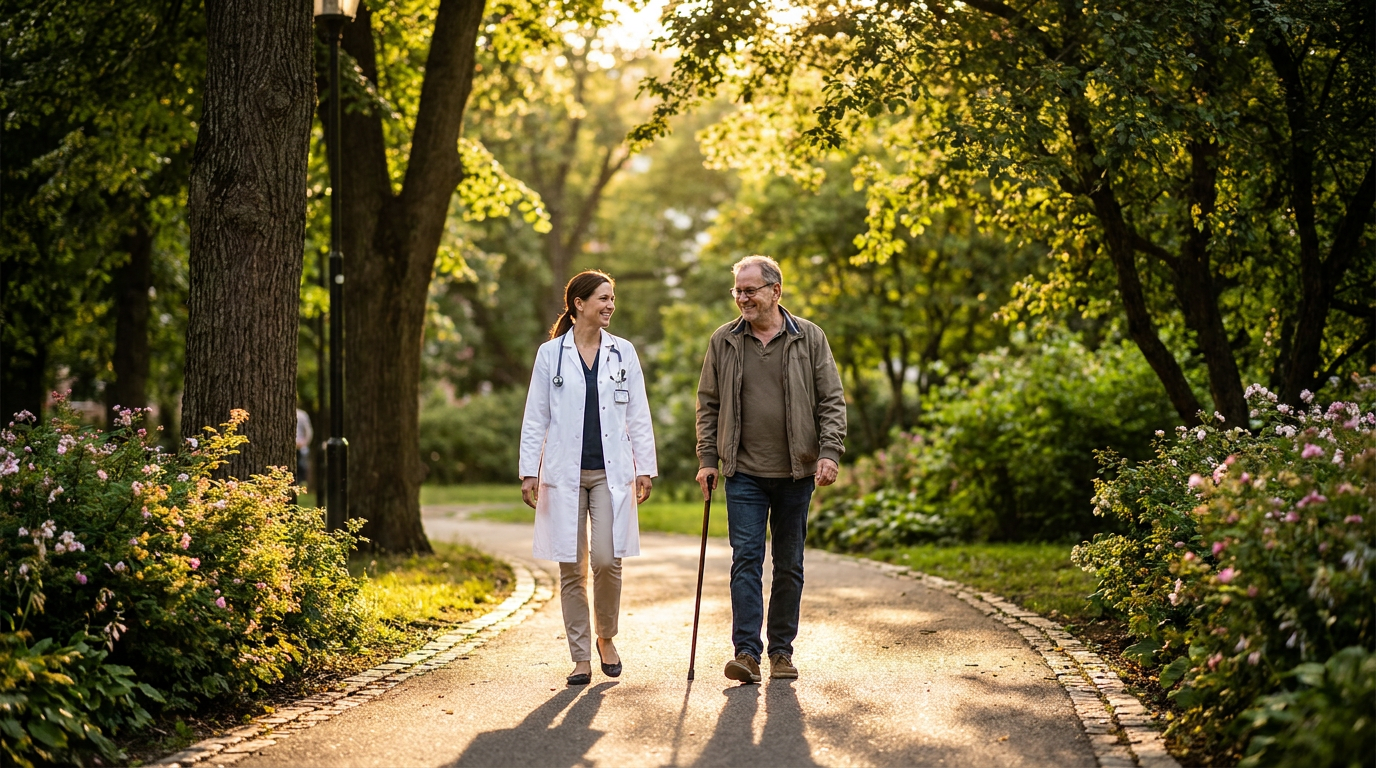
Across the globe, a growing number of physicians and psychotherapists are reaching for their prescription pads to dispense an intervention that requires no pharmacy: time in the woods. "Nature prescriptions," or green social prescribing, have transitioned from a fringe wellness concept to a formalized, evidence-based medical intervention. Designed to combat the escalating crises of clinical depression, anxiety, and chronic stress, these prescriptions provide patients with specific, targeted recommendations to spend time in natural environments. Rather than simply advising a patient to "get some fresh air," clinicians are writing actionable directives detailing the location, frequency, and duration of outdoor exposure. This shift represents a profound recognition by the medical establishment that human biology remains deeply tethered to the natural world, and that severing that connection carries a heavy psychological toll.[1][6]
The stakes for integrating this approach into mainstream healthcare are exceptionally high. Global mental health burdens continue to rise, while traditional psychiatric interventions—such as cognitive behavioral therapy (CBT) and selective serotonin reuptake inhibitors (SSRIs)—often face bottlenecks in accessibility, high costs, and varying patient adherence. In this landscape, nature offers a potent, low-cost, and highly accessible adjunct therapy. Public health researchers and clinicians are now compiling rigorous data to prove that green prescriptions are not merely a pleasant diversion, but a measurable biological intervention capable of altering brain chemistry and improving long-term clinical outcomes.[5][7]
The first major claim of this movement is that nature prescriptions can rival or exceed the efficacy of standard psychological therapies in specific clinical settings. The most compelling evidence for this claim comes from the United Kingdom, where the "Dose of Nature" program has been integrated directly with general practitioner referrals. Unlike passive recommendations, this program pairs individuals experiencing mental illness with guided outdoor courses designed to foster a deep, mindful connection with the natural environment. Independent assessments of the program have yielded results that challenge the primacy of indoor clinical settings for psychological recovery.[1]
The data supporting this clinical efficacy is striking. According to a 2026 report, the Dose of Nature program boasts a clinical recovery rate of 64%, significantly outperforming the standard National Health Service (NHS) talking therapies, which hover around a 50% recovery rate. Furthermore, the program demonstrated a reliable improvement rate of 86%, compared to the 69% baseline of traditional interventions. Researchers conducting a randomized controlled trial of the program over two and a half years concluded that the intervention provided "clinically meaningful benefits," effectively treating mental illness while simultaneously boosting social connection.[1]

The second major claim is that the psychological benefits of nature exposure are driven by rapid, measurable physiological changes. Skeptics of green prescriptions have historically dismissed the practice as relying on the placebo effect or the simple benefit of physical exercise. However, recent neurobiological and physiological studies have mapped the exact mechanisms by which natural environments alter human biology. The consensus across multiple peer-reviewed reviews is that nature exposure triggers an immediate downregulation of the body's sympathetic nervous system—the network responsible for the "fight or flight" stress response.[3][5]
The biomarkers of this shift are highly quantifiable. Clinical studies demonstrate that spending just 20 minutes in a green space can lower salivary cortisol—the body's primary stress hormone—by an average of 21.3% compared to spending the same amount of time in an urban environment. Beyond hormones, exposure to the fractal patterns inherent in nature, such as the branching of trees or the ripples on a pond, has been shown to boost alpha wave activity in the brain. This specific neurological state is associated with a pleasant, relaxed wakefulness, aiding in rapid recovery from acute stress.[1][5]
Furthermore, functional magnetic resonance imaging (fMRI) studies have revealed that walking in nature significantly reduces neural activity in the subgenual prefrontal cortex. This region of the brain is heavily implicated in rumination—the repetitive, negative, self-focused thinking that is a hallmark symptom of clinical depression and severe anxiety. By quieting this specific neural pathway, nature prescriptions offer a targeted neurological intervention that mirrors the goals of advanced psychiatric medications, but without the associated side effects.[7]

The third claim asserts that "green exercise" yields significantly better mental health outcomes than identical physical exertion performed indoors. A common confounding variable in nature research is whether the benefits stem from the environment itself, or simply from the physical activity patients engage in while outdoors. To isolate this, researchers have conducted extensive meta-analyses comparing outdoor green exercise to indoor workouts. The findings heavily favor the natural environment as a critical active ingredient in the therapeutic process.[3]
The third claim asserts that "green exercise" yields significantly better mental health outcomes than identical physical exertion performed indoors.
A comprehensive network meta-analysis published in Frontiers in Public Health aggregated data from randomized controlled trials to rank the effectiveness of different exercise contexts. The researchers found that green exercise demonstrated a large and statistically significant effect in improving global mental health outcomes, recording a Standardized Mean Difference (SMD) of -0.96 compared to standard care. In stark contrast, indoor exercise did not show a statistically significant advantage over the control group for these specific mental health metrics, suggesting that the context of the physical activity is just as vital as the movement itself.[3]
The fourth claim is that green prescriptions offer a massive economic return on investment for public health systems. Beyond individual clinical outcomes, health economists are evaluating the macro-level impact of scaling nature prescriptions across populations. Because the intervention relies on existing civic infrastructure—parks, trails, and urban green spaces—the overhead costs are exceptionally low compared to building new clinical facilities or subsidizing long-term pharmaceutical regimens.[2]
A 2025 trial conducted by the University of Melbourne evaluated a six-week "Nature Scripts" program aimed at improving the mental health and wellbeing of young people. The health economists estimated that the wellbeing improvements experienced by each participant were equivalent in value to approximately $19,875 AUD, assuming the benefits were sustained over six months. When scaled, the researchers calculated that the overall wellbeing benefits generated by the program were more than four times the actual cost of running it, presenting a highly compelling case for government and insurance-backed funding of green social prescribing.[2]

However, the evidence pack contains a crucial caveat regarding how these prescriptions are delivered: removing patient autonomy can actively undermine the therapeutic benefits. While the aggregate data is overwhelmingly positive, mental health interventions are highly sensitive to patient agency, and nature prescriptions are no exception. When the intervention transitions from a gentle invitation to a strict medical obligation, the psychological outcomes can invert.[4]
An extensive international study led by the University of Exeter, which analyzed data from over 18,000 people across 18 countries, investigated the role of social and medical pressure in nature visits. The researchers found that while people with depression and anxiety frequently visit nature to self-manage their symptoms, formalizing this process carries risks. Specifically, the study revealed that when patients felt pressured by well-meaning loved ones or healthcare providers to spend time outdoors, they reported feeling less motivated and significantly more anxious during the visit.[4]
This data highlights a critical limitation in the prescriptive model: the benefits of nature are highly dependent on the visit being voluntary and self-directed. Healthcare practitioners are now being trained to use sensitive, motivational interviewing techniques when suggesting green prescriptions. The goal is to encourage patients to visit places they already feel comfortable in, rather than mandating a specific outdoor regimen that could inadvertently add to their cognitive load or induce performance anxiety.[4][7]
Another significant structural barrier to the widespread adoption of nature prescriptions is the inequitable distribution of safe, accessible green spaces. Low-income families and marginalized communities often reside in urban heat islands with limited tree canopy, poor air quality, and underfunded public parks. For a physician to prescribe a daily park walk to a patient who lives miles from the nearest safe green space is not only ineffective but potentially alienating, highlighting the need for urban planning to align with public health initiatives.[7]

To address this access gap, researchers are exploring alternative delivery mechanisms for nature exposure. A 2025 peer-reviewed review in Psychiatria Fennica highlighted that when physical access is impossible, "virtual nature" experiences—such as high-quality nature videos paired with natural sounds—can provide measurable stress relief and central nervous system restoration. While not a complete substitute for physical immersion, these virtual interventions, alongside the integration of indoor plants and natural materials, offer a vital stopgap for patients facing severe mobility or geographic barriers.[5][7]
Ultimately, the evidence pack for nature prescriptions points to a paradigm shift in how modern medicine approaches psychological wellbeing. By quantifying the biological, clinical, and economic impacts of green space, researchers have elevated a seemingly simple concept into a rigorous medical discipline. As healthcare systems continue to strain under the weight of the global mental health crisis, the prescription pad of the future will increasingly direct patients not just to the pharmacy counter, but out into the sunlight and under the canopy of trees.[6][7]
How we got here
1982
The Japanese Ministry of Agriculture, Forestry, and Fisheries coins the term 'Shinrin-yoku' (forest bathing).
2017
Cornell Health begins formally prescribing time in nature to university students to combat academic stress.
2020
The BlueHealth survey of 18,000 people warns that pressuring patients into nature can backfire and increase anxiety.
2025
The University of Melbourne quantifies the economic ROI of youth nature prescriptions at four times the program cost.
2026
The UK's 'Dose of Nature' program reports a 64% clinical recovery rate, outperforming standard NHS talking therapies.
Viewpoints in depth
Clinical Practitioners
Doctors view nature prescriptions as a highly effective, low-cost adjunct therapy.
For clinicians facing a bottlenecked mental health system, green prescriptions offer an immediate, actionable tool. Practitioners emphasize that nature acts as a biological intervention, lowering cortisol and quieting the brain's rumination centers. They advocate for integrating these prescriptions alongside traditional SSRIs and cognitive behavioral therapy, noting that the lack of side effects and low cost make it an ideal first-line or supplementary treatment.
Public Health Economists
Researchers focus on the macro-level cost savings and population health benefits.
Health economists argue that scaling nature prescriptions could save national health systems billions. By utilizing existing civic infrastructure like parks and trails, the overhead for these interventions is minimal. Studies showing a four-fold return on investment for youth nature programs provide the quantitative backing needed to convince insurance providers and government health agencies to formally subsidize green social prescribing.
Patient Advocates
Advocates warn against the medicalization of nature if it removes patient autonomy.
Psychologists and patient advocates caution that the success of a nature prescription relies entirely on the patient's agency. Data shows that when individuals feel forced or pressured by doctors to spend time outdoors, their anxiety actually increases. Furthermore, advocates highlight the 'nature gap,' pointing out that prescribing a park walk to a patient living in an unsafe, concrete-heavy urban environment is ineffective and ignores structural inequalities in green space access.
What we don't know
- The optimal 'dosage' (frequency and duration) of nature exposure required for specific psychiatric diagnoses.
- Long-term adherence rates for patients who are prescribed nature compared to those prescribed traditional pharmaceuticals.
- How effectively virtual nature experiences can substitute for physical immersion in patients with severe mobility restrictions.
Key terms
- Nature Prescription
- A formal recommendation by a healthcare provider for a patient to spend targeted time in a natural environment to improve physical or mental health.
- Shinrin-yoku
- The Japanese practice of 'forest bathing,' or immersing oneself in nature in a mindful way to promote physiological relaxation.
- Cortisol
- The body's primary stress hormone, which can be significantly lowered by exposure to green spaces.
- Rumination
- A pattern of repetitive, negative self-focused thinking strongly associated with clinical depression and anxiety.
- Standardized Mean Difference (SMD)
- A statistical measure used in meta-analyses to compare the effect size of an intervention across different studies.
Frequently asked
Do I need to go hiking in the wilderness for this to work?
No. Studies show that simply sitting on a local park bench or spending 20 minutes in an urban green space provides significant mental health benefits.
Is a nature prescription meant to replace my antidepressants?
Healthcare providers emphasize that green prescriptions are an adjunct therapy, meaning they are designed to be used alongside, not necessarily instead of, traditional medications and therapy.
What if I don't have access to a safe park?
Emerging research suggests that even 'virtual nature' experiences, such as high-quality nature videos with sound, or tending to indoor plants, can provide measurable stress relief.
Sources
Source coverage
7 outlets
3 viewpoints surfaced







[1]The GuardianClinical Practitioners
'Massive boost of serotonin!': How a dose of nature is treating mental illness
Read on The Guardian →[2]University of MelbournePublic Health Researchers
'Nature prescriptions' improve young people's mental health & wellbeing
Read on University of Melbourne →[3]Frontiers in Public HealthPublic Health Researchers
Green exercise and mental health: A systematic review and network meta-analysis
Read on Frontiers in Public Health →[4]University of ExeterPatient Advocates & Psychologists
Pressure to spend time in nature can undermine mental health benefits
Read on University of Exeter →[5]Psychiatria FennicaPublic Health Researchers
The potential of natural environments in mental health promotion and prevention
Read on Psychiatria Fennica →[6]Cornell HealthClinical Practitioners
Nature Rx: Prescribing time in nature for student wellbeing
Read on Cornell Health →[7]Factlen Editorial TeamPatient Advocates & Psychologists
Synthesis by Factlen editorial team
Read on Factlen Editorial Team →

More in health
See all 6 stories →Endometriosis Tech
The End of the 10-Year Wait: How Saliva and Blood Tests Are Transforming Endometriosis Diagnosis
8 sources

Brain Health
Shingles Vaccine Linked to 24% Lower Risk of Dementia in Major Study
7 sources
Exercise Mimetics
The Science of 'Exercise Mimetics': How New Drugs Aim to Replicate the Benefits of a Workout
7 sources

Exercise Mimetics
The Science of 'Exercise in a Pill': How Mimetics Could Redefine Longevity
7 sources

Every angle. Every day.
Get health stories with full source coverage and perspective breakdowns delivered to your inbox.